
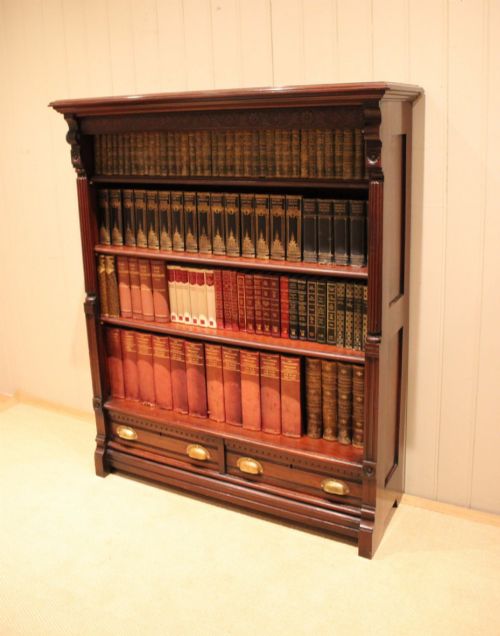
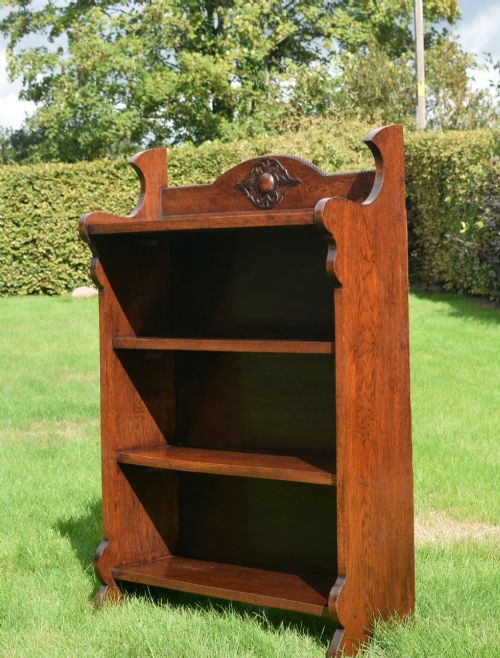
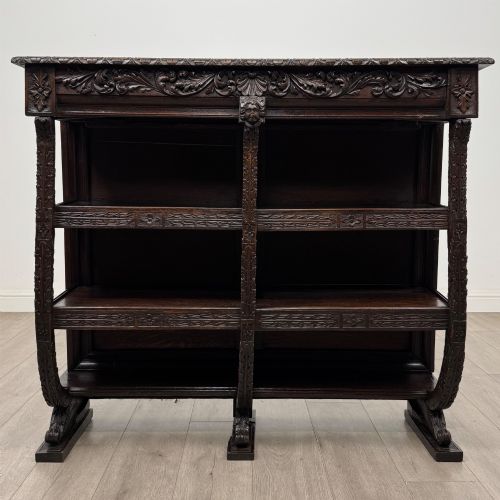
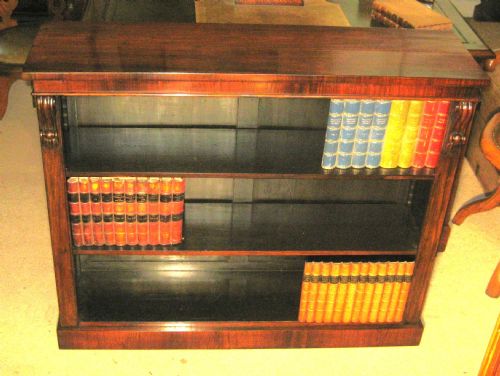
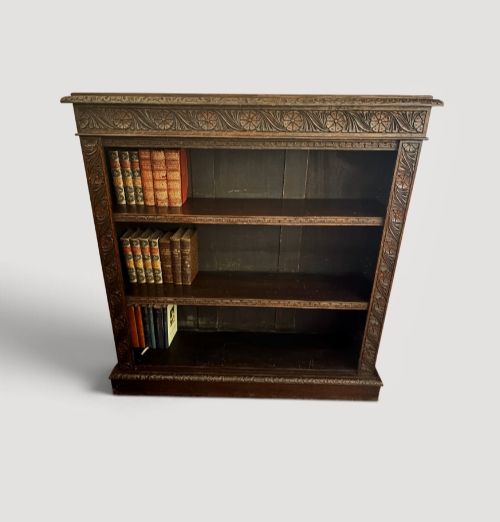
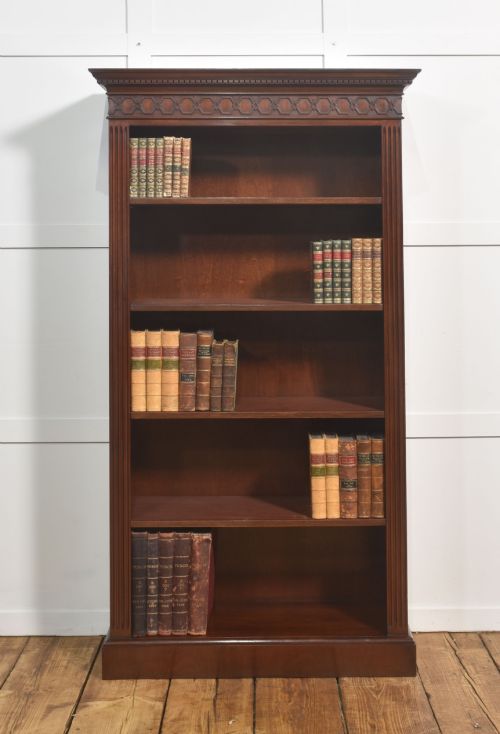
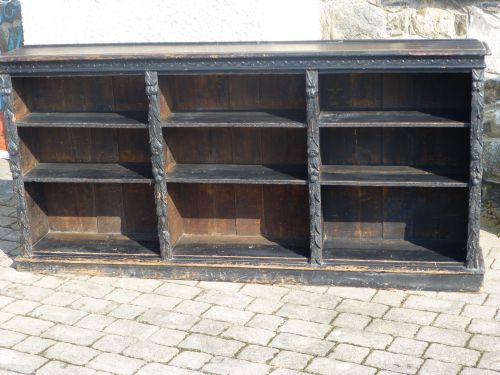
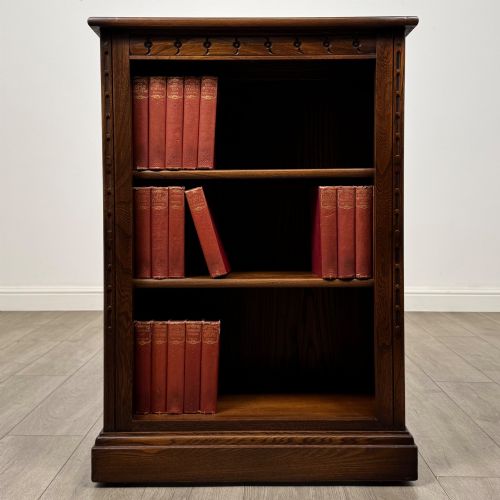
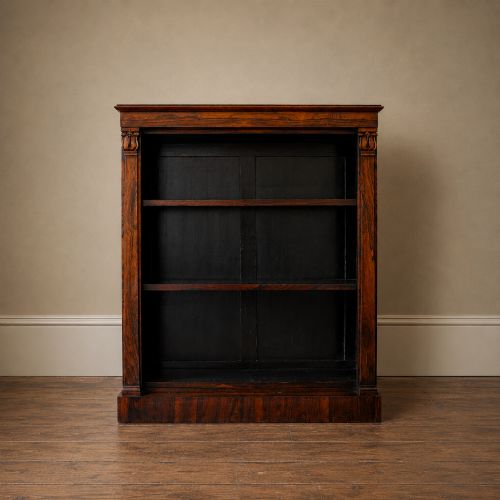
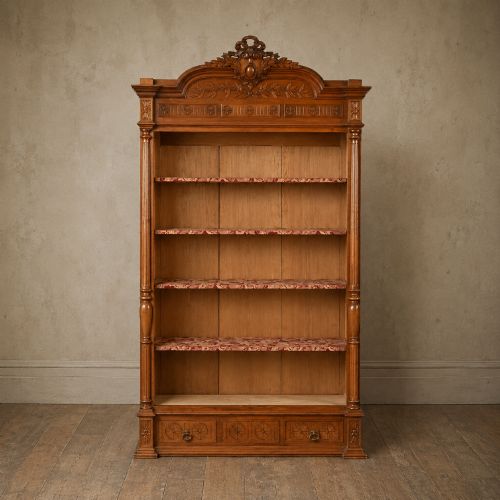
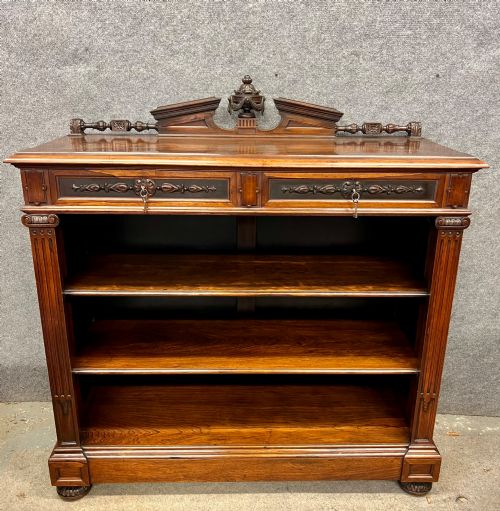
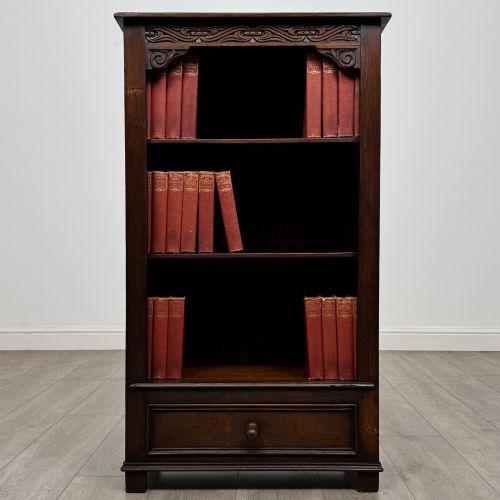
Carved Wood Bookshelves
These carved wood bookshelves bring architectural depth to a room while keeping volumes ready to hand.
Carved Wood Bookshelves
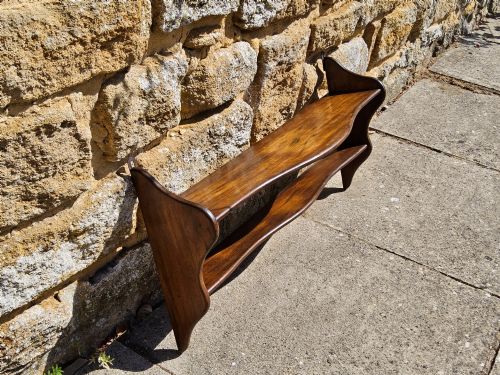
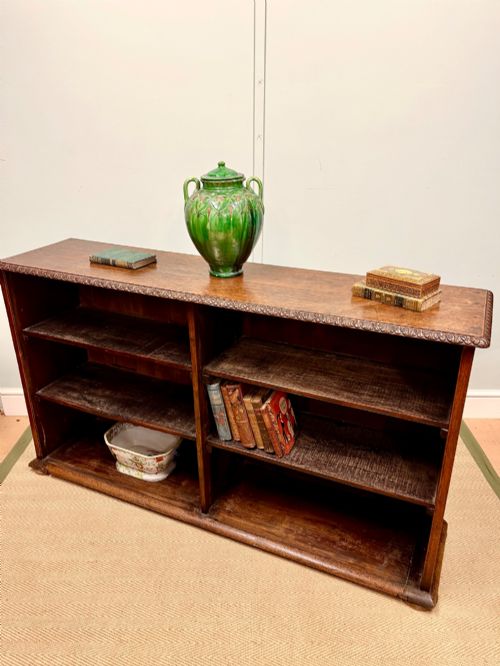
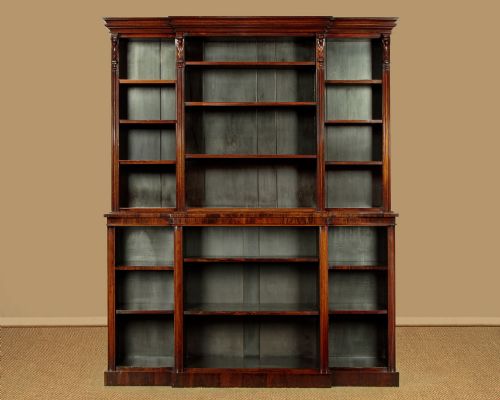
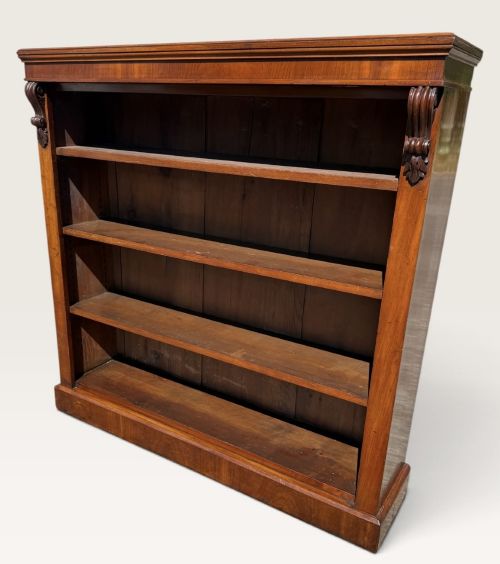
Carved wood bookshelves are open storage units designed to hold volumes while displaying ornamental woodwork across shelves, cornices, and uprights. When searching for carved wood bookshelves, buyers encounter open bookcases, wall shelves, and whatnots that span the nineteenth and early twentieth centuries.
The pieces appearing on this page stem predominantly from the Victorian, Edwardian, and Regency eras, with materials ranging from dense mahogany and rosewood to figured walnut and oak. Workshops built these forms as low dwarf units, tall library bookcases, and tiered wall shelves to suit domestic studies and parlours.
How they were made
Cabinetmakers constructed these pieces using solid timbers like oak, mahogany, walnut, and rosewood, often applying burr veneers or ebonisation to surface planes. Timber selection determined both the structural integrity of the shelves and the clarity of the carved ornamentation.
Joinery techniques included adjustable shelf mechanisms supported by brass racks or wooden pegs, alongside applied carved corbels and green man motifs. Brass mounts and marble accents occasionally reinforced the framework of exhibition quality pieces.
Materials span oak, mahogany, rosewood, walnut, burr walnut, brass, pine, and marble.
What varies in quality
Quality rests upon the crispness of the hand-carved detail and the selection of figured timber veneers across the display surfaces. Pieces exhibiting deep relief carving, such as green man motifs or foliate scrolls, demand higher levels of joiner artistry.
Structural refinement also separates standard utility shelving from grander library pieces, notably in the integration of adjustable shelving mechanisms and solid backboards. The choice of dense hardwoods like rosewood or burr walnut elevates the standing of the piece within its period.
The Carved Wood Bookshelves Glossary
- Breakfront
- A piece of furniture where the central section projects forward from the flanking sides. This layout adds visual weight and architectural presence to larger open bookcases.
- Corbel
- A structural bracket projecting from a wall or upright to support a shelf or cornice. Carved wooden versions often feature leaf or scroll designs.
- Ebonisation
- A chemical treatment applied to timber to darken the grain and imitate ebony. Cabinetmakers utilised this finish on nineteenth century display furniture to create stark contrast.
- Green Man
- A sculptural motif representing a human face entwined with foliage and vines. This ancient symbol appears frequently on Victorian carved oak furniture.
- Whatnot
- An open set of tiered shelves used for displaying ornaments and small volumes. These freestanding pieces rely on slender upright supports and delicate fretwork.
Carved Wood Bookshelves: Frequently Asked Questions
How do I choose the right size bookcase?
Measure your available wall space and the height of the volumes you intend to store. Low dwarf units suit rooms with restricted wall height, whilst taller library bookcases maximise vertical capacity.
Consider whether you need adjustable shelves to accommodate varying book sizes. Open fronts allow immediate access to your collection whilst maintaining an airy feel in smaller reception rooms.
What is the difference between an open bookcase and a whatnot?
Open bookcases are primarily utilitarian units designed specifically for holding rows of books on sturdy shelves. They often feature architectural cornices and plinth bases.
Whatnots are lighter, tiered shelving units traditionally utilised for displaying decorative objects rather than heavy libraries. They frequently incorporate slender turned supports and multiple open display tiers.
How do I date a Victorian carved bookcase?
Examine the timber species, joinery methods, and decorative motifs employed across the structure. Early Victorian pieces often display Regency influences with rosewood and brass mounts, whilst later examples favour heavy oak with deep relief carving.
The presence of adjustable metal shelf racks typically points towards nineteenth century production methods rather than earlier hand-pegged systems.
Can adjustable shelves handle heavy books?
Solid mahogany, oak, and walnut shelves possess the structural strength required to support substantial rows of volumes without sagging. The inclusion of brass support tracks allows you to reposition shelves securely.
Distribute heavier volumes evenly across the lower tiers to maintain structural stability. Solid timber construction ensures the frame remains rigid under regular domestic use.