


Carved Wood Blanket Box
A carved wood blanket box provides deep domestic storage while anchoring a room with centuries of timber craftsmanship.
Carved Wood Blanket Box
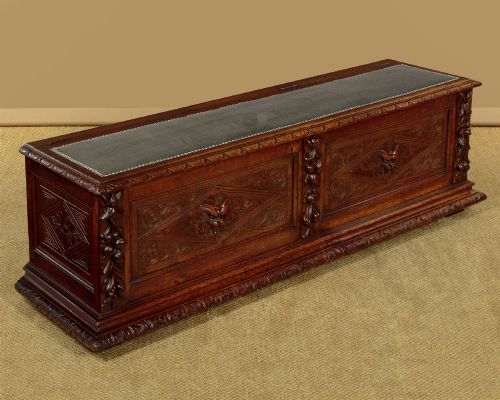
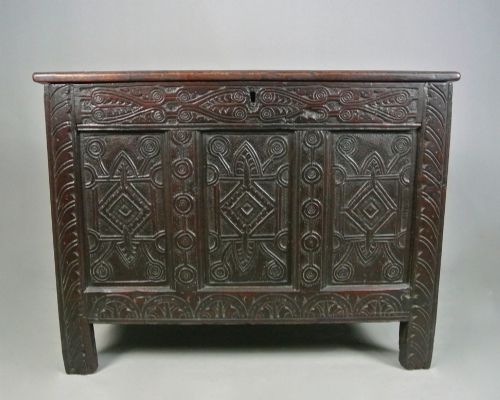
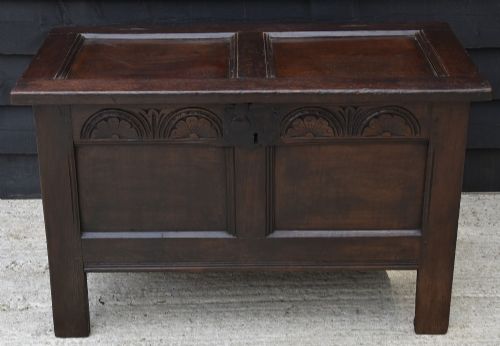
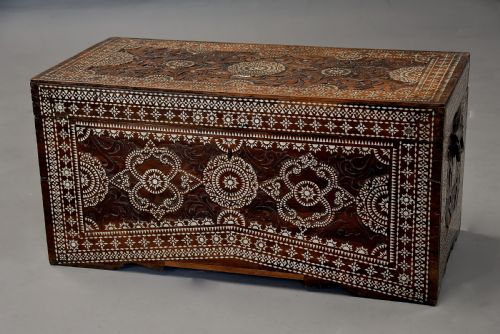
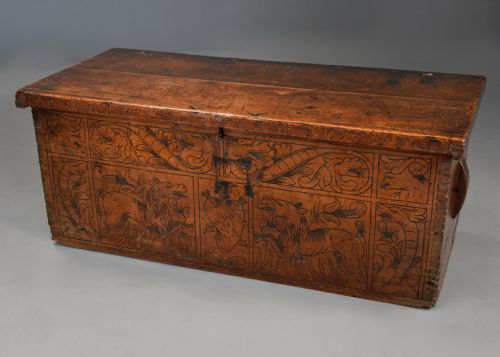
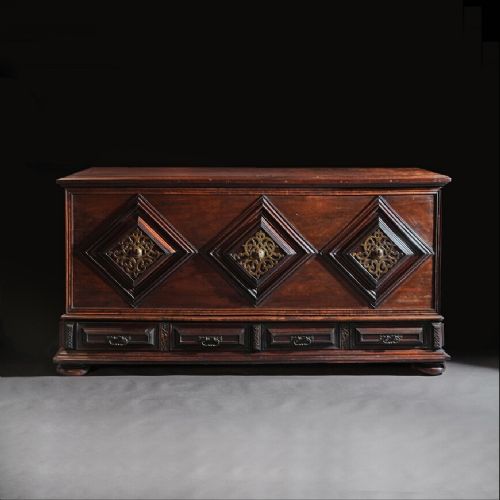
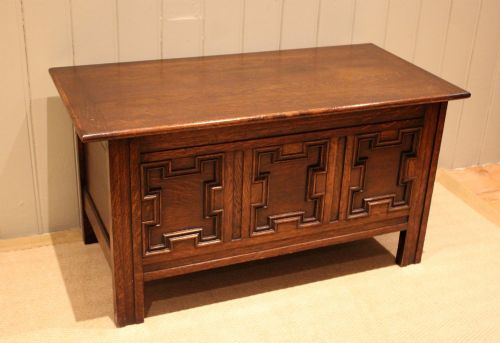
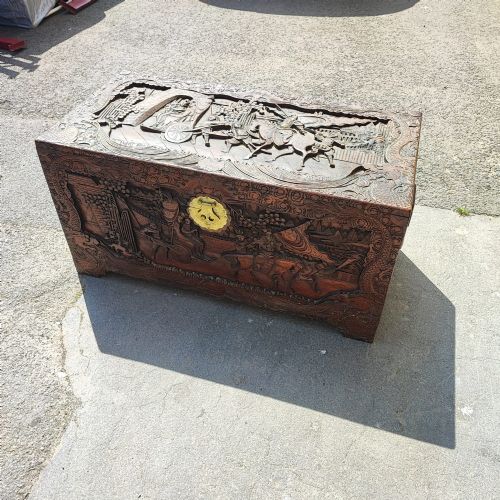
When you search for a carved wood blanket box, you encounter heavy storage chests and coffers built across multiple centuries, serving as both utility furniture and decorative focal points. The pieces range from straightforward regional oak storage to elaborate colonial and oriental trunks.
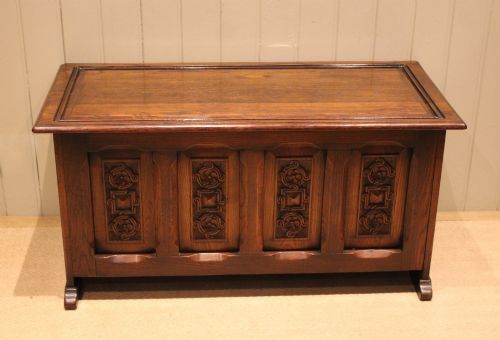
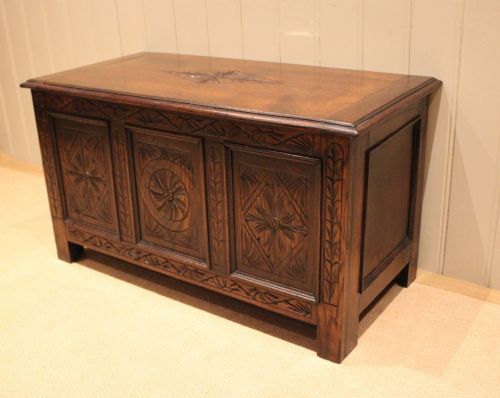
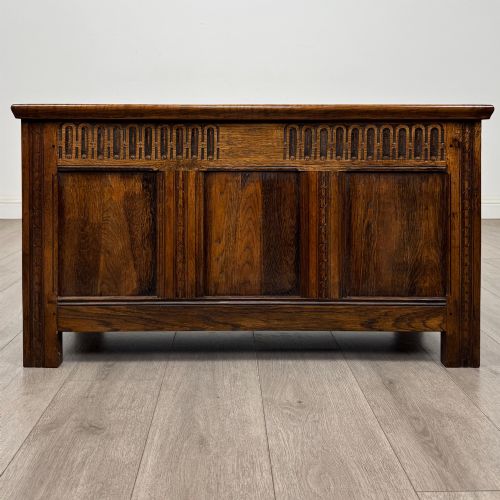
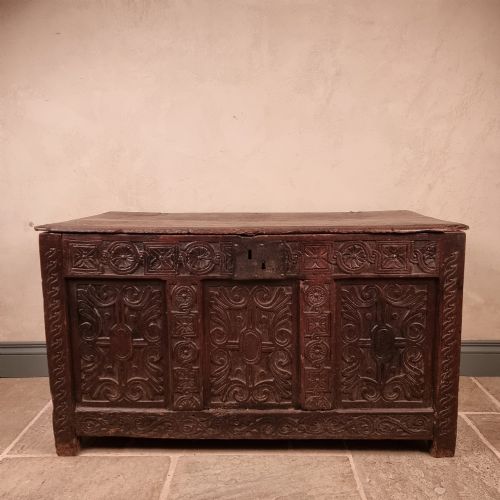
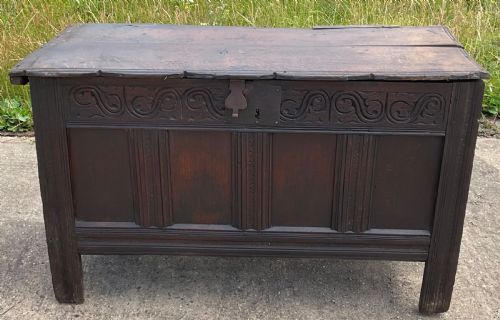
The version you are most likely to meet on this page is the traditional oak coffer, often dating from the seventeenth or eighteenth century, alongside carved camphor wood trunks from various periods. These objects served primary roles in domestic organisation long before fitted wardrobes existed.
Makers shaped these chests from sturdy local and exotic timbers, applying hand-carved panels, linen fold motifs, or brass studwork. They appear under various descriptions including coffers, storage chests, and dowry trunks.
How they were made
Joiners and cabinet makers constructed these pieces primarily from solid oak, camphor wood, and mahogany, utilising sturdy frame and panel techniques to allow timber to move naturally with humidity. Iron and brass hardware, including hinges, straps, and decorative studs, secured the lids and corners.
Carving was executed directly into the solid wood boards, featuring geometric patterns, floral reliefs, or Gothic tracery depending on the region and period. Certain examples incorporate applied mouldings, painted surfaces, or inlaid mother of pearl.
Listings span periods from the 16th century through the 1930s, featuring materials such as oak, camphor wood, mahogany, pine, and teak.
What varies in quality
The distinction between standard utility storage and exceptional examples rests in the depth and crispness of the hand-carving and the preservation of the original surface timber. Pieces retaining an untouched patina and robust structural integrity command greater appreciation from collectors.
Hardware originality also influences the character of the piece, as period hinges, locks, and brass studwork demonstrate the original assembly standards. Altered lids or replaced base timbers change the overall integrity of the antique.
The Carved Wood Blanket Box Glossary
- Coffer
- A heavy wooden chest traditionally used for storing valuables or textiles. They typically feature a hinged lid and robust construction.
- Camphor wood
- An aromatic hardwood native to Asia, frequently utilised for chests because its natural scent deters insects. It is soft to work and takes detailed carving.
- Linen fold
- A style of relief carving that resembles folded linen fabric, commonly seen on Tudor and seventeenth-century panels. It gives flat wooden surfaces texture and visual depth.
- Mule chest
- A traditional storage chest featuring one or more drawers beneath the main internal compartment. This form bridges the gap between the simple coffer and the modern chest of drawers.
- Patina
- The surface sheen and colour developed by timber over decades and centuries of handling and ageing. A desirable patina reflects genuine age and usage.
Carved Wood Blanket Box: Frequently Asked Questions
What is a carved wood blanket box used for?
These chests served historically to store household linens, blankets, and woollens, protecting textiles from dampness and moths. Today, they function similarly at the foot of a bed or within living spaces for general storage.
Their sturdy flat lids also allow them to double as casual seating or low display surfaces within a room.
How do I date an antique oak coffer?
Dating relies on observing construction methods, such as hand-cut joints, original forged iron hinges, and the style of the timber carving. Seventeenth-century pieces often display pegged frame-and-panel construction with geometric or floral motifs.
Later revival pieces from the nineteenth and twentieth centuries emulate these older styles but typically reveal machine sawing marks or different internal secondary woods.
Why are some chests made of camphor wood?
Camphor wood was favoured for export trunks, particularly from China, due to its natural aromatic insect-repellent properties. This quality made it ideal for protecting garments during long sea voyages.
The wood is also relatively soft, which allowed craftsmen to carve deeply detailed oriental scenes across the exterior surfaces.
How do I care for an antique wooden chest?
Maintain antique timber by keeping it away from direct heat sources and sudden humidity changes, which can cause the wood to split. Dust the carved surfaces regularly with a dry cloth.
Occasional applications of a traditional beeswax feed help nourish the grain and preserve the surface patina without building up synthetic residues.