
Carved Windsor Armchair
A carved windsor armchair brings tactile regional craftsmanship and robust timber construction straight into a room.
Carved Windsor Armchair
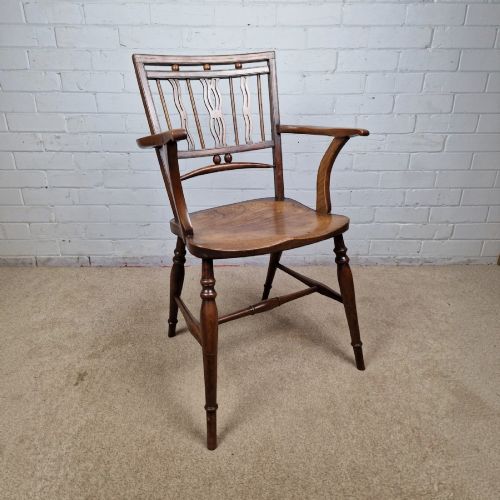
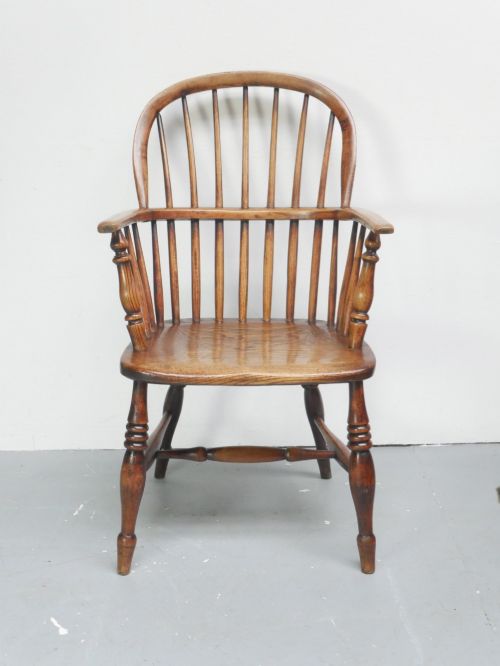
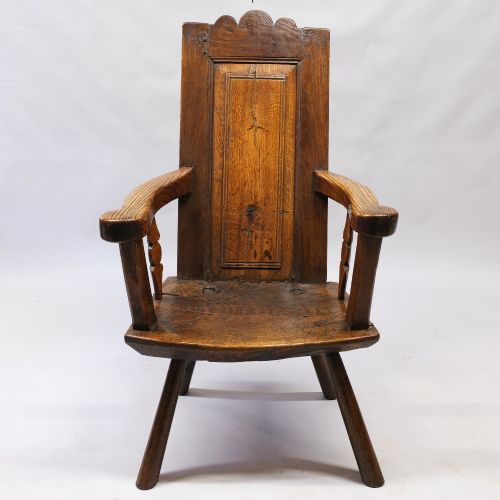
A carved windsor armchair forms part of a rich domestic tradition spanning the Georgian, Victorian and Edwardian eras. Buyers searching for a carved windsor armchair will encounter regional variations including Thames Valley, Yorkshire and Mendlesham forms.
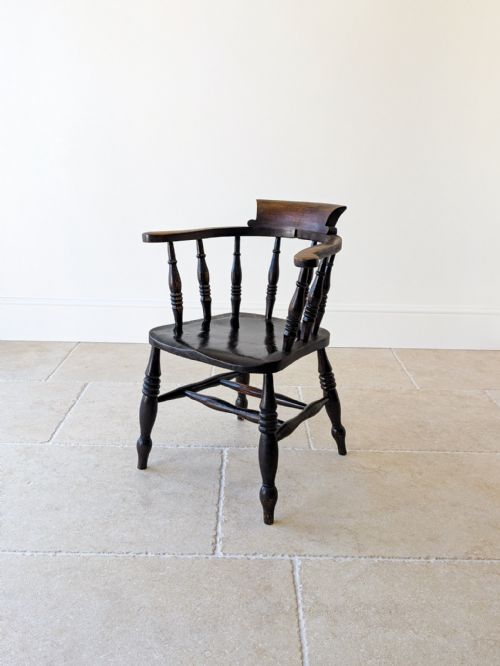
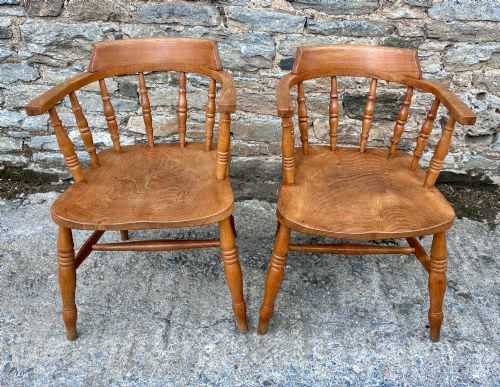
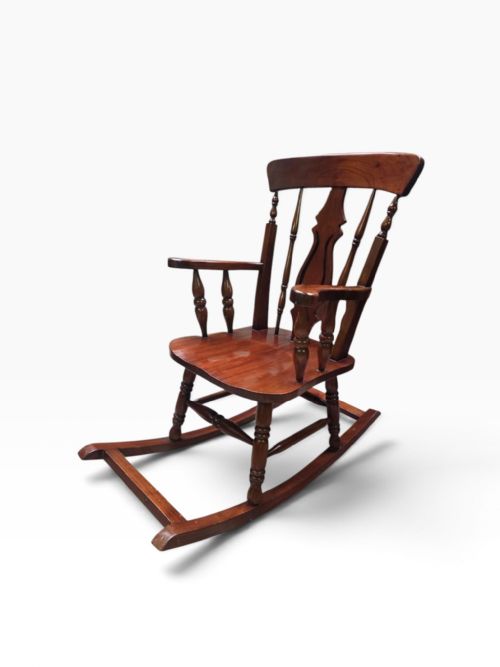
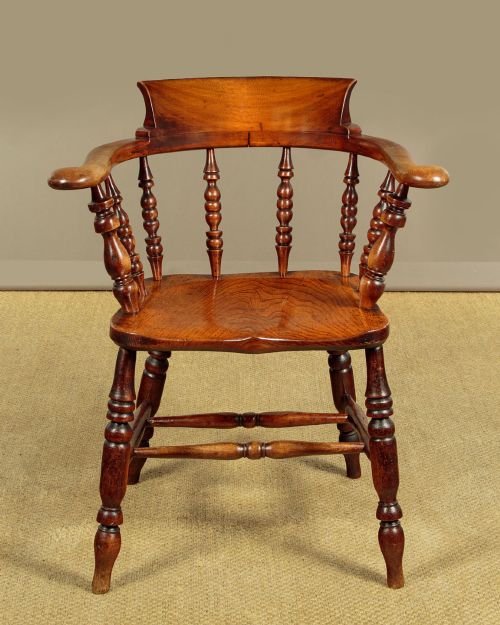
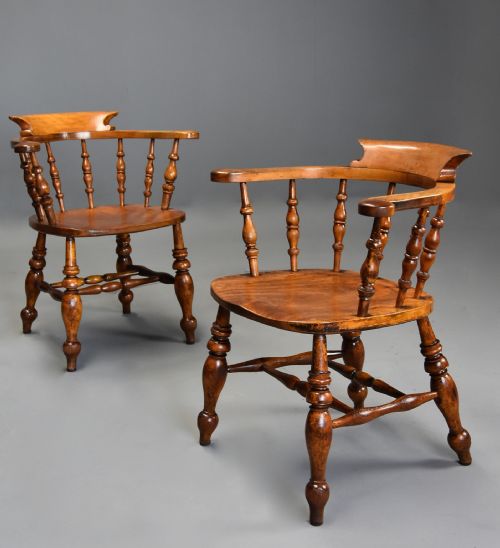
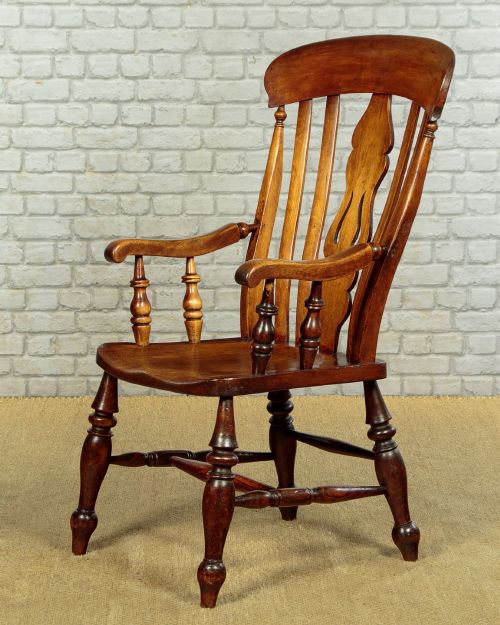
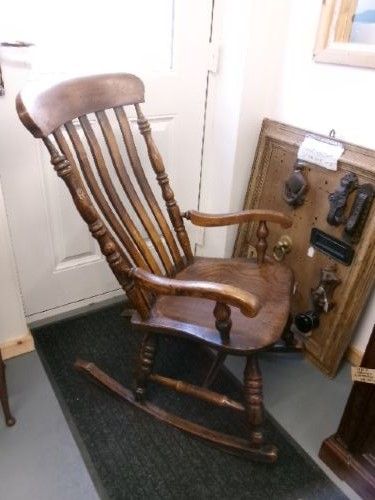
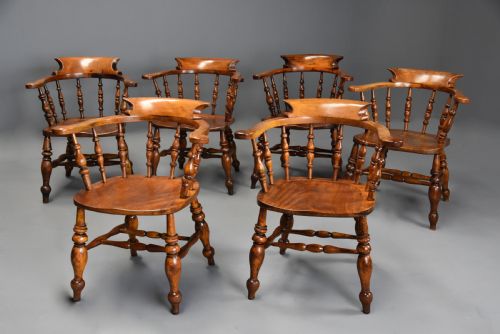
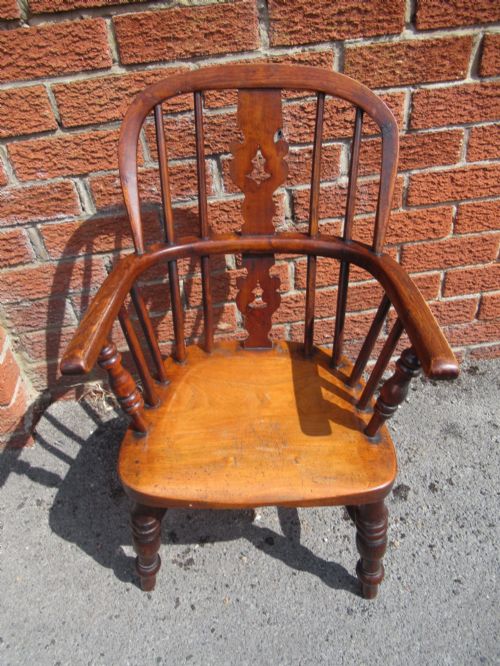
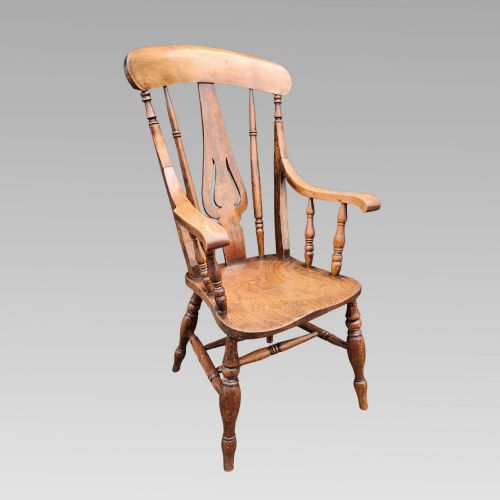
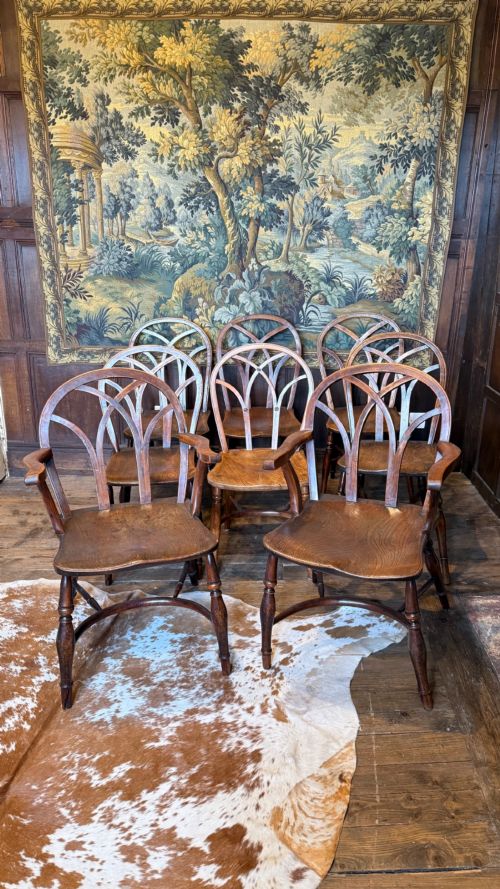
The pieces on this page range from low back and high back armchairs to captains chairs, smokers bows and rocking chairs. Elm seats combined with ash, beech or yew frames dominate the selection.
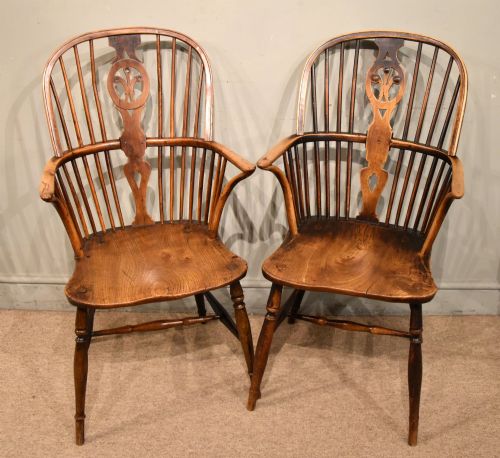
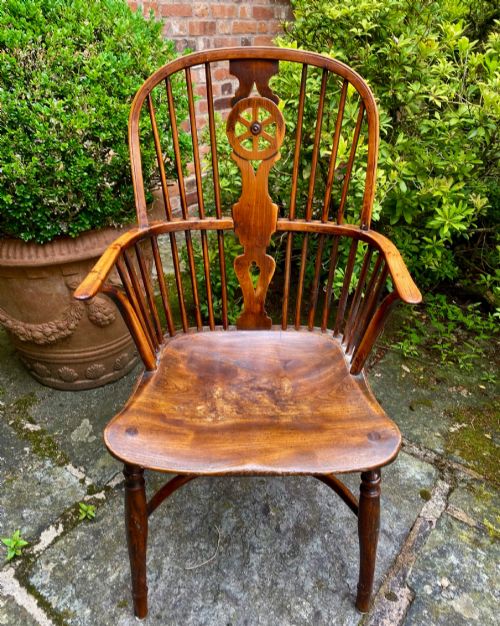
Makers utilised local timbers and specific regional splat designs such as wheel backs, bar backs and spindle and lyre backs. These seating options served farmhouses, country houses and cottages alike.
Materials and construction
Makers constructed these chairs by wedging legs and spindle backs directly into a thick solid wood seat, usually carved from elm. This method created a sturdy, durable frame capable of enduring decades of heavy daily use.
Superstructure components such as bows, hoops and arms relied on flexible timbers like ash, beech and birch, steam-bent into curved profiles. Decorative elements, including pierced splats and carved details, were shaped by hand using gouges and drawknives.
Listings feature timbers including elm, ash, beech, oak, yew, fruitwood, mahogany and laburnum across 18th, 19th and early 20th-century periods.
Judging quality in country seating
Quality rests in the balance of timber selection, particularly the choice of dense woods like yew or nicely figured elm. Chairs displaying crisp carving on the splat or crest rail command greater interest.
Structural integrity and untouched surface patination separate fine examples from heavily restored ones. Original wedged joints and minimal timber replacement preserve the historical integrity of the piece.
Fred Walker Rockley
The Carved Windsor Armchair Glossary
- Smoker's bow
- A low-backed Windsor armchair with a continuous curved armrail, often used in gentlemen's clubs and public houses during the nineteenth century.
- Comb back
- A Windsor chair design where the central spindles extend upward to support a horizontal top rail resembling a hair comb.
- Spindle back
- A chair back filled with numerous slender turned wooden rods rather than a solid central splat.
- Splats
- The central vertical wooden element positioned within the back of a chair, frequently pierced or carved with decorative motifs like wheels.
- Hoop back
- A continuous bentwood frame forming the top rail and arms of a Windsor chair in a single sweeping arc.
Carved Windsor Armchair: Frequently Asked Questions
What is a carved windsor armchair?
A carved windsor armchair is a traditional wooden seat featuring a solid saddle-shaped elm seat into which legs and back spindles are tenoned directly. The carved elements typically appear on the central splat or crest rail.
These chairs developed distinct regional characteristics across England and Scotland, reflecting local timber availability and vernacular furniture styles.
How do I date an antique windsor chair?
Dating relies on examining the timber species, construction joints, tool marks and overall form. Earlier eighteenth-century examples often feature ash and elm with simpler joinery, while Victorian versions introduce bent beech and elaborate splats.
Changes in turning styles for legs and stretchers also provide clear chronological indicators for regional pieces.
Where were windsor chairs used?
These armchairs served varied roles across farmhouses, country houses, cottages and commercial establishments like inns. Their robust construction made them ideal for daily seating at dining tables or by the hearth.
Smaller child variants and rocking chair formats accommodated specific domestic needs within the home.
How do I care for antique elm and ash?
Maintain the timber by keeping the chair away from direct heat sources and sudden humidity changes to prevent wood shrinkage or cracking. Occasional applications of natural beeswax help nourish the surface and preserve the historic patina.
Avoid modern liquid polishes that can build up heavy residues over time.