


Georgian Carved Windsor Chair
A georgian carved windsor chair brings robust country craftsmanship and sculpted wooden seats into domestic spaces.
Georgian Carved Windsor Chair
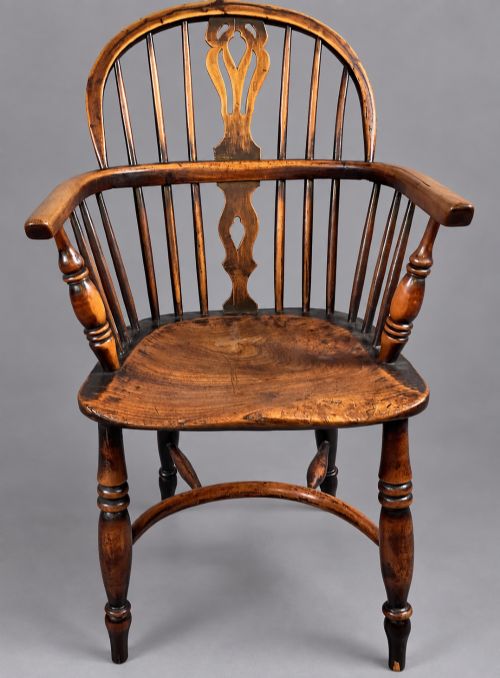
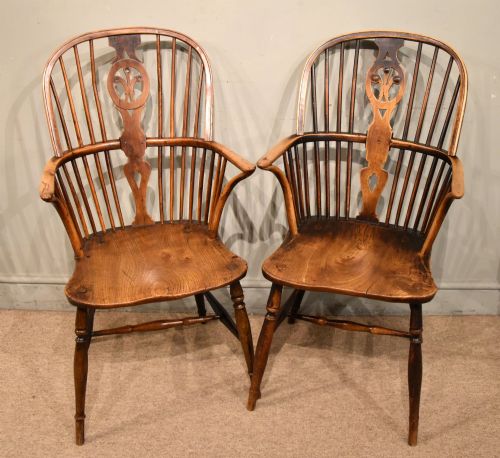
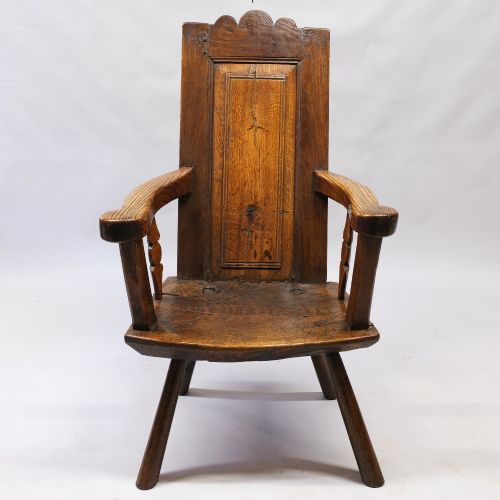
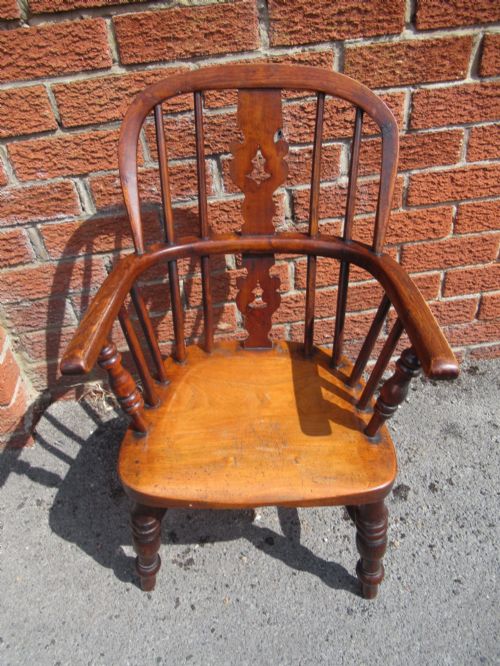
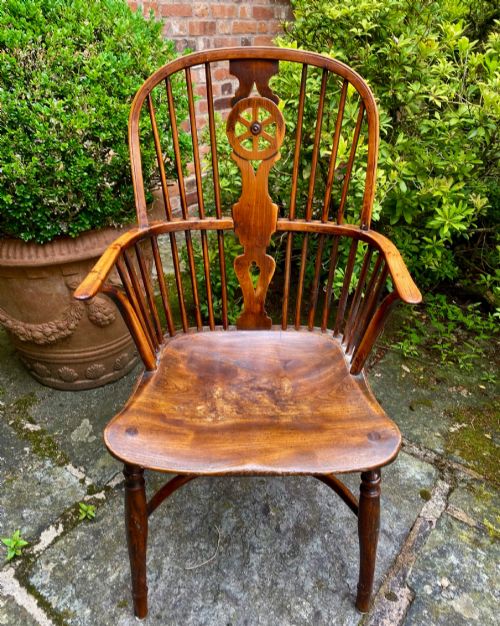
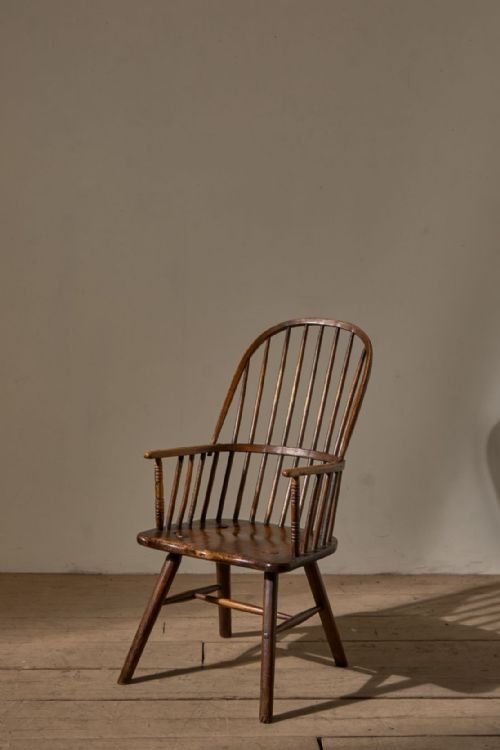
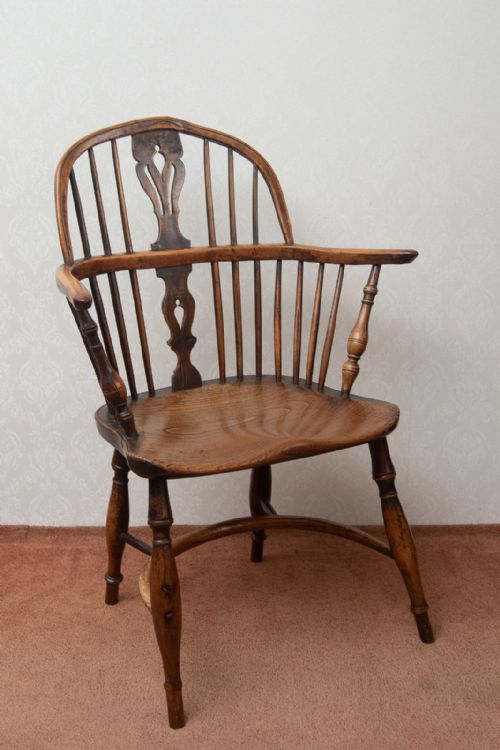
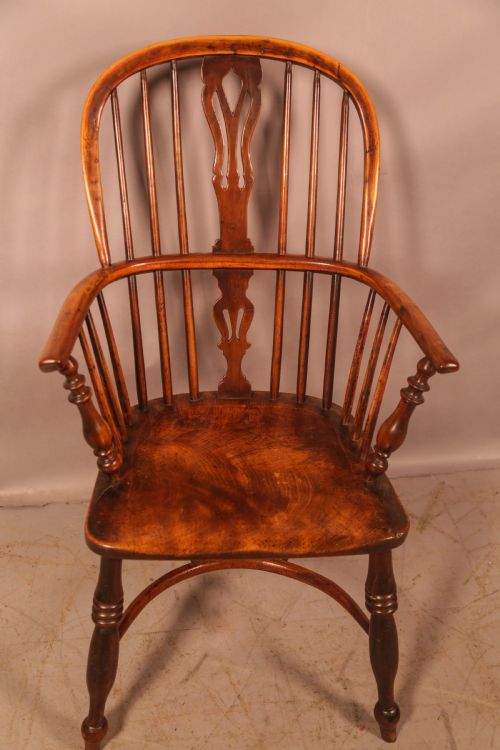
A georgian carved windsor chair is a sturdy timber seat designed for everyday comfort with a distinctive stick-back or spindle construction. When searching this phrase, buyers encounter variations such as high back, comb back, panel backed, and low fiddle back forms.
Most pieces on this page originate from the Georgian and nineteenth-century periods, showing regional English vernacular styles. Examples range from child-sized chairs to broad-arm variants with carved details like snake heads or bulls-eye motifs.
Materials and construction
These chairs utilise mixed timbers native to English woodlands, notably elm for solid carved seats, ash for structural spindles, and yew wood for rich figuring. Craftsmen turned legs and stretchers on a pole lathe while shaping seats with an adze or scorp.
Hoop backs and comb backs rely on steam-bending green wood to create tensioned supports that hold the spindles firmly in place. Joints are typically pegged or wedged through the seat slab to ensure lasting stability.
Certain nineteenth-century makers carved literal snake heads into the wooden armrests, adding a startling touch of wildlife to the parlour.
Judging the work
Quality rests in the balance of the proportions, the depth of the sculpted seat, and the harmonious pairing of timbers. A well-balanced frame shows confident turning on the legs and carefully tapered spindles rather than stiff, uniform machine work.
Carved details like snake heads or pierced splats distinguish more ambitious vernacular pieces from standard utilitarian seating. The integrity of the original joints and the patina accumulated on the unpainted wood surfaces also shape the character of each chair.
Rockley·Worksop
The Georgian Carved Windsor Chair Glossary
- Windsor chair
- A wooden chair built with a heavy solid seat into which the legs and back spindles are separately inserted. This method creates a rigid skeletal frame without traditional side rails.
- Comb back
- A chair back style featuring a low vertical spindle section topped by a horizontal crest rail that resembles the teeth of a comb. This form often includes shaped arm supports.
- Hoop back
- A continuous bent wooden rod forming the upper back and arm rail of a chair in a single curved sweep. It provides spring and support for the user.
- Thames Valley
- A regional English style designation associated with finely turned yew wood chairs featuring pierced splats and sculpted arms. These pieces represent a distinct tradition in chair-making.
- Elm
- A dense, interlocking timber frequently used for Windsor chair seats because it resists splitting when driven through with leg tenons. Its distinctive grain adds visual texture to the finished seat.
Georgian Carved Windsor Chair: Frequently Asked Questions
How do I identify Thames Valley chairs?
Thames Valley chairs are distinguished by their use of yew wood, sophisticated spindle turnings, and often a pierced central splat within the back. They represent a high standard of regional English country craftsmanship.
These pieces typically display rich timber figuring and refined proportions that set them apart from plainer provincial seating.
Why are different woods used together?
Maker traditions dictated mixing timbers to utilise the specific mechanical properties of each tree. Elm provided a tough, non-splitting surface for the carved seat slab.
Meanwhile, ash and yew offered flexible strength and straight grain for the steam-bent hoops and slender turned spindles.
How were these chairs used historically?
These seats served as practical, durable furniture in farmhouses, cottages, and provincial homes throughout the eighteenth and nineteenth centuries. Their sturdy construction made them suitable for dining, fireside seating, or general parlour use.
The comfortable sculpted seats accommodated long hours of sitting in working households.
How do I care for antique timber?
Keep wooden chairs away from direct heat sources and sudden humidity changes to prevent the timber from drying out or splitting. Apply natural beeswax sparingly and buff gently with a soft cloth to maintain the surface sheen.
Avoid modern liquid polishes that can build up a sticky film over the historic patina.