


Traditional Wooden Windsor Chair
A traditional wooden windsor chair combines vernacular British seating traditions with robust timber construction, offering enduring comfort and honest regional character.
Traditional Wooden Windsor Chair
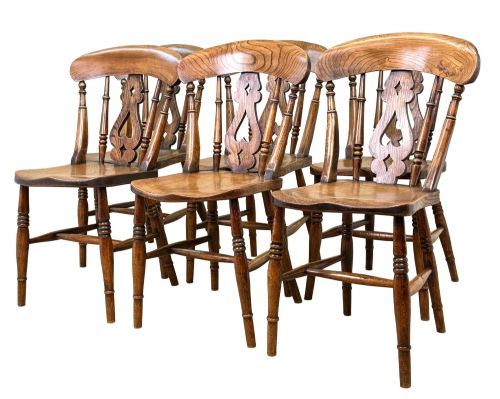
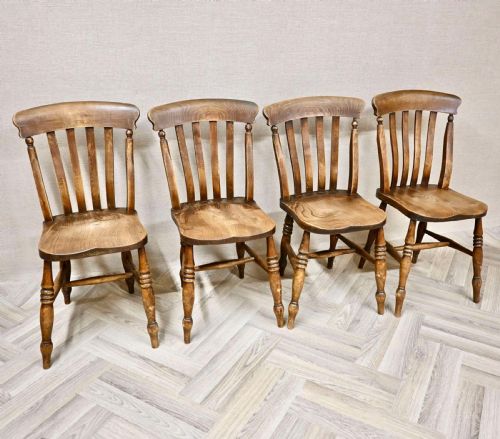
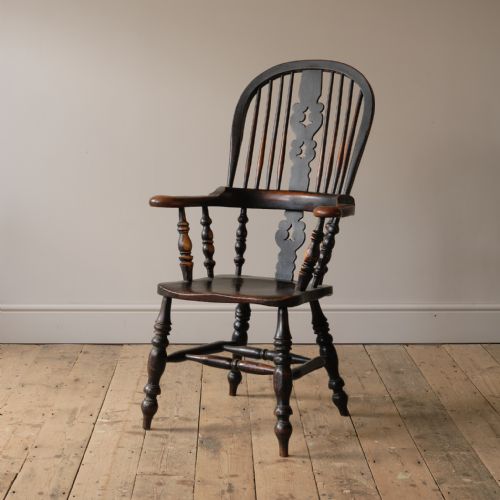
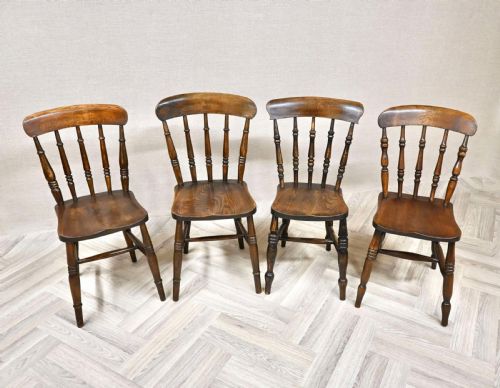
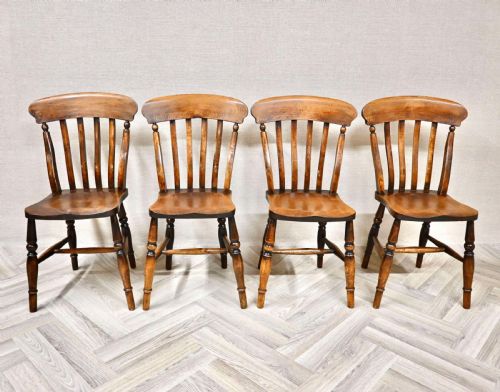
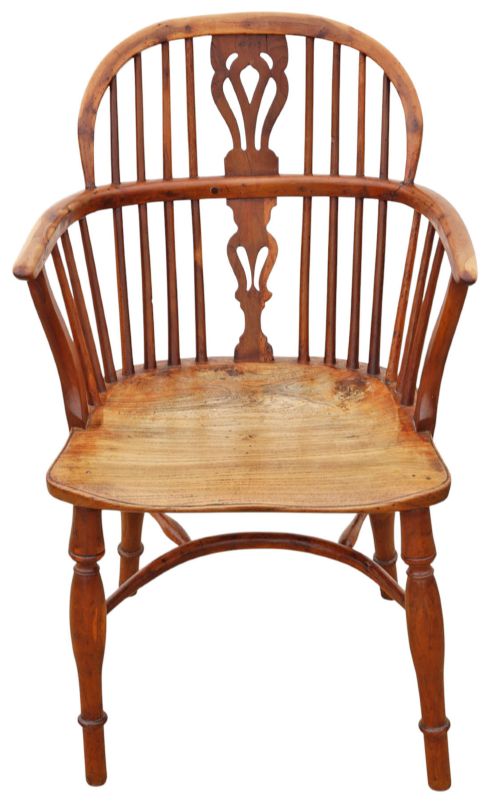
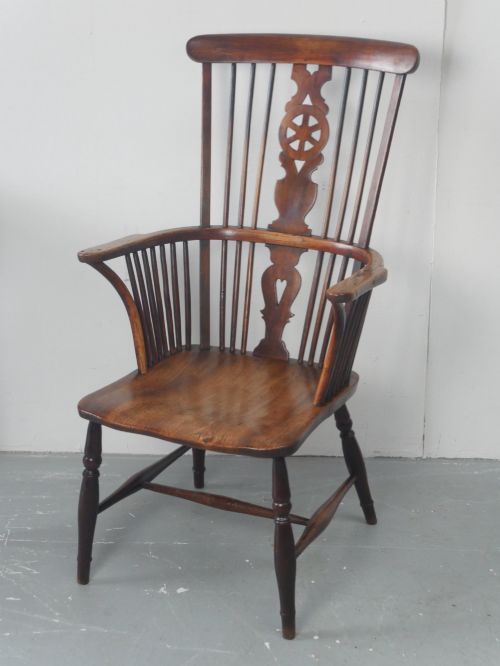
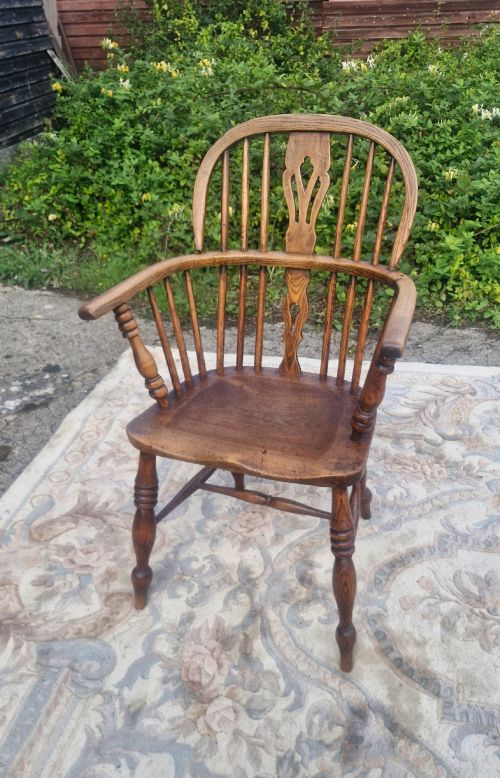
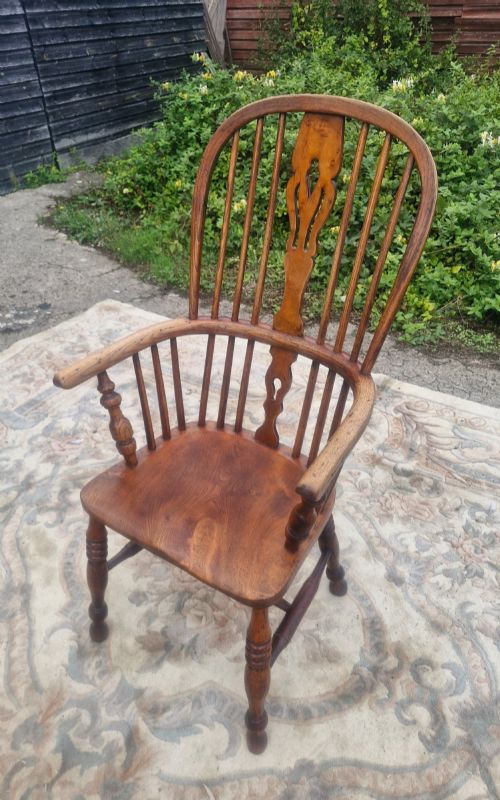
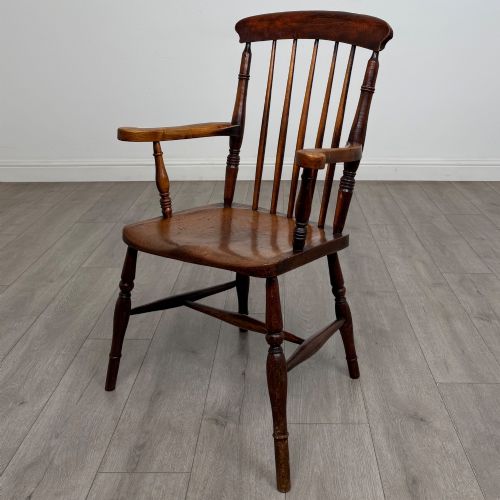
When you search for a traditional wooden windsor chair, you are looking at a form of seating defined by a solid wooden seat into which the legs and back spindles are wedged directly. The examples found here span the eighteenth, nineteenth, and early twentieth centuries, drawing on regional English vernacular styles such as high hoop-back, comb-back, and stick-back designs.
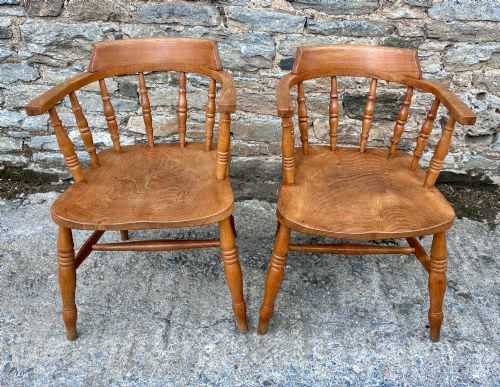
You are most likely to meet nineteenth-century Victorian pieces on this page, often configured as kitchen dining chairs, low or high-backed armchairs, captain's chairs, and rocking chairs. These pieces originate largely from English country workshops, with specific regional variations including West Country and Welsh variants appearing among the broader mix.
Timber Selection and Joinery
These chairs were constructed using a combination of native British timbers chosen for specific structural properties. Elm is predominantly utilised for the solid saddle seats due to its interlocking grain which resists splitting, while ash, beech, and oak provide strength for the bentwood bows, legs, and spindles.
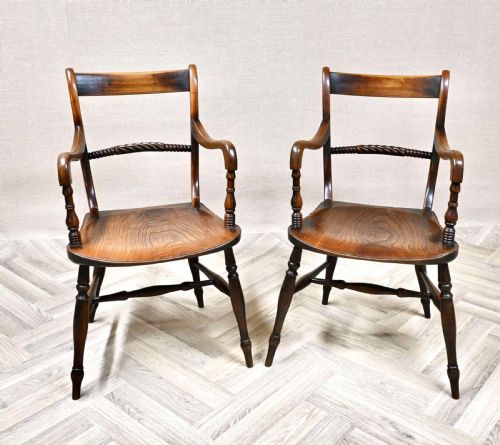
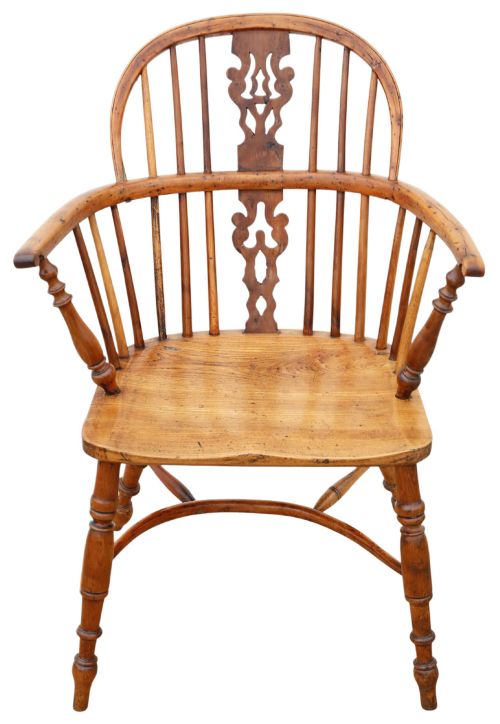
Makers also turned to yew wood for finer armchairs, prized for its rich grain and warmth. Construction relies on stick-back and wedged tenon joinery, where turned or cleft components lock physically into drilled seats without reliance on metal fixings.
Some nineteenth-century makers evidently grew tired of straight spindles and turned out ropetwist armchairs to keep kitchen seating interesting.
Evaluating Construction and Material Figure
The distinction between ordinary and superior examples rests upon the selection of timber and the complexity of the back design. Yew wood and well-figured elm command attention for their grain depth, whereas utilitarian beech and ash variations were built strictly for domestic service.
Quality also shows in the sculptural shaping of the seat, the grace of the bentwood hoop, and the presence of structural details such as crinoline stretchers or carved wheelback motifs rather than plain slats.
The Traditional Wooden Windsor Chair Glossary
- Comb back
- A Windsor chair back design where vertical spindles rise to a horizontal headboard resembling the teeth of a comb. This style offers distinct lumbar support and often dates to the eighteenth or early nineteenth century.
- Crinoline stretcher
- An arched underframe connecting the legs of a Windsor chair to provide rigidity. It gets its name from the hoop-like shape reminiscent of nineteenth-century crinoline petticoats.
- Captain's chair
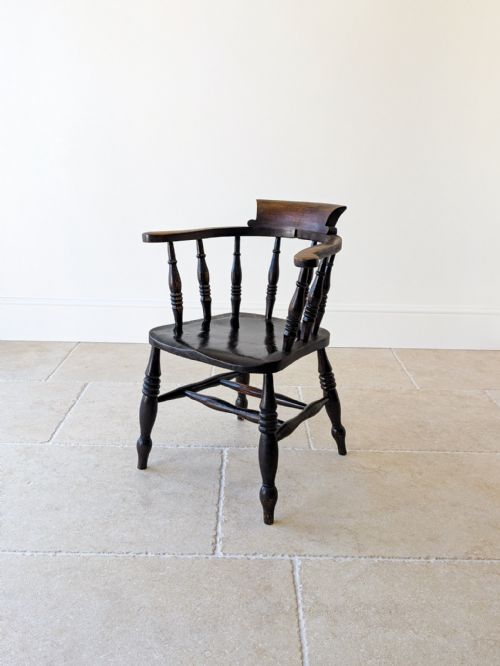
- A low-backed armchair designed with a continuous curved arm rail supported by numerous small spindles. These compact seats were popular in domestic parlours and offices alike.
- Wheelback
- A Windsor chair back featuring a pierced wooden splat carved in the shape of a spoked carriage wheel. This decorative motif became common in nineteenth-century kitchen and dining sets.
- Spindle
- A thin, turned wooden rod forming part of the chair back or underframe. Spindles distribute weight evenly and contribute to the structural integrity of stick-back seating.
Traditional Wooden Windsor Chair: Frequently Asked Questions
How do I identify an eighteenth century windsor chair?
Eighteenth century traditional wooden windsor chairs often feature comb backs or high hoop backs constructed from ash and elm. They frequently display deeper saddle seats and regional framing characteristics unique to early rural workshops.
Closer inspection of the turnery on the legs and spindles reveals hand-carved details rather than mass-produced uniformity. The patination on these older examples generally shows a deeper warmth acquired through generations of domestic use.
What is a smoker's bow armchair?
A smoker's bow is a low-backed Windsor armchair featuring a rounded, continuous arm rail and turned spindles above a solid wooden seat. They were standard seating in nineteenth-century inns, homes, and offices.
These sturdy chairs were built for durability and comfort during extended periods of sitting. Elm and beech are the most common timbers found in this specific form.
Are these chairs suitable for daily dining use?
Traditional wooden windsor chairs were originally built for heavy daily use in farmhouses and kitchens, making them exceptionally durable today. Their robust construction handles regular seating without structural compromise.
Pairing mismatched or matched sets around a dining table introduces historical character and tactile warmth. Checking the underframe and leg joints ensures stability for contemporary dining.
How do I care for antique elm and ash timber?
Maintaining traditional wooden windsor chairs requires avoiding direct heat sources and extreme humidity fluctuations that cause timber to dry and split. Regular dusting and occasional application of appropriate beeswax preserve the natural finish.
Harsh chemical polishes should be avoided to protect the historic patination accumulated on the surface. Gentle maintenance keeps the grain vibrant and safeguards the original joinery.