



Carved Walnut Vanity Desk
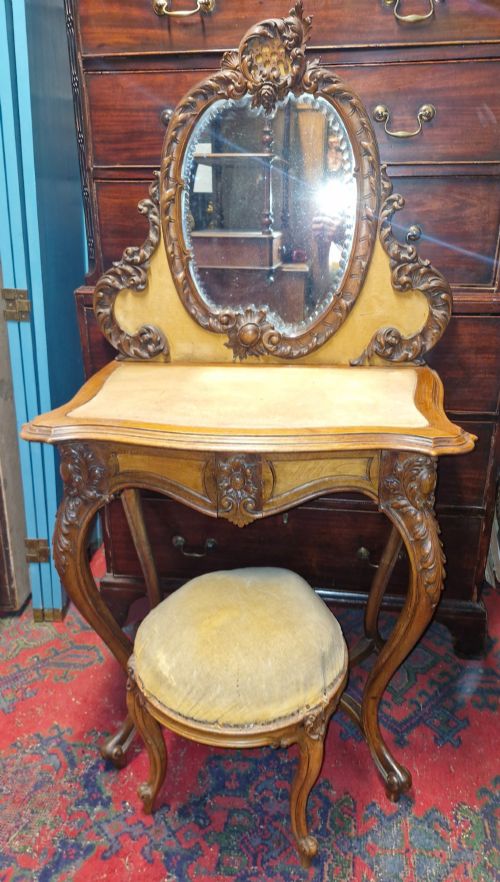
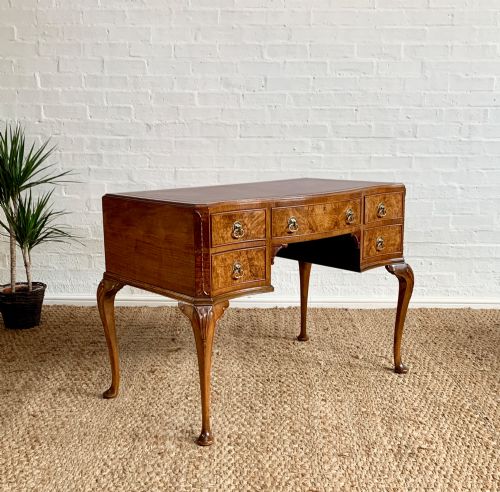
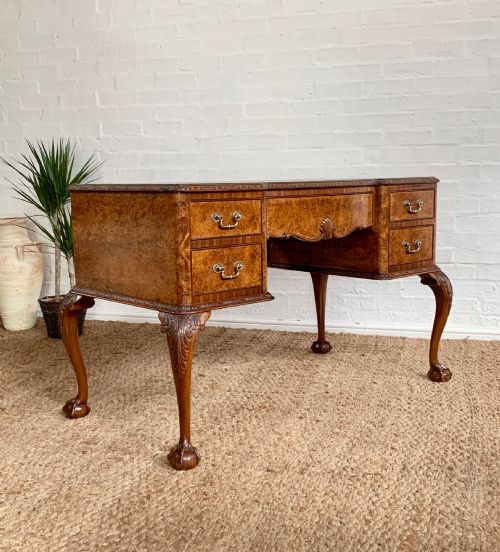
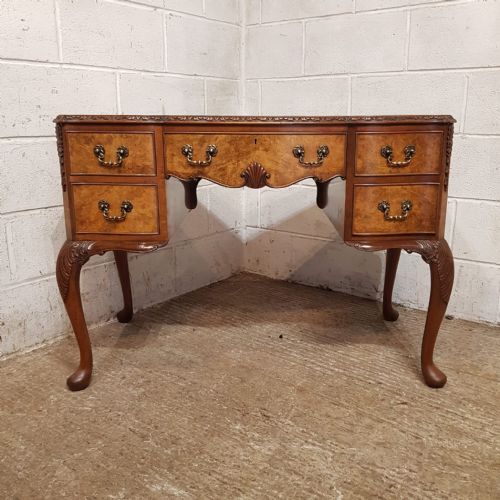
A carved walnut vanity desk brings rich timber grain and classic craftsmanship directly into a dressing room or study.
Carved Walnut Vanity Desk
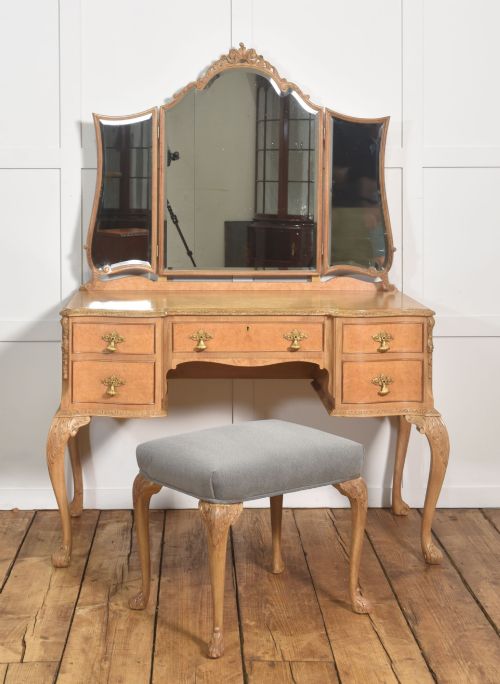
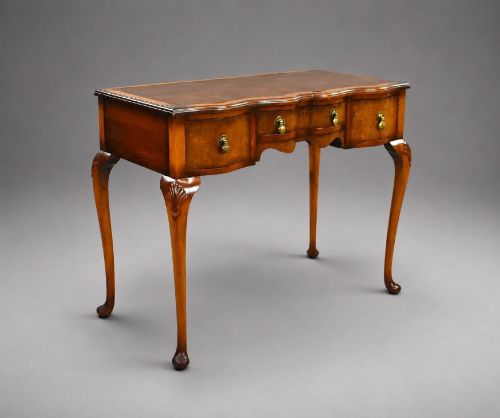
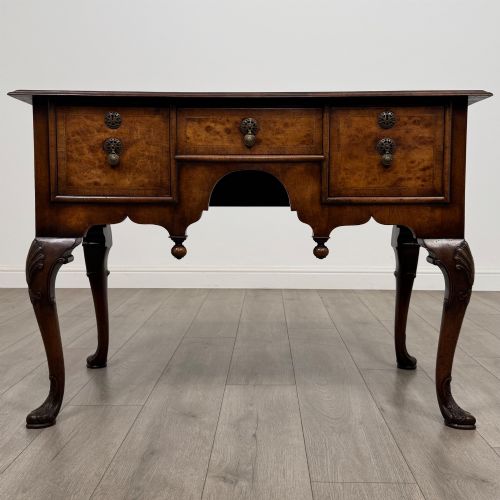
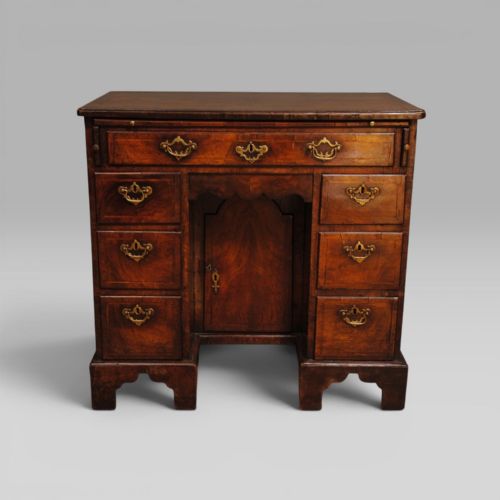
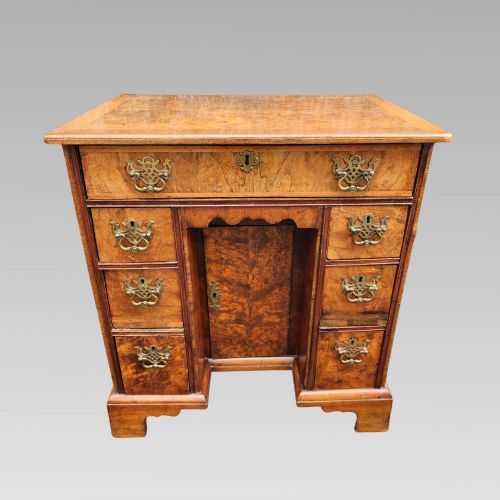
A carved walnut vanity desk combines the utility of a writing table with the dedicated surface needed for grooming and dressing. These pieces appear across multiple eras, ranging from early eighteenth century lowboys and kneehole desks to Victorian duchess dressing tables and twentieth century revivals.
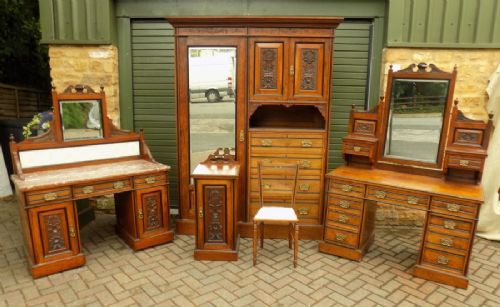
Buyers frequently encounter variations featuring intricate carved details, cabriole legs, and folding mirror attachments designed for domestic chambers. The selection spans straightforward writing tables adapted for vanity use alongside elaborate bedroom suites equipped with matched stools.
Origins stretch from eighteenth century workshops through nineteenth century revival movements up to early twentieth century productions. The underlying form remains consistent, offering kneehole compartments, drawer arrangements, and durable wooden surfaces intended for daily personal use.
Materials and construction methods
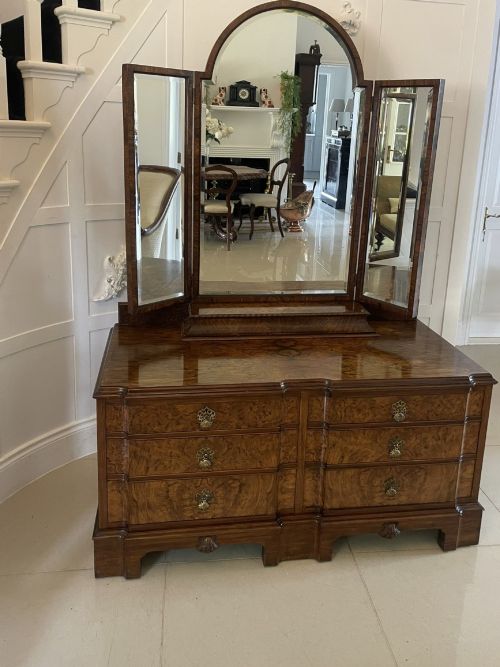
Cabinetmakers utilised solid walnut and decorative burr walnut veneers applied over secondary timbers to create highly figured surfaces on drawer fronts and tabletops. These wooden elements frequently pair with brass hardware, leather writing inserts, mirror glass, and upholstered fabric or leather seats.
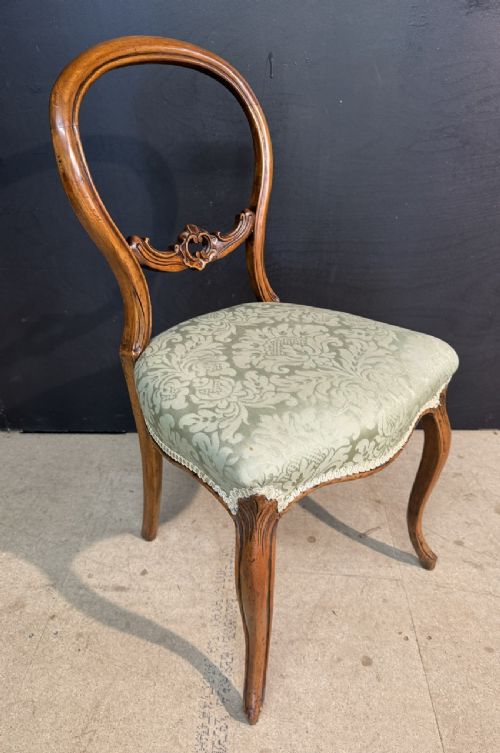
Traditional joinery techniques secure the structural framework, while hand-carving defines the cabriole legs, borders, and backrests found on associated chairs. Surface finishing relies on polishes that accentuate the natural grain patterns inherent to walnut timber.
Secret compartments occasionally hide behind miniature drawer fronts within antique kneehole desks, waiting for future letters.
Assessing quality in walnut furniture
The choice of timber grain fundamentally distinguishes individual examples, with dense burr walnut figuring commanding particular attention compared to plain stock. The depth and precision of hand-carved ornamentation further separate standard production items from masterwork creations.
Structural integrity depends on the retention of original brass fittings, intact leather inserts, and unaltered mirror assemblies where applicable. Pieces that preserve their matching stools or complete secondary components maintain a higher degree of historical coherence.
Wylie and Lochhead Glasgow
The Carved Walnut Vanity Desk Glossary
- Burr walnut
- A timber harvested from the gnarled growth knots of walnut trees, yielding complex swirling grain patterns. Cabinetmakers prize this material for decorative veneering.
- Kneehole desk
- A compact desk or dressing table featuring a central recessed space for the sitter's legs, flanked by pedestals of small drawers. This form appeared frequently during the eighteenth and nineteenth centuries.
- Lowboy
- A small low dressing table or side table equipped with one or more tiers of drawers, typically raised on tall cabriole legs. These pieces date predominantly from the eighteenth century and later revival periods.
- Cabriole leg
- A furniture leg that curves outward in a convex arc before tapering inward in a concave sweep, often ending in a pad or claw foot. This design feature echoes classical Chinese forms adopted during the seventeenth and eighteenth centuries.
- Duchess dressing table
- A large Victorian dressing table incorporating an attached swing mirror supported by small drawers or trinket boxes above a main writing surface. These elaborate pieces formed part of matching bedroom suites.
Carved Walnut Vanity Desk: Frequently Asked Questions
What is the difference between a vanity desk and a lowboy?
A vanity desk typically includes integrated mirrors, compartments, or writing surfaces tailored for grooming and correspondence. A lowboy functions as a compact side table with drawers, predating dedicated dressing table designs.
While both share similar proportions and kneehole arrangements, the lowboy leans toward general storage, whereas vanity pieces adapt directly to personal dressing routines.
How do I identify a Queen Anne style walnut desk?
Queen Anne style walnut desks feature characteristic cabriole legs, pad feet, and smooth curved outlines without heavy Victorian ornamentation. Drawer fronts often display book-matched burr walnut veneers framed by simple banding.
Original examples from the period contrast with twentieth century revival pieces, though both share a light, graceful silhouette centred around functional kneehole configurations.
Where should I place a vanity desk in a modern room?
A vanity desk suits bedrooms, dressing rooms, or quiet corners of a living space where natural light illuminates the writing surface. Placing the piece against a feature wall allows the burr walnut grain to serve as a focal point.
Pairing the desk with a matching side chair or upholstered stool ensures correct seating height while maintaining the historical aesthetic of the furniture.
Are these desks suitable for daily writing work?
These desks accommodate everyday writing and laptop use, provided the interior kneehole clearance matches your seating requirements. Many variants include fitted leather or fabric inserts designed specifically for writing tasks.
Careful consideration of drawer depths and surface dimensions helps determine whether a particular lowboy or kneehole desk meets modern workspace needs.