

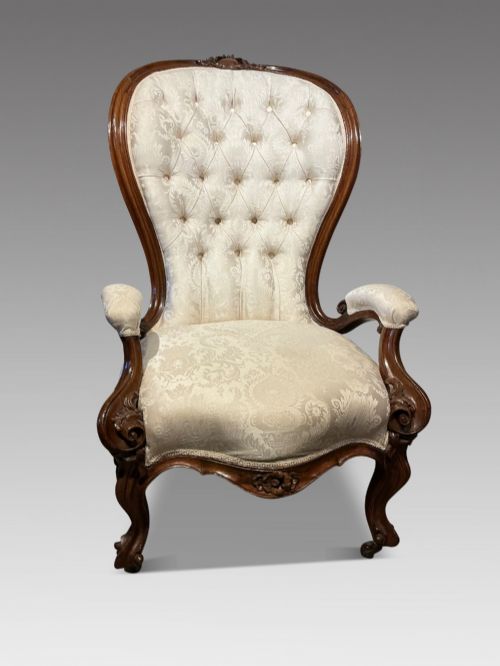


Carved Walnut Spoon Back Chair
A carved walnut spoon back chair offers deep comfort and flowing Victorian curves that anchor a traditional room with character.
Carved Walnut Spoon Back Chair
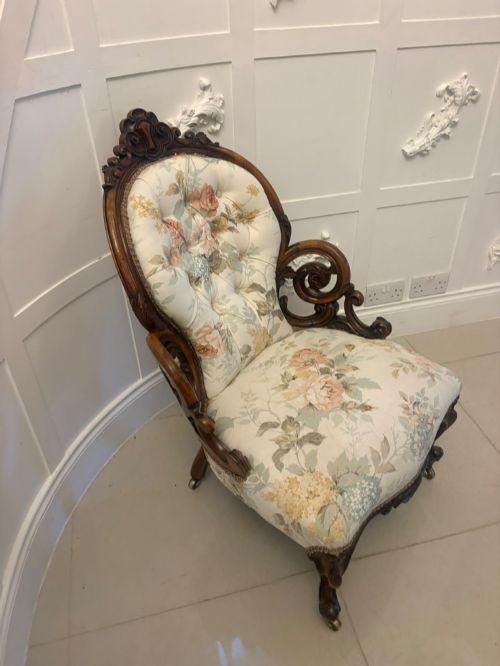
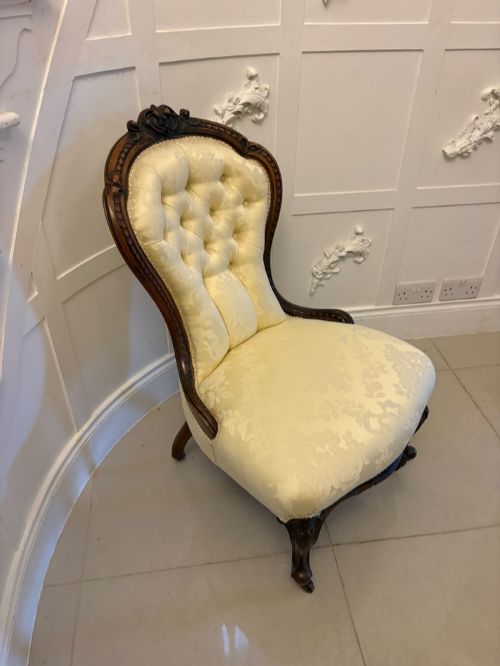
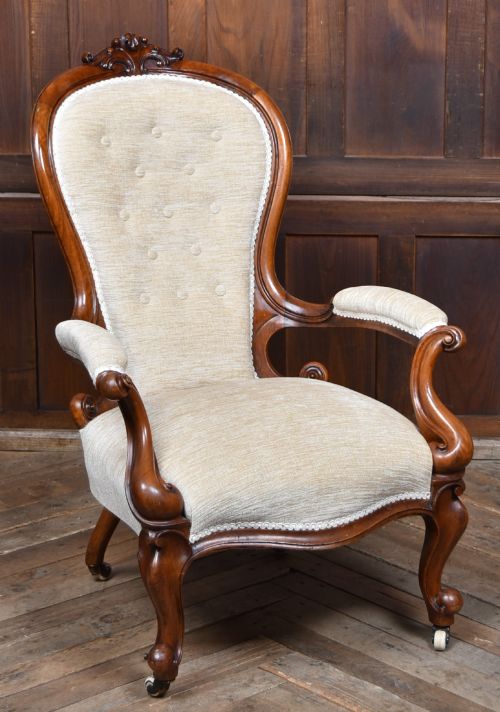
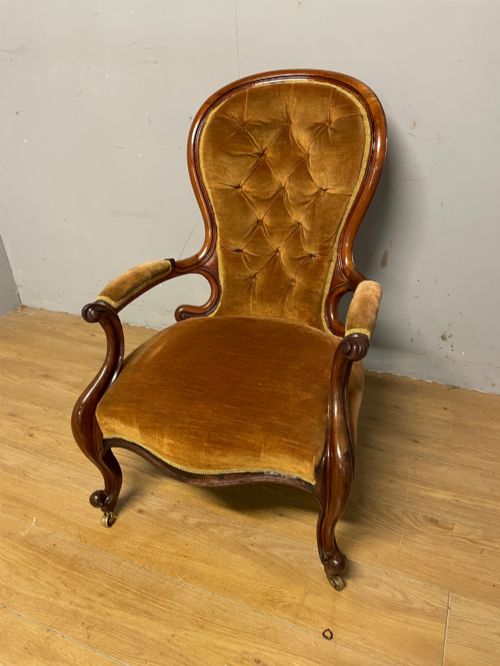
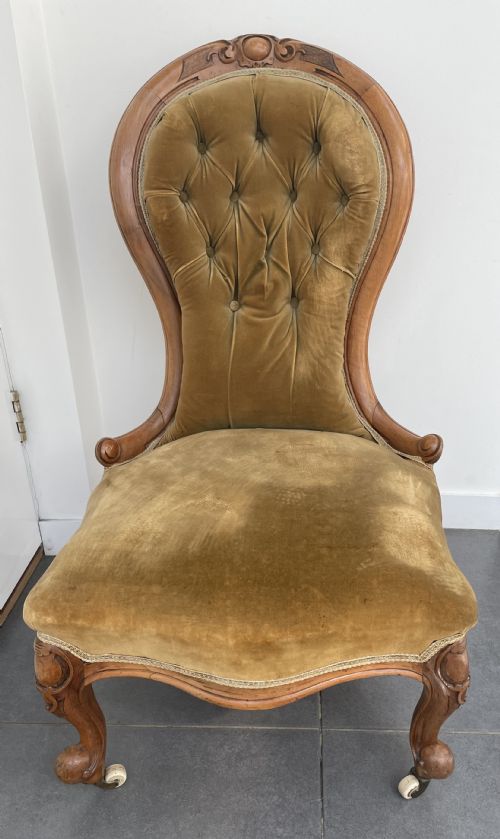
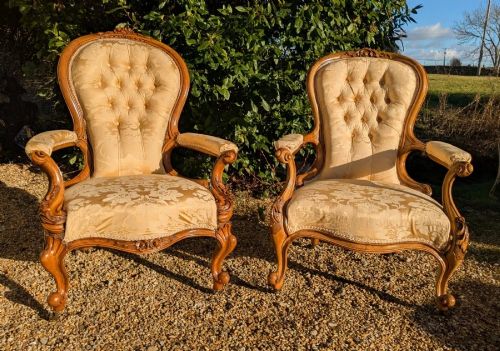
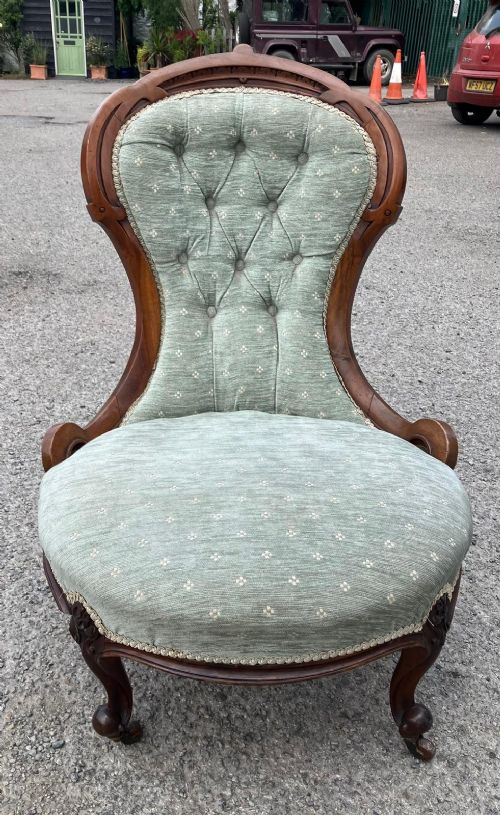
A carved walnut spoon back chair represents a defining seating form of the Victorian era, prized for its ergonomic, concave timber crest that mirrors the bowl of a spoon. These pieces emerge predominantly from the mid to late nineteenth century, spanning various formats from low-slung nursing chairs to open armchairs and formal salon seats.
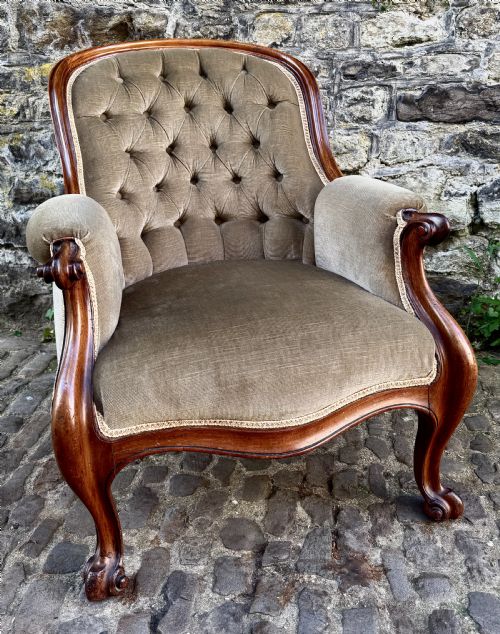
The specimens encountered here display distinct show wood frames carved from walnut, often paired with upholstered padded backs and seats. Buyers will find frequent examples of ladies chairs, fireside chairs, and occasional chairs reflecting revivalist aesthetics and Victorian Rococo tastes.
How they were made
Cabinet makers constructed the curved framework using solid walnut, bending and carving the timber to create the characteristic recessed backrest. Show wood frames expose this rich grain around the perimeter while supporting internal padding secured with traditional textiles.
Upholstery techniques involve durable fillings covered in materials such as velvet, damask, fabric, leather, or rexine. Brass tacks and ceramic castors occasionally complete the assembly, depending on the specific armchair or nursing chair design.
Carved Walnut Spoon Back Chair Retail Price Guide 2026
Typical asking prices for carved walnut spoon back chair among the pieces listed under this phrase on Sellingantiques today, from the lower quarter to the upper quarter. They describe what is for sale here now, not the wider market.
Listings feature walnut frames paired with diverse upholstery options, including velvet, damask, leather, and rexine.
What varies in quality
The standard of carving distinguishes superior examples, where floral motifs and scrollwork exhibit crisp depth and hand-finished precision rather than flat mechanical replication. The choice of walnut timber also plays a role, with richly figured grain patterns elevating the presence of the show wood frame.
Proportion and structural integrity define the remaining differences across these nineteenth-century seats. Refined cabriole legs, balanced open arms, and sturdy joinery separate standard domestic seating from exhibition-grade salon and parlor pieces.
The Carved Walnut Spoon Back Chair Glossary
- Spoon back
- A padded chair back shaped with a concave oval recess resembling the bowl of a spoon. This profile provides ergonomic support to the spine.
- Show wood
- Exposed timber framing left visible around the upholstered portions of a chair. It highlights the grain and carved ornamentation of the walnut structure.
- Nursing chair
- A low-seated Victorian chair originally designed for women to sit comfortably while tending to infants. They frequently feature buttoned upholstery and compact proportions.
- Cabriole leg
- A furniture leg that curves outward in a convex arc before tapering inward to a foot. This style draws inspiration from animal limbs and typifies Victorian revival designs.
- Rexine
- A leathercloth material utilised as an artificial upholstery covering. It mimics the texture of animal hide while offering a durable wipe-clean surface.
Carved Walnut Spoon Back Chair: Frequently Asked Questions
What is a spoon back chair?
A spoon back chair is a Victorian seating form defined by a concave, oval wooden frame that curves inward to support the back. The wooden border is typically carved from walnut and left exposed around the upholstered panel.
These chairs appeared in various domestic rooms during the nineteenth century, functioning as nursing seats, salon armchairs, and fireside chairs. Their distinctive profile remains easily recognisable among antique seating.
How do I identify a Victorian walnut chair?
Identification relies on observing the dark, rich grain of the walnut timber combined with mid-nineteenth-century revival styles. Look for characteristic show wood frames, serpentine seat rails, and curved cabriole legs.
Many pieces also feature button-tufted upholstery and hand-carved floral motifs along the crest rail. The construction methods and materials align directly with workshop practices of the eighteen-fifties and sixties.
Where were these chairs used originally?
These seats served multiple domestic functions across Victorian households, from formal drawing rooms to private bedrooms and parlours. Ladies chairs and nursing chairs offered low seating for personal dressing or infant care.
Larger open armchairs and salon chairs provided comfortable parlor seating for social gatherings and reading. Their decorative carved frames allowed them to sit visibly against drawing room walls when not in use.
How do I care for antique walnut wood?
Maintenance involves keeping the walnut timber away from direct heat sources and strong sunlight to prevent the grain from drying out. Periodic dusting with a soft, dry cloth preserves the polished surface of the show wood.
Avoid chemical polishes that can build up a residue over the antique finish. Conditioning the wood occasionally with appropriate natural wax helps maintain its moisture and depth of colour.