






Carved Walnut Secretary
A carved walnut secretary brings together rich timber and clever compartmentalised writing spaces, making it a handsome centrepiece for a study.
Carved Walnut Secretary
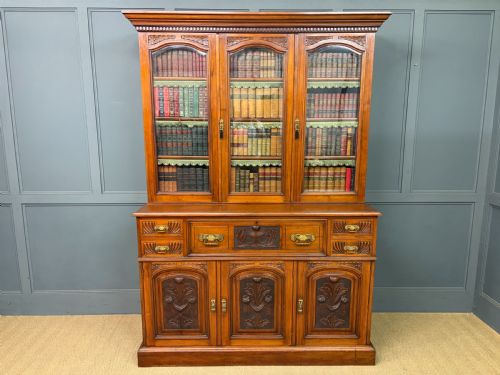
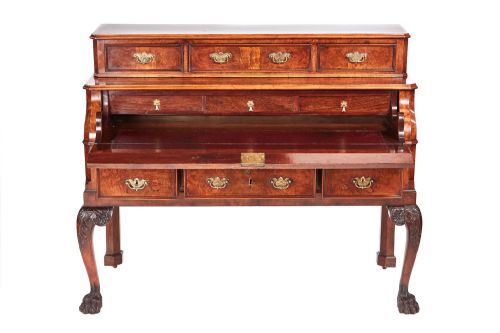
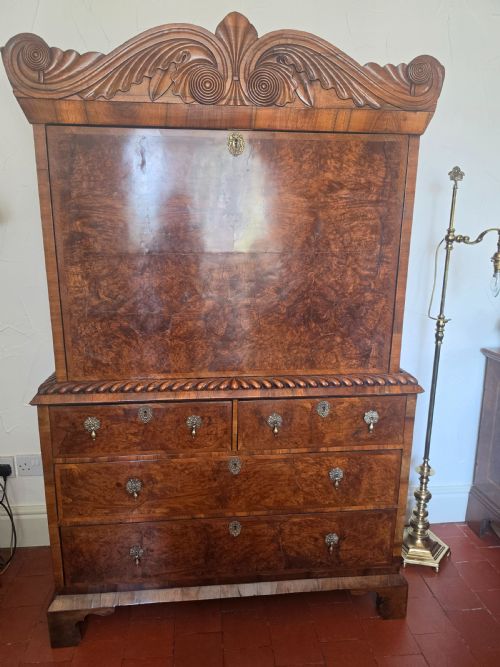
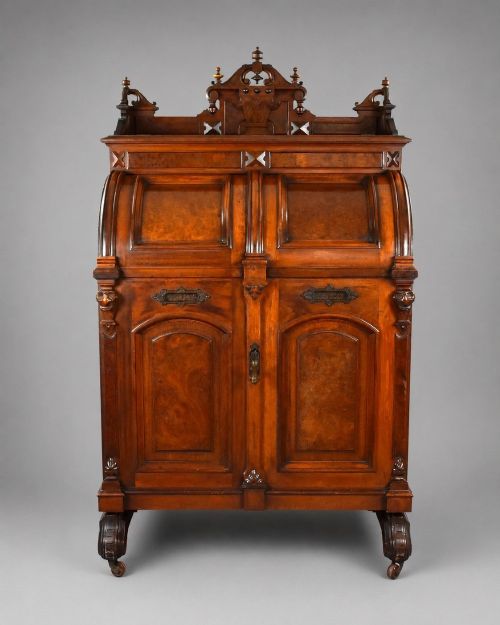
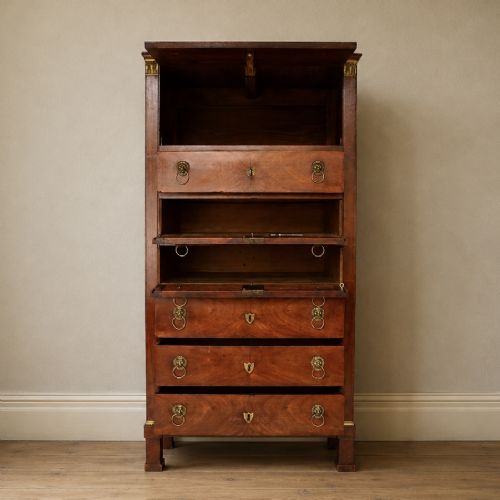
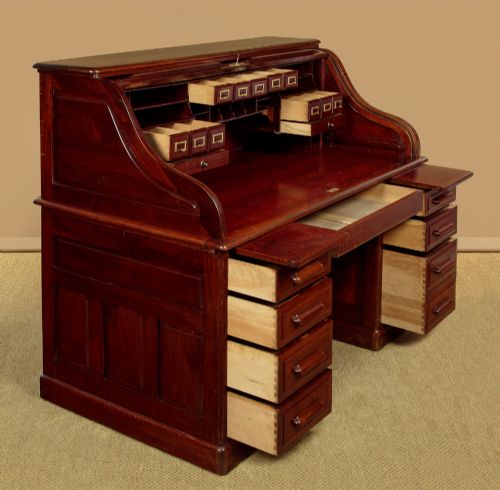
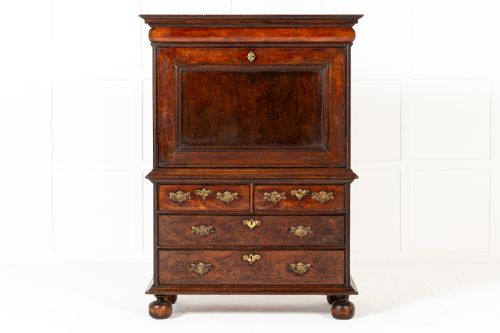
A carved walnut secretary encompasses form variations ranging from tall escritoires and bureau bookcases down to compact Davenport desks and cylinder rolls. You will most frequently encounter Victorian interpretations alongside Dutch burr walnut examples and earlier English or continental pieces.
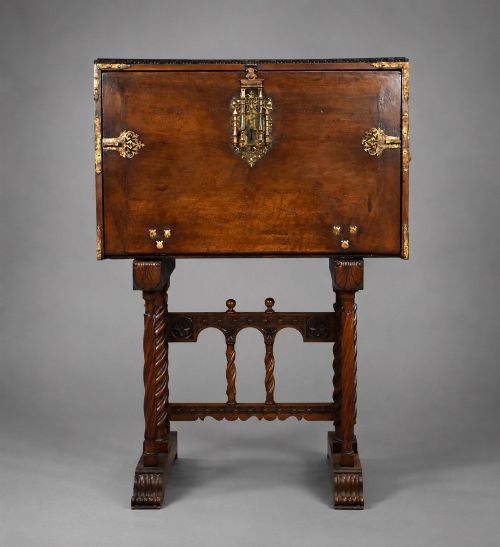
These items served primarily for correspondence and the secure storage of papers, often incorporating fitted pigeonholes, small drawers and a drop-front or slant-front writing surface. The presence of carved details, marquetry inlay or glazed upper bookcase sections distinguishes the more architectural examples from simpler writing cabinets.
Materials and construction methods
Cabinet makers relied heavily on solid walnut and burr walnut veneers, frequently matched with secondary timbers such as oak and mahogany to form the carcase and internal framing. The decorative surfaces often utilise intricate inlaid marquetry alongside deep relief carving.
Brass hardware, including drop handles, escutcheons and hinges, complements the dark timber, while glass is employed in the upper doors of bookcase variants. Structural integrity depends upon traditional joinery techniques adapted to support heavy fall-front desks and upper display cabinets.
Materials appearing across the inventory include solid walnut, burr walnut veneer, brass, oak, marquetry inlay, and glass.
Judging the quality of a secretary
The grading of a piece rests upon the figuration of the burr walnut veneer, the crispness and depth of the hand carving, and the fidelity of historical style execution. Superior examples display seamless timber matching across the fall-front or drawer fronts and retain their original brass fittings.
Internal complexity also dictates worth, where well-executed secret compartments, finely dovetailed small drawers and polished pigeonholes signal superior workshop standards. Conversely, clumsy restorations, mismatched timber replacement or dulled carving diminish the overall integrity of the furniture.
Wiggers
The Carved Walnut Secretary Glossary
- Escritoire
- A writing cabinet featuring a fall-front flap that conceals a nest of small drawers and pigeonholes. This form often includes upper shelving or a bookcase section.
- Bargueño
- A portable Spanish cabinet fitted with numerous small drawers, frequently resting on a separate stand and heavily ornamented with carving or metalwork.
- Marquetry
- The art of applying decorative veneer pieces of different woods to a structural panel to create intricate geometric or floral patterns.
- Bombe
- A swelling, convex furniture contour characteristic of Dutch and continental baroque design, particularly prominent on the lower sections of chests and bureaux.
- Davenport
- A compact pedestal desk featuring a sloping writing surface and drawers opening to the side, popular during the Victorian era.
Carved Walnut Secretary: Frequently Asked Questions
What is a secretary desk?
A secretary desk is a form of writing furniture that combines a concealed writing surface, typically behind a drop or slant front, with storage drawers or shelving above and below.
These pieces were designed to keep correspondence and writing materials neatly organised while providing a stable, dedicated writing plane.
How do I date a walnut secretary?
Dating relies on observing construction methods, timber choice, hardware styles and decorative motifs such as marquetry or carved relief work.
Comparing the stylistic cues against known periods like the Victorian era, William and Mary, or Dutch Baroque helps narrow down the decade of manufacture.
Where should I place this in my home?
A secretary functions well in a home office, study, or a quiet corner of a living room where its drop-front can be opened for occasional writing use.
Keep the piece away from direct sunlight and strong heat sources to protect the burr walnut veneer and prevent the timber from drying out.
How do I care for walnut furniture?
Maintenance involves dusting regularly with a soft, dry cloth and occasionally applying a suitable furniture wax to nourish the timber and preserve the polished finish.
Avoid using silicone-based polishes or household cleaners that can penetrate the grain and degrade the antique surface over time.