
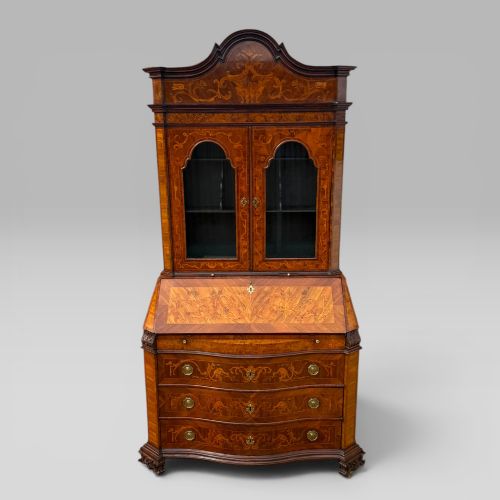


Rococo Bureau Bookcase
A rococo bureau bookcase combines a fitted writing slope and a shelved upper cabinet, bringing fluid carved lines and intricate marquetry into the room.
Rococo Bureau Bookcase
A rococo bureau bookcase brings together a lower writing section and an upper shelving cabinet, designed for both correspondence and display. These pieces range from substantial 18th-century examples to later revival interpretations.
The most common forms on this page include bureau bookcases, bureau cabinets, and secretaires featuring distinct regional characteristics from Italy, Germany, the Netherlands, and Scandinavia. They serve as commanding architectural furniture centrepieces in traditional interiors.
Makers utilised walnut, burr walnut, tulipwood, oak, and mahogany, often enhanced by elaborate marquetry inlays or painted finishes. Double dome tops and carved pediments frequently crown the upper cabinet doors.
What varies in quality
The sophistication of the marquetry and the choice of veneers distinguish finer examples, with figured burr walnut and multi-wood inlay representing higher craftsmanship. The fluidity and depth of the carved woodwork, particularly on pediments and feet, indicate the maker's skill level.
Structural integrity of the fall-front writing slope and the alignment of internal pigeon holes and small drawers demonstrate the original workshop standards. Original brass hardware and undamaged glass panes contribute significantly to the standing of the piece.
Listings span the eighteenth and nineteenth centuries alongside revival pieces from nineteen twenty, constructed in walnut, oak, mahogany, and tulipwood.
The Rococo Bureau Bookcase Glossary
- Marquetry
- Decorative veneer work where small pieces of various woods are assembled into pictorial or floral patterns. This technique requires immense precision to fit the pieces flush.
- Burr Walnut
- Wood harvested from walnut tree growths, producing swirling, highly figured grain patterns. Cabinet makers prized this material for prominent exterior drawer fronts and door panels.
- Secretaire
- A desk or cabinet featuring a pull-out or drop-down writing flap concealing small drawers and pigeon holes. It often forms the lower section of a taller bookcase combination.
- Giltwood
- Timber coated with a thin layer of gold leaf or metallic gilt paint. This finish highlights carved architectural elements and flourishes.
- Double Dome
- An upper cabinet roof line shaped into two parallel arched or rounded domes. This architectural feature elevates the height and presence of the furniture piece.
Rococo Bureau Bookcase: Frequently Asked Questions
How do I use a bureau bookcase?
The fold-down flap serves as a writing surface, hiding internal compartments for letters and inkwells while the upper shelves hold books or display items.
Lower drawers provide concealed storage for household linens or documents, making the entire piece multifunctional for daily study or reception rooms.
Where did these pieces originate?
Surviving examples originate from workshops across Europe, with distinct regional traits found in Dutch, Italian, German, and Scandinavian pieces.
Venetian and Dutch makers frequently employed floral marquetry and burr walnut, while German and Scandinavian pieces often showcased heavier carved wooden details.
How do I tell 18th century from revival pieces?
Eighteenth-century pieces display period-specific timber ageing, hand-cut dovetails, and traditional construction methods unique to early cabinet making workshops.
Revival pieces from later periods often utilise machine-sawn elements and standardised hardware while copying earlier Dutch, Venetian, or Baroque styles.
How do I care for walnut veneer?
Keep the wood away from direct sunlight and sustained heat sources to prevent the delicate burr walnut veneers from drying and cracking.
Apply a microcrystalline wax sparingly and polish gently with a soft cloth to maintain the natural lustre of the timber.