



Carved Walnut Looking Glass
A carved walnut looking glass brings rich timber grain and period presence to a wall, offering the depth only antique glass provides.
Carved Walnut Looking Glass
A carved walnut looking glass spans centuries of domestic reflection, appearing in forms from modest wall mirrors to grander cushion frames. Buyers exploring these items find pieces originating across the eighteenth, nineteenth, and early twentieth centuries, reflecting changing domestic tastes in interior decoration.
The selection here draws heavily on Georgian and early eighteenth-century precedents, alongside later revival pieces and continental examples. Wall mirrors and table mirrors dominate the current range, showing how cabinetmakers adapted timber frames for different rooms in the house.
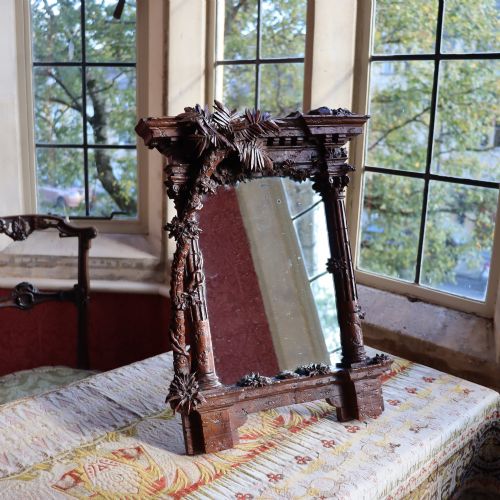
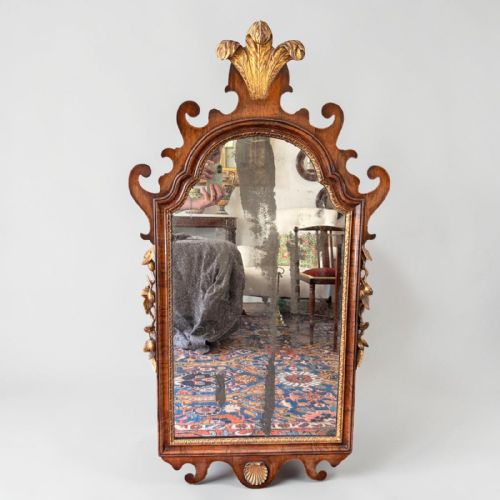
Origins stretch from English workshops to continental makers, including French Louis Philippe designs and Swiss Black Forest carving. Each period brings distinct proportions, from the cushion mouldings of the seventeen-hundreds to the parcel gilt highlights of the Georgian era.
How they were made
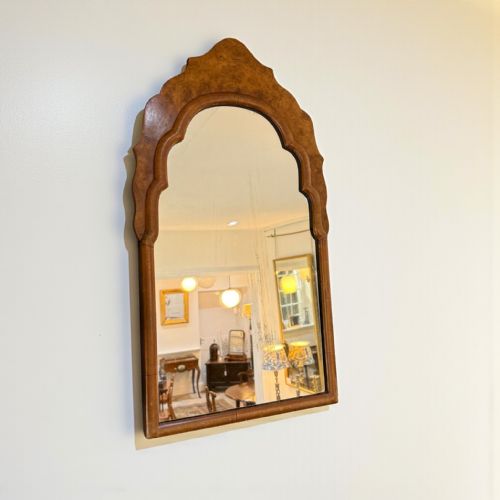
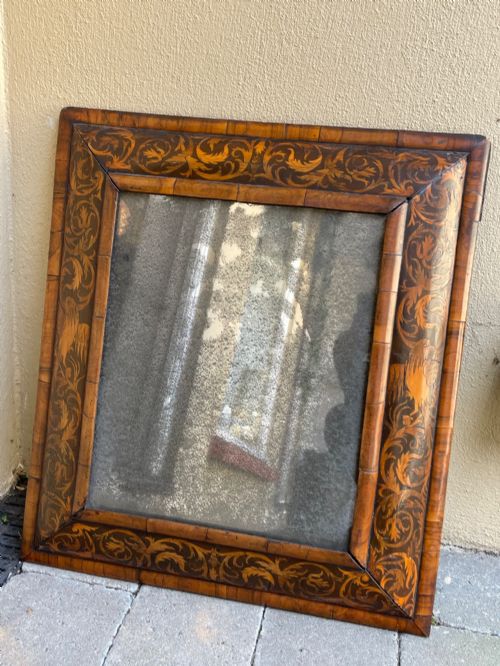
Makers utilised solid walnut and burr walnut veneer over secondary timbers, often applying boxwood stringing or marquetry inlay to enrich the flat surfaces. Giltwood and gesso accents highlight carved details, catching the light against the dark grain of the timber.
Mirror glass itself varied according to period, with Vauxhall plates and early polished mirror glass set into rebated frames. Joinery methods relied on pinned tenons and corner blocks, holding heavy wooden constructions secure over centuries.
Carved Walnut Looking Glass Retail Price Guide 2026
Typical asking prices for carved walnut looking glass among the pieces listed under this phrase on Sellingantiques today, from the lower quarter to the upper quarter. They describe what is for sale here now, not the wider market.
Listings span periods from seventeen-hundred through the Edwardian era, incorporating materials such as burr walnut veneer, giltwood, gesso, and boxwood.
What varies in quality
The refinement of the carving separates standard joinery from exceptional craftsmanship, particularly where parcel gilt mouldings meet the walnut ground. Early examples display crisp hand-chiselled details on the wooden borders, whereas later interpretations rely on softer contours.
The preservation of original mirror glass and veneer surfaces dictates the character of each piece. Surviving mercury plates with natural ageing hold greater historic integrity than modern replacements.
The Carved Walnut Looking Glass Glossary
- Cushion mirror
- A frame with a pronounced convex profile resembling a soft cushion, often decorated with marquetry or veneer. These heavy frames date predominantly to the late seventeenth and early eighteenth centuries.
- Vauxhall mirror
- A plate manufactured at the Vauxhall glasshouse in London, known for its bevelled edges and high clarity. These plates are prized indicators of early English mirror production.
- Parcel gilt
- Partial gilding applied to specific carved details of a wooden frame to contrast with the dark walnut timber. This technique was favoured during the Georgian period.
- Gesso
- A plaster-like mixture applied to timber frames as a base for gilding or painting. Skilled artisans carved fine relief work directly into this prepared surface.
- Burr walnut veneer
- Thin slices of timber cut from the knotty growths of walnut trees, displaying swirling grain patterns. Cabinetmakers laid these veneers across prominent surfaces to create decorative visual movement.
Carved Walnut Looking Glass: Frequently Asked Questions
How do I hang a heavy antique mirror?
These timber frames carry significant weight, particularly larger Georgian and nineteenth-century examples with thick wooden mouldings. Secure fixings into structural wall studs or appropriate masonry anchors ensure the mirror hangs safely.
Professional mirror hangers utilise split battens or heavy-duty D-rings screwed directly into the structural timber of the frame back. Avoid relying on old hanging wire, which degrades over decades and risks failure under tension.
Are antique mirror plates always original?
Many mirrors retain their original glass, which develops characteristic dark spots, foxing, and minor distortion over centuries. These optical imperfections confirm the age and authenticity of the piece.
Replacement glass appears in mirrors where the original plate broke or degraded beyond reflection. While clear modern glass offers sharper reflection, period glass preserves the historic character intended by the maker.
How do I clean a walnut frame?
Dusting with a dry, soft cloth prevents the accumulation of grime in carved recesses and delicate gilt details. Moisture damages fragile gesso and dry old timber.
Occasional application of microcrystalline wax feeds the walnut veneer without building up a sticky residue. Avoid modern spray polishes containing silicone, which penetrate timber pores and ruin antique finishes.
How do I tell an 18th-century frame from a later copy?
Eighteenth-century frames show hand-cut joinery, pegged corners, and timber shrinkage appropriate to age. Secondary woods behind the frame match the expected species for the period.
Revival pieces from the nineteenth and twentieth centuries often employ machine-cut elements or modern fixings. Comparing the construction methods to known period examples reveals the true age of the object.