

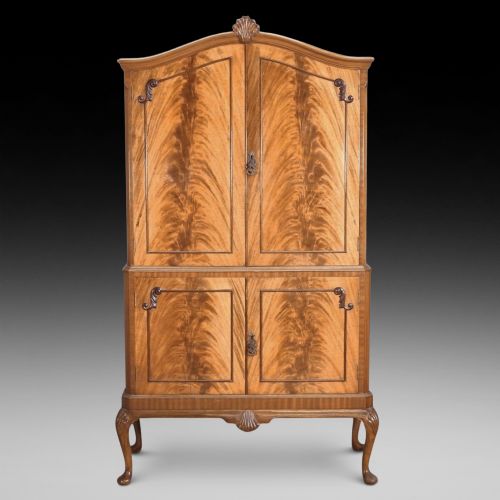
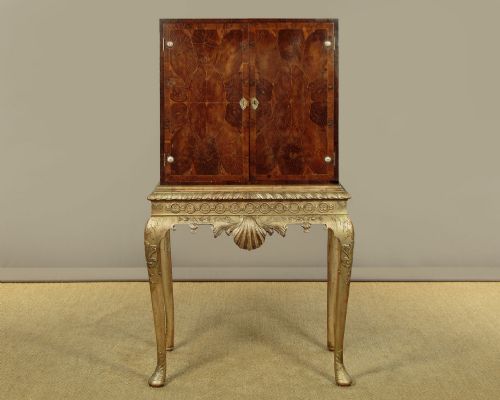
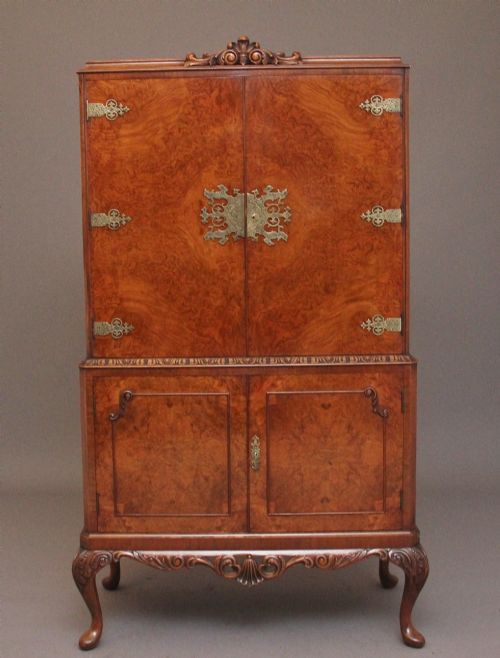
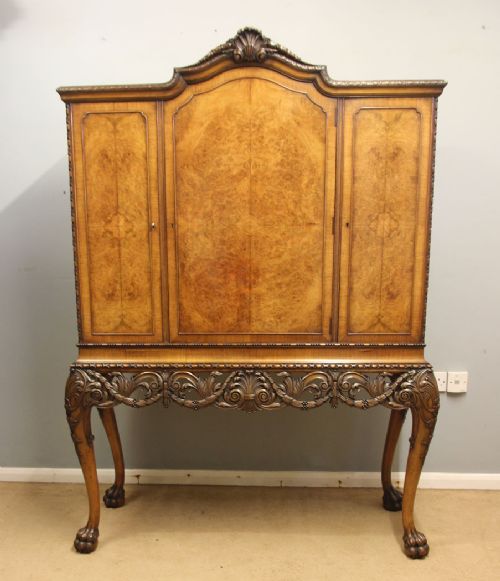
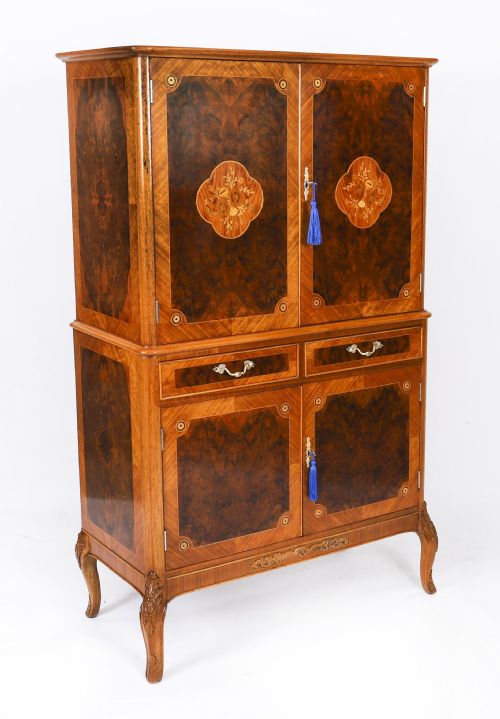


Carved Walnut Drinks Cabinet
A carved walnut drinks cabinet brings rich figure and period presence to a room, offering a dedicated home for glassware and bottles.
Carved Walnut Drinks Cabinet
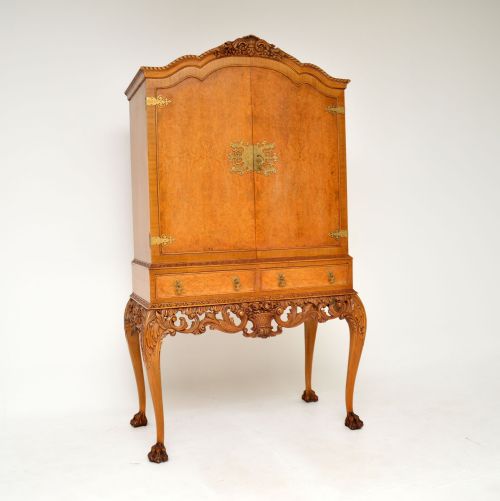
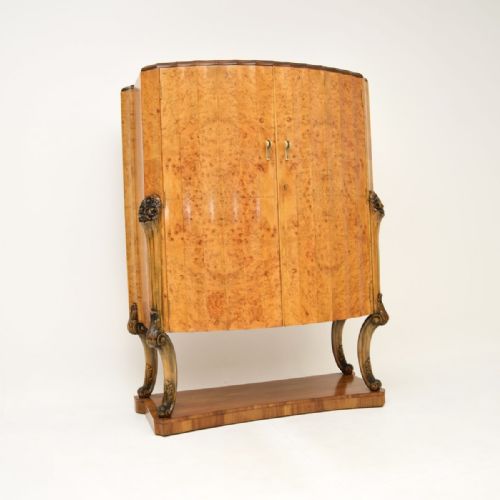
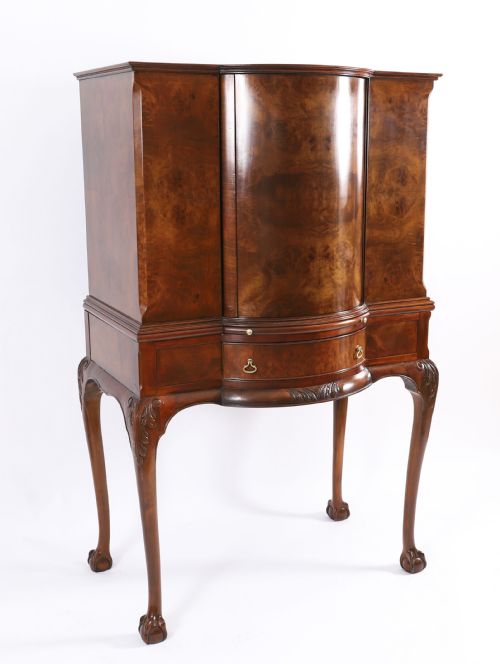
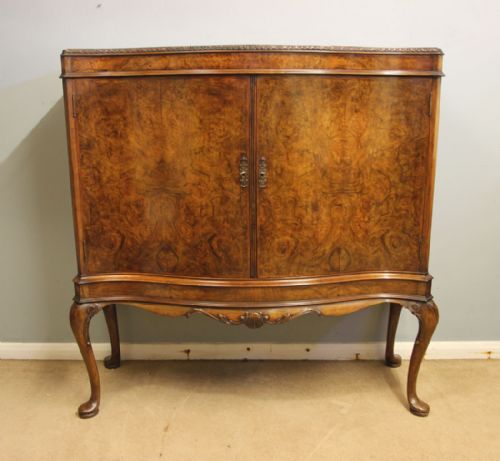
A carved walnut drinks cabinet is a specialised storage piece designed for entertaining, featuring internal fittings for bottles and glasses. When exploring this selection, a buyer encounters forms spanning the Victorian era, the Edwardian period, and the 1920s and 1930s. The most common examples adopt the Queen Anne Revival or Art Deco styles, often taking the form of dedicated cocktail chests or cabinets on stands.
The construction of these pieces often incorporates substantial side cabinets, double bow fronts, or serpentine shapes. Many variations include drop-down flaps that serve as mixing surfaces alongside specialised internal compartments. Walnut predominates as the primary timber, frequently enhanced by contrasting oak linings and brass hardware.
How they were made
Cabinet makers utilised solid walnut and figured veneers laid over secondary timbers such as oak. Burr walnut and flame walnut veneers were sliced to create symmetrical patterns across doors and drop fronts, highlighting the natural grain of the wood. Marquetry inlay added decorative surface detail to select panels during the interwar decades.
Internal spaces were fitted with mirrored backs, glass shelves, and pull-out sliding trays to hold barware securely. Brass hinges, locks, and handles provided durable functional accents, while carved details defined the stands, cornices, and base mouldings of Queen Anne style and revival pieces.
Some revolving drinks cabinets let you spin your entire collection of spirits until the gin faces front.
What varies in quality
The grade of timber selection largely dictates the visual impact of each piece, with dense burr and flame veneer figuring commanding attention over plain walnut boards. Marquetry precision and the crispness of carved wooden details further separate standard production from exhibition or workshop pieces.
Internal execution matters significantly in these entertaining pieces. Superior examples integrate mirrored interiors, robust sliding shelves, and specialised bottle racks that operate smoothly within the fitted compartments.
Epstein·Liberty's of London
The Carved Walnut Drinks Cabinet Glossary
- Burr walnut
- A wood veneer taken from the knotted growth of a walnut tree, producing highly figured, swirling patterns. This timber slice is prized for decorative cabinet doors.
- Marquetry
- The art of applying small pieces of veneer to a structure to form decorative patterns or pictures. Craftsmen assemble contrasting woods to adorn cabinet facades.
- Demi-lune
- A half-moon shape used for the footprint of specific side and drinks cabinets. This curved profile allows the furniture to sit compactly against a wall.
- Cocktail cabinet
- A specialised storage unit designed specifically for the preparation and serving of drinks. These pieces typically include internal glass shelving and mirrored serving surfaces.
Carved Walnut Drinks Cabinet: Frequently Asked Questions
How do I identify a 1920s drinks cabinet?
Look for characteristic geometric or revival styles, particularly Art Deco influences and Queen Anne Revival motifs. The use of burr walnut veneer combined with brass hardware typically points to this interwar period.
Check internal fittings such as mirrored backs and glass shelves, which became standard in cocktail furniture of this era.
What is the difference between a side cabinet and a cocktail cabinet?
A standard side cabinet offers general enclosed shelving for dining or living room storage. A cocktail cabinet is specifically arranged for entertaining with drop-front mixing trays and bottle storage.
Many examples in walnut blur these lines by incorporating specialised bar fittings behind traditional doors.
Where were these cabinets placed in a period home?
These pieces usually stood in reception rooms, dining rooms, or dedicated home bars to facilitate entertaining guests. Their decorative burr walnut facades allowed them to function as statement furniture.
Cabinets on stands were often positioned in corners or against prominent walls to display glassware.
How should I care for walnut veneer surfaces?
Keep walnut furniture away from direct sunlight and heat sources to prevent the underlying veneers from drying and lifting. Regular dusting with a soft, dry cloth preserves the polished finish.
Avoid excessive moisture on the wood and apply specialist wax sparingly when the surface loses its lustre.