

Carved Walnut Cabriole Stool
These carved walnut cabriole stools combine solid timber frames with upholstered seats, offering decorative appeal and practical seating across period interiors.
Carved Walnut Cabriole Stool
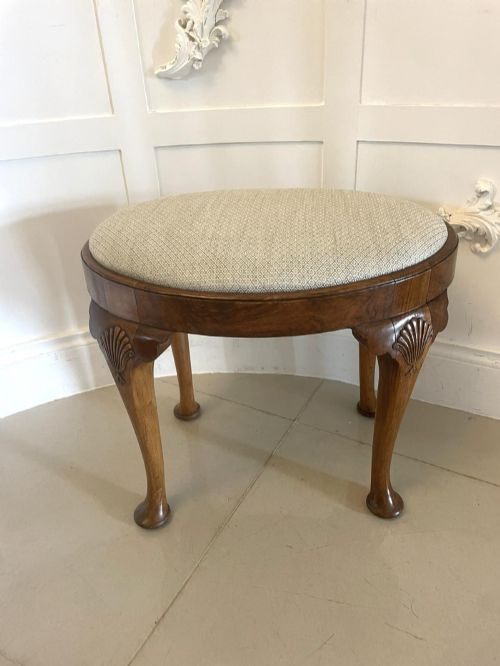
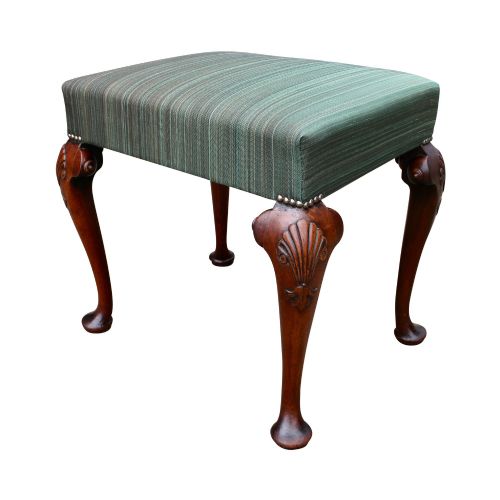
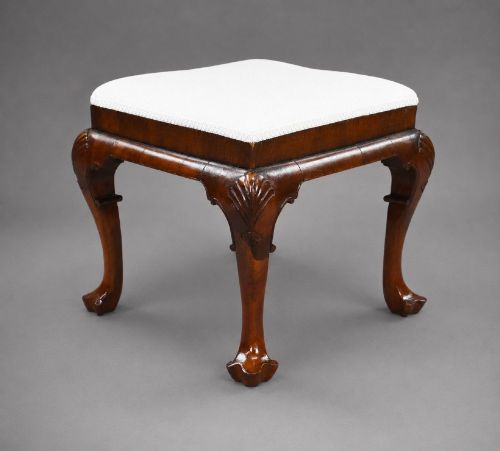
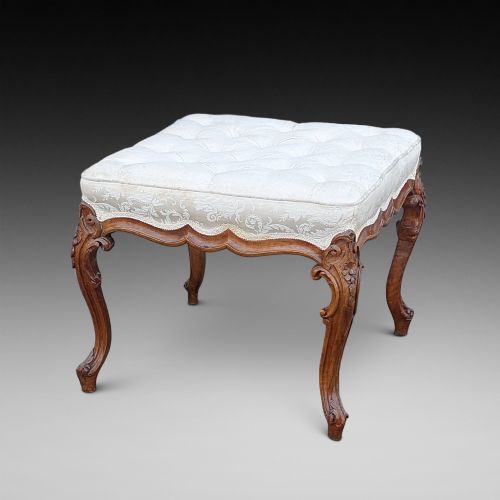
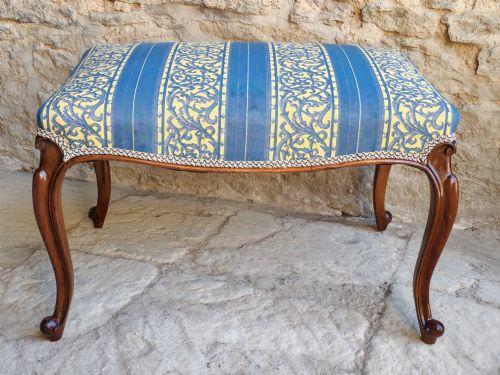
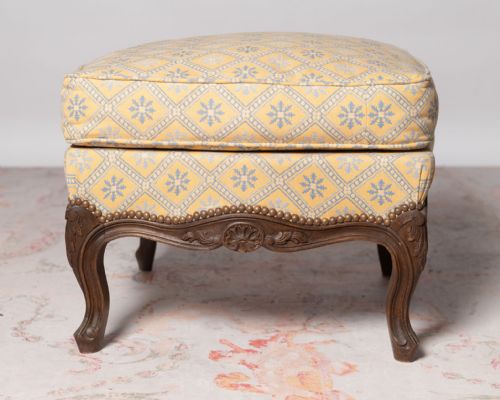
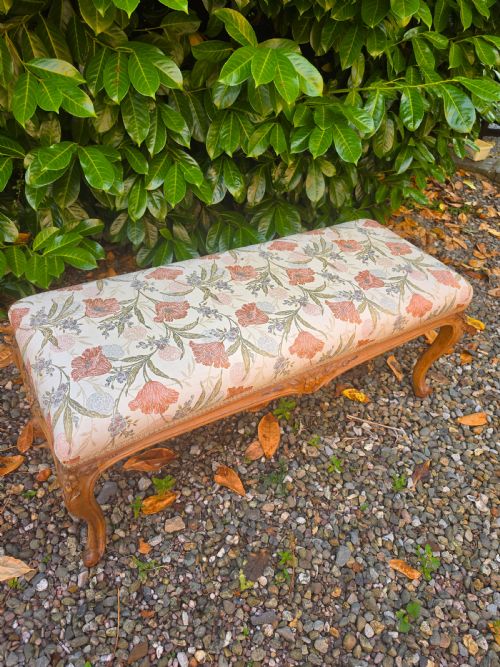
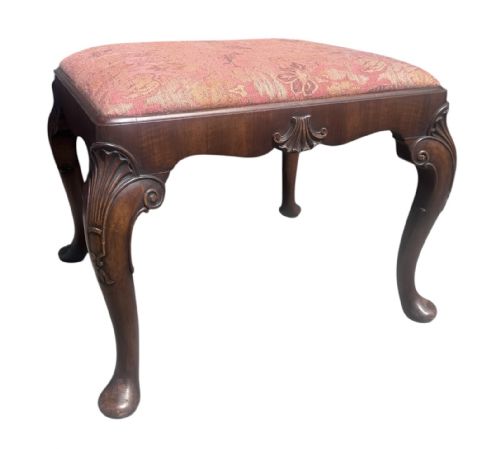
When you search for a carved walnut cabriole stool, you are looking at low seating forms designed for the fireside, dressing table, or salon. These pieces span the nineteenth century and the early twentieth century, showing revival styles such as Queen Anne and Louis XV.
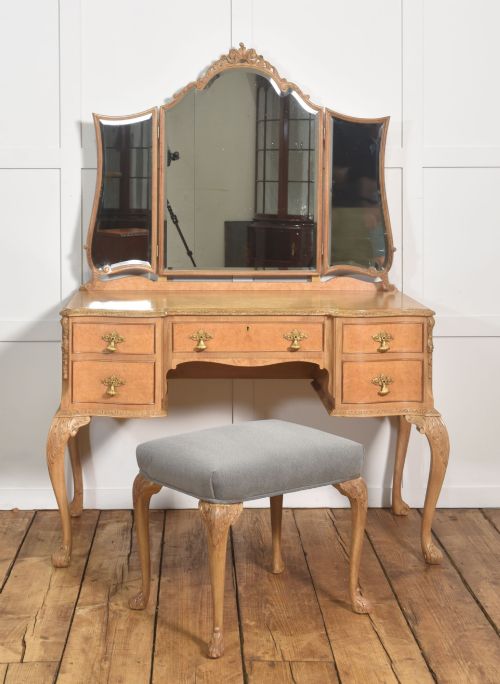
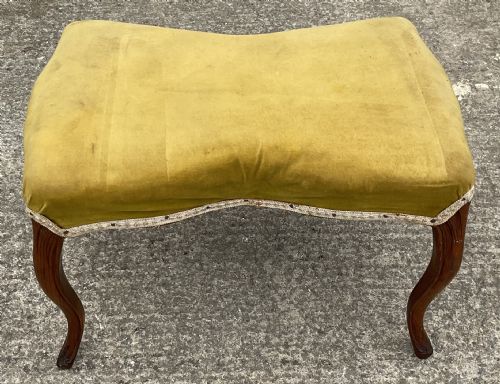
The most common examples on this page are Victorian and early twentieth-century creations featuring shaped wooden legs and upholstered tops. They range from small single footstools to larger centre stools and matching dressing table seats.
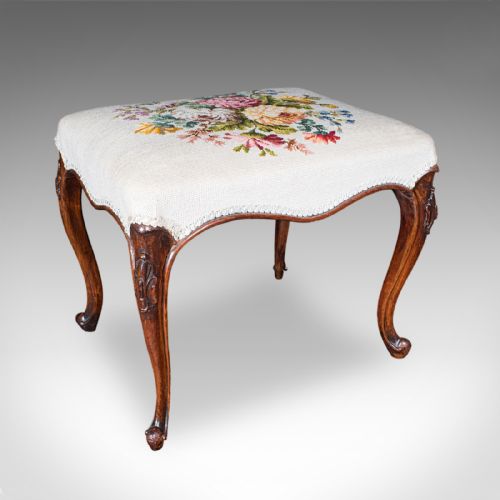
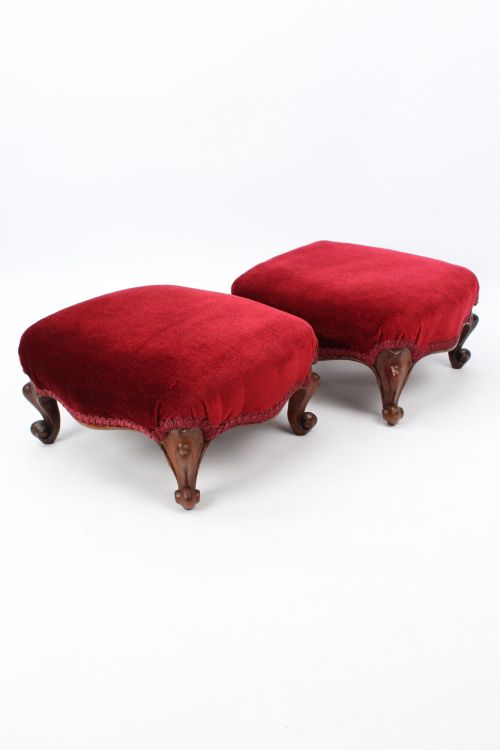
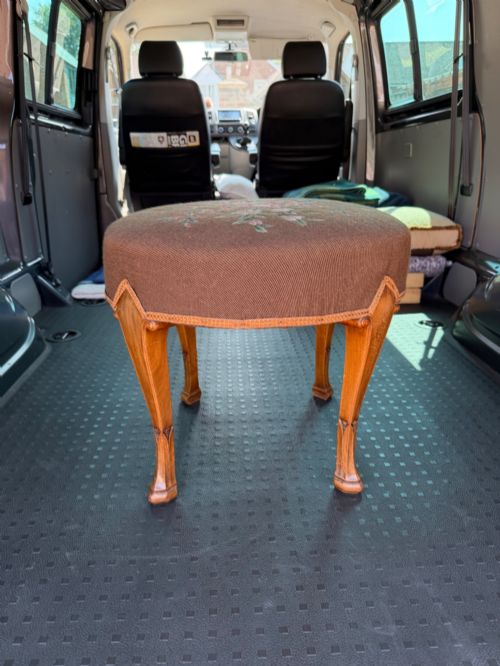
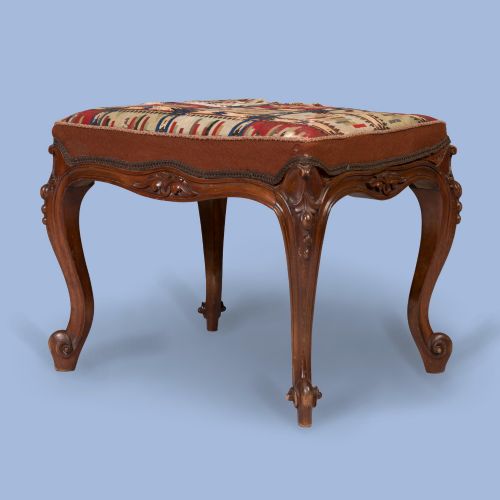
Makers and manufacturers produced these items in various proportions, frequently pairing dark timber frames with traditional textile coverings like needlepoint, tapestry, or velvet.
How they were made
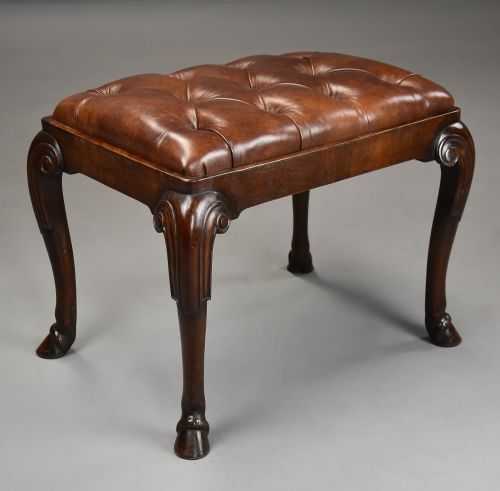
Makers constructed the structural frames using solid walnut, selected for its grain and strength when shaped into curved profiles. Craftsmen carved ornamentation directly into the timber, particularly around the knees and shoulders of the cabriole legs.
Upholstery techniques involved webbing, stuffing, and securing fabric over the top frame, often utilising brass tacks or piping for the finished edge. Many pieces received textile coverings such as wool needlepoint, tapestry, or patterned fabric during their initial production.
Listings feature walnut frames paired with diverse textiles including wool, velvet, tapestry, and leather.
What varies in quality
The standard of carving on the wooden frame determines much of the distinction between ordinary and superior pieces. Crisp, deep relief work on the knees and feet shows greater skill than soft or shallow shaping.
Subtleties in the timber selection and the weight of the walnut frame also separate standard items from finer examples. Robust construction and balanced proportions indicate thoughtful workshop execution.
The Carved Walnut Cabriole Stool Glossary
- Cabriole leg
- A furniture leg that curves outward at the knee and tapers inward toward the foot, mimicking animal limbs. This form appeared frequently on eighteenth-century furniture and later revival pieces.
- Needlepoint
- A type of counted thread embroidery stitched onto canvas, commonly used for historical seat covers. It provides a textured, durable surface with traditional patterns.
- Serpentine form
- A curved outline featuring a convex centre flanked by concave curves. This shape is often found on the upholstered tops or wooden rails of salon stools.
- Rise and fall
- A mechanical adjustment system that allows the seat height to change. This mechanism appears on piano and dressing table stools from the nineteenth century.
Carved Walnut Cabriole Stool: Frequently Asked Questions
What rooms suit a cabriole stool?
These stools fit well beside fireplaces, dressing tables, or as standalone pieces in a living room. Their compact size allows them to sit comfortably beneath tables or near seating groups.
They offer flexible seating that moves easily between rooms when extra guests arrive.
How do I identify the period?
Period identification relies on examining the timber colour, the style of the carving, and the upholstery methods. Victorian examples often display heavier frames and dark finishes compared to later revivals.
Construction marks and assembly techniques underneath the frame also help date the piece accurately.
Are the fabrics original?
Some pieces retain early needlework or tapestry covers, while others have been reupholstered to suit modern interiors. Fabric condition varies considerably across surviving examples.
Original textiles show wear consistent with age, whereas newer upholstery offers a clean surface ready for daily use.
How do I care for walnut wood?
Maintain walnut frames by keeping them away from direct heat sources and strong sunlight that can dry the timber. Dusting with a dry cloth prevents dirt build-up on the carved surfaces.
Occasional light polishing helps preserve the natural sheen of the wood without leaving heavy residue.