


Carved Walnut Bedside Cupboards
These carved walnut bedside cupboards bring timber warmth and enclosed storage to the bedroom, selected for daily bedside use.
Carved Walnut Bedside Cupboards
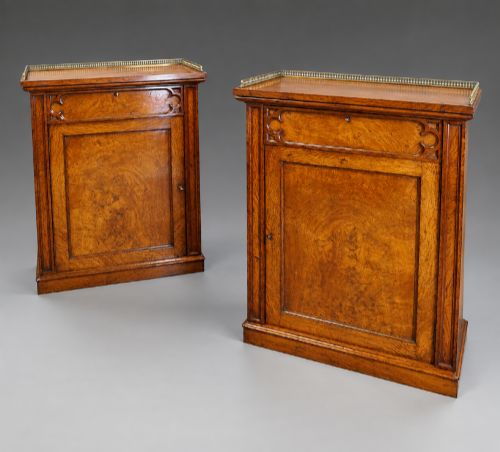
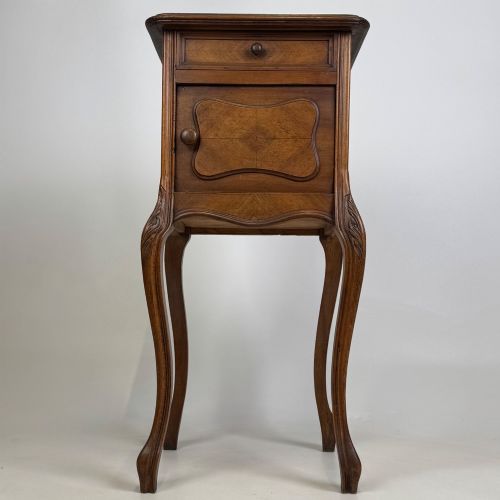
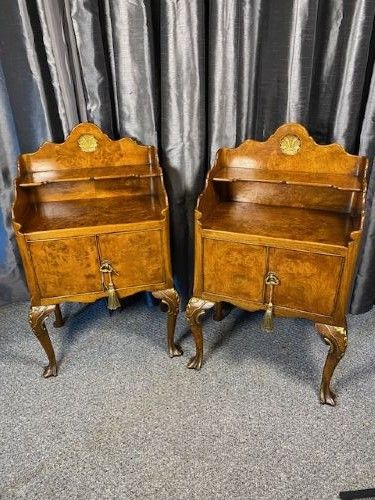
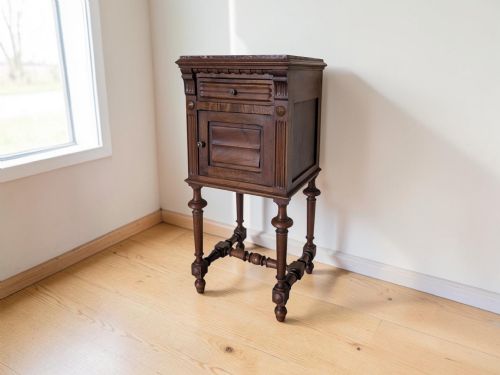
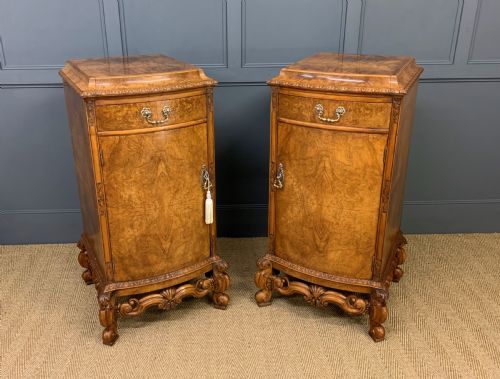
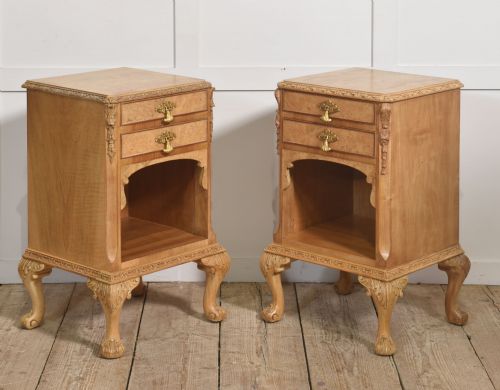
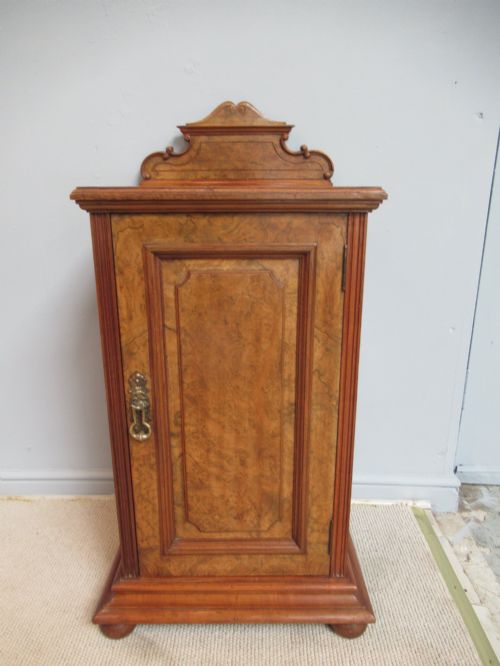
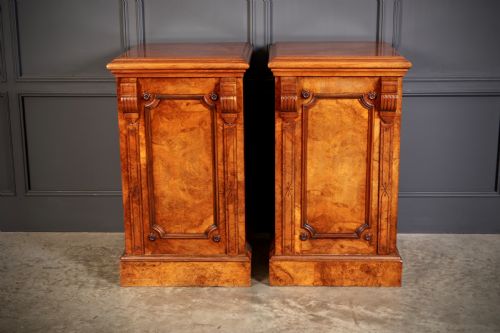
Carved walnut bedside cupboards appear primarily as single cabinets or matched pairs designed to sit beside a bed. The selection includes pedestal cupboards, bedside tables, and nightstands spanning the Victorian and Edwardian eras into the early twentieth century.
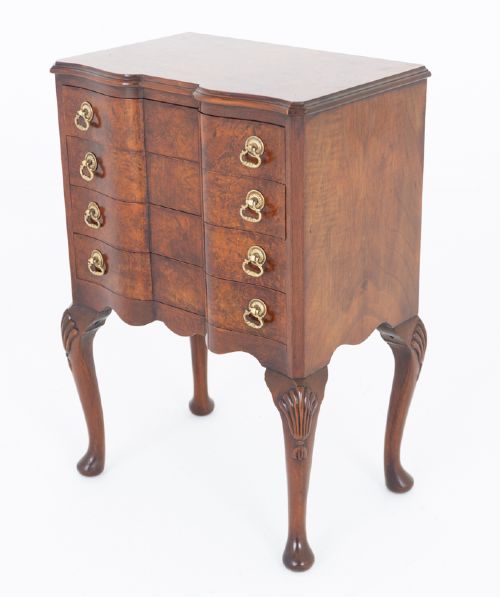
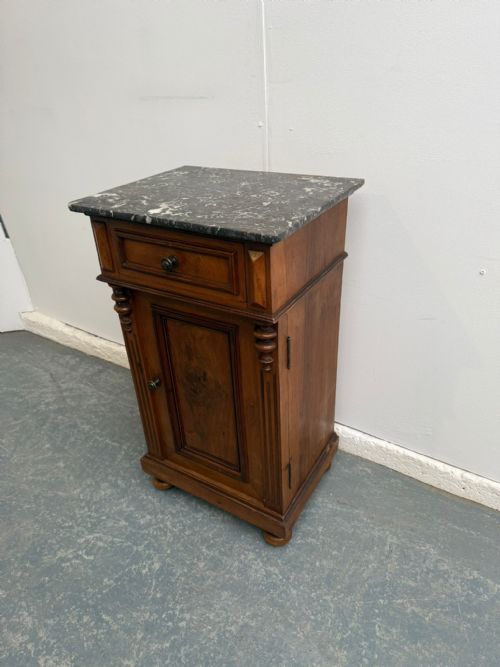
French Provincial, Queen Anne Revival, and Louis XV styles dominate the designs, alongside English and Italian variants. Buyers frequently encounter pieces featuring a single door above or below a small drawer, often paired with a marble top.
How they were made
Cabinet makers utilised solid walnut, burr walnut, and figured walnut veneers over secondary timbers, shaping the grain to create decorative surfaces on doors and drawer fronts. Fruitwood and satin walnut also appear in specific regional examples.
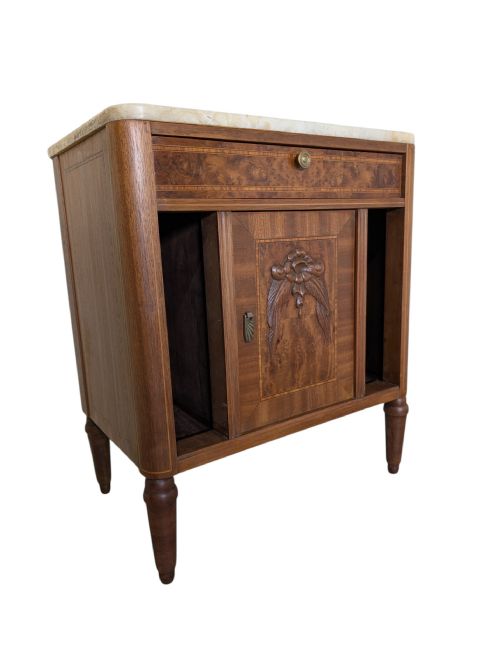
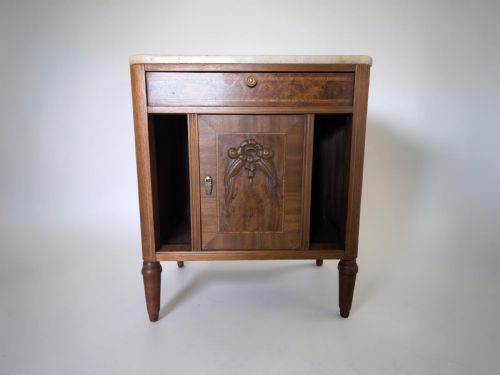
Selected pieces incorporate inset marble tops in white or Belgian Sainte-Anne varieties, mounted above carved wooden carcasses fitted with brass handles and metal hardware.
Several examples double as music cabinets, proving that nineteenth-century bedtime habits involved considerably more sheet music than a smartphone.
What varies in quality
Quality rests in the selection of the timber grain, where highly figured burr walnut or book-matched veneers command greater visual presence than plain walnut. Crispness in hand-carved ornamentation and the integration of fitted marble slabs further distinguish standard workshop output from finer productions.
Structural integrity depends on the precision of the joinery in the door frames and drawer linings, along with the retention of original brass fittings and hardware rather than later replacements.
Alfred Cox
The Carved Walnut Bedside Cupboards Glossary
- Burr walnut
- A veneer taken from the growth wart of a walnut tree, producing swirling patterns of grain highly prized by cabinet makers.
- Pedestal cupboard
- A tall, narrow freestanding cabinet enclosing a single storage compartment, commonly used beside a bed.
- Sainte-Anne marble
- A dark grey or mottled Belgian limestone frequently utilised as a durable, decorative top surface on French cabinets.
- Demi-lune
- A half-moon shape applied to the top surface and footprint of small tables and bedside chests.
- Queen Anne style
- A design movement characterised by cabriole legs, pad feet, and restrained walnut veneers drawing on early eighteenth-century forms.
Carved Walnut Bedside Cupboards: Frequently Asked Questions
What is the typical size of a bedside cupboard?
These cabinets are built to sit adjacent to standard mattress heights, providing a compact surface for a lamp alongside a small enclosed cupboard or drawer for personal items.
Dimensions vary according to the period and regional style, with French pedestal versions generally standing taller and narrower than English variations.
Why do some cabinets have marble tops?
Marble surfaces were added to French and continental bedside cupboards to provide a durable, water-resistant top that could easily handle jugs, glasses, or wash-basin accessories.
Sainte-Anne and white marble slabs were heavily utilised in nineteenth-century workshops for this practical purpose.
Are pairs common for these bedside cabinets?
Matched pairs appear frequently across the Victorian and Edwardian periods, constructed to flank a double bed symmetrically.
Single cabinets also occur, often originating as standalone nightstands or modular pieces from larger bedroom suites.
How do I identify a Queen Anne style cupboard?
Queen Anne style walnut bedside cupboards display characteristic smooth curves, subtle veneer figuring, and shaped aprons rather than heavy carved ornamentation.
They reflect an early eighteenth-century aesthetic that experienced strong revivals during the late Victorian and Edwardian eras.