




Carved Tripod Tiered Table
These carved tripod tiered table pieces bring multi-tiered display and dining utility to a room through distinctive pillar and leg construction.
Carved Tripod Tiered Table
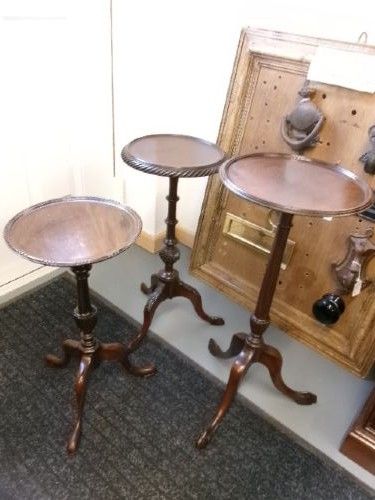
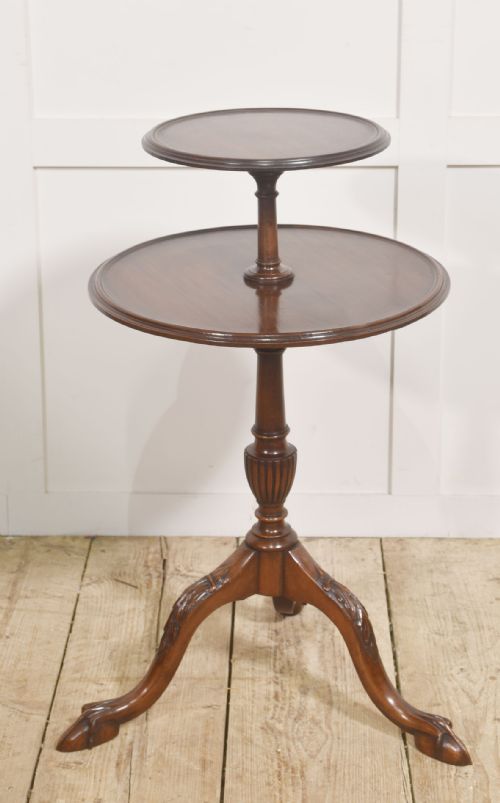
A carved tripod tiered table offers stacked surfaces supported by a central column and three branching feet. The selections on this page span forms such as wine tables, lamp tables, plant stands, occasional side tables, and revolving or stationary dumbwaiters.
Most examples date across the Georgian, Regency, Victorian, and Edwardian periods, with mahogany serving as the dominant timber. Buyers encounter varied formats ranging from compact two-tier wine tables to taller three-tier dumbwaiters designed for serving or display.
How they were made
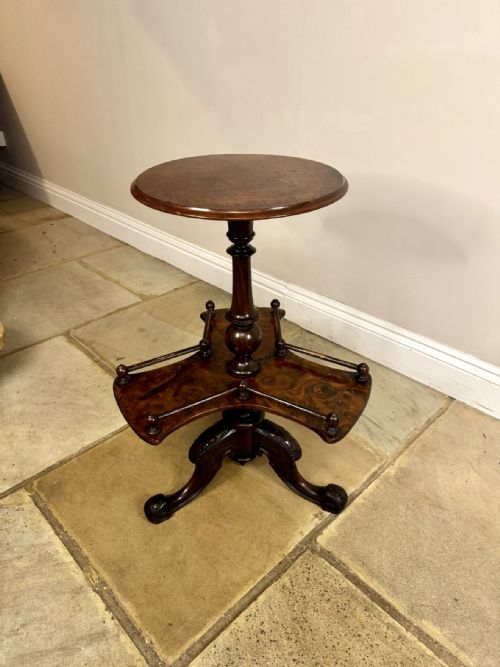
Construction relies heavily on solid mahogany and occasional accented timbers like burr walnut, yew wood, burr yew veneer, and rosewood. Turning forms the central columns, while tripod legs are shaped and fitted to support the stacked platforms securely.
Revolving mechanisms appear on specific dumbwaiter tiers, allowing sections to turn around the central shaft. Surface treatments highlight the grain of the wood, often utilising traditional polish to bring out the figure in mahogany and walnut.
Early dining hosts relied on revolving tiers to pass the port without awkwardly reaching across the mahogany.
What varies in quality
Quality shows in the selection of timber figures, such as fiddleback mahogany or burr veneers, and the crispness of any carved detailing on the tripod base and column. Finer pieces demonstrate careful proportion between the tiers and stability across the three supporting feet.
The sophistication of the mechanism on revolving tiers dictates how smoothly the structure operates. Construction methods, including precise joinery at the leg junctions, separate standard utility tables from more ambitious cabinetmaker work.
The Carved Tripod Tiered Table Glossary
- Tripod base
- A support structure featuring three legs radiating from a central pillar. This design provides stability on uneven floors.
- Dumbwaiter
- A multi-tiered freestanding piece of furniture carrying food, wine, or tableware. Tiers are typically graduated in size from top to bottom.
- Occasional table
- A small, movable table intended for specific, intermittent use in a room. These pieces function easily beside seating or in corners.
- Fiddleback mahogany
- Mahogany timber exhibiting a wavy, cross-grain figure resembling the back of a violin. Cabinetmakers prize this grain for decorative surfaces.
- Burr veneer
- Thin slices of wood cut from tree growths or burls, showing swirling grain patterns. This material coats primary surfaces for visual depth.
Carved Tripod Tiered Table: Frequently Asked Questions
What were dumbwaiters used for?
These tiered structures held dishes, wine bottles, and decanters during meals without requiring constant servant attendance.
Dining rooms utilised them to keep secondary courses and glassware close at hand beside the dining table.
How do I date a tiered table?
Period indicators include leg profiles, column turnings, and the choice of secondary woods or veneers.
Georgian and Regency pieces tend to show sharper joinery and specific column proportions compared to later Victorian and Edwardian revivals.
Where should I place a wine table?
Compact wine tables fit easily beside armchairs, sofas, or in unused corners for holding drinks and small lamps.
Multi-tiered versions work well as plant stands or display surfaces for decorative objects in a living space.
Are all tiers fixed in place?
Some tiered tables feature stationary platforms fixed rigidly to the central pillar at set intervals.
Other examples, particularly dumbwaiters, incorporate revolving mechanisms allowing individual tiers to turn independently.