

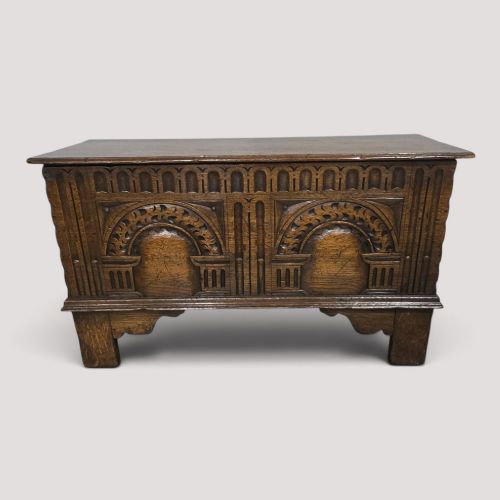
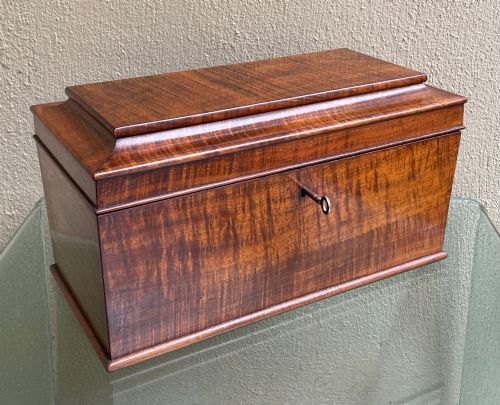
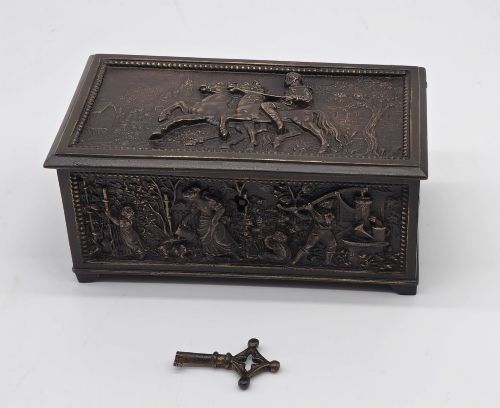
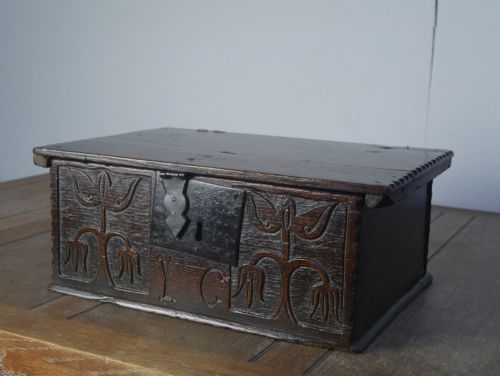



Carved Trinket Chest
A carved trinket chest holds small valuables, and these pieces offer enduring craftsmanship in timber and metal.
Carved Trinket Chest
A carved trinket chest spans several centuries of storage forms, including miniature coffers, tea caddies, desk boxes, and jewellery chests. These containers served domestic uses for storing valuables, documents, tea, or sewing implements.
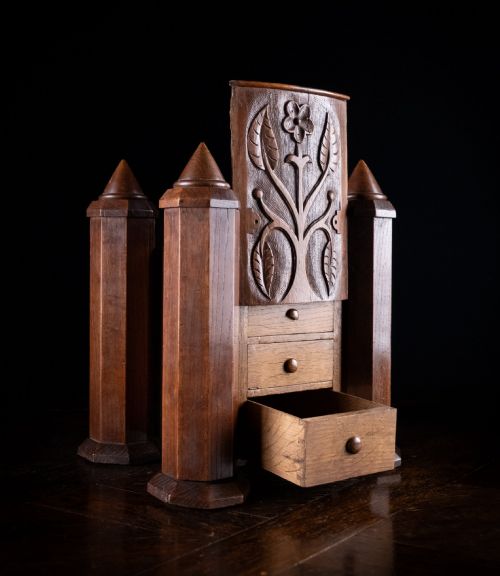
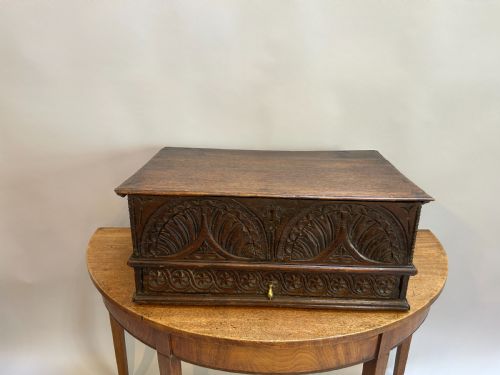
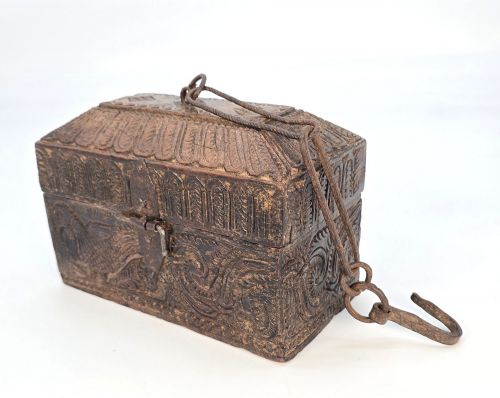
The selections on this page feature regional interpretations from British oak boxes and Welsh coffor bach pieces to Indian sandalwood caskets, Chinese hardwood containers, and Black Forest walnut boxes. Eighteenth and nineteenth-century examples dominate the offerings.
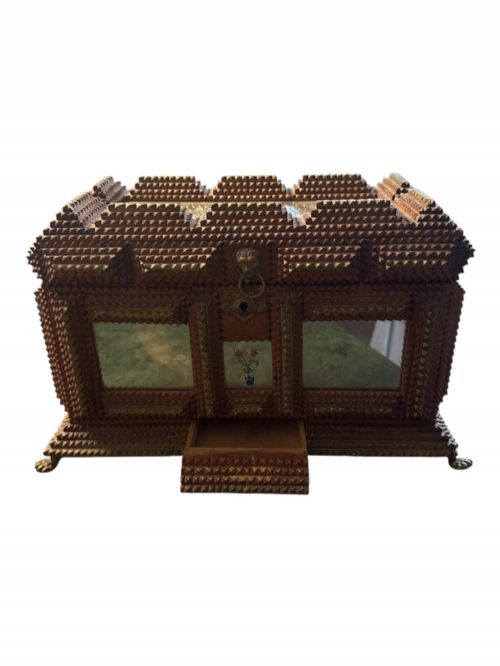
Makers utilised diverse regional styles ranging from Gothic Revival and Jacobean to Anglo-Indian carving traditions, Art Nouveau, and Tramp Art. Miniature furniture and apprentice pieces also appear amongst the box forms.
Materials and Construction
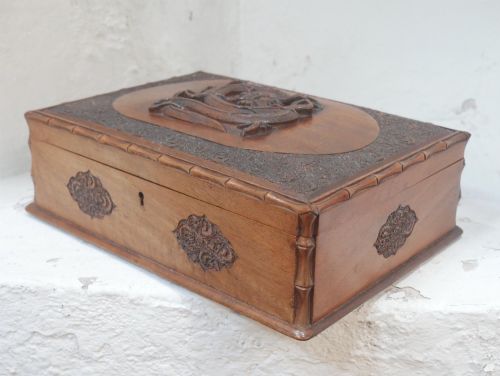
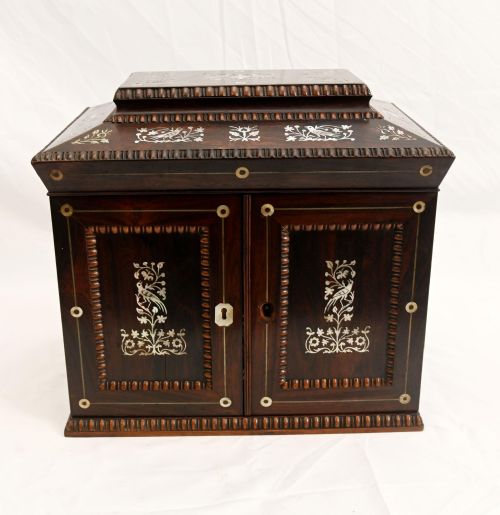
Timber selection forms the foundation of these pieces, with native British oak, mahogany, walnut, and exotic hardwoods such as sandalwood, teak, and various imported woods utilised by makers. Metal elements appear in brass, bronze, steel, and silvered or gilt finishes.
Surface decoration relies on chip carving, floral marquetry, bone or mother-of-pearl inlay, and mosaic techniques like Tunbridge Ware. Joinery methods range from early pegged oak construction to precise dovetailing on mahogany tea caddies and miniature chests.
Carved Trinket Chest Retail Price Guide 2026
Typical asking prices for carved trinket chest among the pieces listed under this phrase on Sellingantiques today, from the lower quarter to the upper quarter. They describe what is for sale here now, not the wider market.
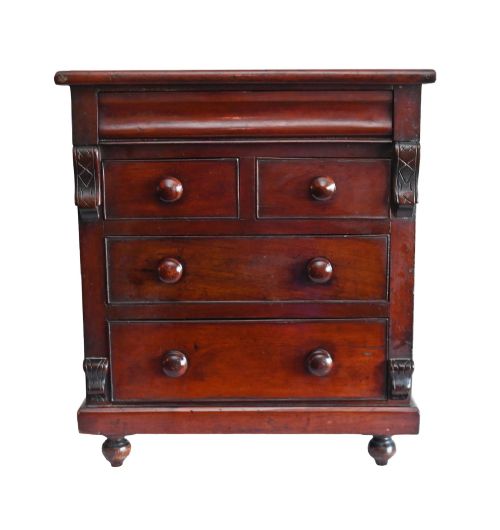
Apprentice cabinetmakers proved their skill by crafting tiny sideboards and chests of drawers that look ready for a dollhouse.
Judging Quality
The calibre of a carved trinket chest depends upon the crispness of the hand-carved detail and the integration of decorative elements with the timber's grain. Superior pieces display deliberate proportion and careful selection of figured woods.
Construction integrity distinguishes finer examples, visible in the snug fit of lids, original hinges, internal compartment layouts, and the preservation of delicate inlay work without excessive replacement or modern intervention.
The Carved Trinket Chest Glossary
- Coffor Bach
- A miniature Welsh coffer or chest used historically for holding valuables or dowry items. These small scaled chests often feature chip carving and local oak construction.
- Apprentice Piece
- A small-scale item demonstrating the skill of a trainee woodworker before admission to a guild. They replicate full-sized furniture forms like chests of drawers and sideboards.
- Tunbridge Ware
- Woodware decorated with mosaic patterns created from thousands of tiny tinted wood prisms. This technique produces geometric or pictorial motifs on small boxes.
- Marquetry
- The art of applying veneer pieces to a structure to form decorative patterns. Floral designs and geometric scenes frequently adorn seventeenth and eighteenth-century boxes.
- Tramp Art
- A style of utilitarian woodworking formed by chip-carving discarded materials such as cigar boxes. These items utilise pocket knives and simple glue assembly.
Carved Trinket Chest: Frequently Asked Questions
What is a coffor bach?
A coffor bach is a traditional Welsh miniature coffer made primarily from oak during the eighteenth century. Families used them as presentation pieces or for storing personal keepsakes.
These small chests frequently incorporate drawers beneath the main lidded compartment and display regional chip carving styles unique to Wales.
How were tea caddies used?
Tea caddies served to store precious tea leaves securely under lock and key when tea was an expensive commodity. Wealthy households kept them in formal reception rooms.
Inside, lidded compartments separated different varieties of tea leaves, often accompanied by a small mixing bowl.
How do I date an oak box?
Dating an oak box involves examining the construction methods, joint types, and surface patination. Early seventeenth-century pieces use hand-riven boards and pegged mortise and tenon joints.
Later eighteenth and nineteenth-century versions show machine-sawn timber, different hinge types, and standardised hardware that evolved over time.
What is Tramp Art?
Tramp Art refers to folk art objects created by self-taught makers using inexpensive or recycled wood. Makers notched and layered the material using simple pocket knives.
Boxes from this tradition display distinct tiered carving patterns and assembled geometric reliefs characteristic of late Victorian and early twentieth-century vernacular craft.