
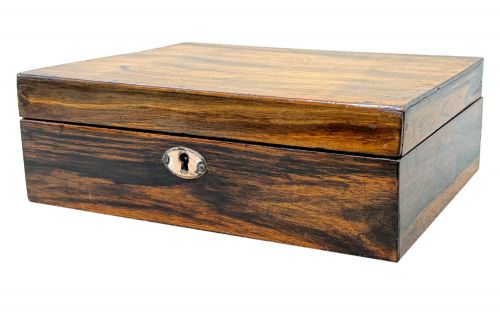
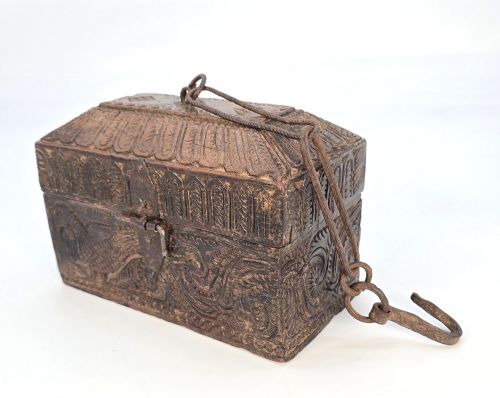


Carved Timber Trinket Box
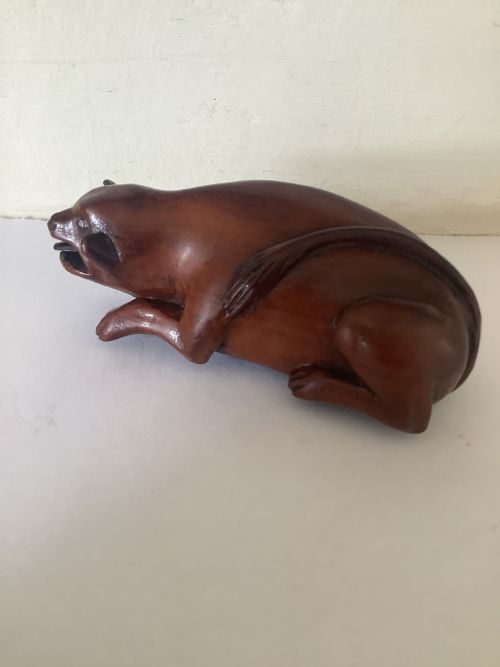
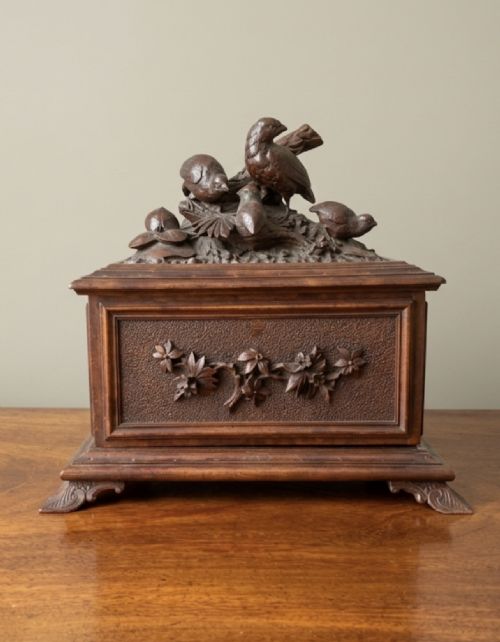
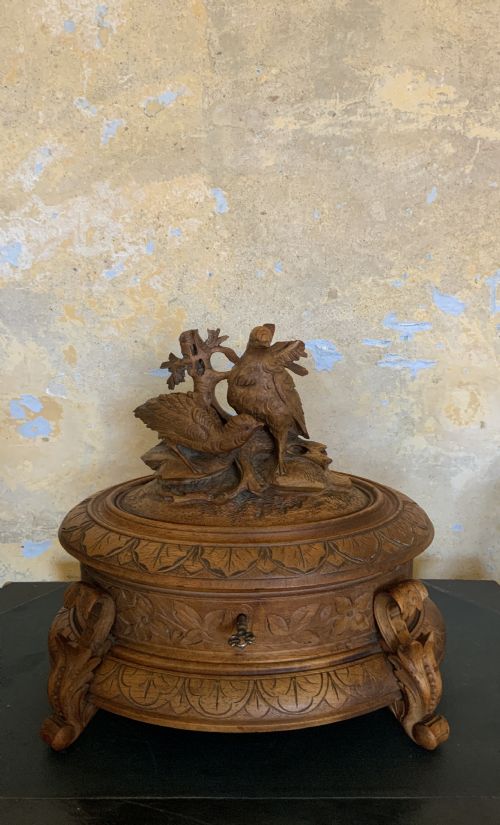
These carved timber trinket box examples range from Black Forest caskets to Indian spice boxes, offering tactile storage for small personal valuables.
Carved Timber Trinket Box
A carved timber trinket box is a small lidded container designed for keepsakes, personal items or small valuables. You will find examples here spanning several centuries, including 17th century pieces, 19th century items, and Edwardian specimens.
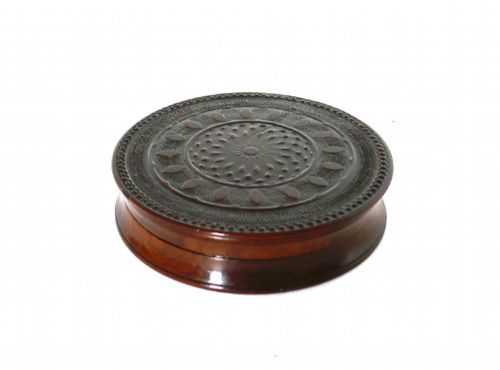
The forms vary widely across the selection. They include snuff boxes, work boxes, humidors, jewellery boxes, caskets, and spice boxes.
Origins are similarly diverse, taking in British, Scottish, Dutch, Afghan, and Indian traditions. Many pieces reflect distinct regional carving styles such as Black Forest work or Anglo-Indian colonial production.
What varies in quality
Quality in these pieces is largely determined by the depth and precision of the carving. Crisp, detailed execution separates ordinary turned vessels from finely worked sculptural boxes.
The choice of timber and the development of a rich, deep patina over centuries also influence the character of each box. Structural integrity and original hardware further distinguish finer examples.
The listings show materials ranging from common hardwoods and mahogany to exotic rosewood, coromandel, and fragrant sandalwood.
The Carved Timber Trinket Box Glossary
- Treen
- Small wooden domestic objects made before the widespread use of plastics. These items display traditional woodworking skills such as turning and carving.
- Black Forest
- A style of wood carving originating from the Swiss and German mountain regions during the 19th century. Pieces often feature naturalistic animal and foliage motifs.
- Patina
- The surface sheen and colour developed by wood over long periods of handling and exposure. A deep patina indicates considerable age and use.
- Sarcophagus-shaped
- A box design tapering towards the top, popular during the Regency and William IV periods. It mimics the silhouette of an ancient stone coffin.
Carved Timber Trinket Box: Frequently Asked Questions
What were these boxes used for?
These containers served specific domestic and personal functions depending on their internal layout. Smaller vessels held tobacco or snuff, while larger caskets stored jewellery, letters, or spices.
Over time, owners repurposed them according to their needs, shifting functional items into decorative display pieces for dressing tables or studies.
How do I date a wooden box?
Dating relies on identifying the timber species, construction methods, and stylistic cues of the period. Hardwoods like rosewood and coromandel point to specific Regency or Victorian manufacturing trends, while turnery techniques indicate earlier craftsmanship.
Examining the hinges, locks, and internal linings provides additional clues about the workshop origins and decade of production.
How do I care for antique timber?
Maintain stable environmental conditions away from direct heat sources and strong sunlight to prevent the timber from splitting. Dust regularly with a dry cloth and avoid modern silicone polishes.
Occasional application of appropriate wax helps nourish older wood surfaces without building up heavy residues that obscure the grain.
What is Anglo-Indian carving?
Anglo-Indian work represents furniture and decorative items produced in India under British rule, combining local timber resources with European forms. Carvers utilised dense woods like teak and sandalwood to execute intricate floral and geometric reliefs.
These objects often show a distinct fusion of Eastern carving depth and Western cabinet-making shapes.