
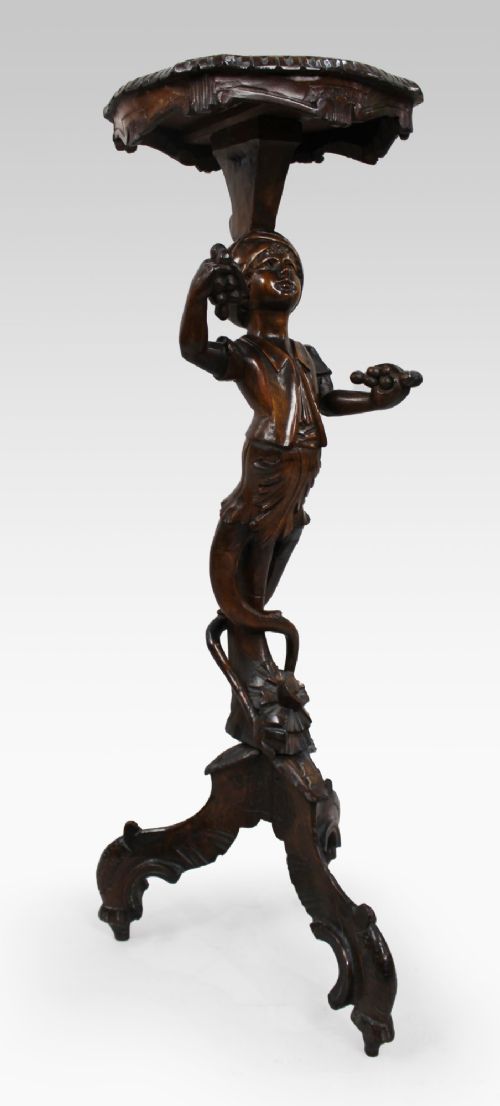

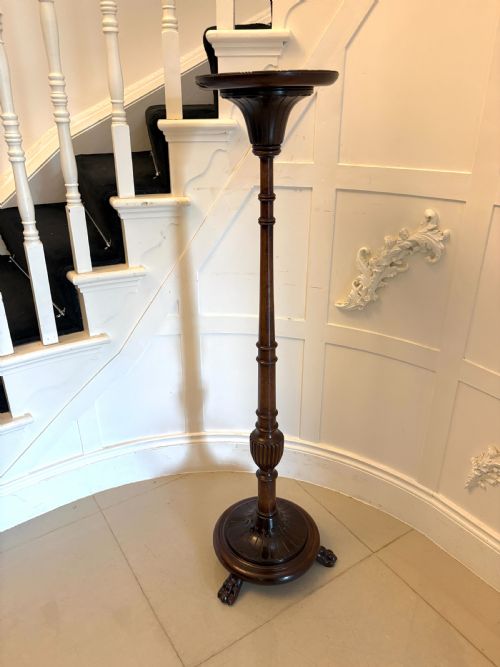
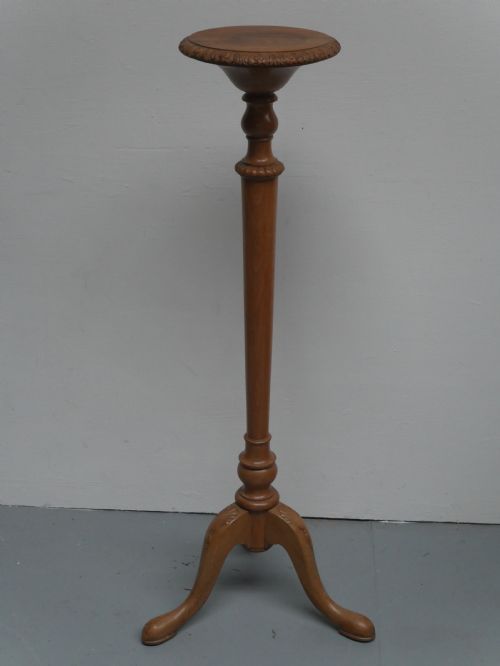


Carved Timber Torchere Stand
These carved timber torchere stand examples bring height and structure to a room, holding plants or figures with sculptural presence.
Carved Timber Torchere Stand
When you search for a carved timber torchere stand, you encounter tall display columns and plant stands originating from the nineteenth century onward. These furnishings serve to elevate jardinieres, busts, or figures above floor level.
The selections available here span diverse regional aesthetics, from Venetian figures and Italian Baroque revivals to English country house pedestals. Walnut, mahogany, oak, and pinewood appear frequently across the inventory.
Forms range from simple turned columns to elaborate figural supports featuring caryatids and crouching figures. Such pieces function effectively in corners or empty hallways needing vertical emphasis.
Materials and construction
Carvers shaped these items from dense hardwoods including walnut and mahogany, alongside softer pinewood finished with ebonisation or carving. Selecting close-grained timber allowed artisans to execute deep relief work without splintering.
Construction methods relied on turning vertical shafts on lathes and joining circular or polygonal tops with sturdy central columns. Figural stands required skilled hand-carving to realise complex human and architectural motifs.
Surface treatments varied according to origin, utilising polished wood finishes to highlight natural grain patterns or applying dark stains to emulate older Renaissance styles.
Several stands rely on crouching wooden figures to bear the weight of your houseplants.
What separates the fine examples
The choice of primary timber influences the piece's durability and visual weight, with dense walnut and figured mahogany commanding greater presence than plain pinewood. Proportion between the narrow shaft and the supporting base ensures structural stability.
The Carved Timber Torchere Stand Glossary
- Torchere
- A tall stand originally designed to hold a candle or torch, later adapted for lamps and decorative objects. These slender columns provide vertical height in domestic interiors.
- Caryatid
- A sculpted female figure serving as an architectural support in place of a column or pilaster. They frequently appear supporting the top platform on nineteenth-century pedestals.
- Jardiniere
- An ornamental pot or stand for plants and flowers. These holders sit atop pedestals to display indoor foliage.
- Blackamoor
- A historical decorative motif depicting human figures from North or Sub-Saharan Africa, often rendered in carved and ebonised wood. Such figures form the structural support of nineteenth-century stands.
- Pedestal
- An upright support or base for a statue, vase, or column. They elevate objects to eye level for display.
Carved Timber Torchere Stand: Frequently Asked Questions
What is a torchere stand used for?
These tall stands support decorative items such as vases, jardinieres, and sculptural busts. They place objects at eye level to create focal points in a room.
Historically, similar stands held lighting devices, but today they serve primarily as display furniture in hallways and reception rooms.
How do I date a wooden pedestal?
Dating relies on examining the timber species, tool marks left by manufacture, and the prevailing stylistic revival of the period. Nineteenth-century pieces often reflect Renaissance or Baroque revivals.
Construction techniques, such as the type of screws or joining methods used beneath the top platform, also indicate the era of production.
Where should I place a torchere in a room?
They suit empty corners, beside fireplaces, or framing doorways where vertical height breaks up flat walls. Their slender footprint allows them to occupy tight spaces without obstructing movement.
Pairing a stand with a compatible plant or bust enhances its sculptural qualities.
What is the difference between a torchere and a plant stand?
A torchere traditionally implies a more ornate, columnar support derived from lighting stands, while a plant stand can be simpler and utilitatian in design. In practice, nineteenth-century makers used these terms interchangeably.
Both forms elevate items above floor level using turned timber or carved figural columns.