
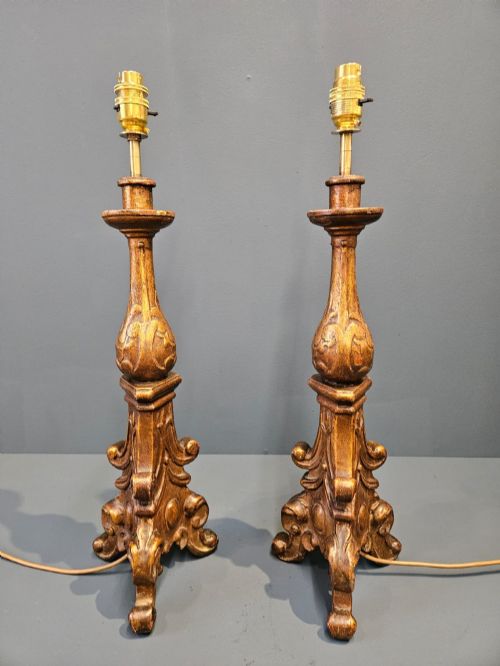
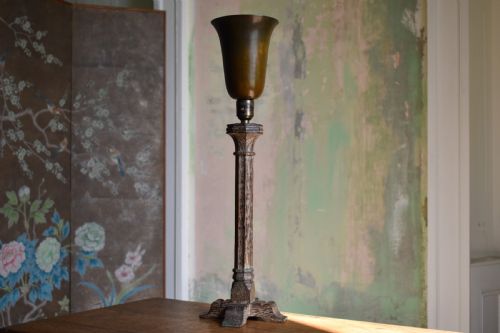


Carved Timber Candlestick
These carved timber candlestick pieces bring character and warmth to a room, offering functional candlelight shaped by centuries of craftsmanship.
Carved Timber Candlestick
A carved timber candlestick is a lighting support shaped from wood, often turned on a lathe or carved by hand into figurative and architectural forms. The items on this page span several centuries, including Victorian, 19th Century, and 17th Century examples.
Buyers encounter a variety of forms ranging from standard candle holders to large torchere stands and table lamps. Styles include folk art, Italian Baroque Revival, Gothic Revival, and Adam Style mahogany pieces.
Materials extend beyond plain wood to feature carved timber, pinewood, limed oak, and painted finishes, sometimes accented with brass or metal prickets and gilt details.
How they were made
Craftsmen shaped these items using hand-carving and turning techniques on woods such as pinewood, mahogany, and oak. Surface decoration often involved applied paint, limed finishes, or gilt highlights to enhance the timber grain.
Certain examples incorporate metal components like brass or metal prickets to secure the candle safely in place above the wooden stem.
Listings feature periods from the 17th Century through the Victorian era and into the early 20th Century.
What varies in quality
The sophistication of the hand-carving defines the upper tier of these pieces, particularly in figurative works like folk art figures or angel candlesticks. Detail and depth in the woodwork separate standard turned items from sculptural examples.
Surface preservation also distinguishes the range, where original paint, limed treatments, or gilt layers remain intact over the underlying timber.
The Carved Timber Candlestick Glossary
- Pricket
- A sharp metal spike on a candlestick designed to hold a candle in place. This metal fitting protects the timber top from direct flame and wax damage.
- Torchere
- A tall ornamental stand or candlestick intended to hold a light source high above the floor. These large supports often feature elaborate Italian Baroque Revival or classical carving.
- Limed Oak
- Timber treated with a specialised finish that highlights the open grain of the oak with a pale, whitish deposit. This technique became popular for lightening dark wood furniture and decorative objects.
- Gilt
- A thin layer of gold leaf or gilt applied to the surface of the timber. It provides a reflective decorative contrast against the carved wood underneath.
Carved Timber Candlestick: Frequently Asked Questions
How are wooden candlesticks cleaned?
Dust the carved surfaces gently with a soft, dry brush to preserve the timber and any historic paint or gilt finishes.
Avoid liquid cleaners and harsh chemicals that can strip the patina or damage the underlying wood.
Can these candlesticks hold real candles?
Many traditional holders with metal prickets or sockets accommodate standard candles, provided they fit securely.
Some pieces adapted as lamps require careful handling to maintain their historical structure.
How do I date an antique candlestick?
Examine the tool marks, timber species, and stylistic indicators such as Adam Style details or folk art motifs.
Periods range from seventeenth-century carved angel designs to Victorian and early twentieth-century interpretations.
Where should I place a torchere?
These tall stands suit corners or empty wall spaces where their height can add vertical balance to a room.
Keep them away from direct heat sources and strong sunlight to protect the aged wood.