
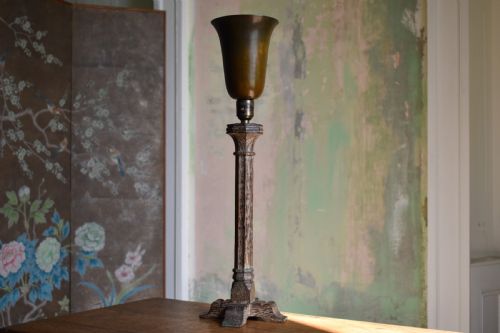
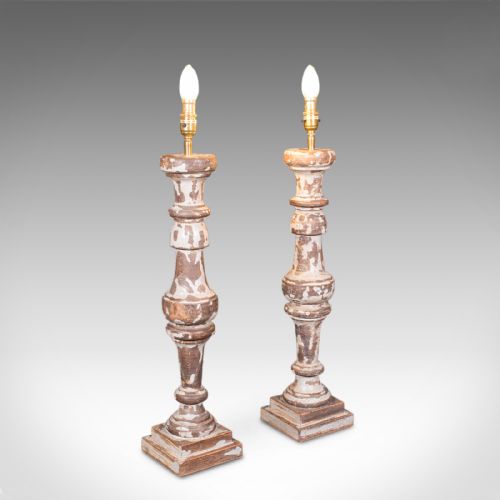


Rustic Wooden Candlestick
These rustic wooden candlestick examples bring genuine character to a room, offering tactile warmth and sturdy craftsmanship from past centuries.
Rustic Wooden Candlestick
A rustic wooden candlestick embodies functional design shaped by hand, drawing from folk art traditions and country workshops. These pieces range from simple turned items to figurative carvings, using timber selected for utility and presence.
The selection here draws heavily on early twentieth century production alongside nineteenth century examples. Buyers encounter vernacular forms including pairs of turned supports, carved figures, and converted table lamps utilising pine, oak, and ash.
Origin varies from English country workshops to continental European provinces, bringing distinct regional carving styles to light. Pieces span domestic table lighting and taller torchere stands, maintaining the grain and surface marks of their working lives.
Materials and construction
Makers utilised available timbers such as pine, limed oak, ash, and elm, often turning sections on a lathe or carving details by hand. Surface treatments include original paint, limed finishes, and exposed grain that highlight the natural material.
Secondary elements incorporate brass or metal components for mounting and candle holders, while structural joinery relies on traditional pegging and turning. Selected pieces display applied pigment or folk art polychrome decoration over the carved wood.
The selection includes both turned wood standards and figurative folk art carvings depicting human figures.
Distinctions in craftsmanship
Quality rests in the depth and animation of the carving, particularly where human figures or regional motifs define the silhouette. Proportions that feel balanced rather than heavy separate standard turned items from superior studio or folk pieces.
Surface integrity matters greatly, where original paint or patinated timber finishes remain undisturbed by aggressive modern sanding. The crispness of hand-turned rings and the stability of the timber base dictate the enduring utility of the object.
The Rustic Wooden Candlestick Glossary
- Treen
- Small handmade wooden domestic objects valued for their utility and tactile quality. Collectors prize early treen for its honest tool marks and patinated surfaces.
- Torchere
- A tall stand or candlestick designed to elevate a light source. These vertical pieces provide height variation in a room scheme.
- Turned wood
- Material shaped by rotating it against a cutting tool on a lathe. This technique produces symmetrical columns and decorative rings.
- Folk art
- Utilitarian items made by self-taught or traditional craftspeople outside academic canons. These objects showcase regional character and direct observation of life.
- Limed oak
- Timber treated with a specialised finish that whitens the grain pores. This technique accentuates the natural texture of the oak.
Rustic Wooden Candlestick: Frequently Asked Questions
What is a rustic wooden candlestick?
It is a hand-shaped domestic lighting support created from timber, often featuring folk art carving or vernacular turning.
These pieces reflect the vernacular traditions of English and European country workshops rather than formal court styles.
How were these candlesticks used?
They provided portable illumination in homes before electricity, sitting on tables or sideboards to hold wax candles.
Taller torchere versions stood directly on the floor to illuminate larger spaces in reception rooms.
How do I clean wooden candle holders?
Dust gently with a dry, soft cloth to preserve the historic patina and any surviving surface finishes.
Avoid liquid cleaners, waxes, or oils unless the timber surface is completely dry and stripped of original coatings.
Can these hold modern candles?
Many vintage holders feature sockets sized for older taper dimensions, which may require minor adjustments for modern candles.
Inspecting the aperture diameter helps determine whether standard tapers fit securely without damaging the wood.
How do I date a wooden candlestick?
Examination of tool marks, timber shrinkage, wear patterns, and fastener types helps establish the period of manufacture.
Stylistic cues such as Arts and Crafts simplicity or Victorian turning profiles also indicate the likely era.