
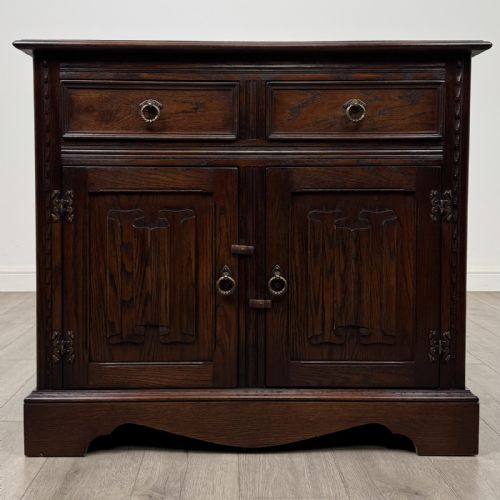
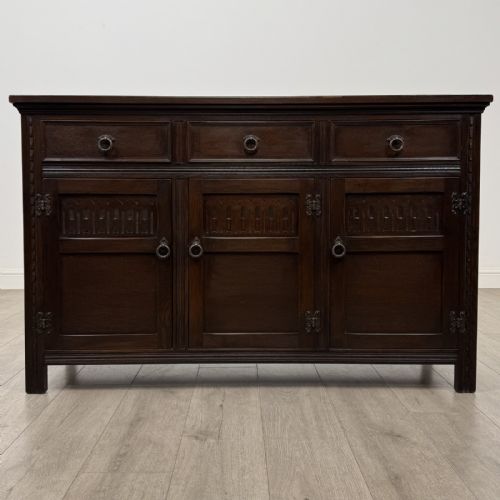
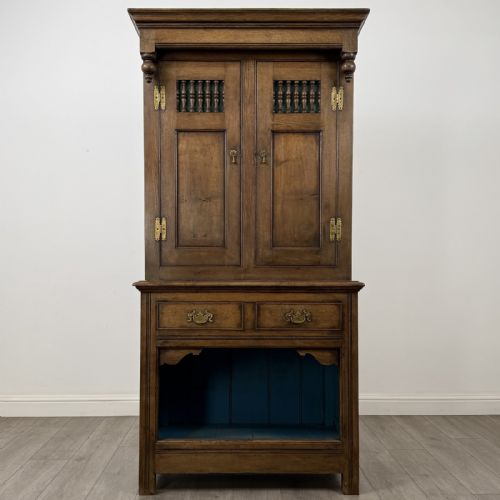
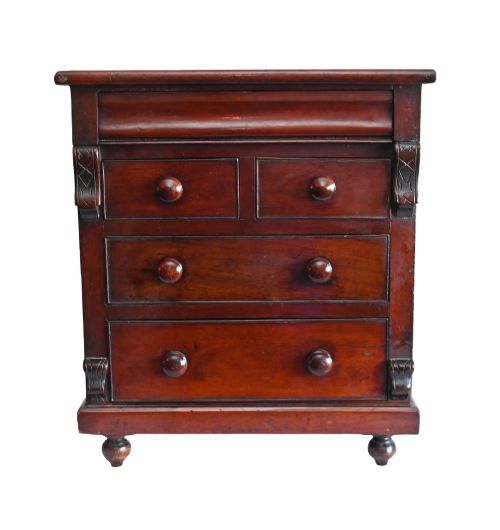
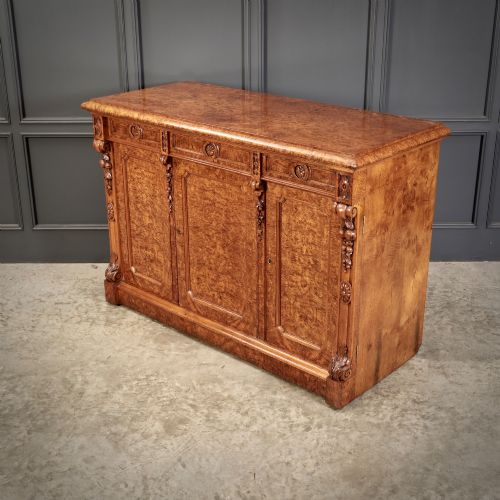
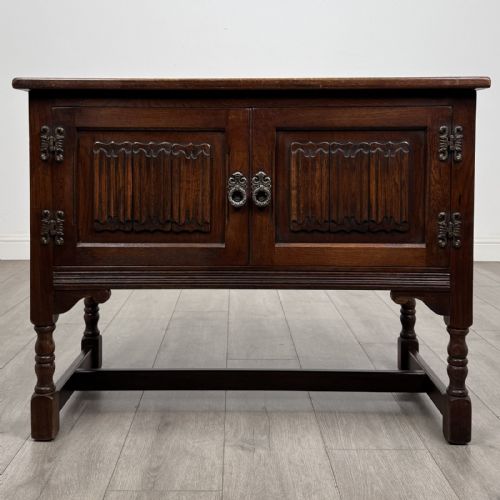
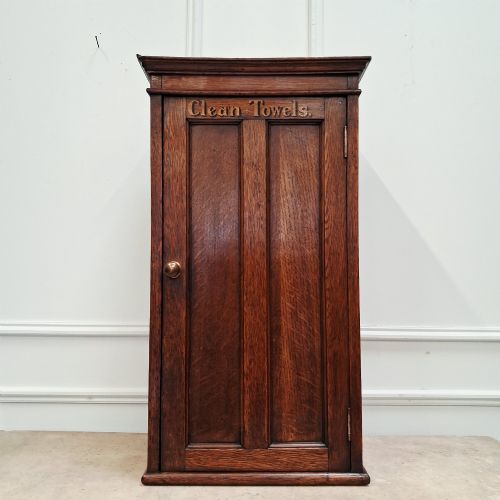
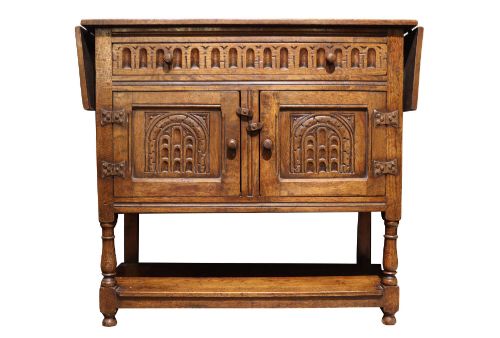
Carved Storage Cupboard
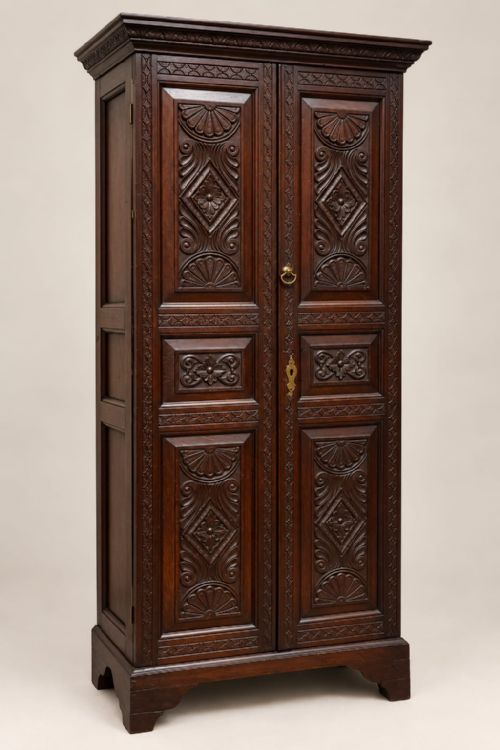
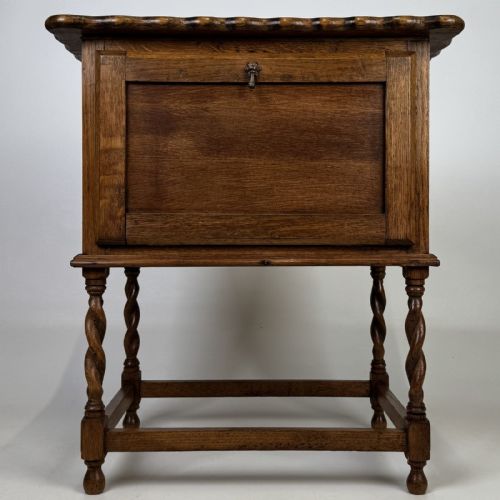
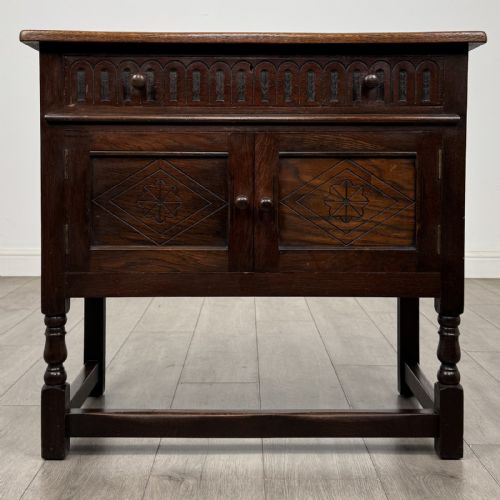
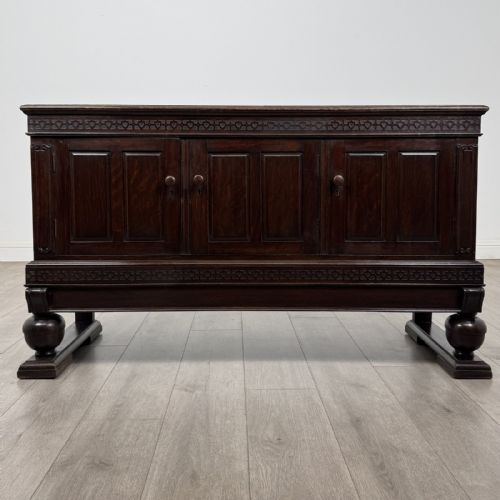
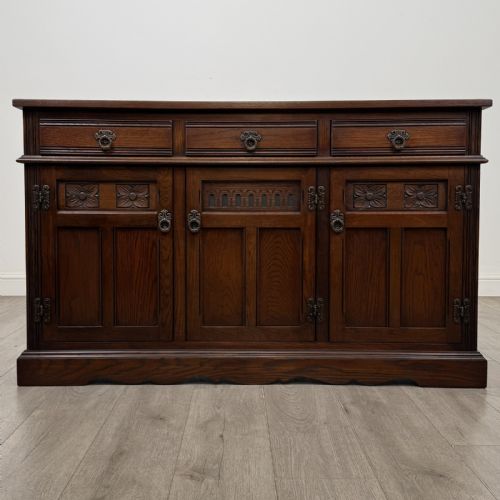
These carved storage cupboard pieces are solid timber vessels built to hold household goods, offering practical depth and rich textural surface detail for daily use.
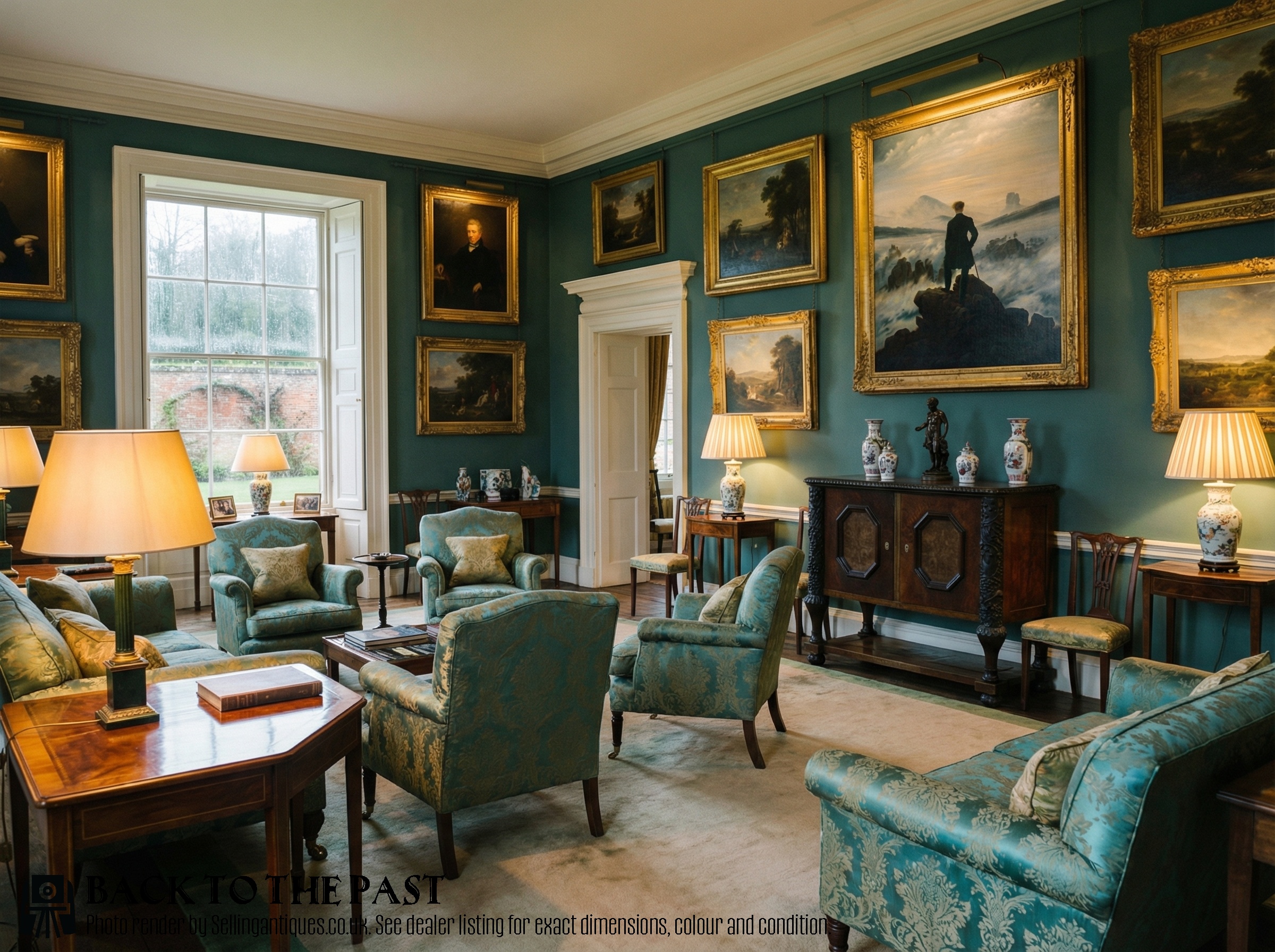
Carved Storage Cupboard
A carved storage cupboard provides enclosed domestic storage through panelled doors and internal shelving, taking forms such as court cupboards, housekeepers cupboards, hall cupboards, and compact bedside units. These items appear across centuries of British, French, and Italian design, reflecting changing household needs for stowing provisions, linen, and personal belongings.
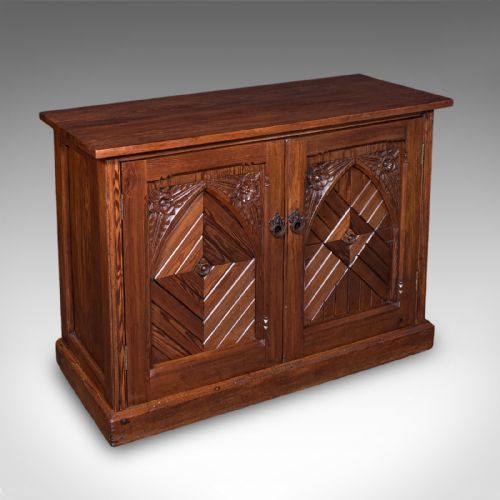
The pieces on this page span several distinct periods, with Edwardian oak items and Victorian examples appearing most frequently alongside earlier seventeenth and eighteenth-century joined oak work. Styles range from heavy Jacobean and Gothic revivals to French provincial designs, showing how cabinet makers adapted traditional storage forms to suit contemporary tastes.
Materials and Construction
Oak dominates the construction of these storage pieces, complemented by walnut, burr walnut, mahogany, and pine, often joined using traditional mortise and tenon framing. Cabinet makers utilised iron and brass for hinges, locks, and handles, adding functional metalwork that secured the heavy timber doors.
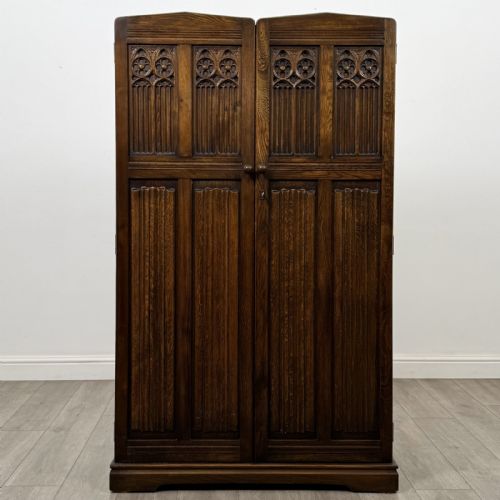
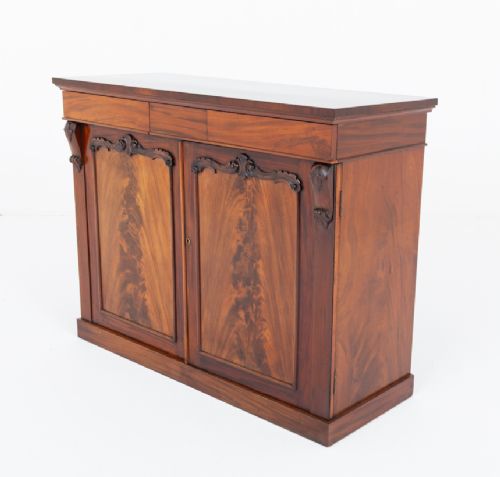
Surface decoration relies primarily on direct wood carving, linenfold panelling, and figured grain selection, particularly in burr walnut veneers. French polishing, wax finishes, and occasional painted treatments protect the timber while highlighting the natural colour and texture of the wood.
Materials across the inventory include solid oak, walnut, burr walnut, mahogany, pine, teak, brass, and iron.
Assessing the Craftsmanship
Quality in a carved storage cupboard lies in the crispness of the chisel work and the structural integrity of the frame. Superior examples display deep, deliberate carving rather than shallow machine-cut decoration, with tight joints that keep heavy doors true over centuries of opening and closing.
The choice of timber heavily dictates the grade of the piece, with quarter-sawn oak showing distinct medullary rays and burr walnut offering complex, swirling grain patterns. Original iron or brass hardware and intact internal shelving further separate standard utilitarian storage from finer cabinet work.
Shoolbred and Co·Denby and Spinks
The Carved Storage Cupboard Glossary
- Court cupboard
- An antique open or enclosed sideboard originating in the sixteenth and seventeenth centuries, typically featuring carved tiers and upper display or storage compartments.
- Linenfold
- A style of wood carving that mimics folded fabric or linen, commonly seen on Tudor and Edwardian panels.
- Chiffonier
- A low sideboard or cabinet with a raised back, popular during the Victorian period for serving and storage.
- Enfilade
- A suite of rooms or, in furniture terms, a long cabinet or sideboard with three or more doors, frequently seen in French pieces.
- Joinery
- The method of connecting pieces of wood without nails, relying instead on interlocking wooden joints such as mortise and tenon.
Carved Storage Cupboard: Frequently Asked Questions
What rooms suit a carved storage cupboard?
These cupboards suit living rooms, hallways, and dining spaces where deep shelving and enclosed storage keep household items out of sight. Their substantial wooden presence anchors a room while providing functional space for tableware, linens, or books.
Smaller variants like bedside or table-top cabinets fit more intimate spaces, offering compartmentalised storage on a reduced scale. Their historical character allows them to contrast effectively with modern interiors or blend into traditional period settings.
How do I date an oak storage cupboard?
Dating relies on observing construction methods, tool marks, and stylistic indicators such as linenfold panelling or geometric mouldings. Early pieces from the seventeenth century often show hand-riven timber and pegged mortise and tenon joints.
Later Edwardian revivals copy these earlier Jacobean styles but typically feature machine-sawn timber and standardised hardware. Examining the backboards and interior construction usually reveals whether a piece belongs to the seventeenth century or a later nineteenth-century revival.
How should I care for antique timber?
Maintain antique timber by keeping it away from direct heat sources and sudden humidity changes that cause wood to split or warp. Regular application of beeswax feeds the grain and preserves the lustre of the finish.
Avoid synthetic polishes that build up a silicone residue over time. A soft, dry cloth removes dust safely without harming the carved details or aged patina.
Are these cupboards suitable for modern clothes storage?
Many of these pieces function well for modern clothing storage, though interior layouts vary significantly compared to contemporary wardrobes. Cupboards originally built for linen or books may require the addition of hanging rails or adjusted shelving.
Checking the internal depth and height of each cabinet ensures it accommodates modern garments and bulky items. Housekeepers cupboards and larger wardrobes offer the greatest internal volume for everyday clothing.