



Carved Stone Maiden Sculpture
A carved stone maiden sculpture brings classical form and tactile presence into a room, capturing the human figure in lasting mineral.
Carved Stone Maiden Sculpture
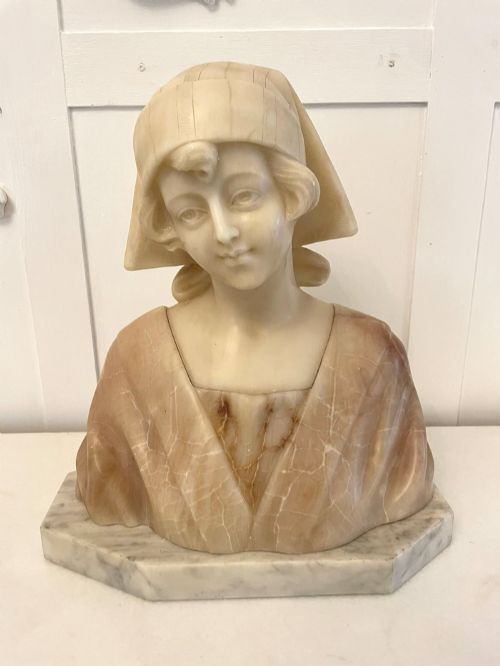
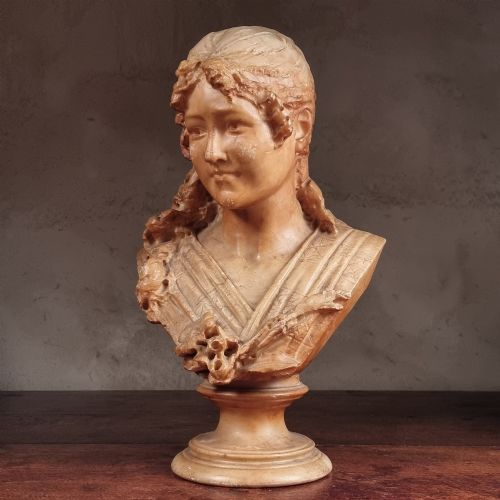
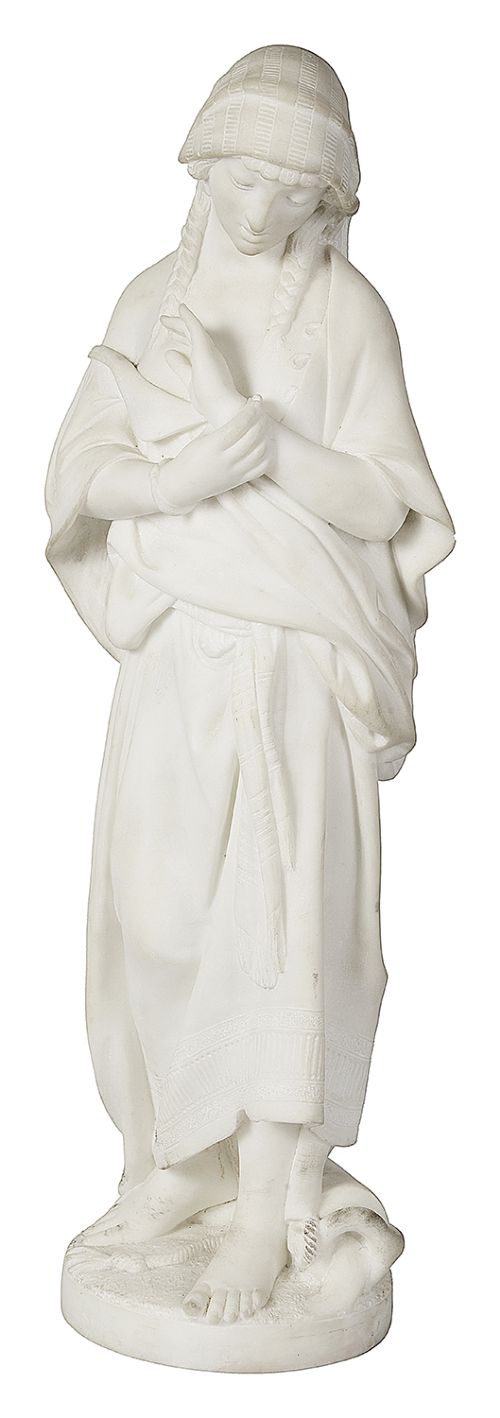
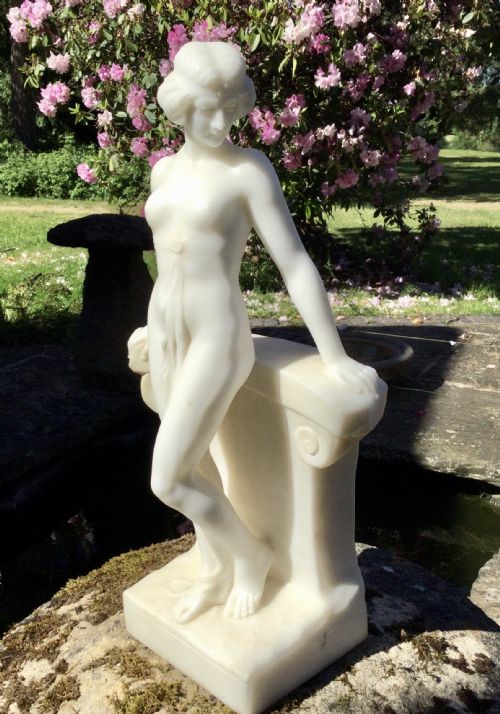
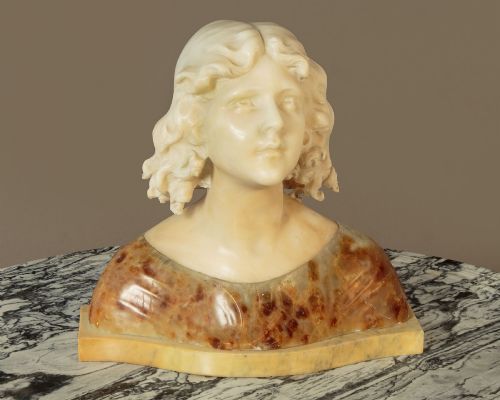
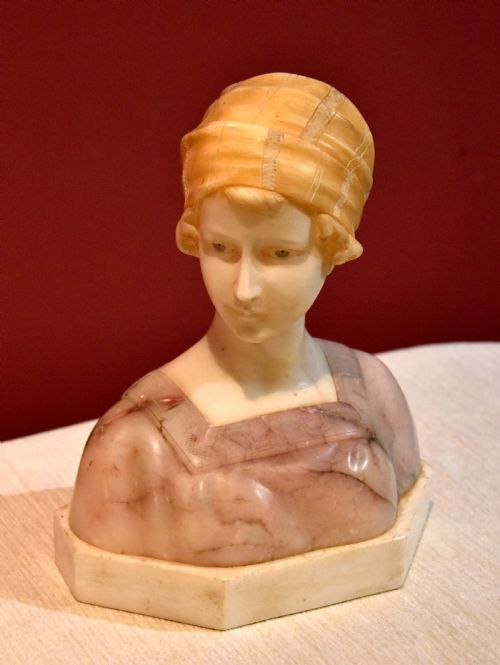
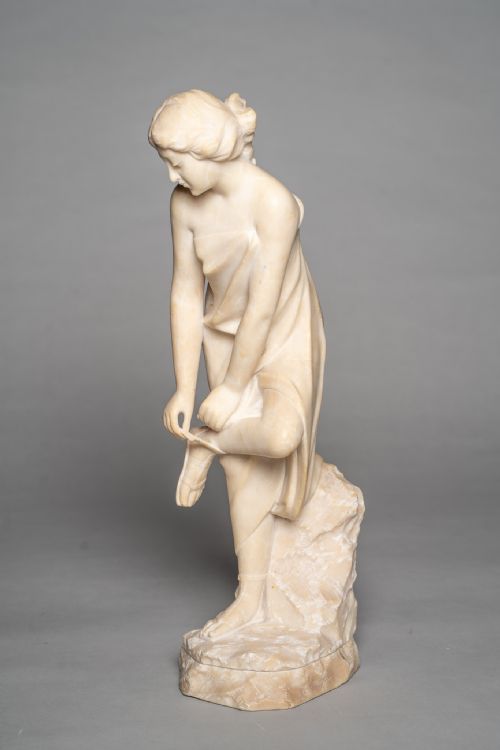
A carved stone maiden sculpture represents female figures in forms ranging from full-length statues to portrait busts and standing figures. These works draw heavily on classical, Victorian, and Art Nouveau idioms, capturing subjects that include young women holding flowers, wheat sheaves, or mandolins.
The pieces appearing here lean strongly towards nineteenth-century and early twentieth-century European production, particularly Italian and French workshops. Alabaster and marble dominate the selections, offering smooth surfaces that take fine detail and soft polish.
How they were made
Makers shaped these sculptures from blocks of alabaster, Carrara marble, and soapstone using chisels, rasps, and abrasive sands. Some pieces combine different minerals, pairing white marble with alabaster or introducing two-tone effects to distinguish drapery from skin.
Carvers finished the stone through progressive hand-polishing to achieve matte or lustrous surfaces. Many examples received signatures or studio marks incised directly into the base or rear support.
Carved Stone Maiden Sculpture Retail Price Guide 2026
Typical asking prices for carved stone maiden sculpture among the pieces listed under this phrase on Sellingantiques today, from the lower quarter to the upper quarter. They describe what is for sale here now, not the wider market.
Several stone maidens arrive equipped with musical instruments, holding mandolins as if pausing mid-tune.
What varies in quality
Attribution to named sculptors or established Italian and French workshops distinguishes gallery-level works from anonymous studio output. The integration of contrasting stone tones and the handling of delicate attributes like instruments or natural flora also elevate the stature of a figure.
Barranti·A.Gamay·Auguste Henri Carli·Eduardo Giolli·Gugielmo Pugi·Auguste Moreau·A.Cipriani
The Carved Stone Maiden Sculpture Glossary
- Alabaster
- A fine-grained, translucent stone favoured for nineteenth-century portrait busts and figurative sculpture. Its soft nature allows carvers to achieve subtle gradients of light beneath the surface.
- Carrara Marble
- A white or blue-grey marble quarried in the city of Carrara in Tuscany, widely utilised by European sculptors for classical statues. The stone is prized for its uniform crystalline structure.
- Grand Tour
- A cultural journey undertaken by nineteenth-century travellers who acquired portable marble and alabaster sculptures as mementos of Italy. These souvenir pieces often reproduced classical antiquities.
- Art Nouveau
- A stylistic movement prominent around nineteen hundred characterised by flowing, organic lines and natural forms. In sculpture, it manifests in the windswept hair and fluid drapery of female figures.
Carved Stone Maiden Sculpture: Frequently Asked Questions
How do I clean alabaster sculpture?
Dust alabaster gently with a dry, soft microfibre cloth to prevent accumulation in carved crevices. Avoid water and chemical solvents entirely, as moisture penetrates the porous stone and causes irreversible staining.
Keep pieces away from direct sunlight and damp environments to protect the natural mineral structure. Professional conservation is advised if deeper cleaning becomes necessary.
Where should I place a marble bust?
Position marble and alabaster busts on sturdy pedestals, console tables, or mantels that support their substantial weight. Ensure the display surface is level to prevent any risk of tipping.
Select a spot with stable room temperature away from radiators and fireplaces, as thermal fluctuation stresses carved stone over time.
How do I spot an Italian Grand Tour piece?
Italian Grand Tour sculptures typically date from the nineteenth century and reproduce classical subjects or Renaissance forms. They were produced in Florence and Rome for travelling collectors.
Look for fine-grained white marble or veined alabaster paired with simple polished plinths. The execution reflects commercial workshop standards aimed at the European tourist market.
What is the difference between marble and alabaster?
Marble is a metamorphic rock formed from recrystallised carbonate minerals, offering high hardness and durability. Alabaster is a softer mineral composed of gypsum that transmits light beneath its surface.
Alabaster scratches more easily than marble and responds differently to touch, developing a warm patina in older pieces. Both materials require careful handling to preserve delicate carved details.