
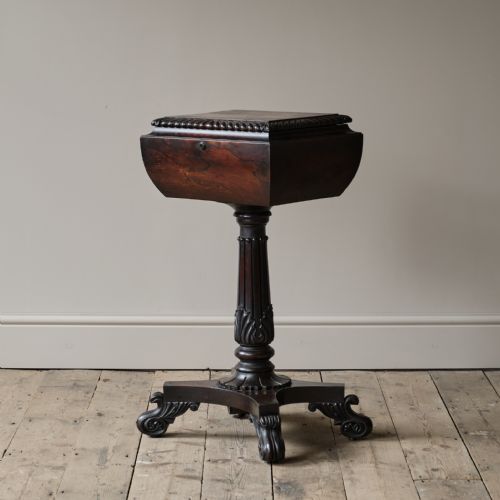


Carved Stand Storage Box
A carved stand storage box brings solid timber and raised stature into a room, offering practical containment with distinct period character.
Carved Stand Storage Box
When you search for a carved stand storage box, you enter a field of elevated receptacles spanning the eighteenth and nineteenth centuries. These pieces combine a lidded box, chest, or cabinet with an integrated support structure, ranging from formal George II mahogany chests to Anglo-Indian lacquered trunks and Victorian teapoys.
You are most likely to encounter oak coffers on stands and mahogany tea caddies or teapoys on carved feet within this selection. Styles stretch across Georgian, Victorian, and Edwardian periods, frequently displaying distinct regional ornamentation such as Chinoiserie or Anglo-Indian lacquer work.
The forms serve varied domestic functions, from holding tea and documents to storing linens and music sheets. Each item pairs a lidded vessel with a purposeful stand, ensuring the storage compartment sits clear of the floor.
How they were made
The primary construction relies on traditional timber framing, utilising solid oak, mahogany, and burr walnut for the main bodies and stands. Joinery is paired with surface detailing, including intricate carving, lacquer finishes, and applied bone or brass elements.
Secondary materials such as gilt accents and brass hardware frequently secure corners, hinges, and carrying handles. Lacquered trunks utilise layered resin finishes over wooden cores, often enriched with hand-painted or gilt motifs.
Materials across these listings include solid oak, mahogany, burr walnut, and lacquer, paired with brass and bone.
What varies in quality
Quality reveals itself in the crispness of the timber carving and the selection of figured veneers like burr walnut. Superior examples maintain structural harmony between the box and its stand, using matching primary timbers throughout.
The integrity of decorative surfaces, whether raised woodwork or lacquer, distinguishes finer workshop output from simpler domestic utility pieces. Original brassware and intact internal fittings further separate standard items from exceptional survivals.
The Carved Stand Storage Box Glossary
- Teapoy
- A small box or chest mounted on a stand, originally designed for storing precious tea leaves and blending them for the table.
- Coffer
- A heavy wooden chest with a lid, traditionally used for storing valuables, documents, or garments securely.
- Chinoiserie
- European decorative style reflecting Chinese artistic influences, frequently seen in lacquered surfaces and painted motifs.
- Burr walnut
- Timber taken from a walnut tree growth, prized by cabinetmakers for its swirling, highly figured grain patterns.
Carved Stand Storage Box: Frequently Asked Questions
What were carved stand storage boxes used for originally?
These elevated boxes served specific domestic storage needs, from locking away expensive tea leaves to keeping family documents and linens safe from damp floors. The raised stand kept the contents accessible without requiring the user to bend to the ground.
Over time, different forms evolved for specialised tasks, such as music cabinets for sheet music or teapoys equipped with internal mixing bowls and canisters.
How do I date a carved stand storage box?
Dating relies on observing the combination of timber, construction methods, and stylistic details present in the stand and box. Eighteenth-century pieces often display robust oak framing or Georgian mahogany proportions, while Victorian and Edwardian examples show softer woods or decorative burr veneers.
Hardware style, such as brass drop handles or hinges, also provides reliable clues to the period of manufacture.
Are the stands always original to the boxes?
Most pieces maintain their original fitted stands, particularly formal types like George II chests on stands and purpose-built teapoys. Cabinetmakers designed the support structure to match the timber and decorative vocabulary of the upper box.
Examining the joinery where the box meets the stand helps confirm that the elements were constructed for one another.
How do I care for antique wood and lacquer?
Keep these pieces away from direct sunlight and dramatic humidity changes to protect vulnerable veneers and lacquered finishes. Regular dusting with a dry, soft cloth preserves the surface without stripping historical polishes.
Applied brass and bone elements require gentle treatment, avoiding harsh modern chemical cleaners entirely.