

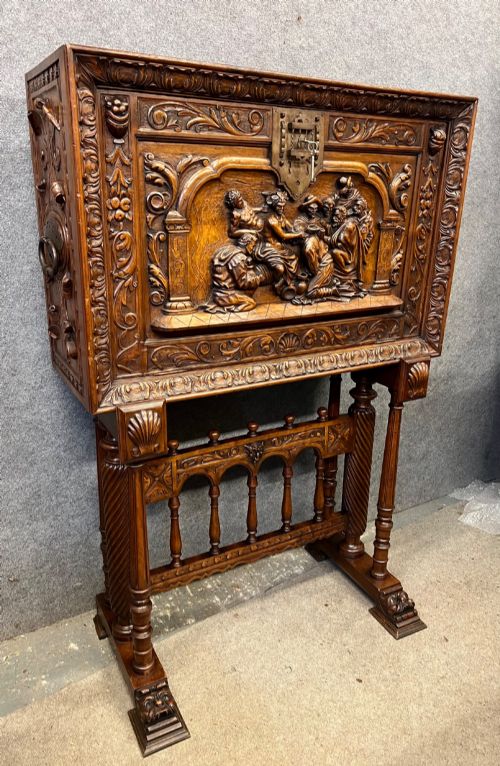
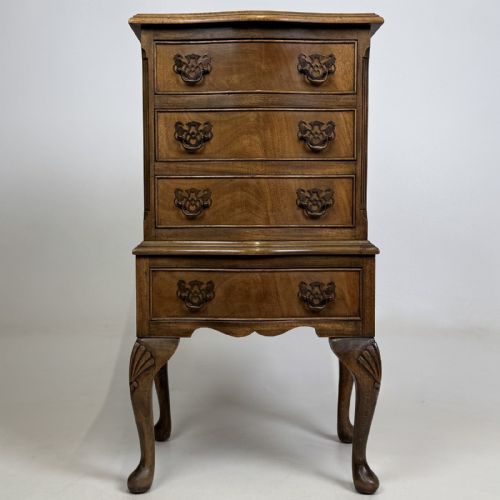
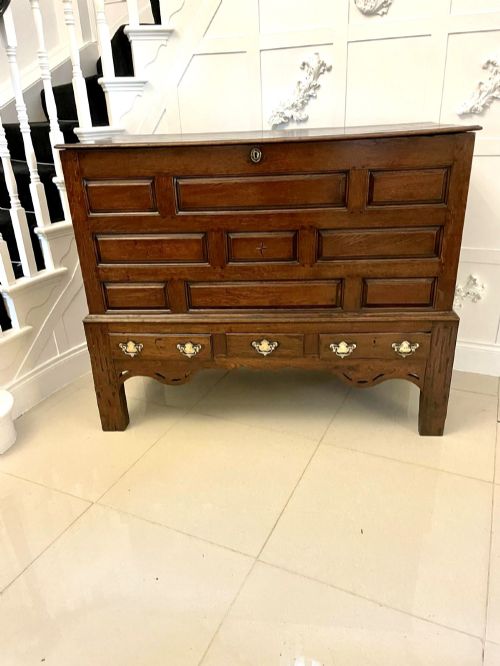
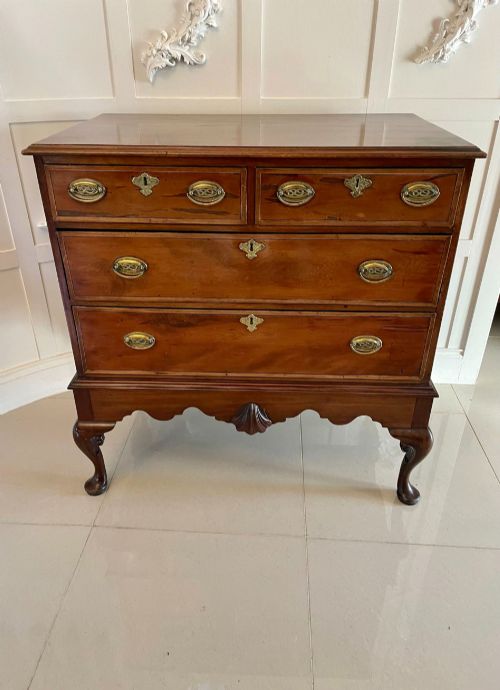


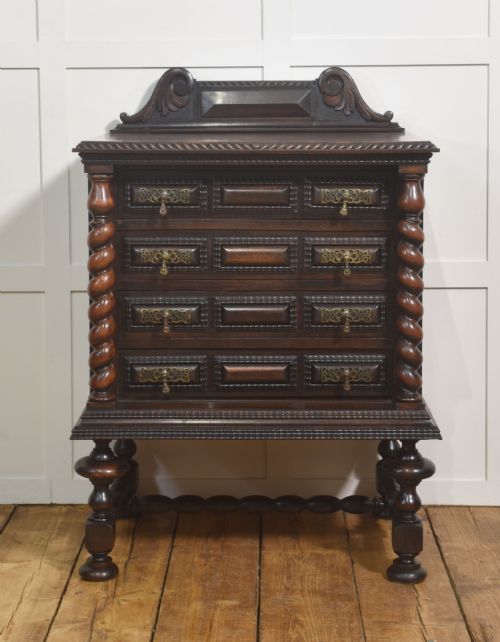
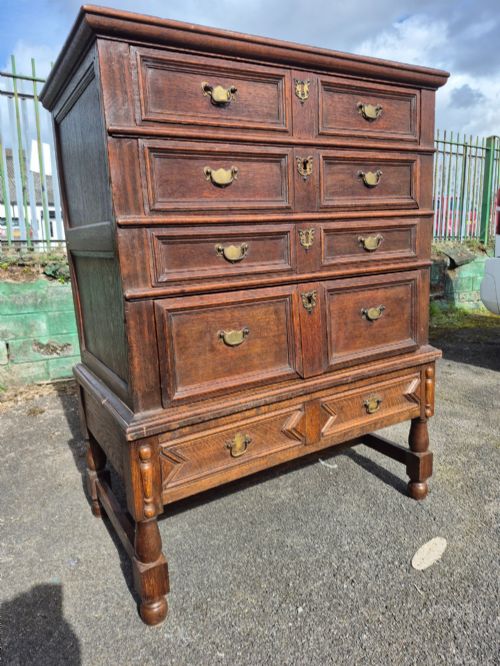
Carved Stand Chest
A carved stand chest brings elevated storage and rich timber grain to a room, uniting a deep upper cabinet or chest with an integrated support base.
Carved Stand Chest
When you search for a carved stand chest, you encounter a hybrid form that pairs a lidded coffer, drawer unit, or enclosed cabinet with a raised stand or legs. These pieces emerge from periods spanning the seventeenth century through to the early twentieth century, reflecting shifting domestic needs for elevated storage.
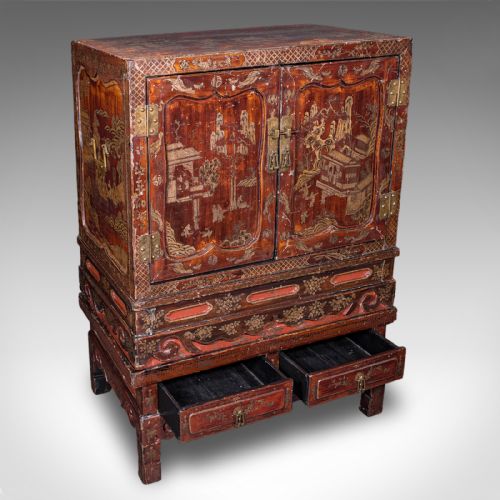
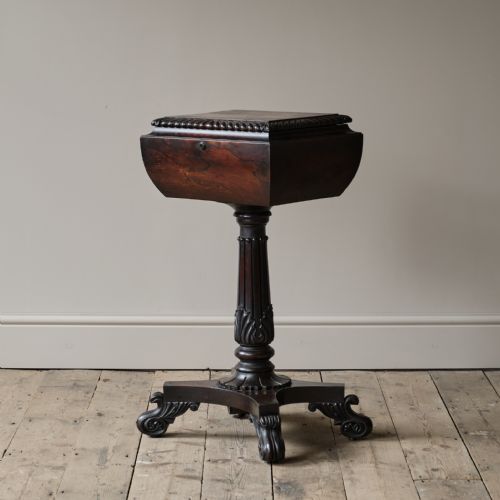
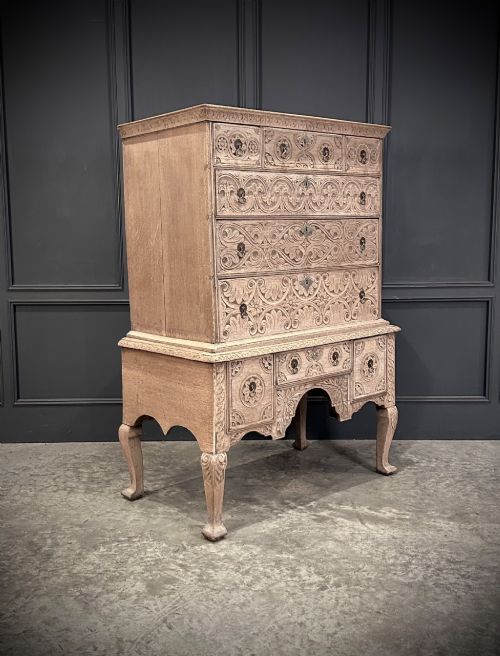
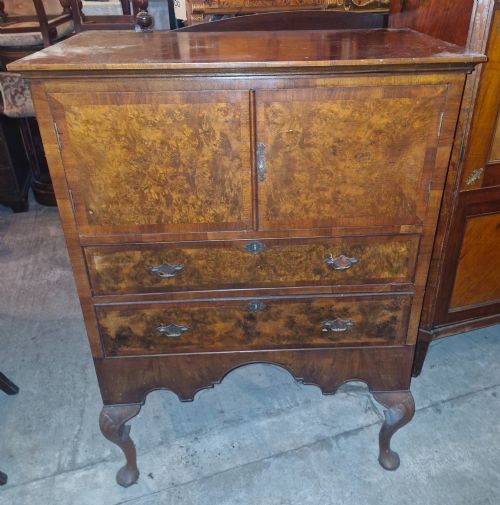
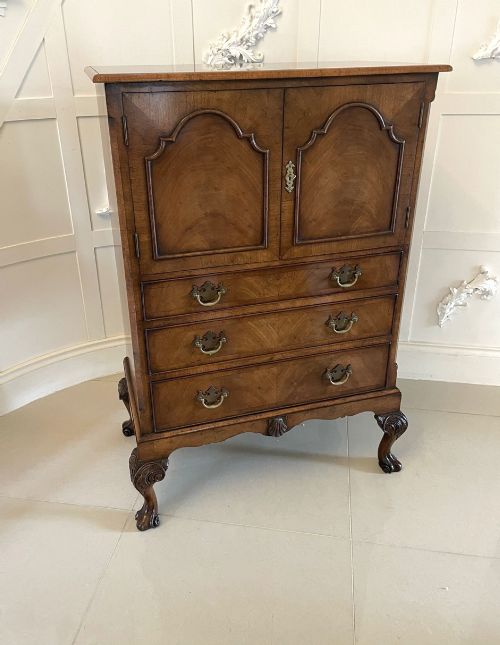
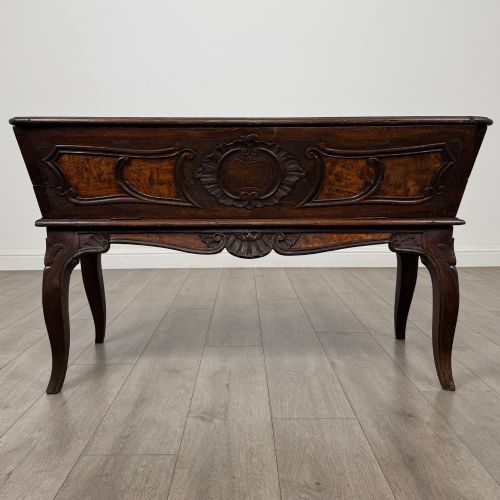
The most common examples on this page combine sturdy oak or figured walnut upper sections with matching wooden stands, occasionally finished with intricate surface decoration. Forms range from seventeenth-century oak coffers on stands to twentieth-century burr walnut cabinets and music storage units raised on legs.
Craftsmen built these dual-part items to keep precious textiles, documents, and valuables away from damp floors while offering accessible compartment storage. The elevation lightens the visual weight of heavy timber boxes, creating a piece that functions effectively in hallways, living rooms, and bedrooms.
Materials and Construction
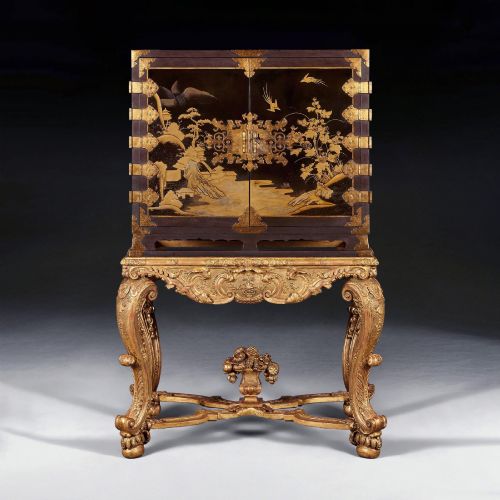
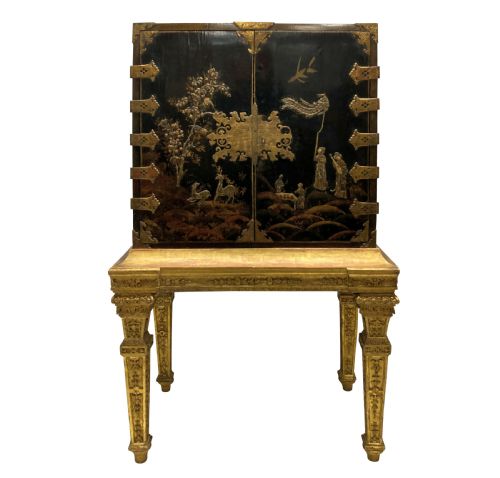
Cabinetmakers relied heavily on durable timbers such as oak, mahogany, and walnut, frequently selecting burr veneers and flame mahogany to introduce dramatic grain patterns. Lacquered finishes and Chinoiserie details appear on select pieces, utilising layered varnishes and decorative motifs applied to wood substrates.
Construction methods involved traditional joinery, including hand-cut dovetails for drawers and mortise and tenon joints for structural stands and framing. Brass hardware, drop handles, and escutcheons were fitted to secure doors and drawers, completing assemblies designed to endure generations of daily use.
Carved Stand Chest Retail Price Guide 2026
Typical asking prices for carved stand chest among the pieces listed under this phrase on Sellingantiques today, from the lower quarter to the upper quarter. They describe what is for sale here now, not the wider market.
Listings span multiple centuries, uniting seventeenth-century oak coffers with Edwardian music cabinets and twentieth-century burr walnut cocktail units.
Distinctions in Quality
Quality rests in the selection of timber figures, where symmetrical burr walnut or unblemished flame mahogany elevates the visual impact of the upper cabinet. Superior examples display crisp, hand-carved detailing on the stand and drawer fronts rather than softened, mass-produced mouldings.
Structural integrity sets apart finer items, evident in tight joinery, original brass hardware, and stands that bear the weight of the upper chest without shifting. The harmony between the upper storage body and its supporting legs dictates the overall success and authenticity of the composition.
Strahan of Dublin·Muirhead Moffat And Co
The Carved Stand Chest Glossary
- Coffer
- A large wooden chest used historically for storing valuables and household goods. These sturdy lidded boxes frequently form the upper section of early stand chests.
- Stand
- A raised supporting structure with legs or a low frame designed to elevate a cabinet, chest, or coffer off the floor. It transforms a standard box into a commanding piece of furniture.
- Chinoiserie
- European decorative style inspired by Chinese art and design, featuring painted or lacquered motifs such as landscapes, figures, and pagodas. It appears on select eighteenth- and twentieth-century cabinets.
- Burr Walnut
- Timber taken from the gnarled growths of walnut trees, prized for its swirling, highly figured grain patterns. Cabinetmakers utilised it as a decorative veneer on statement furniture.
- Cellarette
- A lockable container or cabinet designed to hold bottles of wine and spirits safely. Examples from the Georgian period often feature fitted interiors for partitioned storage.
Carved Stand Chest: Frequently Asked Questions
What is a carved stand chest?
A carved stand chest is a piece of furniture that combines an upper storage cabinet, chest, or coffer with a distinct supporting base or legs. The carved decoration typically highlights the stand, drawers, or door panels.
These items were developed to keep contents away from cold, damp floors while adding decorative presence to a room. They serve today as functional storage units for books, linens, and media.
How do I date a wooden chest on stand?
Dating relies on examining the timber species, joinery methods, and hardware style. Seventeenth-century examples often utilise heavy oak with pegged mortise and tenon joints, while eighteenth- and nineteenth-century pieces introduce mahogany, dovetailed drawer construction, and refined brass handles.
Secondary woods inside drawers and the ageing of the finish offer further clues to the period of manufacture. Comparing the stylistic motifs on the stand with known historical periods helps confirm the timeline.
Where should I place a stand chest at home?
A stand chest works well in hallways, living rooms, and bedrooms where you need practical storage combined with display surface area. The elevated design prevents the piece from feeling too heavy in smaller spaces.
Position the chest away from direct heat sources and strong sunlight to protect vulnerable timber veneers and polished finishes. Ensure the floor is level so the weight distributes evenly across the supporting legs.
How do I care for antique wood furniture?
Maintain antique wood by dusting regularly with a soft, dry cloth and avoiding modern silicone sprays or harsh chemical cleaners. Consistent indoor humidity levels prevent the timber and veneers from drying out or cracking.
Applying a traditional beeswax polish occasionally helps nourish the grain and preserves the patina. Lift the piece rather than dragging it across the floor to protect the joints on the stand.