

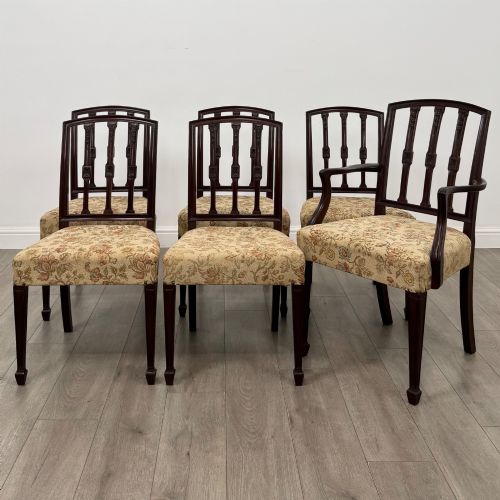
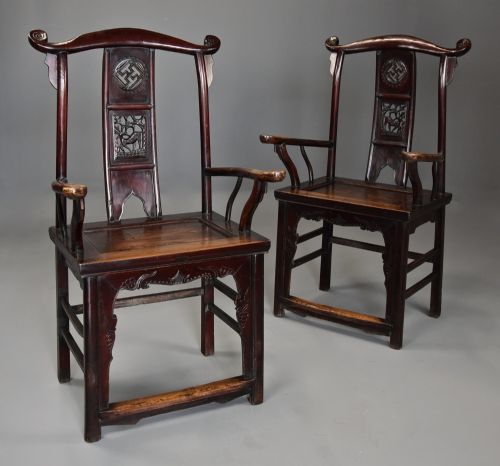

Carved Splat Side Chairs
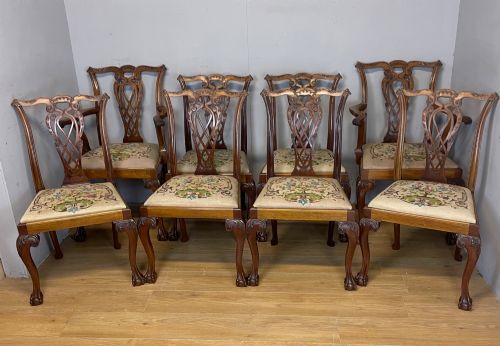
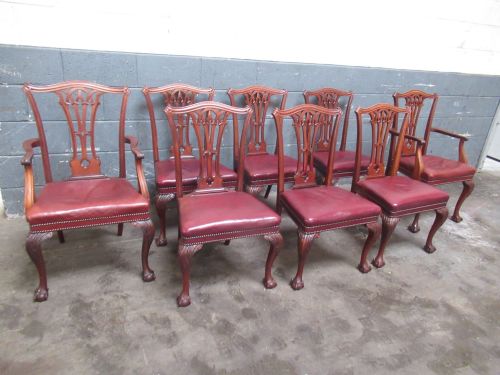
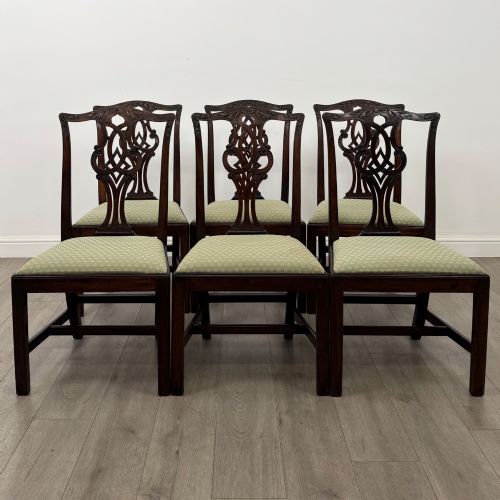
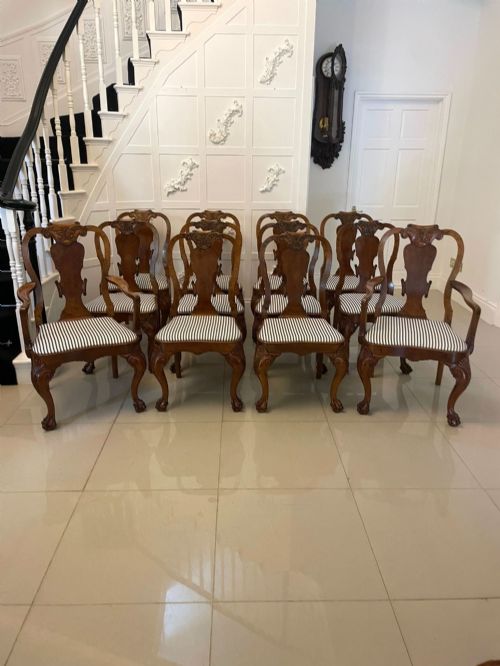
These carved splat side chairs bring structural timber and pierced backs together for everyday dining or occasional seating.
Carved Splat Side Chairs
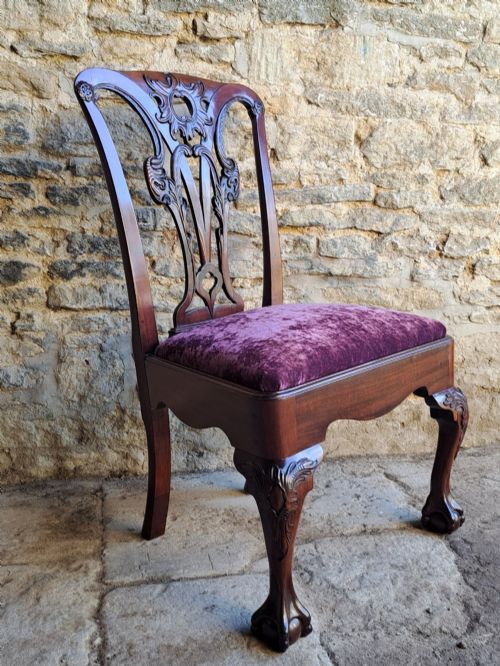
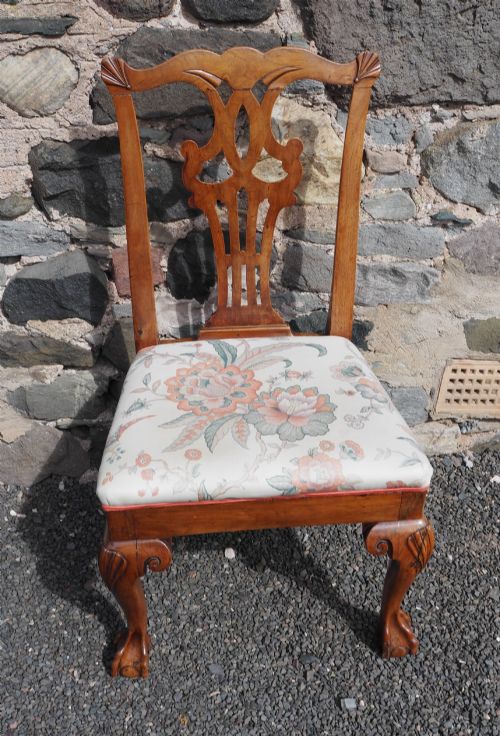
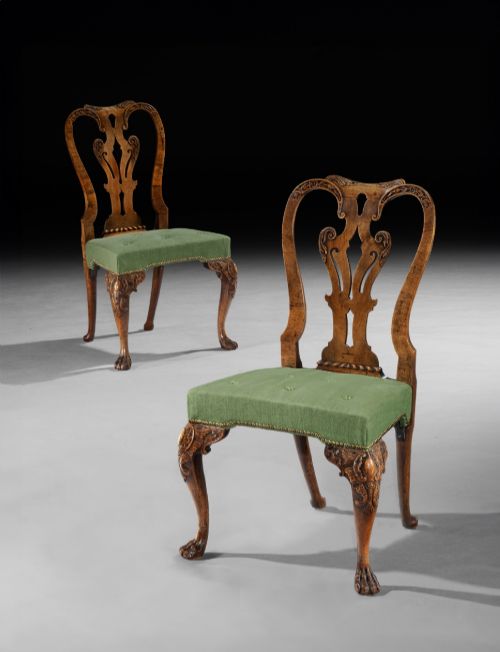
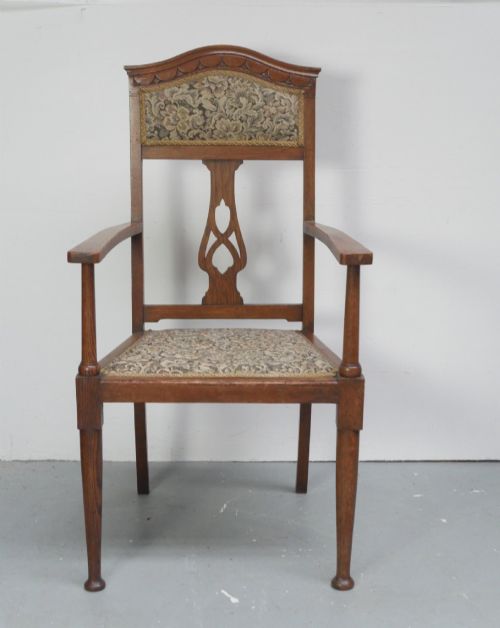
Carved splat side chairs comprise dining chairs and desk chairs designed without arms, intended to pull up to a table or wall. Buyers seeking this phrase encounter seating built across the eighteenth and nineteenth centuries, alongside later revival pieces.
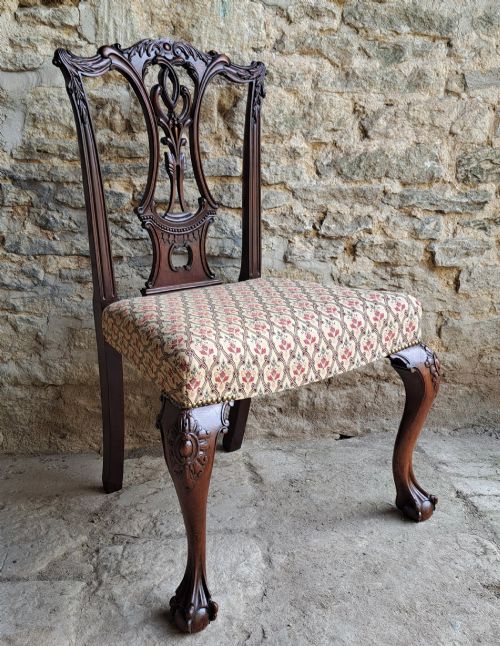
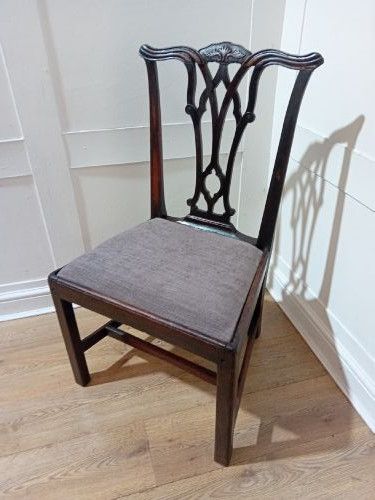
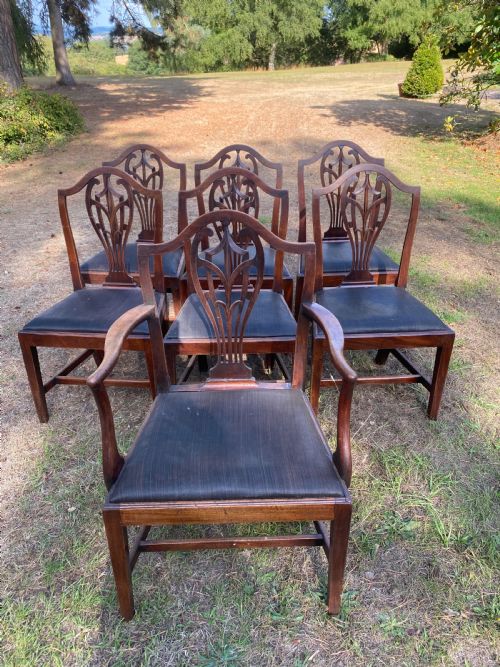
The defining feature rests in the vertical wooden slat, known as the splat, running from the seat up to the top rail. This central element frequently bears carving, piercing, or scrollwork reflecting styles from Georgian periods through to Edwardian interpretations.
Mahogany and walnut form the primary woods encountered within these listings, supplemented by oak, fruitwood, and beech. Makers fashioned these timbers into side chairs and occasional seating spanning the 18th Century, 19th Century, and early 20th Century.
How they were made
Cabinetmakers shaped dense hardwoods like mahogany, walnut, and oak using traditional joinery to construct the frames. Splats were carefully pierced and carved by hand before being integrated into the back rails and seat constructions.
Seating portions utilised drop-in pads, upholstered timber frames, or fabric coverings fixed with brass detailing. Textiles such as leather, contemporary upholstery fabric, and specialist woven cloth completed the seat pads.
Listings span walnut, mahogany, oak, and fruitwood across the Georgian, Victorian, and Edwardian periods.
What varies in quality
The depth and crispness of the carved detail on the central splat separate standard seating from exceptional examples. Skilled carving displays sharp edges and considered proportions along the wooden back.
Timber selection dictates the integrity and appearance of the piece, with dense grain figuring in mahogany and burr walnut elevating the visual weight of the frame. Sound historical construction ensures the joints withstand regular weight bearing without movement.
Charles Tozer·Warings·Wheelers of Arncroach
The Carved Splat Side Chairs Glossary
- Splats
- The vertical wooden slat positioned in the centre of the chair back. Pierced splats contain cut-out decorative openings.
- Cabriole legs
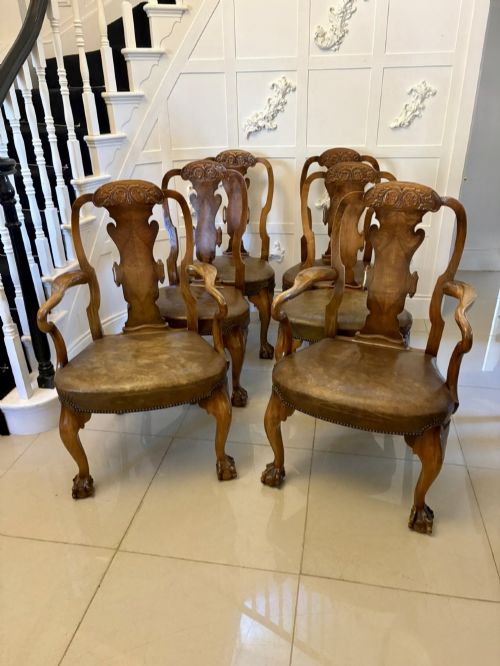
- Furniture legs curving outward at the knee and tapering inward toward the foot. This shape appears frequently on walnut and mahogany pieces.
- Drop-in seats
- Removable wooden frames padded and upholstered separately before dropping into a rebate in the chair frame. They allow straightforward reupholstery.
- Top rails
- The uppermost horizontal wooden member of the chair back. These elements carry stylistic flourishes matching the carved splat below.
Carved Splat Side Chairs: Frequently Asked Questions
How do I identify a true Georgian piece?
Examine the timber density and the hand-cut joinery visible underneath the seat frame. Eighteenth-century examples display patination acquired through decades of handling.
Check the carving style on the splat against established period motifs like ribbons, scrolls, and acanthus leaves. Secondary woods used in the internal framing provide further clues to age.
Can these chairs support daily dining use?
Solid mahogany and walnut frames offer the structural strength required for regular sitting. Many antique examples served around dining tables for generations.
Ensure the joints remain tight and the blocks beneath the seat are secure before putting them into heavy daily service. Periodic maintenance of the timber keeps the frames stable.
What is a drop-in seat?
A drop-in seat is an upholstered wooden frame that lifts out from the rebated recess of the chair base. This method made recovering the textile straightforward without dismantling the main structure.
Many walnut and mahogany chairs from the eighteenth century onwards utilise this construction method. It allows owners to update fabrics while preserving the original wooden frame.
How do revival styles differ from originals?
Revival pieces produced during the Victorian and Edwardian eras interpret earlier eighteenth-century designs using contemporary workshop methods. Machine assistance and standardised tooling often distinguish these later interpretations from period work.
Inspect the timber colour and surface wear to understand the age of the construction. Both original and revival items offer functional seating with distinct historical contexts.