

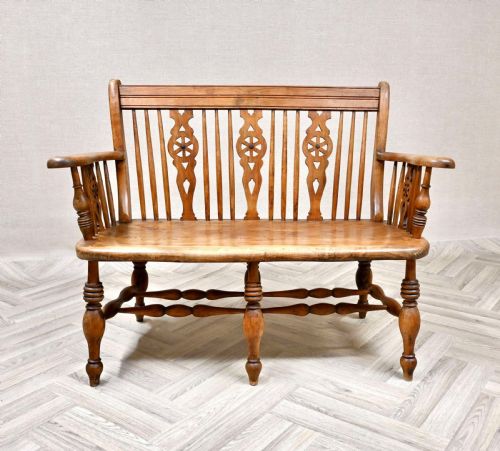


Carved Splat Bench
These carved splat benches are substantial seats built with pierced wooden backs, bringing sculptural presence and formal structure to a hallway or drawing room.
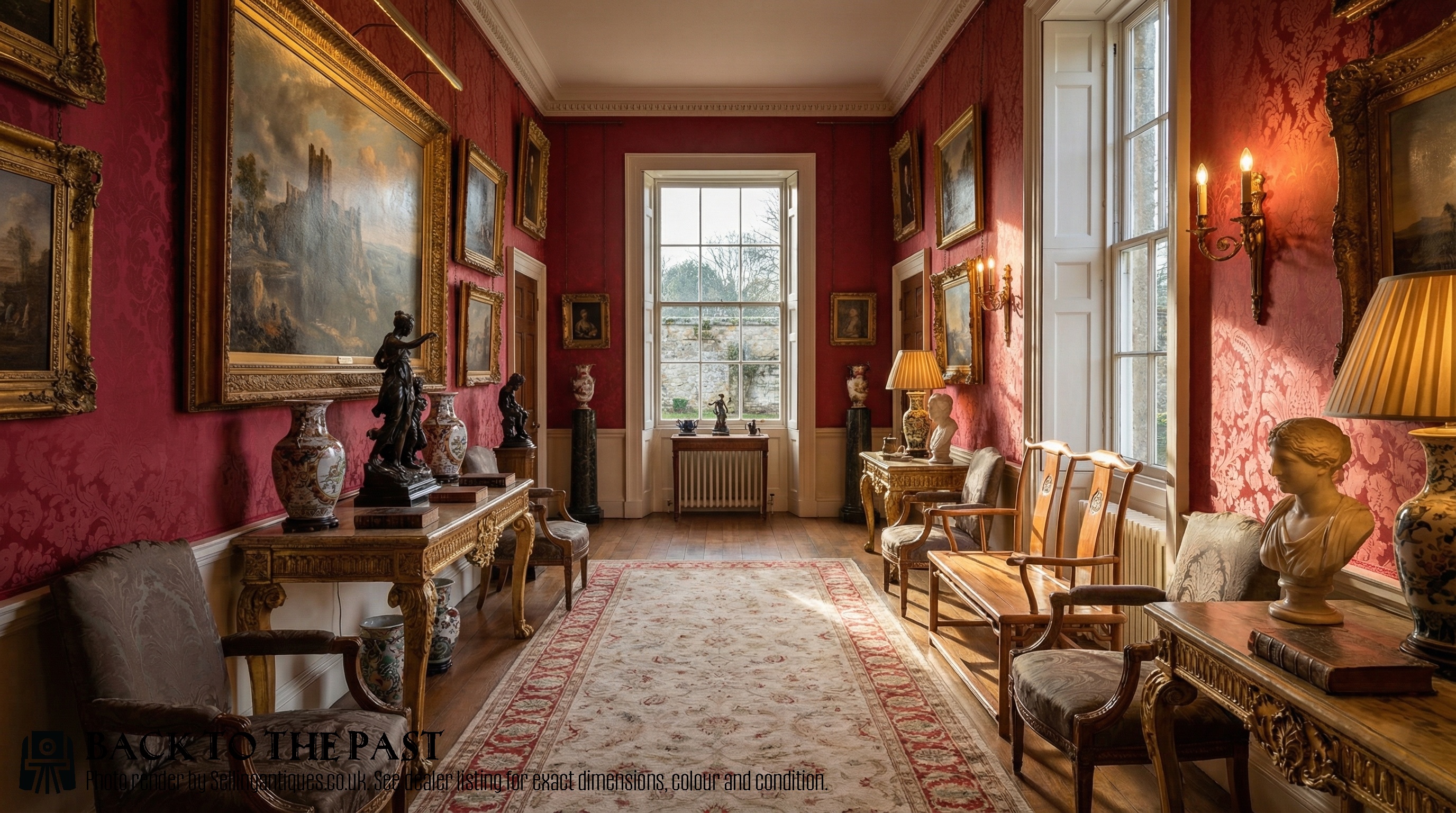
Carved Splat Bench
A carved splat bench takes the distinctive vertical wooden backplate of a dining chair and expands it across a longer seating frame to form a settee or settle. These pieces draw heavily on 18th-century design idioms, appearing in revival interpretations from the Victorian era as well as earlier periods.
The most common examples encountered on this page utilise mahogany frames with classic Chippendale or Hepplewhite style motifs, alongside robust English country versions in elm, ash, and yew. Alongside these traditional British forms, buyers frequently find traditional Chinese blonde wood and hardwood hall benches featuring open woodwork.
Makers adapted these seating forms for different interior settings, ranging from formal chair-back settees designed for reception rooms to sturdy settles built for domestic hallways. The variety spans from George II style oak configurations to French Louis XV style walnut and cane compositions.
Materials and construction methods
Makers relied on dense hardwoods like mahogany and walnut to support intricate piercing and shaping along the central back splats. These woods took fine chisel work while providing the structural rigidity needed for multi-seat frames.
Regional British makers utilised local timbers such as elm, ash, and yew for country settles, building resilient frames without imported stock. Chinese workshops shaped blonde wood and polished hardwoods into horse shoe hall benches using traditional joinery.
Upholstered drop-in seats or cane panels were integrated into the frames to soften the rigid timber construction. Skilled joiners shaped shield backs and chair-back connectors to distribute weight evenly across the bench structure.
Carved Splat Bench Retail Price Guide 2026
Typical asking prices for carved splat bench among the pieces listed under this phrase on Sellingantiques today, from the lower quarter to the upper quarter. They describe what is for sale here now, not the wider market.
Listings feature mahogany, walnut, oak, and regional country timbers like elm, ash, and yew.
Distinctions in construction and design
The crispness of the hand-carved detail on the central splats and arm terminals separates superior examples from plainer workshop output. Deeper relief work and carefully smoothed pierced openings indicate greater attention from the maker.
Timber selection and grain matching across the stretcher base and back frame dictate the visual harmony of the piece. Well-figured mahogany and carefully selected walnut exhibit a richer depth than utility timbers used in simpler country furniture.
The Carved Splat Bench Glossary
- Splat
- The vertical wooden strip running from the seat up to the top rail of a chair or bench back. This central element frequently receives the decorative carving that defines the style of the piece.
- Chippendale Style
- A decorative design vocabulary rooted in mid-18th-century cabinetmaking, characterised by interlaced ribbon splats and cabriole legs. Makers revived these patterns extensively during the Victorian period and into the twentieth century.
- Settle
- A wooden bench with a high solid or pierced back and enclosed arms, historically placed near firesides to block draughts. These forms evolved into lighter hall benches and chair-back settees.
- Cane
- Strips of rattan woven into open mesh patterns to form seat pads or back panels. This technique lightens the visual weight of heavy hardwood frames.
Carved Splat Bench: Frequently Asked Questions
Where should I place a carved splat bench?
These benches suit large hallways, landings, or reception rooms where their decorative backs remain visible from multiple angles.
Because the backs are often intricately pierced or shaped, they work best positioned against a plain wall rather than floating in the centre of a room.
How do I care for the polished hardwood?
Dust the carved splats regularly with a soft, dry brush to prevent dirt settling into the recesses of the woodwork.
Apply a microcrystalline wax occasionally to nourish the timber surface without building up excessive layers that dull the grain.
Can I use these benches for everyday dining seating?
Most of these pieces function primarily as decorative seating or transitional furniture in entranceways rather than primary dining chairs.
The seat heights and fixed wooden or upholstered pads are engineered for shorter periods of sitting rather than extended lounging.
How do I distinguish a revival piece from an 18th-century original?
Examine the construction marks, timber shrinkage patterns, and the uniformity of the carving across the back splats. Revival pieces from the Victorian era or later often display mechanical tool marks and different secondary woods inside the frame.