


Carved Splat Back Bench
These carved splat back bench forms bring architectural joinery into domestic seating, offering elongated chair-back designs rooted in eighteenth-century proportion.
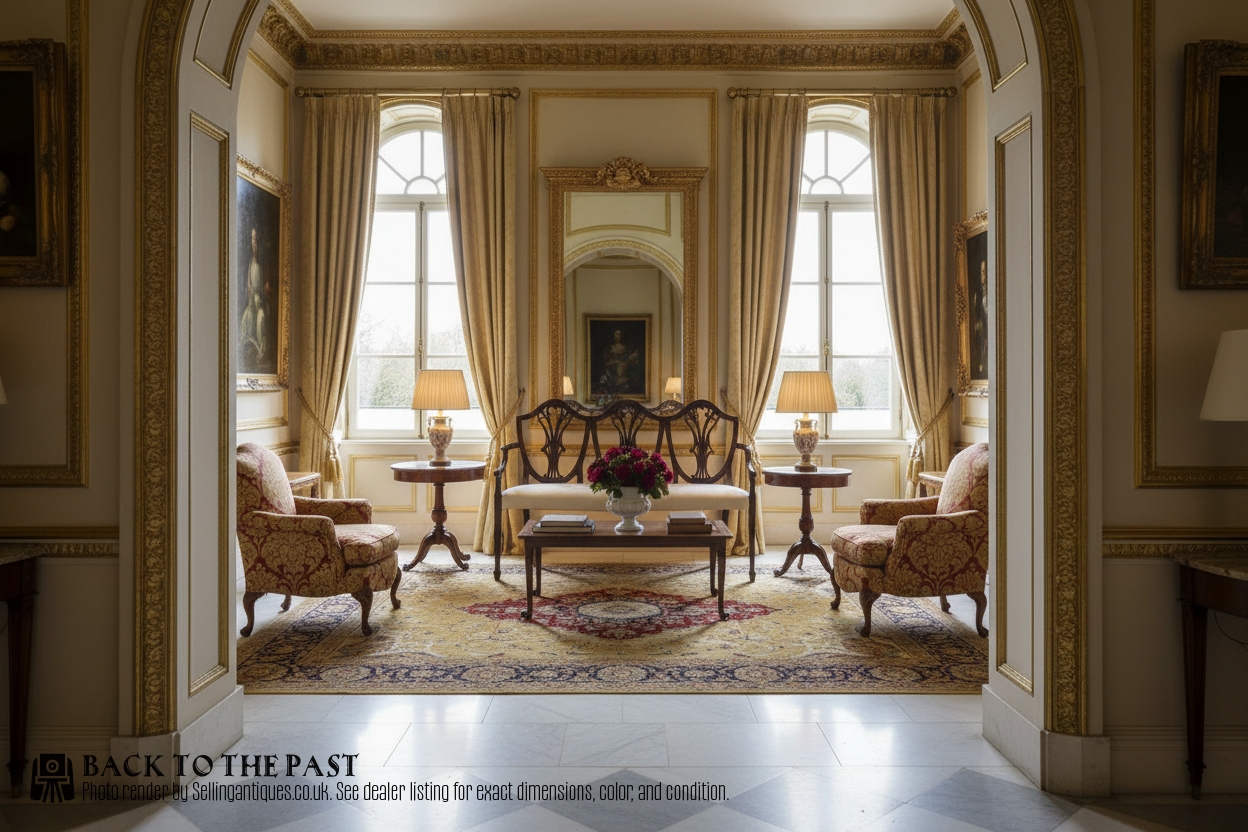
Carved Splat Back Bench
A carved splat back bench combines multiple chair backs into a single long seating unit, creating an impressive linear form for a hallway or reception room. These pieces borrow heavily from classic seat furniture designs, frequently adopting the pierced vertical splats seen in standalone dining chairs.
The versions most commonly found here include eighteenth-century pieces alongside nineteenth-century revivals in the Chippendale, Hepplewhite, and George II styles. Makers during the Victorian era and the early twentieth century enthusiastically returned to these earlier geometric and ribbon-carved motifs.
Makers also adapted these chair-back formats into French Louis XV styles and Chinese blonde wood forms, widening the geographical spread of the design. Buyers encounter settee and bench formats that utilise mahogany, walnut, oak, and elm timbers, often fitted with drop-in fabric upholstery or cane seating.
Materials and construction methods
Cabinetmakers constructed the structural frames of these benches using dense hardwoods such as mahogany, walnut, and oak, ensuring the long rails could support multiple occupants without flexing. Joinery relied on precise mortise and tenon connections, particularly where the upright splats met the crest rails and seat frames.
Carvers shaped the central splats from solid timber blanks, applying pierced fretwork, ribbon motifs, or shield outlines by hand using chisels and gouges. For cane seats, artisans bored holes through the timber seat rails to weave natural cane rush through the framework in tight geometric patterns.
Several makers clearly miscalculated how many guests needed to sit straight at once, cramming up to four chair backs into a single stubborn settee.
Evaluating craftsmanship and proportion
Quality in these benches rests upon the depth and crispness of the carved detail on the splats and crest rails, where sharp undercutting distinguishes superior handwork from mechanical milling. The grain selection in mahogany or walnut frames also dictates visual success, with well-matched timbers providing a unified surface across the elongated seat back.
Structural integrity depends on how cleanly the multiple chair-back sections join the central arm supports and front legs, as poorly aligned joints introduce weakness over long spans. Benches featuring intricate pierced splats combined with secondary materials like cane demand precise tension and seasoned hardwoods to prevent warping.
The Carved Splat Back Bench Glossary
- Splat
- The vertical wooden strip down the middle of a chair or bench back, often shaped and pierced in decorative patterns. It provides crucial lumbar support while defining the stylistic period of the seating.
- Crest rail
- The top horizontal member of a chair or bench back, frequently shaped with curves, ears, or carved scrollwork. It forms the uppermost visual boundary of the seating frame.
- Chippendale style
- A furniture design vocabulary inspired by eighteenth-century maker Thomas Chippendale, characterised by ribbon-back splats and carved cabriole legs. Revivals of this style appeared frequently throughout the nineteenth century.
- Shield back
- A chair or bench back shaped like a heraldic shield, popularized by George Hepplewhite during the late eighteenth century. This silhouette relies on tapered uprights and delicate carved wheat ears or drapery.
- Cane
- Woven peeled rattan or split reed used to create lightweight, resilient seat panels. It requires careful manual threading through drilled channels along the inner seat rail.
Carved Splat Back Bench: Frequently Asked Questions
What is a carved splat back bench?
A carved splat back bench is a long seating form that joins multiple chair backs together into a single unified settee. These pieces feature vertical wooden splats down the backrest and are typically constructed from timbers like mahogany, walnut, or oak.
Craftsmen adapted classic dining chair designs into extended furniture for hallways and reception rooms, drawing on eighteenth-century stylistic traditions. They appear in various revival periods, notably across the nineteenth and early twentieth centuries.
How were these benches used historically?
These benches served as formal seating in grand hallways, galleries, and large reception rooms where wall space suited an elongated furniture form. Their sturdy wooden construction and upright chair-back designs encouraged formal posture rather than lounging.
By uniting several chair backs into one frame, they provided ample seating while maintaining an open, architectural appearance against panelled walls. Many examples accommodated loose fabric cushions or woven cane panels for added comfort.
How do I distinguish nineteenth-century revivals from earlier pieces?
Distinguishing periods relies on examining the timber preparation, tool marks, and secondary woods hidden beneath the structure. Eighteenth-century pieces typically exhibit hand-sawn framing components and specific regional joinery traits that differ from later revival interpretations.
Nineteenth-century makers adopted historical Chippendale and Hepplewhite styles with great enthusiasm, often utilising machine-assisted preparation alongside hand carving. Closer inspection of the wood patina and structural wear helps clarify the true age of the bench.
How should I care for a wood and cane bench?
Preserving these benches involves maintaining stable indoor humidity levels to prevent the timbers and cane panels from drying out and splitting. Dusting regularly with a soft, dry cloth protects the carved surfaces and polished wood finishes from abrasive particles.
Caned panels require occasional gentle cleaning and moisture to maintain elasticity, avoiding harsh chemical cleaners entirely. Keeping the bench away from direct heat sources ensures the joinery and glued assemblies remain secure.