


Carved Slat Back Chair
A carved slat back chair brings solid timber construction and distinct period character directly to your dining room or study.
Carved Slat Back Chair
A carved slat back chair appears in various forms across multiple centuries, ranging from seventeenth-century oak examples to Edwardian and Arts and Crafts interpretations. These pieces function primarily as dining chairs, armchairs, and desk chairs within domestic settings.
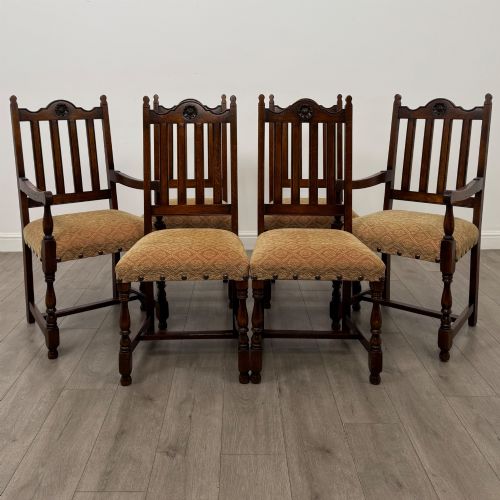
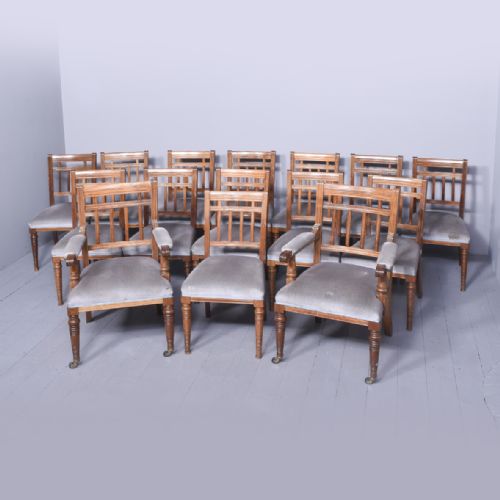
The version most commonly met on this page is the oak dining chair or armchair dating from the late nineteenth or early twentieth century. Many examples arrive as sets, while others appear as pairs or individual armchairs.
Makers drew on historical revival styles such as Jacobean and Charles II, incorporating turned legs and upright backs alongside simpler country designs. Buyers select these chairs for their robust frames and functional seating.
How they were made
Makers relied principally upon solid oak, supplemented by mahogany, walnut, beech, and pitch pine for specific regional or stylistic requirements. Joinery techniques included pegged mortise and tenon joints to ensure long-term stability in daily use.
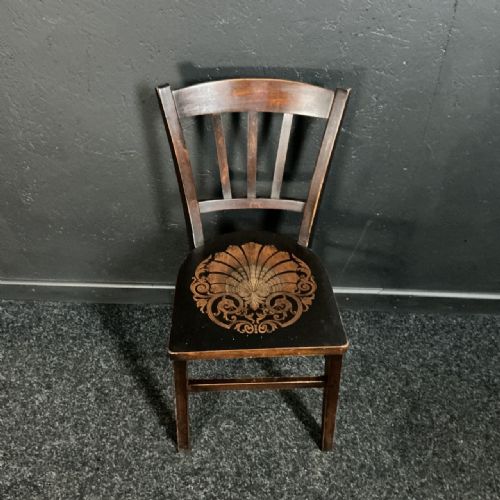
Carving was executed by hand directly into the timber splats and top rails, often reflecting Jacobean revival motifs or Arts and Crafts simplicity. Seat construction varied from plain wood to drop-in upholstery finished in fabric, leather, or velvet.
The furniture forms shown here include matching dining sets, open carver armchairs, and desk chairs featuring twist legs and rush seats.
What varies in quality
Quality separates through the crispness of the timber carving and the architectural proportion of the frame, where finer examples display deeper relief and balanced turnings. The choice and density of the primary wood, such as dense early oak versus lighter twentieth-century stock, heavily influence the overall substance of the piece.
The integrity of the original joinery and the survival of period-appropriate upholstery materials determine the structural standard of each chair. Higher grades retain their original stretchers, sound leg turnings, and well-fitted drop-in or overstuffed seats without modern reconstruction.
The Carved Slat Back Chair Glossary
- Slat back
- A chair back constructed with vertical or horizontal wooden slats framed by upright stiles. This design provides robust lower back support while allowing for decorative piercing or carving.
- Barley twist
- A timber turning style resembling a twisted rope, popular in seventeenth-century furniture and revived during the Victorian and Edwardian eras. It is executed on a lathe to create diagonal ridges.
- Drop-in seat
- A removable wooden frame upholstered in fabric, leather, or velvet that rests upon a ledge inside the seat rails. This form allowed for straightforward reupholstery without dismantling the main chair frame.
- Jacobean Revival
- A nineteenth and twentieth-century design movement that copied or reinterpreted seventeenth-century English furniture styles. Pieces typically feature dark oak, geometric mouldings, and heavy turned supports.
- Arts and Crafts
- A design movement prioritising traditional craftsmanship, visible construction, and simple oak forms over mass-produced ornamentation. Chairs from this tradition often emphasise honest joinery and functional slat backs.
Carved Slat Back Chair: Frequently Asked Questions
What is a carved slat back chair?
A carved slat back chair is a wooden seat featuring a decorated vertical or horizontal slat within the upright back frame. These pieces span several centuries and serve as functional seating for dining rooms and studies.
They appear primarily in oak, mahogany, and beech, incorporating regional styles from seventeenth-century vernacular designs to twentieth-century revivals.
How do I date a wooden chair?
Dating a wooden chair involves examining the wood species, tool marks, joinery methods, and overall stylistic revival cues. Seventeenth-century pieces typically show hand-split oak and pegged joints, whereas Edwardian examples utilise machine-assisted production.
Comparing the turning style on the legs and the construction of the seat frame against known period examples helps narrow the decade of manufacture.
Can I use these chairs daily?
These chairs are built from solid hardwoods like oak and mahogany, making them entirely suitable for regular daily use. Solid timber frames and traditional joinery provide the structural strength required for dining and desk work.
Routine maintenance involves checking the stability of the stretchers and treating the wood finish with appropriate wax to prevent drying.
What does a drop in seat mean?
A drop-in seat is a self-contained upholstered wooden frame that lifts directly out from the seat rails of the chair. This construction style allows the padding and fabric to be replaced easily without altering the structural frame.
Historical examples may retain their original horsehair stuffing and early fabric, while others have received modern upholstery updates.