


Carved Sheet Music Holder
A carved sheet music holder organises folios and scores, bringing tactile timber and brass detail to a music room.
Carved Sheet Music Holder
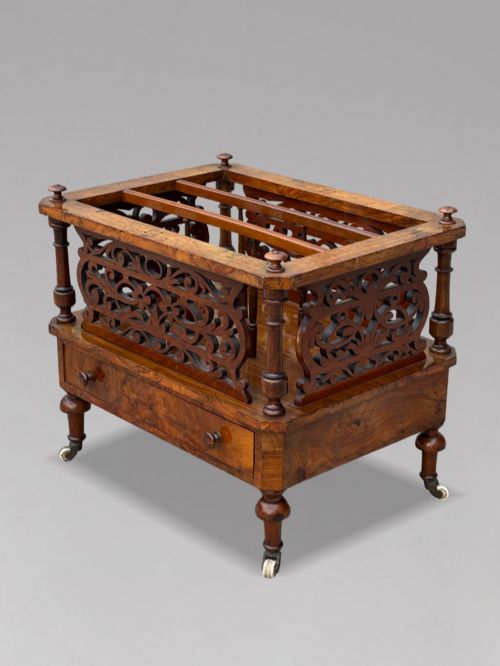
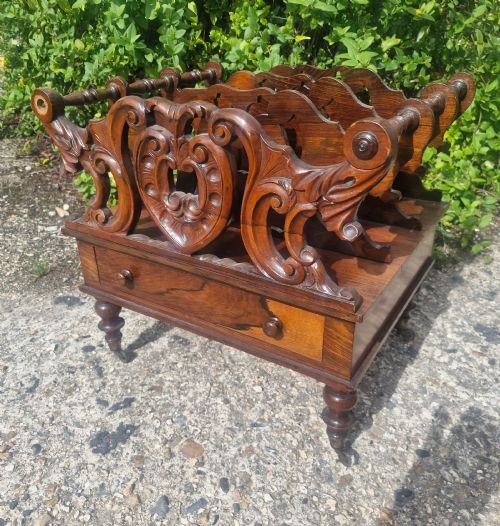
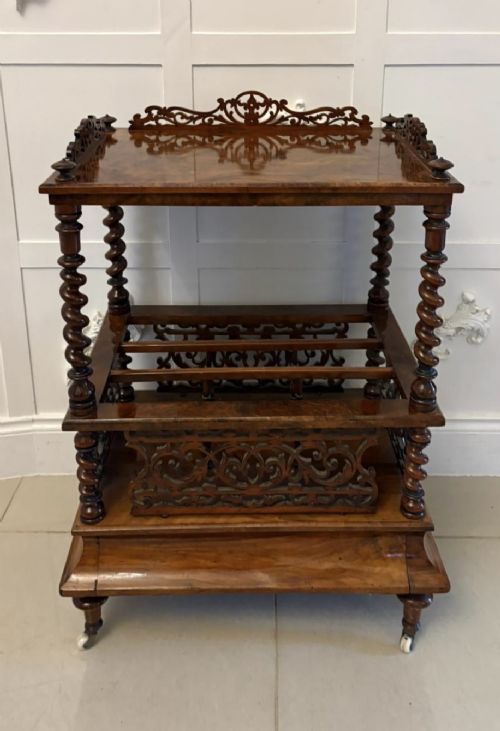
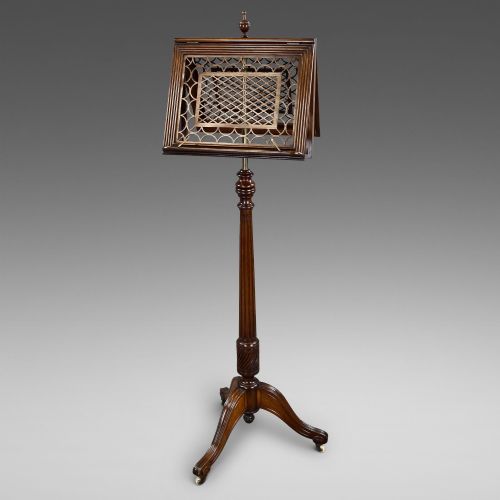
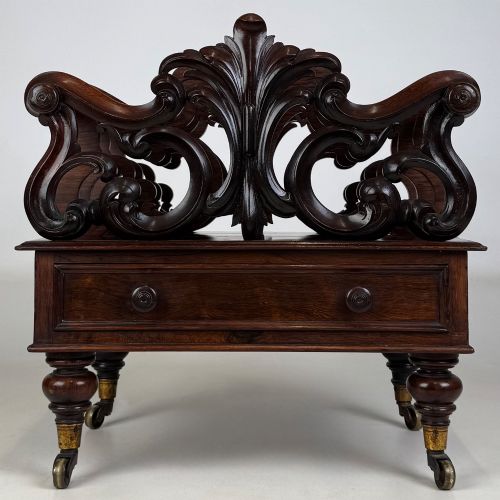
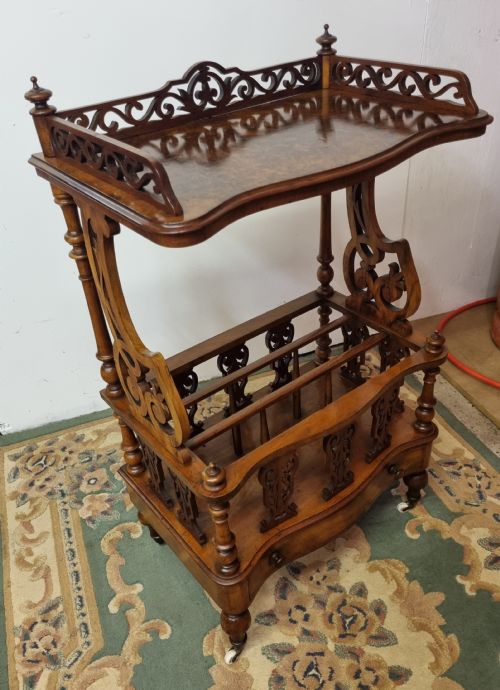
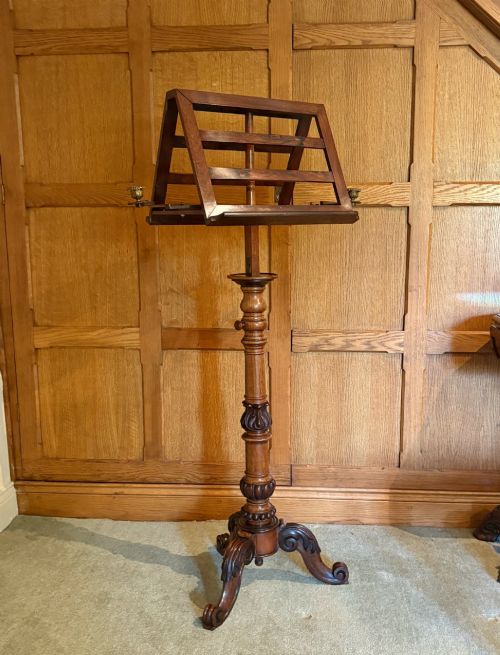
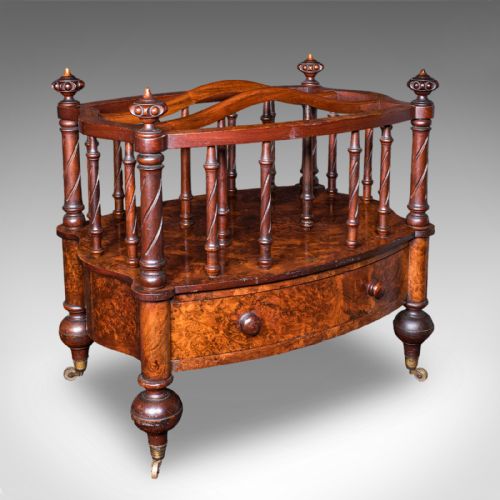
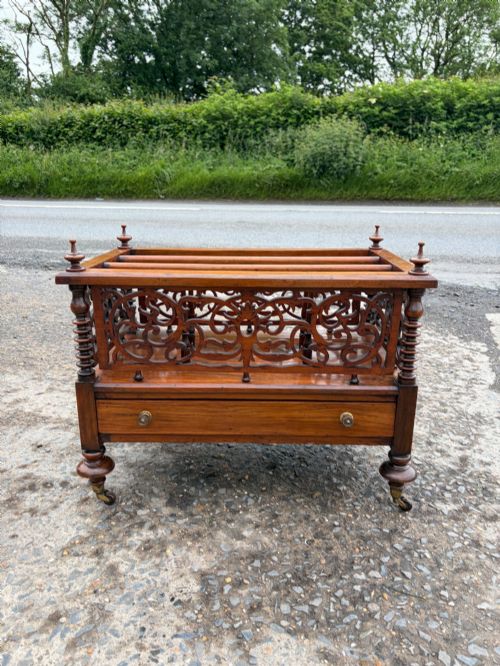
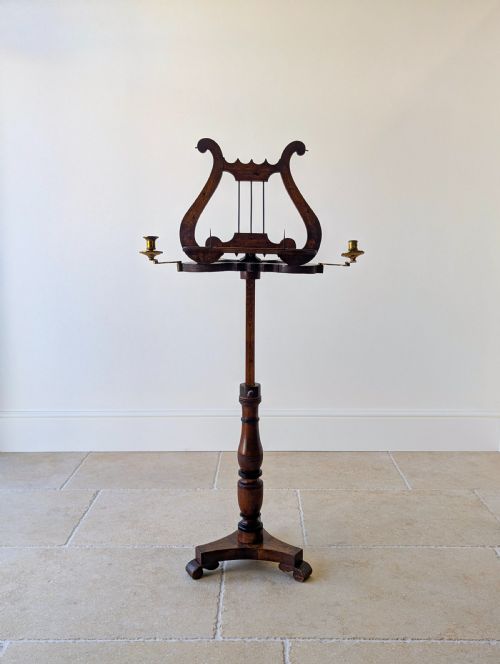
When you search for a carved sheet music holder, you encounter sophisticated nineteenth-century furnishings designed to store and display folios, periodicals, and scores. The most frequent forms on this page are canterburys, music stands, and duet stands originating from the Regency and Victorian periods.
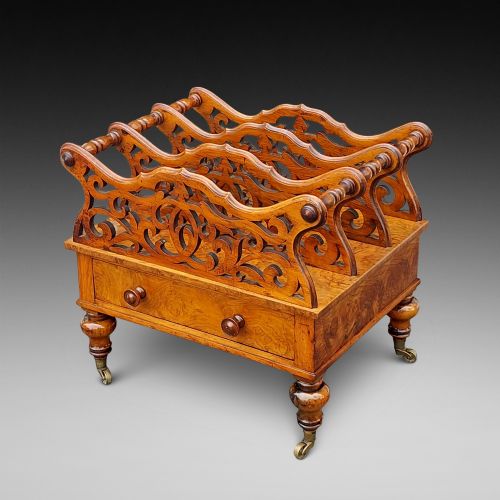
Canterburys typically feature slatted dividers above low drawers and castors, while music stands offer adjustable lecterns supported on turned or carved columns. These pieces stem from Georgian, Regency, and Victorian eras, reflecting the domestic musical life of nineteenth-century households.
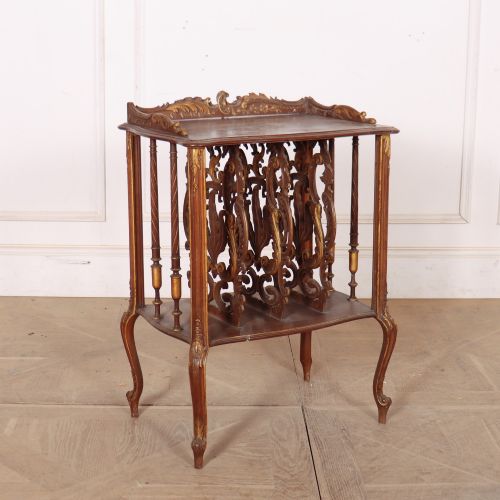
Makers utilised rich timbers including rosewood, walnut, mahogany, and burr walnut, often incorporating pierced fretting, turning, and applied carving. Examples range from simple mahogany racks to serpentine burr walnut canterburys and Black Forest portfolio stands.
How they were made
Cabinet makers built these pieces using solid timbers and decorative veneers such as burr walnut, rosewood, and mahogany over supportive framing. Components were joined with traditional cabinetry methods while turned columns and tripod bases provided structural stability.
Carving, fretting, and inlay defined the decorative vocabulary, executed by hand with gouges and chisels on solid mahogany or applied to walnut panels. Brass castors, hinges, and music lyres were integrated to add functional utility and visual contrast to the dark woods.
Some Victorian musicians kept their folios in a Black Forest stand adorned with carved leaves.
What varies in quality
The distinction between standard examples and finer items rests in the selection of timber figure, such as richly patterned burr walnut or dense Cuban mahogany. Superior pieces display crisp hand-carving, harmonious proportions, and refined details like pierced lyres or inlaid satinwood stringing rather than plain surfaces.
Structural integrity and the retention of original brass castors and turning influence the standing of a piece. Finer items integrate utility with decorative flair, showing meticulous attention to internal drawer construction and the finish of slatted dividers.
Gillows
The Carved Sheet Music Holder Glossary
- Canterbury
- A low stand with slatted divisions for holding sheet music, folios, or newspapers, often fitted with a small drawer and castors below.
- Lyre-form
- A decorative motif shaped like an ancient musical instrument, frequently incorporated into the central support of music stands and canterburys.
- Fretting
- Ornamental woodwork pierced through the board to create openwork patterns, commonly seen on the galleries and music rests of duet stands.
- Serpentine
- A curved line that undulates gently from side to side, used to shape the top edges and fronts of better-quality cabinet furniture.
- Burr walnut
- Timber taken from the gnarled growths of a walnut tree, prized for its swirling, highly figured grain pattern on Victorian table tops and cabinets.
Carved Sheet Music Holder: Frequently Asked Questions
What is a Canterbury used for?
A Canterbury serves as a compartmented stand designed to hold sheet music, folios, and periodicals within reach of a piano or seating area.
Nineteenth-century households utilised them to keep scores tidy while adding decorative warmth to drawing rooms and music parlours.
How do I tell Regency from Victorian pieces?
Regency pieces often display classical restraint, clean lines, and rosewood or mahogany timbers inspired by Greek and Roman forms dating from around eighteen-thirty.
Victorian examples tend to be heavier, employing burr walnut, serpentine shapes, and more exuberant carved ornamentation from the mid to late nineteenth century.
Were music stands adjustable?
Many duet stands and music racks incorporated mechanical ratchets or screw adjustments to alter the height and angle of the reading desk.
Musicians could position scores precisely for seated or standing performance during parlour recitals.
How do I care for rosewood and walnut?
Maintain these timber surfaces by keeping them away from direct sunlight and sudden temperature changes that can dry out old veneers.
Apply a light application of natural wax periodically to nourish the grain and preserve the deep lustre of the polished wood.