

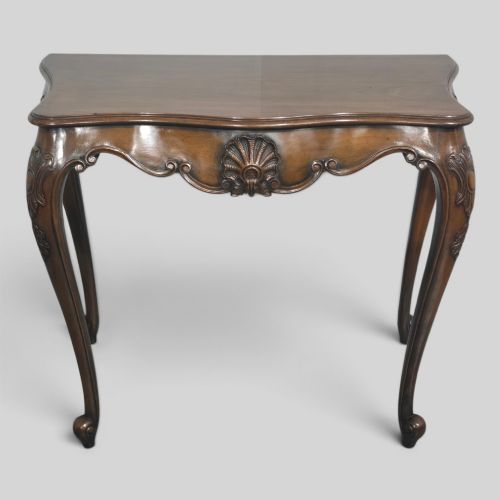
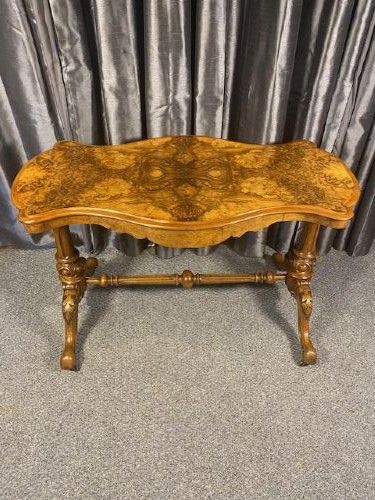
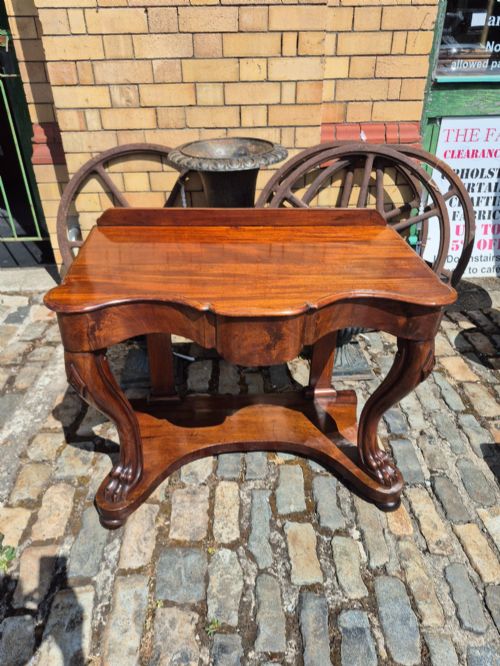
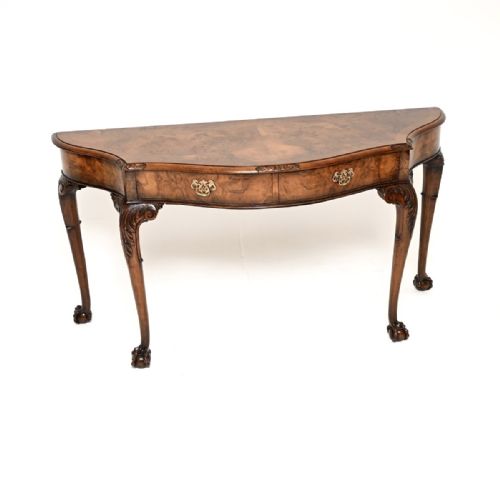
Carved Serpentine Console Table
A carved serpentine console table brings fluid 18th-century movement and rich timber figure to a hallway or drawing room.
Carved Serpentine Console Table
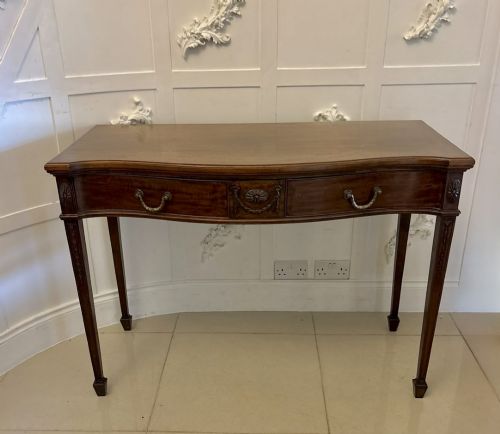
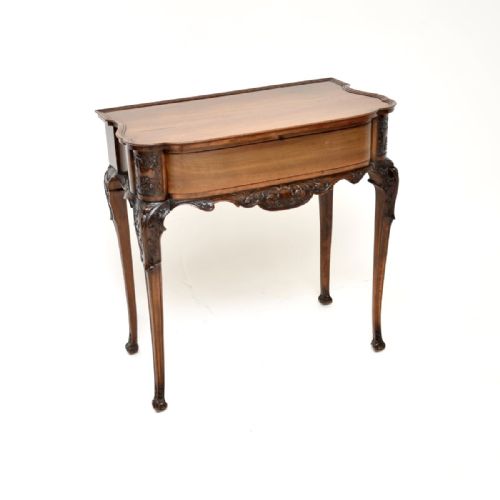
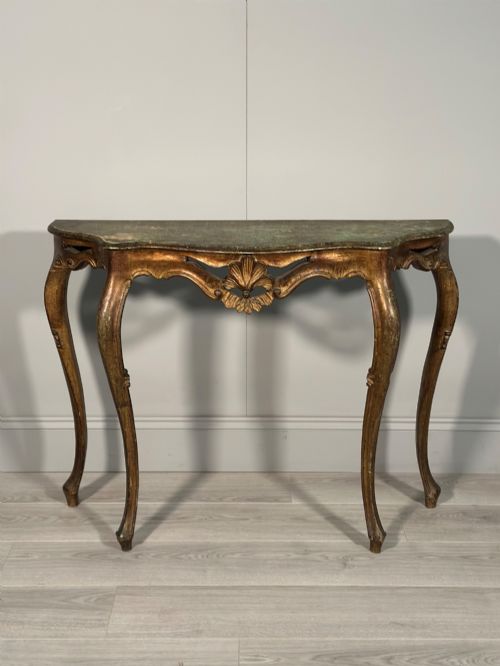
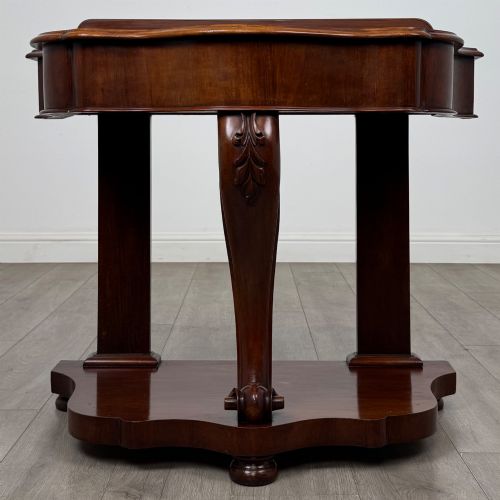
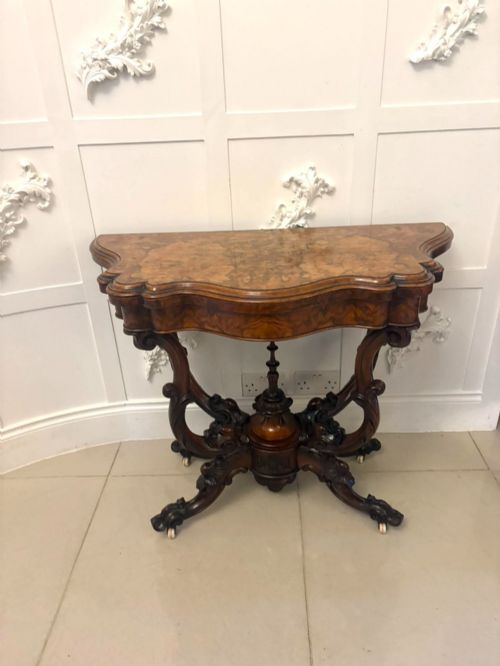
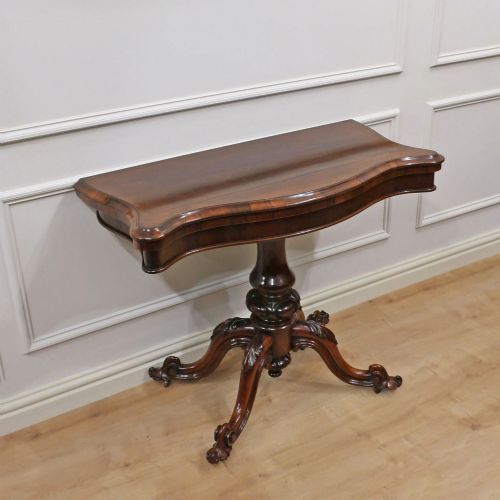
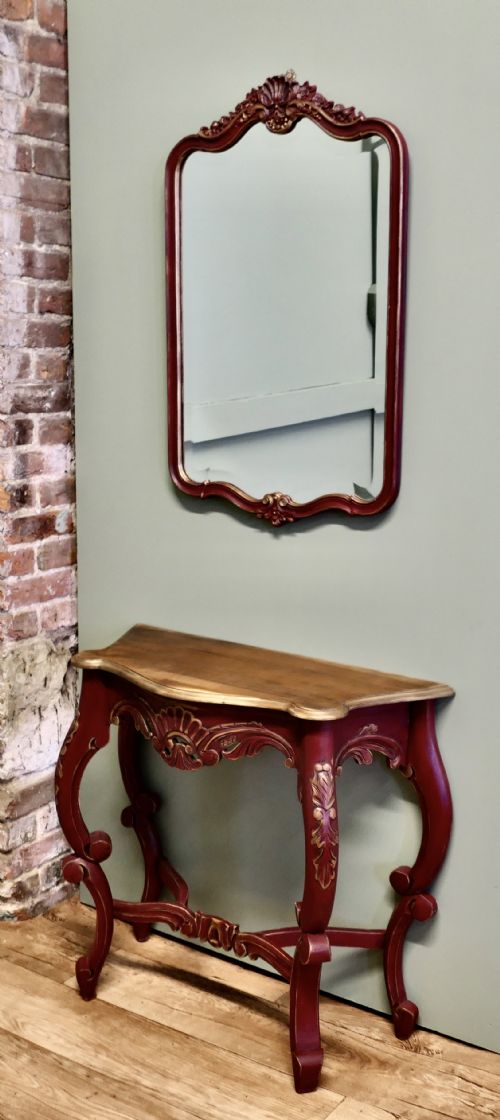
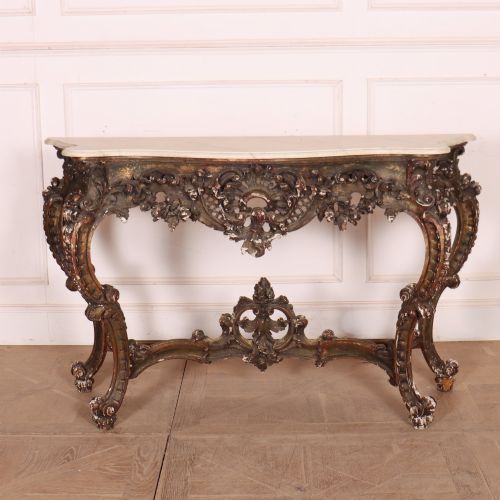
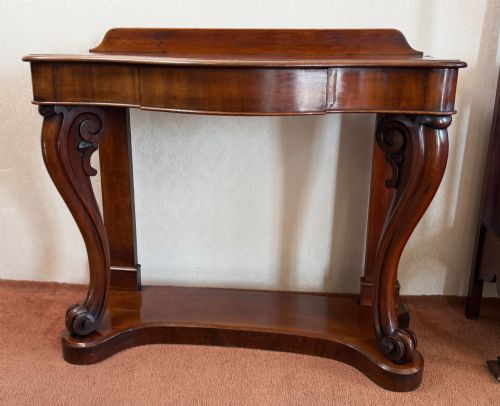
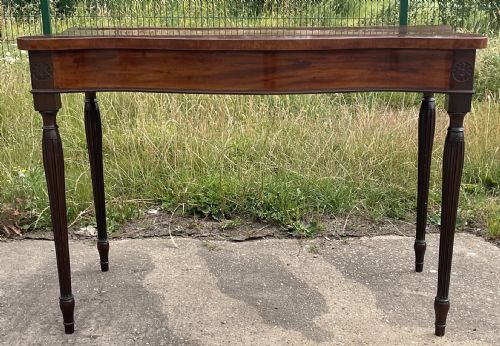
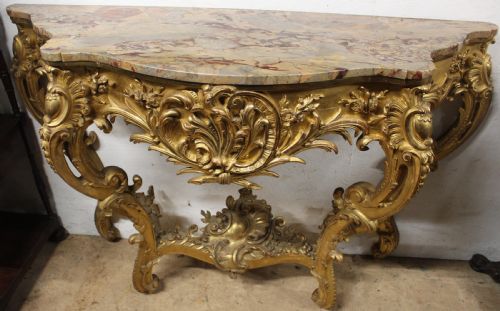
A carved serpentine console table presents a distinctive undulating front edge paired with sculptural woodwork. When you examine this selection, you encounter forms ranging from 18th-century Italian giltwood and English mahogany examples to Victorian and later burr walnut pieces.
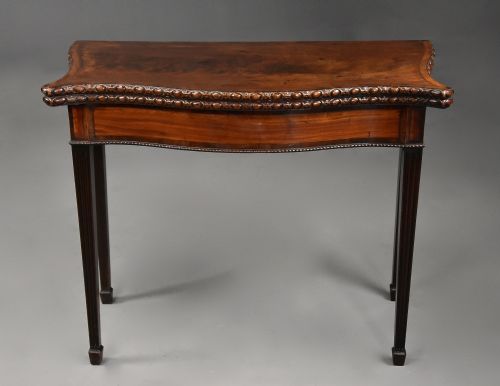
Makers adapted the serpentine outline across console tables, serving tables, and multi-purpose card or games tables. The evidence shows these surfaces arriving in mahogany, walnut, oak, and marble-topped variants spanning the Georgian, Victorian, and early 20th-century periods.
Materials and construction
Cabinetmakers constructed these tables using dense hardwoods like mahogany, walnut, and oak, frequently selecting burr veneers for decorative tabletops. Carving was executed directly into the solid timber framing or built up in gesso over wood before gilding or painting.
Heavier iterations incorporate fitted marble slabs inset into the timber frame, particularly on Italian and French-influenced pieces. Structural joinery accommodated the complex curved rails required to achieve the characteristic serpentine contour.
Carved Serpentine Console Table Retail Price Guide 2026
Typical asking prices for carved serpentine console table among the pieces listed under this phrase on Sellingantiques today, from the lower quarter to the upper quarter. They describe what is for sale here now, not the wider market.
Card tables hide their gaming heritage entirely until someone flips the top open to reveal old green baize.
Qualities that set examples apart
The standard of a carved serpentine console table rests on the crispness and depth of the carved ornamentation. Sharp, undercut foliage and well-defined mouldings separate master cabinetwork from simpler commercial production.
Surface preservation dictates the standing of an antique piece. Original timber patination, intact gilding, and uncompromised veneer figure carry far more weight than later refinishing or replacement marble tops.
Epstein and Co·Pauly et Cie
The Carved Serpentine Console Table Glossary
- Serpentine
- A front edge or tabletop shaped with a central convex curve flanked by two concave sweeps. This flowing outline requires precise joinery to follow the undulating line.
- Console table
- A table designed to stand flat against a wall, frequently secured to the vertical surface with brackets or wall fixings. Historically, these pieces served decorative and display purposes in formal reception rooms.
- Giltwood
- Timber that has been coated with fine gold leaf applied over a prepared gesso ground. This finish appears frequently on 18th-century and continental examples.
- Burr walnut
- Wood taken from the warted excrescences of a walnut tree, yielding intricate, swirling grain patterns. Cabinetmakers prized this timber for high-status tabletops.
- Card table
- A foldable or swing-top table designed for gaming and social card play. Many examples in the records double as console tables when closed against a wall.
Carved Serpentine Console Table: Frequently Asked Questions
Where should I place a console table?
These tables find their traditional home against a flat wall in an entrance hallway, drawing room, or dining space. Because many historical examples were designed to be viewed primarily from the front, they anchor narrow areas without blocking movement.
Pairs of console tables also work well beneath large mirrors or flanking architectural doorways. Their shallow depth keeps them practical for modern rooms while maintaining formal presence.
How do I care for a marble top?
Marble surfaces require gentle cleaning with a damp cloth and neutral soap to preserve the stone. Avoid acidic liquids like vinegar or wine, which can etch polished marble.
Wooden bases should be dusted regularly with a dry cloth. Keep the timber away from direct heat sources to prevent veneer shrinkage.
How do I distinguish 18th-century from later styles?
Eighteenth-century pieces typically exhibit hand-cut joinery, deeper timber patination, and proportional carving specific to Georgian or Rococo idioms. Later revivals from the Victorian and Edwardian eras often utilise machine-sawn framing components and different secondary woods.
Examining the underside and drawer construction helps reveal the true age of the piece.