

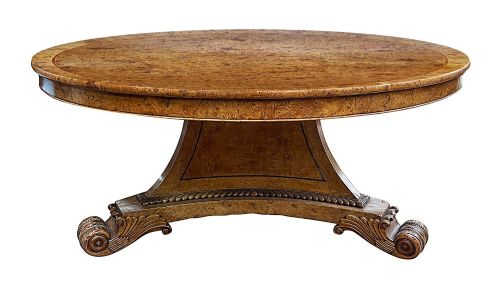
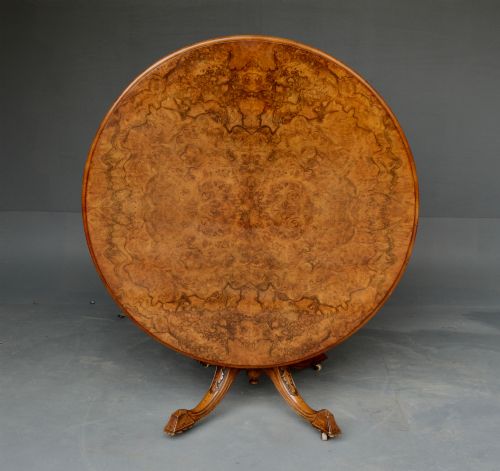
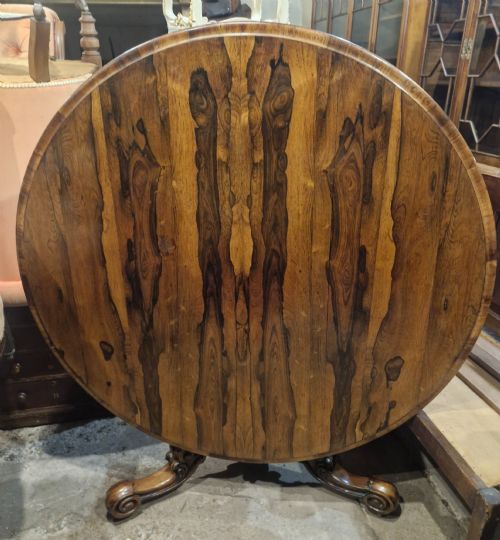
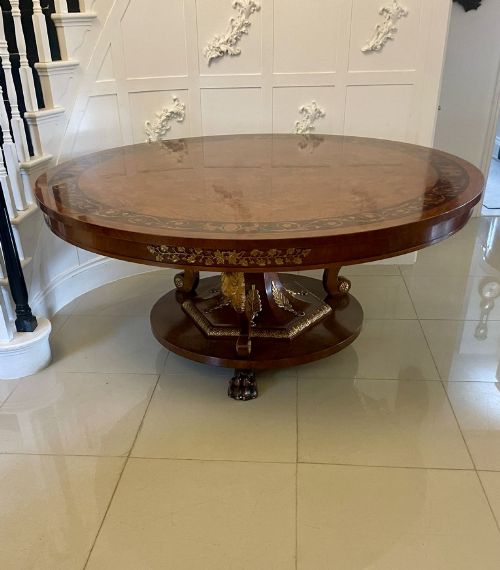
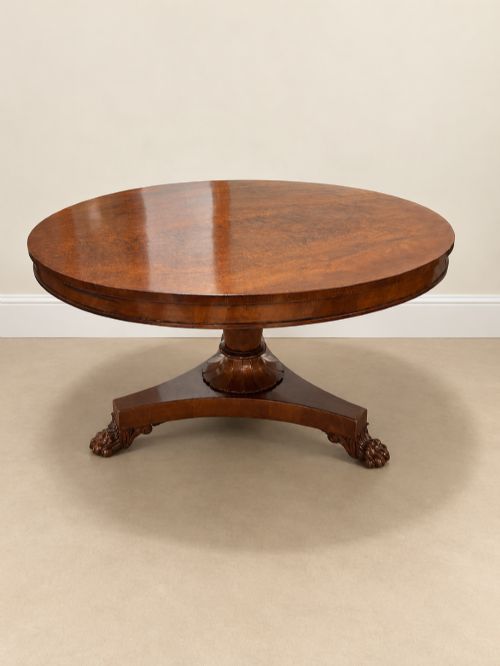
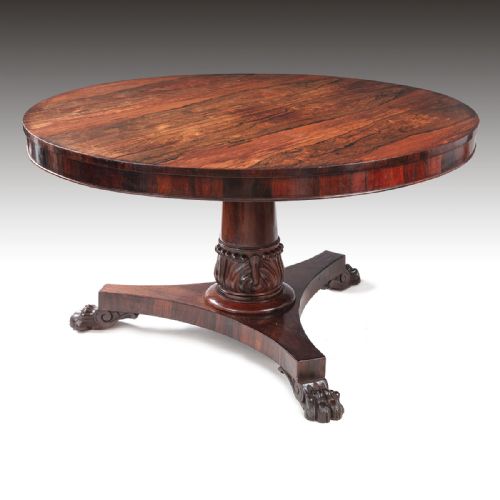
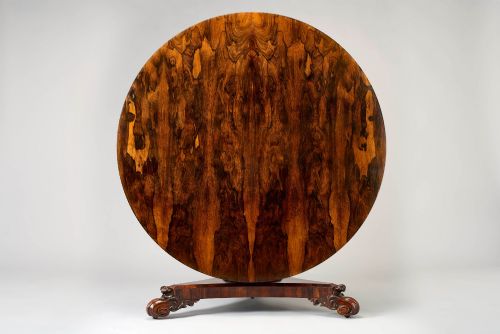
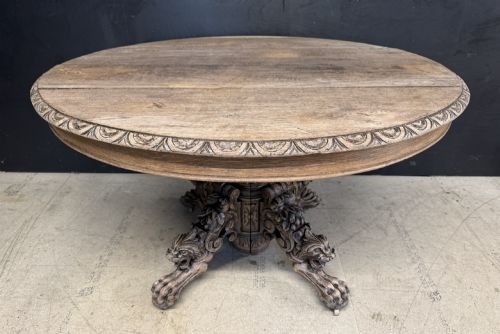
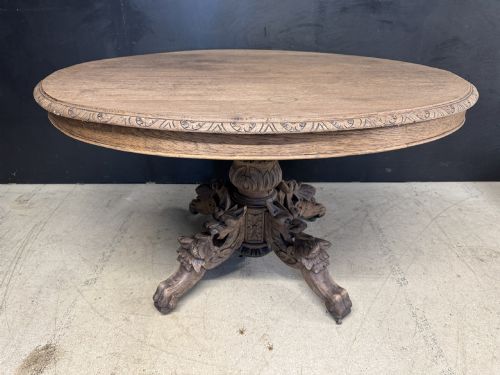
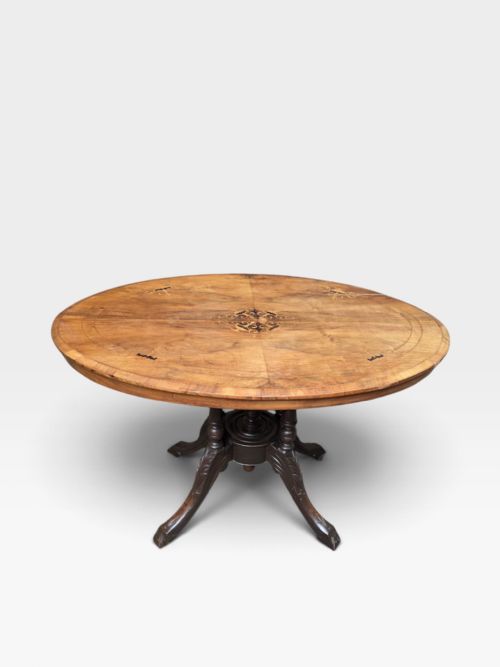
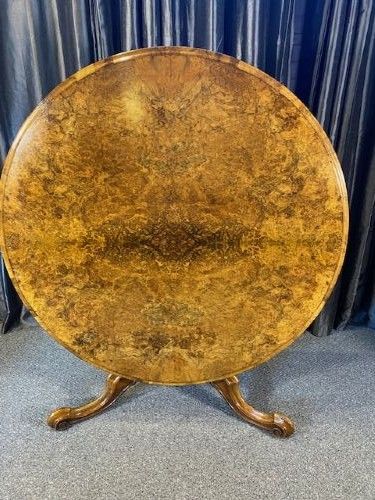
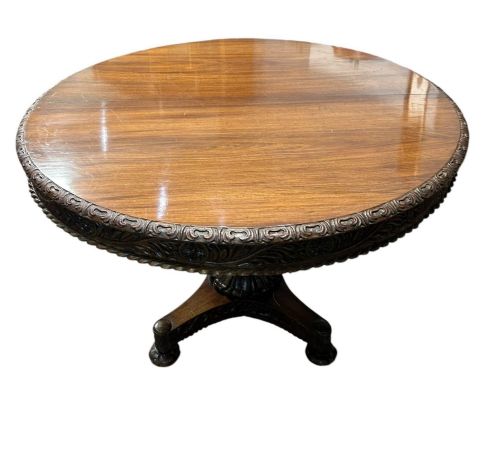
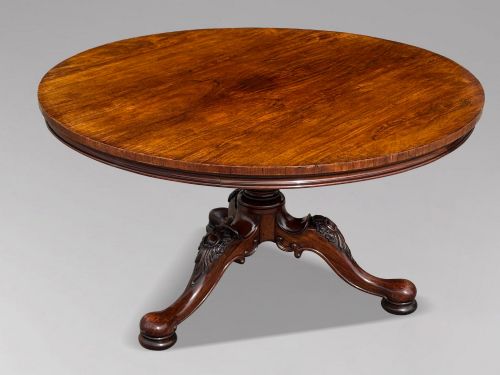
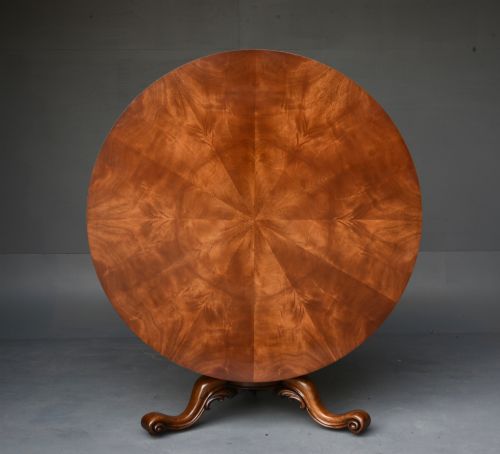
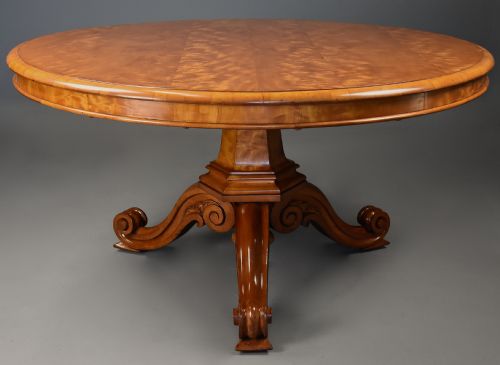
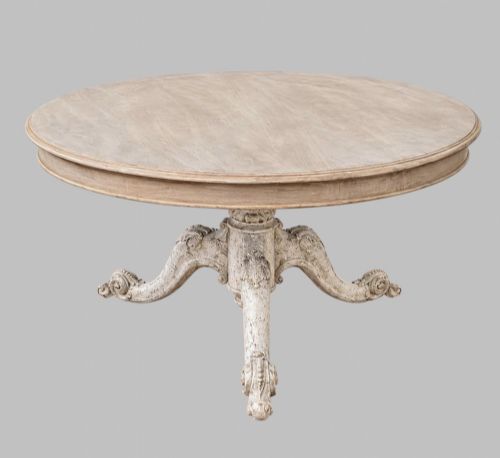
Carved Round Breakfast Table
A carved round breakfast table serves as a central social hub, bringing warmth and character to a room through its figured timber and turned pillar.
Carved Round Breakfast Table
A carved round breakfast table appears most frequently from the Victorian and William IV periods, alongside Regency and 19th-century examples. These circular pieces often function as dining tables, centre tables, or tilt-top tables resting upon triform or tripod bases.
Makers shaped these surfaces from rich timbers including rosewood, mahogany, and burr walnut. Examples range from compact country house pieces to grand circular formats designed for central placement in larger rooms.
Materials and Construction
Cabinet makers utilised dense hardwoods such as rosewood and mahogany for stability and rich figuring, often incorporating burr walnut and pollard oak veneers to create striking circular grain patterns. Wood inlay and marquetry occasionally decorate the tops of finer examples.
Many of these circular tables employ a tilt-top or snap-top mechanism mounted upon a central pillar with a sturdy triform or tripod base. Brass fittings and secret drawers appear on specific Regency and Victorian variants.
Carved Round Breakfast Table Retail Price Guide 2026
Typical asking prices for carved round breakfast table among the pieces listed under this phrase on Sellingantiques today, from the lower quarter to the upper quarter. They describe what is for sale here now, not the wider market.
Several tables include secret drawers designed to hold morning correspondence hidden beneath the circular top.
Assessing Craftsmanship
The distinction between ordinary and exceptional pieces rests in the selection of the timber figures, such as highly figured rosewood or satin birch, and the crispness of the hand carving on the pillar and base. Harmony of proportion between the circular top and the supporting pedestal defines superior production.
The precision of the tilt mechanism and the seamless integration of wood inlay or marquetry reveal the level of workshop skill. Finer tables maintain structural stability at the joints while displaying unblemished polished grain across the entire surface.
The Carved Round Breakfast Table Glossary
- Breakfast table
- A circular dining or centre table designed in the 19th century, frequently featuring a tilt-top mechanism. These pieces accommodated morning meals before being moved aside.
- Tilt-top table
- A table with a hinged top that rotates to a vertical position when not in use. This mechanism allowed the furniture to stand against a wall to save space.
- Triform base
- A three-sided pedestal support common on Regency and William IV tables. It typically rests on carved feet or castors.
- Marquetry
- Decorative patterns formed by the insertion of different coloured wood veneers into a solid ground. It appears on Victorian table tops.
- Snap-top mechanism
- A spring-loaded catch that locks a tilt-top table securely in its horizontal position. This prevents accidental tipping during use.
Carved Round Breakfast Table: Frequently Asked Questions
What is a breakfast table?
A breakfast table is a 19th-century circular dining table designed for smaller morning meals and general use in the home.
These versatile pieces often feature a tilt-top mechanism that allows the table to be stored upright against a wall when not in use.
How do I use a tilt-top table?
A tilt-top table operates via a release catch beneath the surface, letting the circular top pivot from horizontal to vertical.
This function enables the furniture to double as a space-saving wall display or a compact centre table in rooms with limited floor space.
How do I identify a William IV table?
William IV tables, dating from the 1830s, typically feature heavy rosewood or mahogany timbers and robust circular or octagonal pillars.
They frequently stand on substantial triform bases with carved scroll feet and display bold, architectural proportions.
What woods were used for these tables?
Cabinet makers predominantly used rosewood, mahogany, and walnut, often selecting burr walnut, pollard oak, or satin birch for decorative grain.
Secondary timbers like oak and cherry appear in regional construction and internal framing components.