


Carved Rosewood Chiffonier
These carved rosewood chiffonier pieces are compact low cabinets built for the principal reception rooms of nineteenth-century homes.
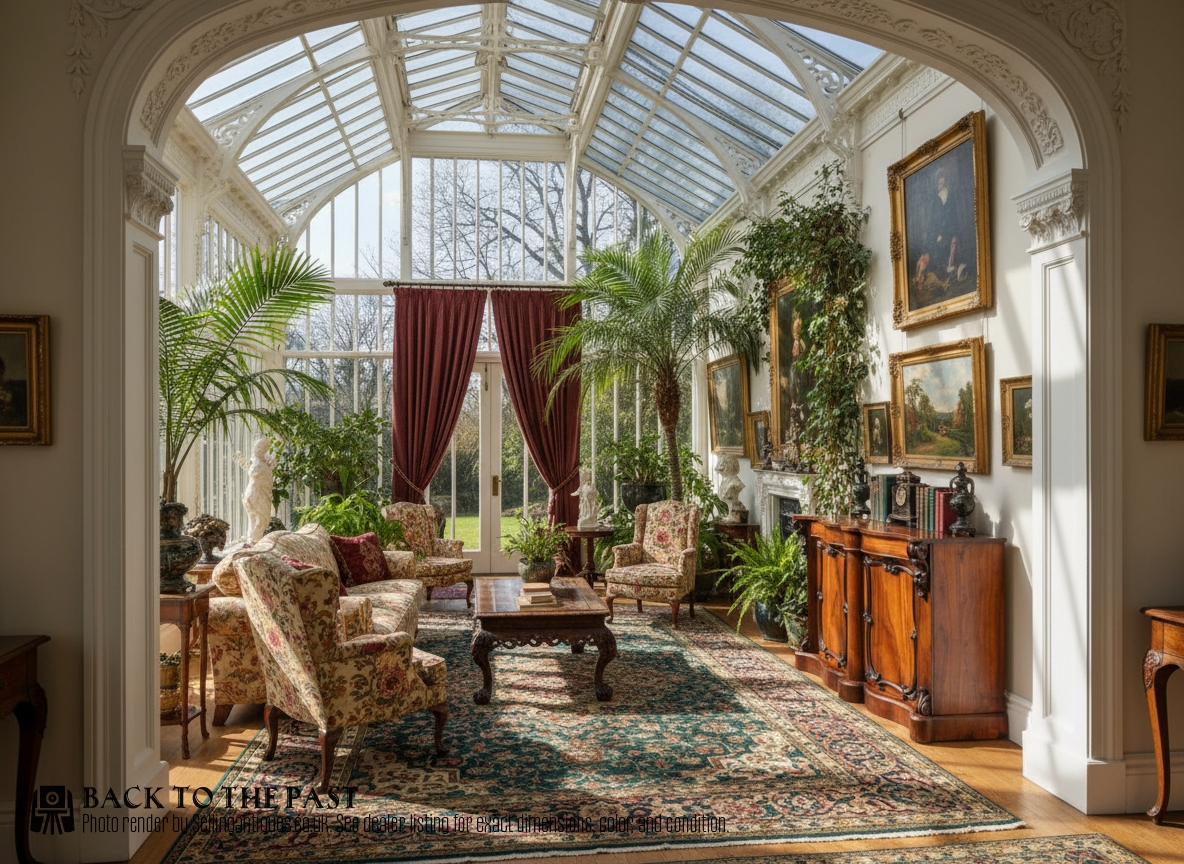
What these pieces are
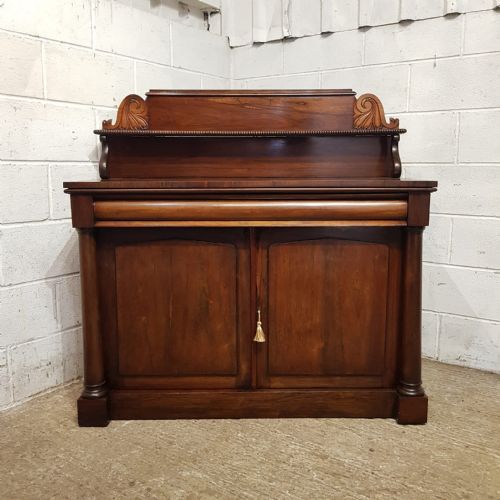
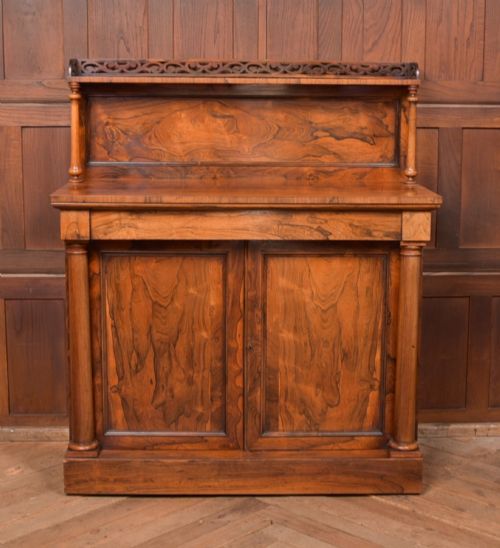
A carved rosewood chiffonier is a low sideboard or side cabinet designed to hold dining silver or books while displaying decorative objects on the top surface. These functional articles of furniture appear across the nineteenth century, spanning the Regency and Victorian periods.
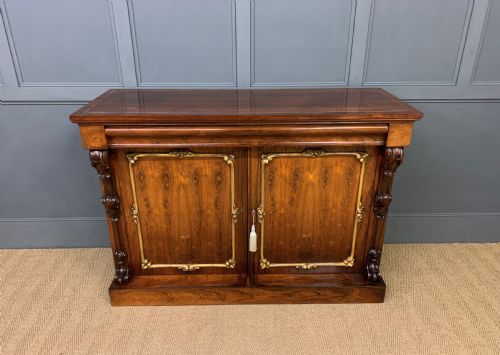
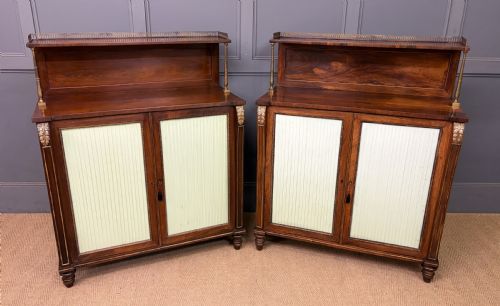
The versions met on this page include mirrored side cabinets, parlour cabinets with boxwood inlay, and four-door storage units. Makers from these eras constructed them primarily as low sideboards or combined them with superstructure mirror backs.
How they were made
Cabinet makers utilised dense rosewood timber as the primary structural and visible material for these chiffoniers. Workshops integrated contrasting boxwood inlay and brass elements into the timber frames to delineate panels and drawer fronts.
Makers incorporated glass panels within doors and fitted mirrored backs above the main cabinet body. Certain pieces also feature fabric linings behind glazed doors to conceal the interior shelves.
Retail Price Guide 2026
Typical UK retail prices for carved rosewood chiffonier, calculated from the Sellingantiques database of over a million retail prices indexed since 2003. This retail price guide relies exclusively on Sellingantiques data; no external sources or auction records are used, so the figures do not describe the wider market.
Secret inner drawers designed for stashing parish tithe receipts occasionally turn up hiding behind the main cupboard doors of these sturdy Victorian sideboards.
What varies in quality
Quality depends on the precision of the carved ornamentation and the refinement of the boxwood inlay work across the front of the cabinet. Finer examples display crisper botanical carving on the rosewood frames and superior timber selection.
The integration of the mirror back and the condition of the original glass and brass fittings distinguish standard utility pieces from more elaborate parlour cabinets.
The Carved Rosewood Chiffonier Glossary
- Chiffonier
- A low side cabinet equipped with shelves and cupboards, typically positioned in a dining room or parlour. It provides enclosed storage below a flat display surface.
- Rosewood
- A heavy, dark timber with distinct grain patterns utilised for fine nineteenth-century cabinet making. It takes a high polish and forms the primary carcass material here.
- Boxwood inlay
- Contrasting pale wood inserted into carved channels within the darker rosewood surface. This technique creates geometric or floral decorative borders.
- Mirror back
- A vertical glass plate fitted into a wooden frame mounted above the main cabinet top. It reflects light and displays objects placed on the shelf below.
Frequently Asked Questions
What is a chiffonier used for?
A chiffonier serves as a low storage cabinet and display surface for dining rooms and parlours. Nineteenth-century households utilised the enclosed cupboards for tableware, books, and household goods.
The flat top surface and optional mirror backs also provide space to display decorative objects and small ceramics within the principal rooms.
How do I tell Regency from Victorian pieces?
Regency items date from the early nineteenth century and typically exhibit cleaner classical lines and restraint in surface decoration. Cabinet makers working in this era focused on timber grain and simple architectural forms.
Victorian examples span from the eighteen-fifties onward and frequently incorporate heavier carving, mirrored superstructures, and contrasting boxwood inlay. The decorative ornamentation becomes progressively more elaborate as the century advances.
Are these cabinets difficult to place in a modern home?
These low cabinets fit easily into modern hallways, living rooms, and dining spaces due to their compact height. Their shallow depth allows them to sit against walls without dominating the floor area.
The dark rosewood and mirrored backs also complement both traditional interiors and contemporary minimalist spaces as focal accent pieces.
How do I care for rosewood furniture?
Rosewood requires stable indoor humidity levels and protection from direct sunlight to prevent timber splitting and fading. Regular dusting with a soft, dry cloth preserves the polished finish.
Avoid placing damp items or harsh chemical polishes directly onto the wood surface. Gentle wax application maintains the natural lustre of the timber.