




Carved Rosewood Candle Stand
A carved rosewood candle stand brings rich grain and solid weight to a room, offering a sturdy perch for illumination or display.
Carved Rosewood Candle Stand
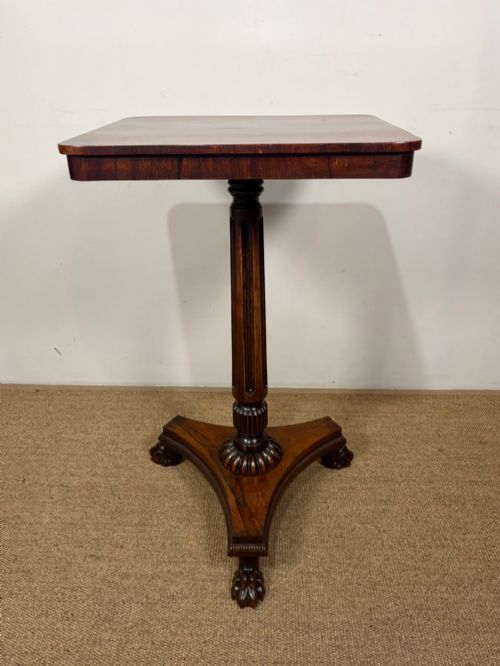
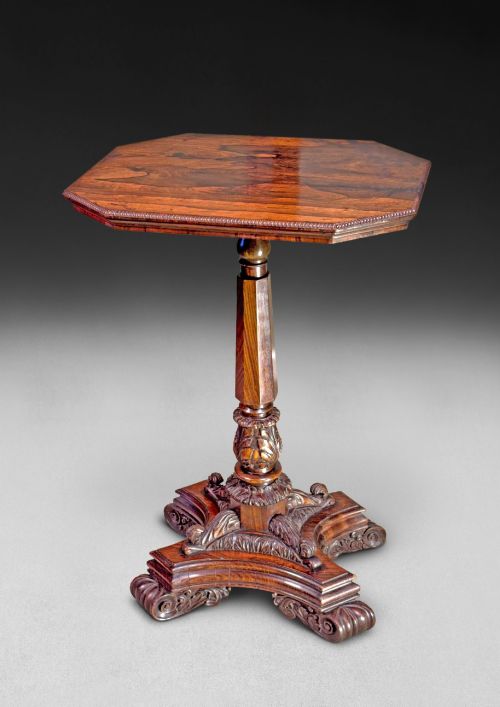
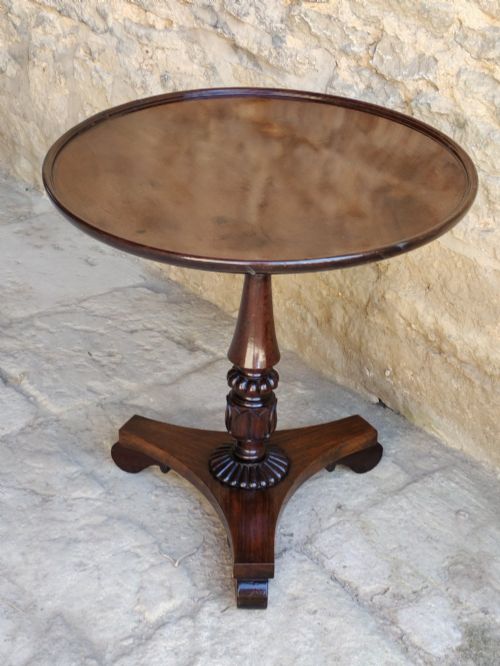
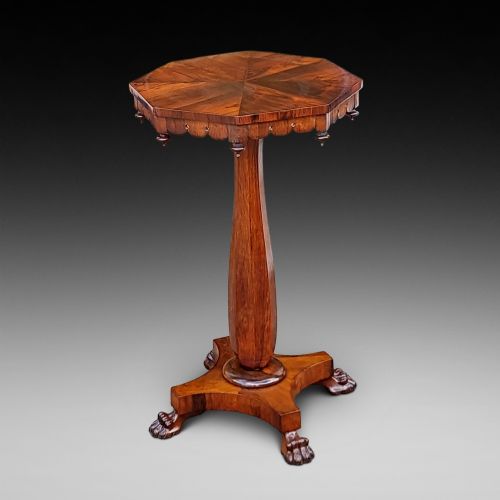
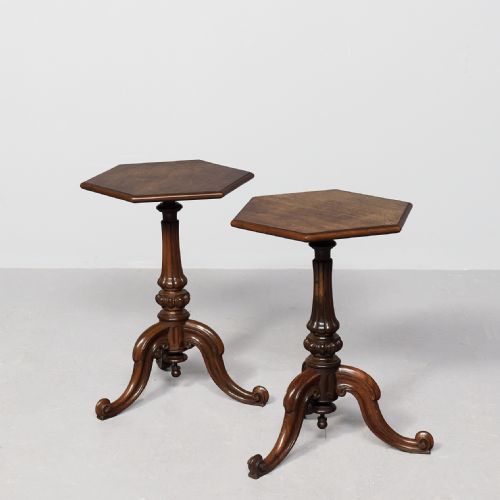
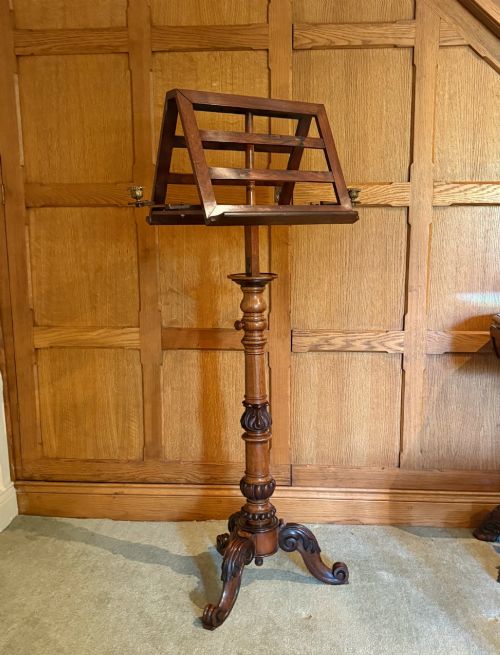
A carved rosewood candle stand encompasses various small tables, torcheres, pedestals, and music stands produced across the nineteenth century. Buyers searching this phrase encounter occasional tables, side tables, and lantern stands shaped during the Regency, William IV, and Victorian eras.
The selection ranges from British designs associated with Gillows or George Bullock to Anglo-Indian and Chinese Qing style hardboards. Most examples function as occasional or side tables, while taller torcheres and plant stands serve to elevate lamps and decorative objects.
How they were made
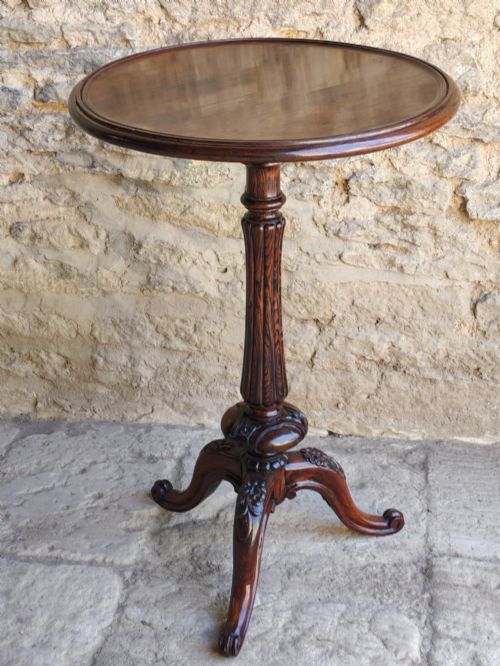
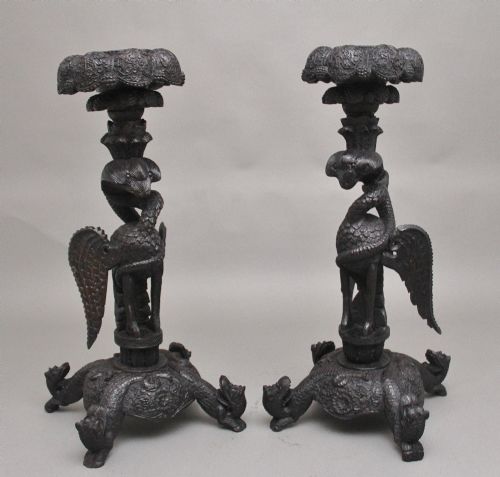
Maker's workshops built these stands primarily from dense rosewood and mahogany, sometimes combining timbers or adding brass fittings for stability and contrast. Craftsmen shaped the heavy wood by hand, carving intricate botanical and dragon motifs into the solid material.
The structural forms rely on turned central pillars, tripod or platform bases, and dishtops or square tops designed to hold weight securely. Skilled joinery connects the upright shafts to sturdy feet, ensuring the stands remain balanced despite heavy carving.
Carved Rosewood Candle Stand Retail Price Guide 2026
Typical asking prices for carved rosewood candle stand among the pieces listed under this phrase on Sellingantiques today, from the lower quarter to the upper quarter. They describe what is for sale here now, not the wider market.
Materials recorded on this page include solid rosewood, mahogany, brass, and carved hardwood.
What varies in quality
Quality rests in the depth and sharpness of the carved detail, distinguishing crisp hand-chiselled foliage or dragon scales from softer, simpler surfaces. The choice of timber also dictates value, where rich, highly figured solid rosewood or matched pairs command greater attention than plain secondary woods.
Proportion and attribution define the upper tiers of the market, particularly pieces linked through design or maker stamps to prominent workshops like Gillows. Well-balanced forms with original brass hardware and stable, heavy construction outlast clumsier adaptations.
Gillow·George Bullock
The Carved Rosewood Candle Stand Glossary
- Torchere
- A tall stand designed to support a candle or lamp. These elevated pieces often feature elaborate carving along the shaft.
- Occasional table
- A small, versatile table used for general purposes in a reception room. They appear frequently in nineteenth-century inventories.
- Rosewood
- A heavy, durable timber prized for its dark colour and distinct grain patterns. It forms the primary material for these stands.
- Regency
- An English design period spanning the early nineteenth century. Pieces from this era often show classical restraint mixed with bold ornamentation.
Carved Rosewood Candle Stand: Frequently Asked Questions
What is a candle stand used for today?
These pieces serve effectively as small side tables for holding drinks, books, or modern lamps rather than naked flames. Their compact footprints allow them to fit into corners or beside seating without crowding a room.
Placed in hallways or living spaces, they draw the eye upward and add functional surface area where space is limited.
How do I identify a Regency period stand?
Regency stands typically display classical motifs, such as reeded columns, sabre legs, and restrained brass mounts inspired by ancient Rome and Greece. The proportions tend to be architectural and balanced.
Makers working in this style focused on clean lines combined with the rich grain of rosewood, creating a refined silhouette.
Are pairs harder to find than single stands?
Matched pairs survive less often because household items get separated over decades of moving and changing decor. When a pair does appear, it usually indicates they stood together in a formal parlour from the beginning.
Single stands remain far more common in everyday hunting.
What is an Anglo-Indian candle stand?
Anglo-Indian pieces combine traditional British furniture forms with intricate, dense carving executed by craftsmen in the Indian subcontinent. These items often feature elaborate foliate or floral patterns across the entire surface.
They were imported for British homes during the nineteenth century to satisfy a taste for exotic ornamentation.