
Regency Rosewood Stand
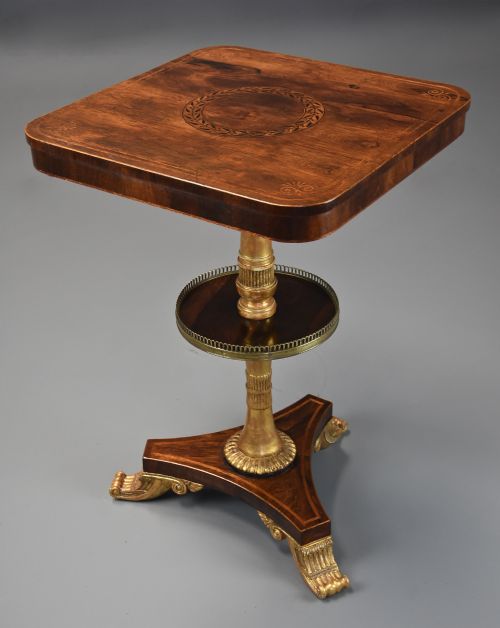
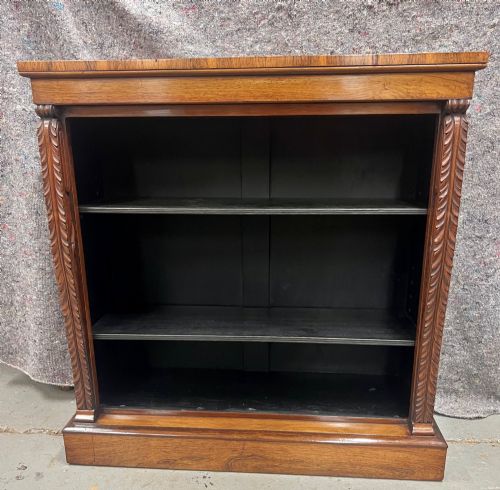
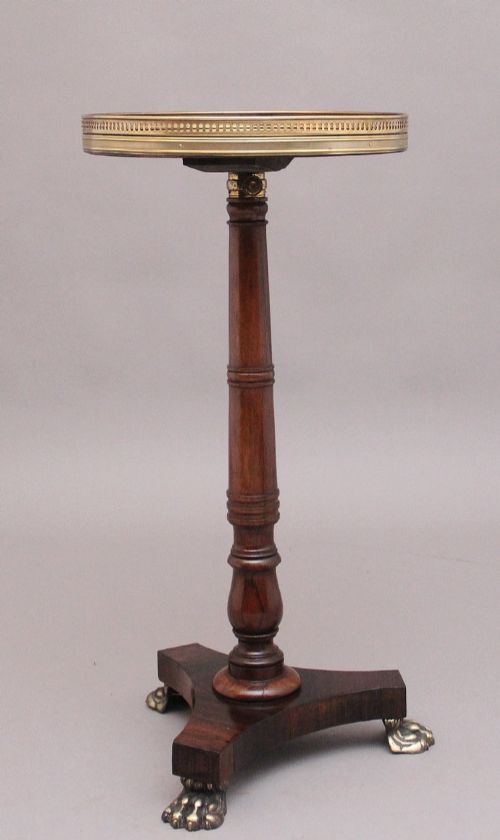
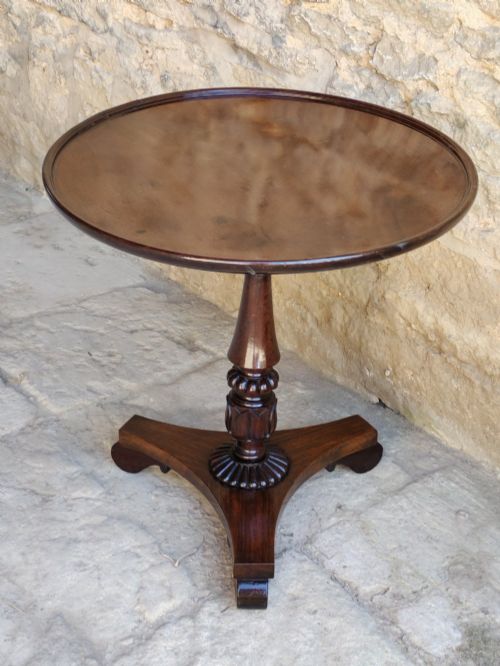
A regency rosewood stand brings dark timber and polished brass into a room, offering a sturdy surface for books, music or lamps.
Regency Rosewood Stand
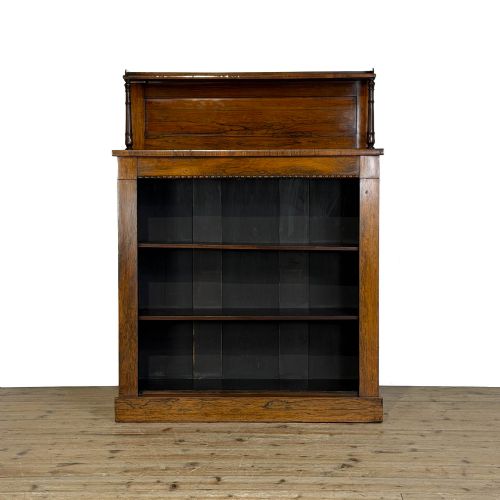
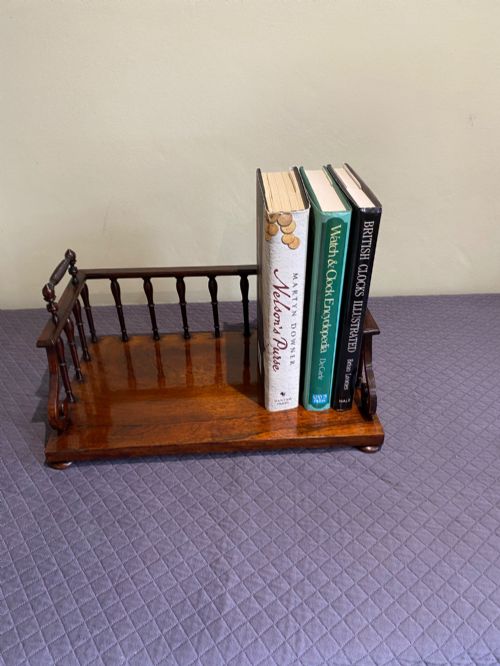
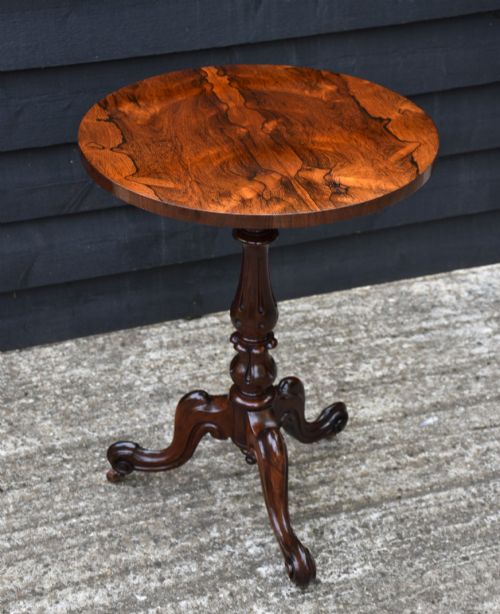
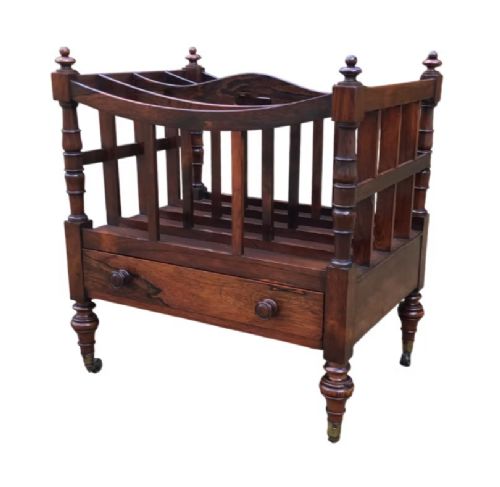
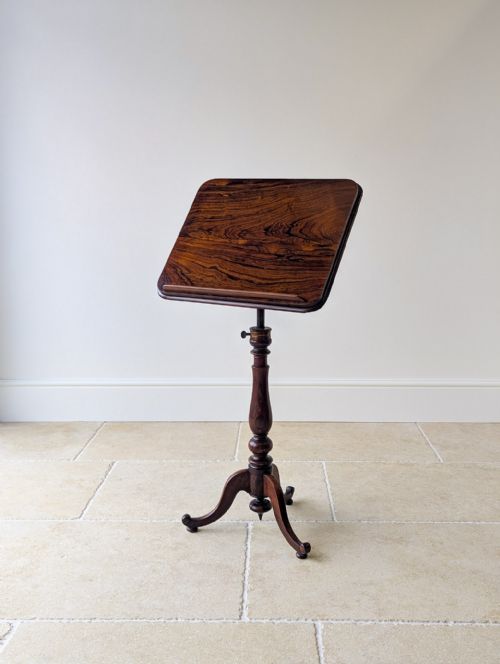
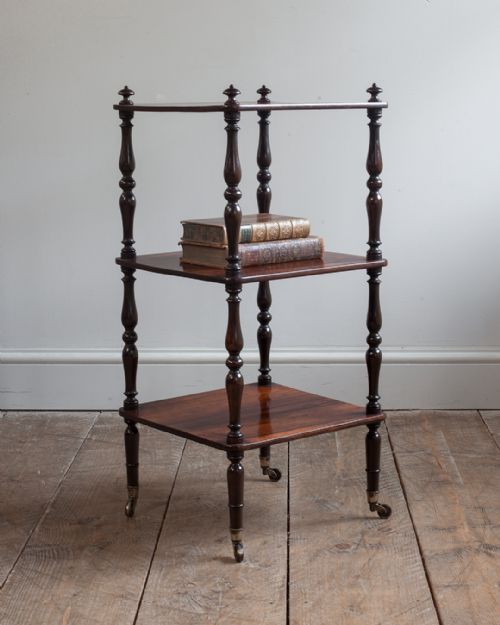
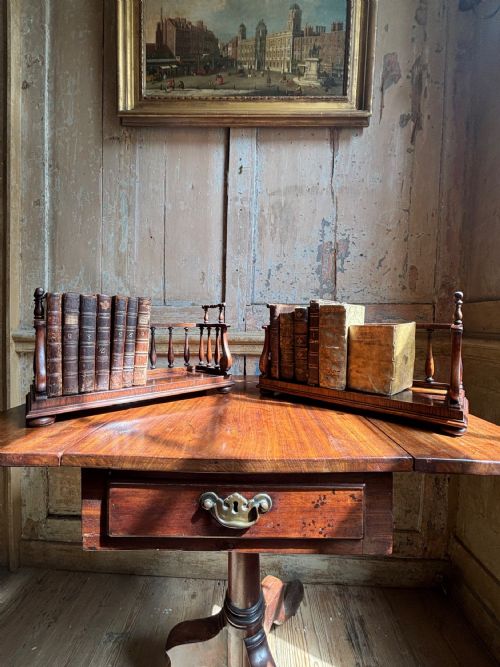
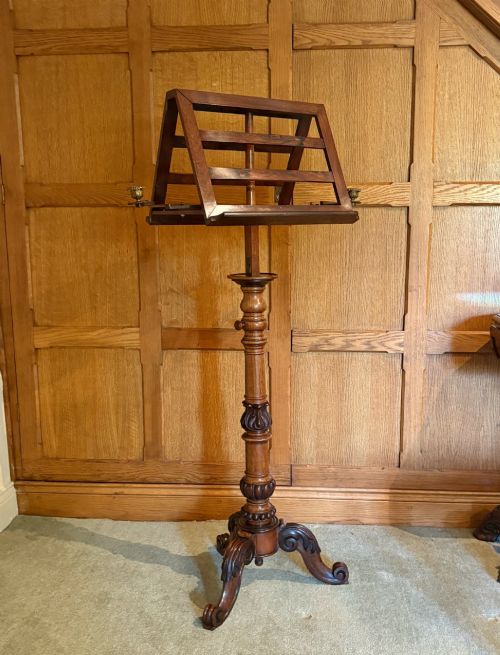
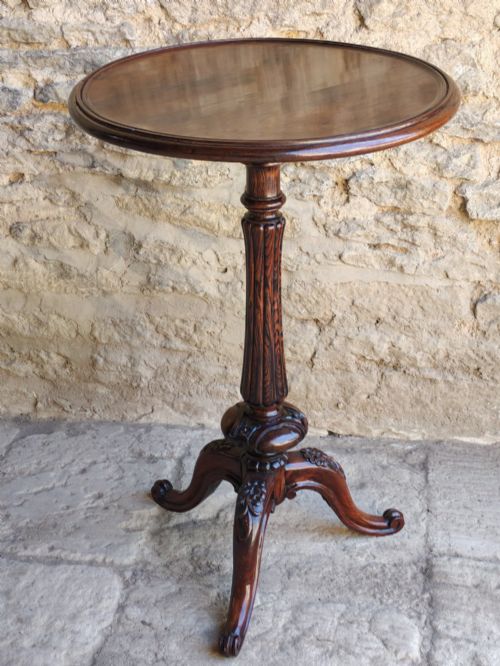
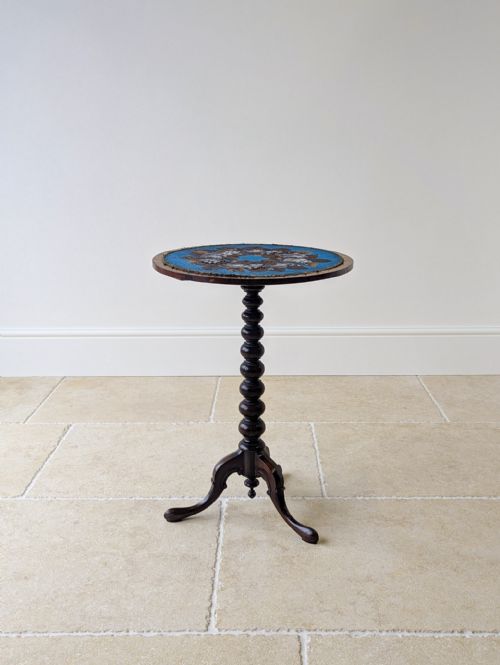
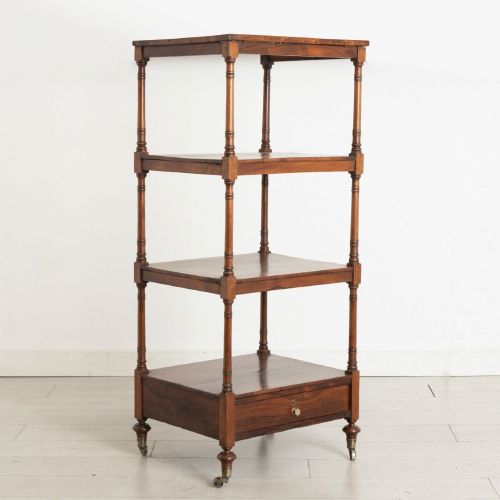
A regency rosewood stand encompasses a variety of compact furnishings designed for reading, writing, and displaying objects. The most common forms met on this page are occasional tables, music stands, reading stands, book racks, and multi-tiered whatnots.
Originating predominantly from the nineteenth century, these pieces span the Regency, William IV, and Georgian periods. They often utilise rich rosewood veneers, sometimes paired with secondary timbers like mahogany or pine.
Buyers seek these stands for their functional utility and refined proportions, whether acquiring a simple tripod wine table or a more complex two-tier etagere. Each variation reflects the domestic habits of the period, providing dedicated spaces for folios, sheet music, and desk accessories.
How they were made
Cabinet makers built these pieces using dense rosewood veneers applied to solid secondary woods such as mahogany or pine. Brass inlay, often seen in delicate linear stringing or geometric motifs, was carefully set into the wood surfaces to provide contrast.
Structural elements like tripod bases, telescopic shafts, and multi-tiered shelves required precise carpentry to ensure stability without sacrificing elegance. Turning, carving, and brass mountings added ornamental detail to reading desks, music stands, and occasional tables.
Some nineteenth-century tables arrived with built-in inkwells and velvet panels, designed for letter-writing by candlelight.
What varies in quality
Quality in a regency rosewood stand is determined by the selection of timber and the precision of the cabinet work. Finer examples display carefully matched rosewood grain, crisp brass inlay, and robust mechanical adjustments on telescopic or reading stands.
Construction methods also separate standard production from superior pieces attributed to notable makers like Gillows or George Bullock. Refined carving on pedestals and feet indicates a higher standard of craftsmanship.
Gillows·George Bullock
The Regency Rosewood Stand Glossary
- Rosewood
- A dense, dark timber featuring distinctive black grain markings. It was highly prized for fine nineteenth-century cabinet work.
- Canterbury
- A low multi-compartment stand originally designed for holding sheet music, folios, or magazines. It frequently includes upright partitions and a carrying handle.
- Etagere
- An open shelving unit with multiple tiers for displaying small objects, books, or ornaments. These pieces rely on slender columns or upright supports.
- Tripod table
- A small occasional table supported by a central pillar resting on three legs. They are commonly found in wine and lamp table formats.
- Brass inlay
- Technique of embedding thin brass strips or decorative brass pieces into the surface of the timber. This creates geometric patterns and contrasting lines.
Regency Rosewood Stand: Frequently Asked Questions
What is a teapoy used for?
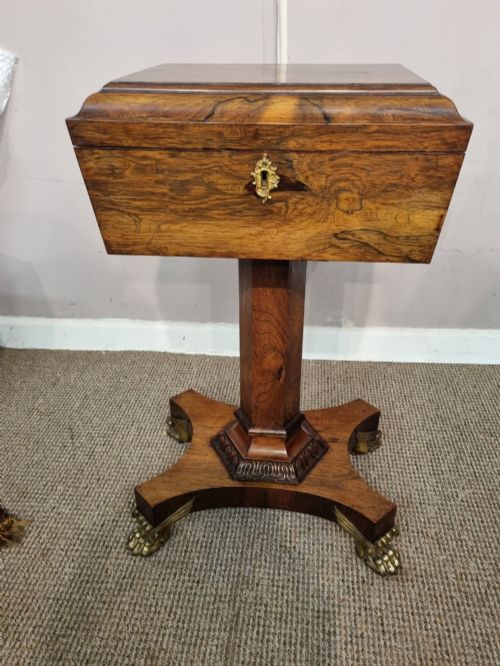
A teapoy is a small storage chest mounted on a central pillar, originally used to hold dry tea leaves safely away from moisture.
Inside, these pieces typically contain small compartments or removable canisters for different varieties of tea.
What is the difference between a whatnot and an etagere?
A whatnot is a tiered shelving unit traditionally used for storing small books, ornaments, or writing supplies in domestic rooms.
An etagere serves a similar open display purpose but often emphasises decorative staging rather than utilitarian storage.
How do you distinguish William IV from Regency pieces?
William IV furniture tends to feature heavier proportions, bolder turning, and more substantial pedestals compared to the lighter, more restrained forms of the Regency era.
Both periods make extensive use of rosewood and brass, but William IV designs often incorporate more pronounced architectural elements.