


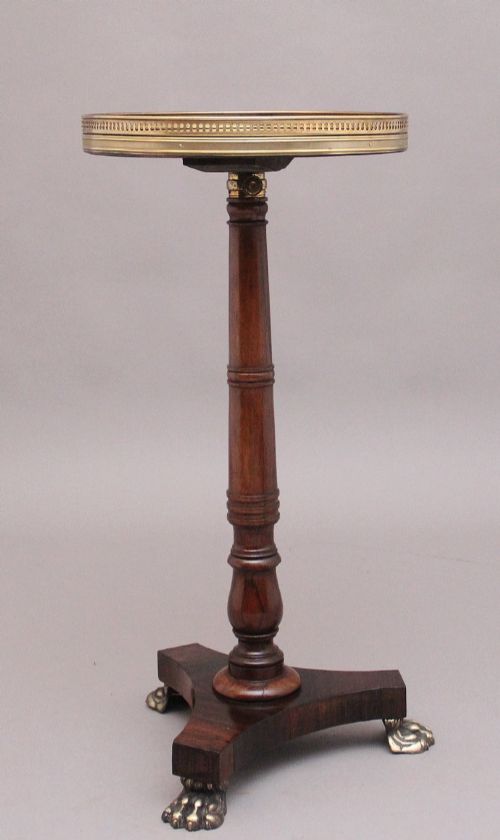


Dark Rosewood Candle Stand
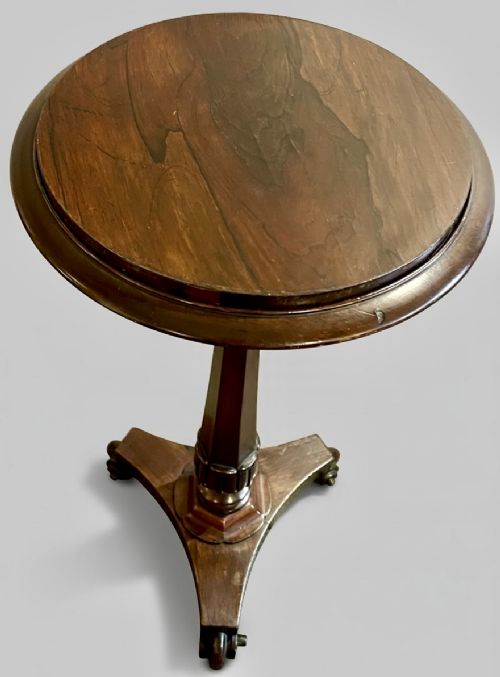
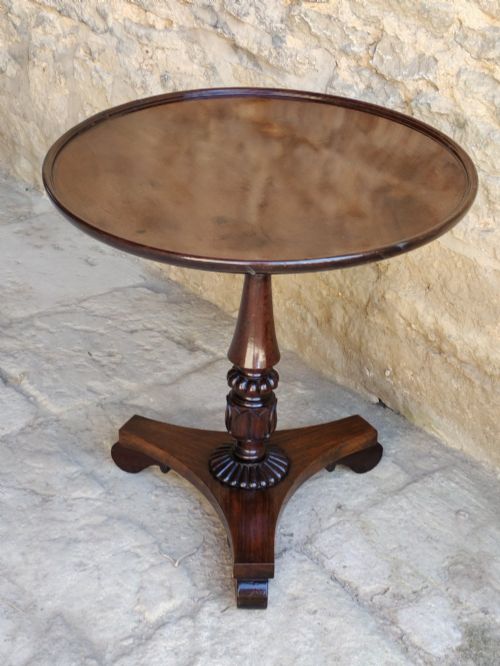
A dark rosewood candle stand brings rich grain and steady proportion to a corner, combining utility with nineteenth-century cabinet-making.
Dark Rosewood Candle Stand
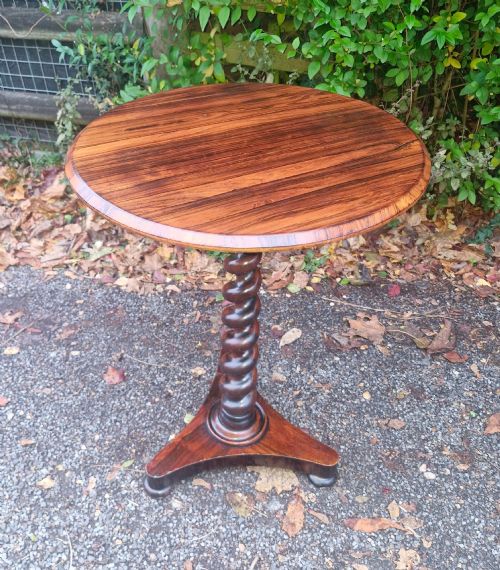
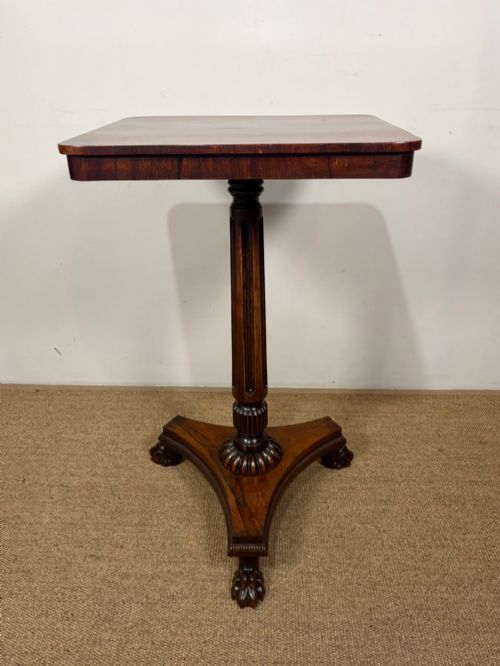
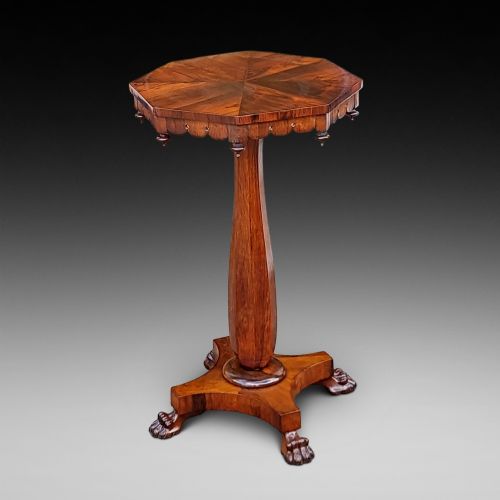
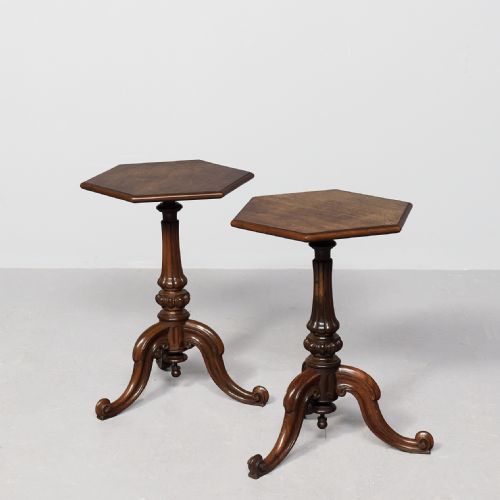
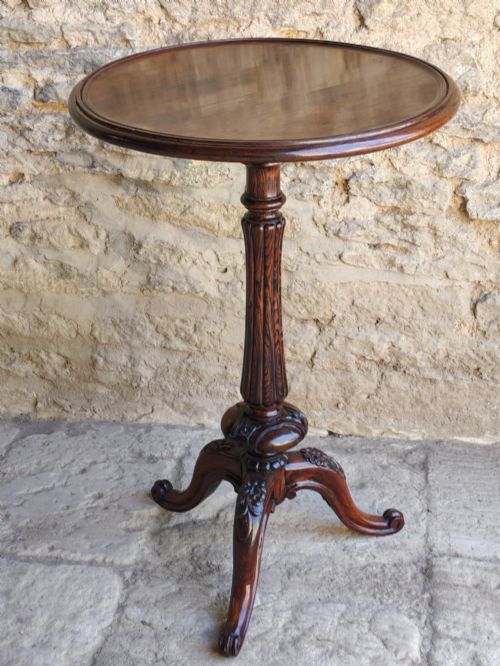
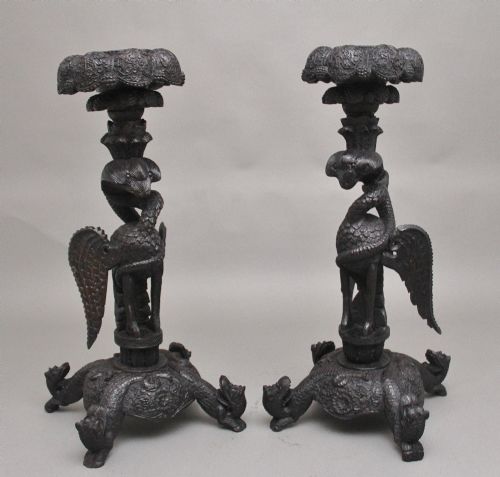
A dark rosewood candle stand on this page typically takes the form of an occasional table, tripod wine table, or torchere designed to elevate a light source or decorative object. The selection draws primarily from the Regency, William IV, and Victorian periods, alongside Anglo-Indian and George IV examples.
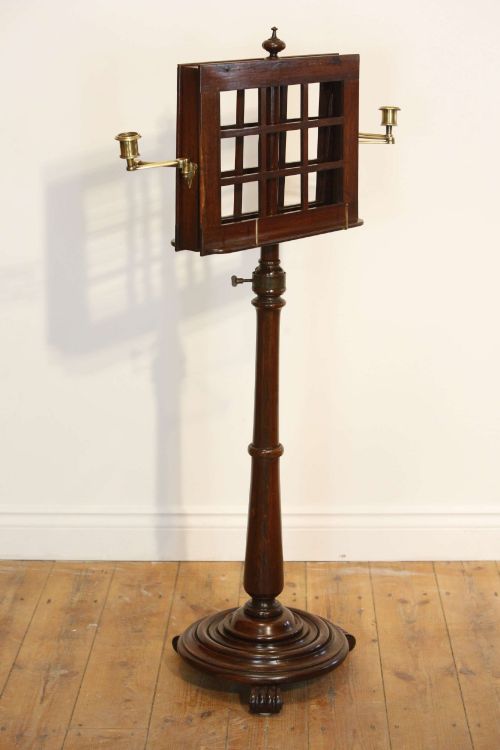
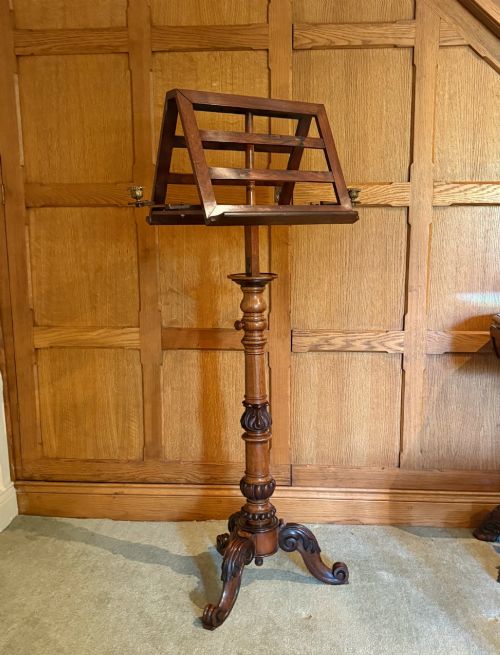
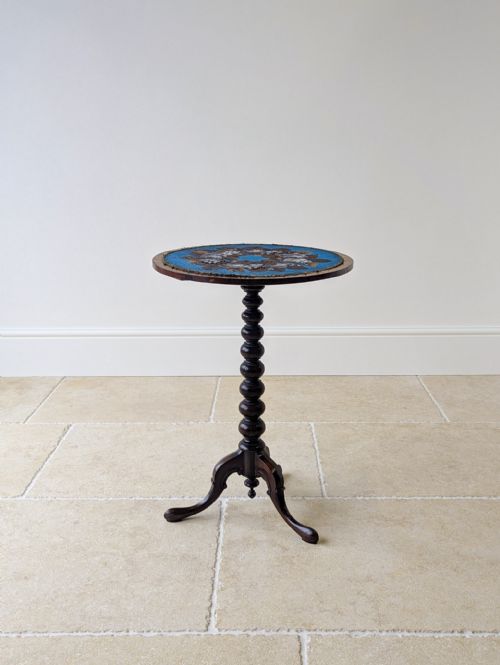
Buyers frequently encounter occasional tables and side tables supported by tripod legs, alongside specialised forms such as music stands, pedestals, and plant stands. The timber shows deep, dark natural figuring characteristic of nineteenth-century rosewood, sometimes paired with mahogany or brass inlay.
How they were made
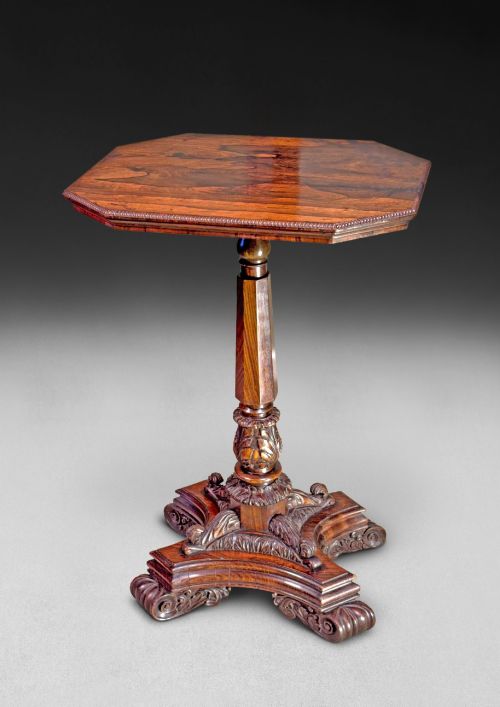
Cabinet-makers utilised solid rosewood and veneers applied to secondary hardwoods, turning central pillars on lathes and shaping tripod bases with precise joinery. Brass inlay, glass beads, and carved hardwood details appear across the inventory to accent the dark timber.
Treen and smaller turned elements demonstrate fine lathe work, while larger occasional tables employ telescopic mechanisms or barley twist stems to create height and visual movement.
Dark Rosewood Candle Stand Retail Price Guide 2026
Typical asking prices for dark rosewood candle stand among the pieces listed under this phrase on Sellingantiques today, from the lower quarter to the upper quarter. They describe what is for sale here now, not the wider market.
Some nineteenth-century tables include telescopic mechanisms so guests could adjust the height of their reading light mid-conversation.
What varies in quality
Quality rests in the depth of the rosewood grain, the crispness of any carved or turned detail, and the structural integrity of the tripod base. Pieces attributed to specific makers like Gillows exhibit superior refinement in proportion and assembly compared to standard workshop output.
The integration of brass inlay, fine beading, and balanced dishtop or gallery edges distinguishes finer examples from simpler utilitarian stands.
Gillows·George Bullock
The Dark Rosewood Candle Stand Glossary
- Torchere
- A tall stand designed specifically to support a candle or lamp. These pieces often feature carved hardwood or slender turned columns.
- Tripod table
- A small occasional table supported by a pillar above three legs. This construction ensured stability on uneven floors.
- Treen
- Small handmade wooden objects produced by turning on a lathe. Examples include miniature candlesticks and small domestic wares.
- Barley twist
- A spiral turning technique utilised on table stems and furniture supports. It became popular during the nineteenth century.
- Regency
- A British design period spanning the early nineteenth century. Furniture from this era often incorporates classical motifs and dark exotic timbers.
Dark Rosewood Candle Stand: Frequently Asked Questions
What is a dark rosewood candle stand used for?
These pieces were originally designed to hold candles or oil lamps close to seating areas for illumination.
Today they serve as versatile occasional tables for small lamps, plants, or decorative objects in living spaces.
How do I identify a Regency period stand?
Regency stands typically feature classical proportions, dark rosewood surfaces, and sometimes brass inlay or strict geometric turning.
They date from the early nineteenth century and reflect classical revival tastes of the era.
Are these tables solid rosewood?
Makers utilised both solid rosewood and rosewood veneers applied over secondary hardwoods like mahogany.
This technique provided stability and allowed craftsmen to display the rich, dark grain effectively.
How do I care for nineteenth-century rosewood?
Keep the wood away from direct sunlight and extreme temperature fluctuations to prevent the natural timber from drying.
Apply a light application of appropriate furniture wax occasionally to maintain the finish.