
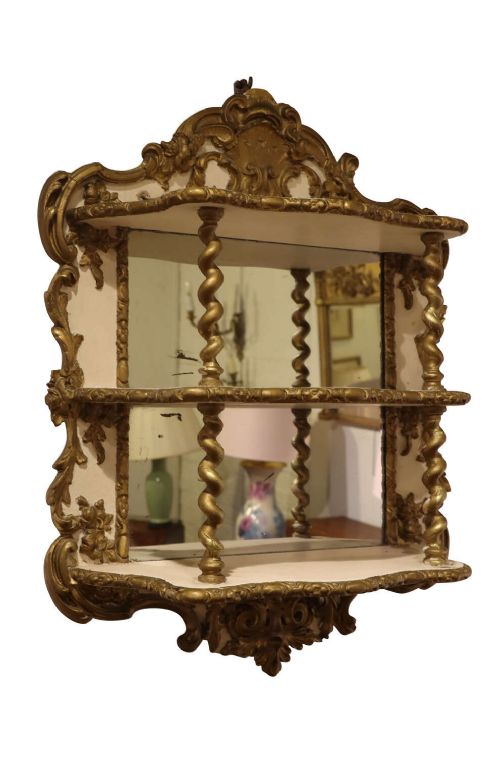


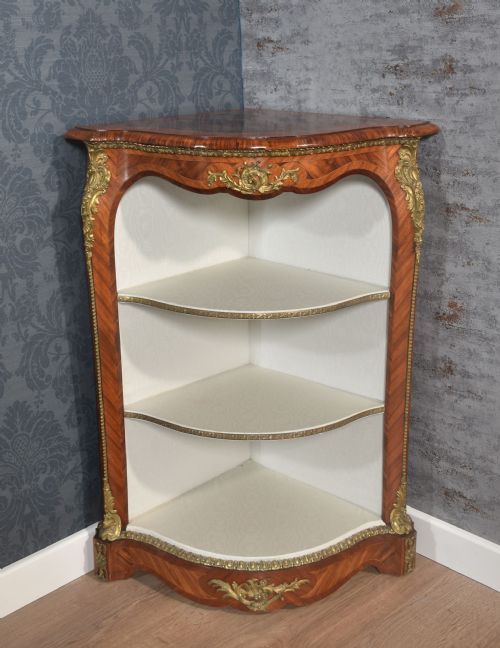


Carved Rococo Display Cabinet
A carved rococo display cabinet brings sweeping, asymmetrical curves and glazed panels into a room to hold treasured porcelain and silver.
Carved Rococo Display Cabinet
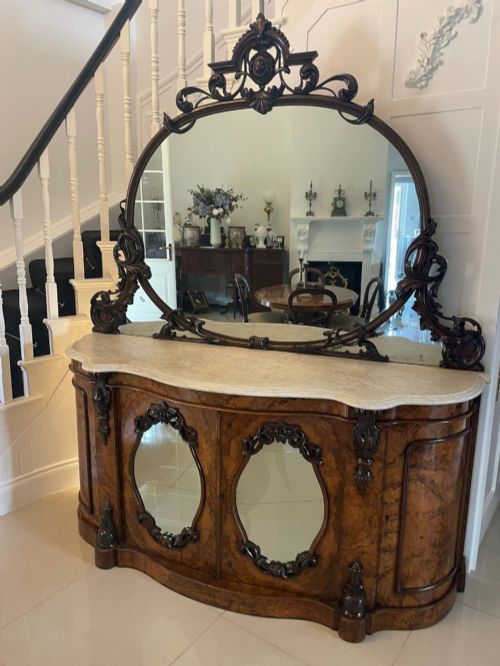
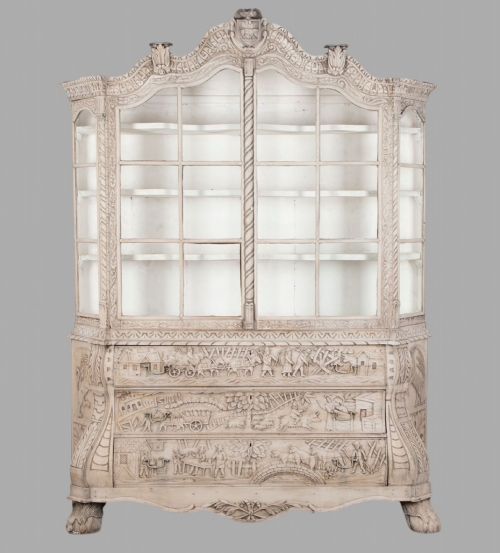
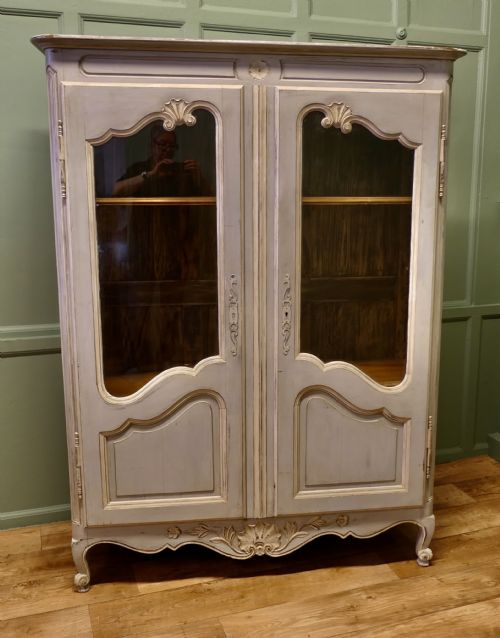
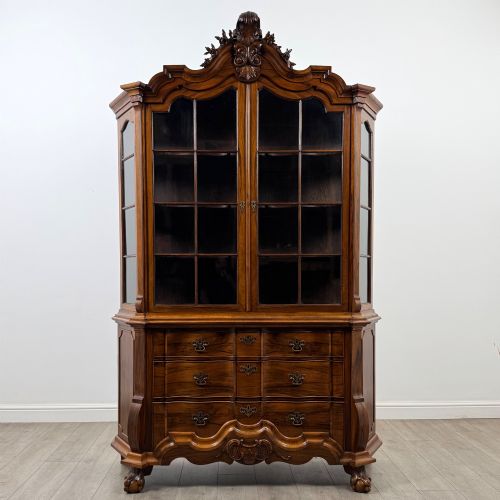
A carved rococo display cabinet combines the exuberant, flowing scrollwork of the eighteenth-century revival with practical glazed storage for collections. Buyers searching this phrase meet pieces ranging from floor-standing vitrines and bombé cabinets on chests to wall-mounted étagères and corner units.
The selections span the nineteenth and twentieth centuries, drawing heavily upon Victorian, Edwardian, and continental interpretations of French and Dutch rococo styles. Formats vary from stately mahogany and burr walnut standing pieces to painted and gilt wall shelves designed to showcase smaller objects.
Materials and construction
Cabinetmakers utilised rich cabinet woods including mahogany, oak, walnut, and burr walnut, often complemented by marquetry inlay or parcel gilt surfaces. Structural elements accommodate glazed doors and mirrored backs, whilst structural mounts incorporate brass and ormolu.
Carving defines the rococo revival aesthetic, shaping solid woods into C-scrolls, foliage, and asymmetrical cartouches. Painted and distressed finishes appear alongside polished timber, and bombé forms demonstrate complex curved joinery.
Listings feature walnut, burr walnut, mahogany, oak, and glass, spanning the Georgian, Victorian, and Edwardian eras.
Judging quality
Quality rests upon the crispness of the hand-carving and the selection of figured veneers such as burr walnut and mahogany. Deep, dimensional relief work on the mouldings and scrollwork separates superior examples from plainer production.
Integration of materials dictates the standing of a piece, from finely fitted glazed doors and mirrored backings to substantial brass and ormolu mounts. The complexity of the carcass shape, notably the swelling curves of bombé forms, reveals the maker's joinery skill.
The Carved Rococo Display Cabinet Glossary
- Bombé
- A swelling, outward-curved furniture form that requires advanced woodworking skill to construct. It appears frequently in continental walnut and oak cabinetwork.
- Vitrine
- A glass-fronted cabinet designed specifically for displaying porcelain, curiosities, and fine objects. These pieces feature glazed sides to maximise light penetration.
- Étagère
- An open tiered shelving unit used for small ornaments and decorative items. They are found in painted and giltwood finishes.
- Credenza
- A low cabinet or sideboard, often featuring mirror backs and glazed compartments in nineteenth-century interpretations. They combine display surfaces with enclosed storage.
- Ormolu
- Gilded bronze mounts applied to furniture for decorative accent. This technique enhances the opulence of rococo revival designs.
Carved Rococo Display Cabinet: Frequently Asked Questions
How do I distinguish French and Dutch rococo styles?
French rococo designs lean towards lighter, highly ornate giltwood, painted surfaces, and serpentine vitrines. Dutch examples frequently employ heavier figured woods like burr walnut and oak with deep bombé shaping.
Both styles share characteristic asymmetrical scrolls and naturalistic floral carvings.
Where should I place a wall étagère?
Wall-mounted étagères suit smaller spaces where floor-standing furniture would overwhelm the room. They provide elevated display surfaces for porcelain and decorative objects.
Ensure the wall fixings can support the weight of the carved wood and the items placed upon the shelves.
Are these cabinets suitable for everyday use?
These cabinets function well for displaying collections behind protective glass doors. The sturdy construction of mahogany, walnut, and oak accommodates interior display.
Keep antique timber away from direct heat sources to protect the veneers and polished finishes.