



Carved Wooden Vitrine Bookcase
A carved wooden vitrine bookcase combines generous display shelving with glass-fronted cabinets, bringing elegance and practical storage to any room.
Carved Wooden Vitrine Bookcase
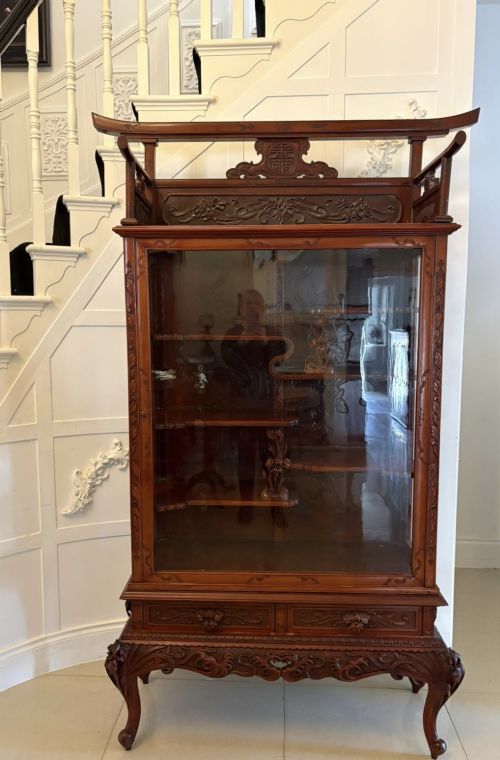
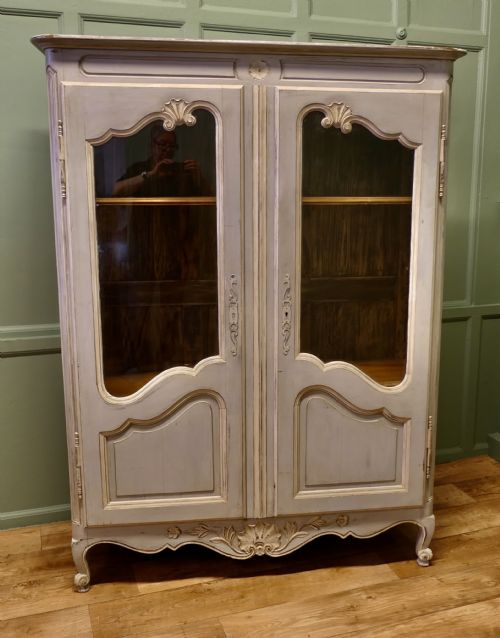
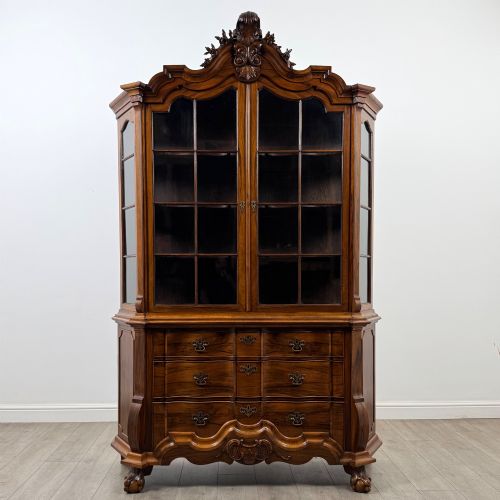
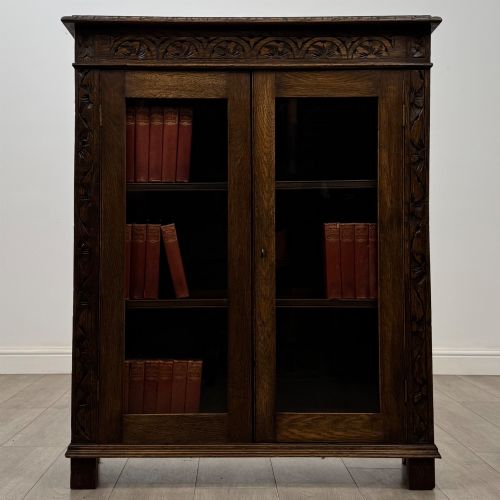
A carved wooden vitrine bookcase brings together enclosed library storage and glazed display space, appearing in forms such as double door vitrines and standing bookcases. These pieces span the nineteenth and twentieth centuries, encompassing Victorian, Edwardian, and later revival styles.
The versions most frequently met on this page include mahogany, oak, and walnut cabinets influenced by Georgian, Sheraton, and Rococo revivals. Makers utilised timber frames alongside glass panels and brass hardware to construct dual-purpose furniture for the home.
How they were made
Carpenters constructed these bookcases primarily from solid and veneered hardwoods like mahogany, oak, walnut, and satinwood, occasionally applying paint finishes. Workshops shaped the wood through traditional joinery techniques, incorporating carved ornamentation across cornices and drawer fronts.
Glass panels were fitted into wooden door frames to create secure display spaces for books and objects, complemented by brass handles and hinges. Marquetry inlay work appeared on select satinwood pieces, adding decorative contrast to the timber surfaces.
Carved Wooden Vitrine Bookcase Retail Price Guide 2026
Typical asking prices for carved wooden vitrine bookcase among the pieces listed under this phrase on Sellingantiques today, from the lower quarter to the upper quarter. They describe what is for sale here now, not the wider market.
Materials recorded across the selection include mahogany, walnut, oak, satinwood, brass, and glass.
What varies in quality
The standard of a carved wooden vitrine bookcase rests upon the selection of timber and the precision of its carving. Superior examples display carefully matched grain patterns, crisp hand-carved details, and refined marquetry work rather than simple machine moulding.
Construction methods also separate finer cabinets from standard production pieces, particularly in the thickness of the timber and the integration of brass fittings. The depth of the revival styling, whether French Rococo or Sheraton, dictates the visual ambition of the finished cabinet.
Warings
The Carved Wooden Vitrine Bookcase Glossary
- Vitrine
- A glass-fronted cabinet designed for the display of fine objects and curiosities. These pieces rely on glazed doors to protect contents from dust while maintaining full visibility.
- Marquetry
- Decorative patterns created by fitting thin pieces of wood veneer onto a structural surface. This technique allows workshops to produce intricate pictorial or geometric designs.
- Satinwood
- A durable hardwood noted for its pale, golden sheen and smooth texture. It serves as a favored canvas for fine inlay work in revival furniture.
- Cornice
- The moulded projection that crowns the top of a bookcase or cabinet. It provides an architectural finish to the upper edge of the woodwork.
- Revival
- A design movement that reinterprets historical styles such as Georgian or Rococo. Makers apply these earlier aesthetic frameworks to contemporary furniture forms.
Carved Wooden Vitrine Bookcase: Frequently Asked Questions
How do I date a wooden bookcase?
Dating relies on observing timber choices, hardware materials, and stylistic revival cues. Victorian and Edwardian examples often feature distinct carving styles and wood selections.
Examining construction methods and secondary woods helps place a piece within its proper era.
Where should I place a display cabinet?
Display cabinets suit principal reception rooms, studies, or libraries where books and collections can be easily viewed. Positioning them away from direct sunlight protects both the timber and the contents.
Adequate clearance is essential to allow glass doors to swing open fully.
How do I care for antique wood and glass?
Maintaining these pieces involves regular dusting with a soft, dry cloth and avoiding silicone-based polishes. Glass panels benefit from standard glass cleaner applied sparingly to a cloth.
Keeping the furniture away from excessive heat sources prevents the wood from warping.