




Carved Profile Portrait
Carved profile portrait pieces capture historical likenesses in relief, offering collectors tangible connections to past centuries through wearable and decorative miniature art.
Carved Profile Portrait
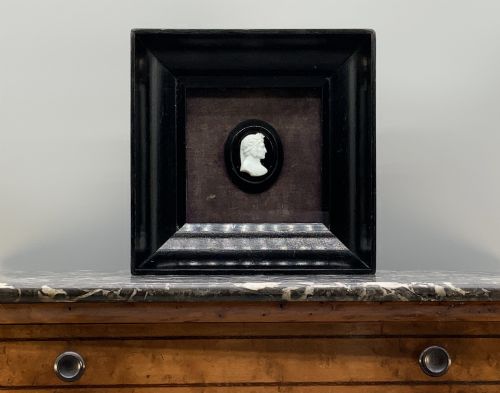
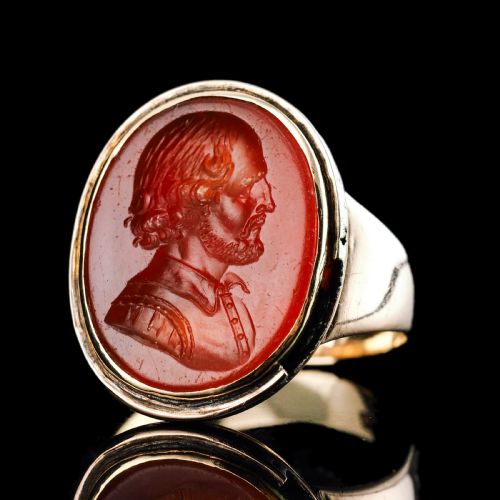
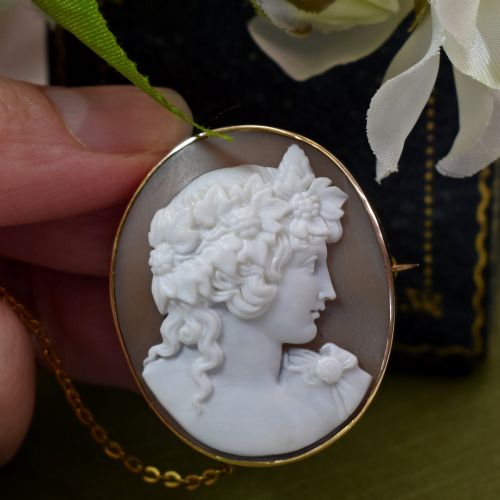
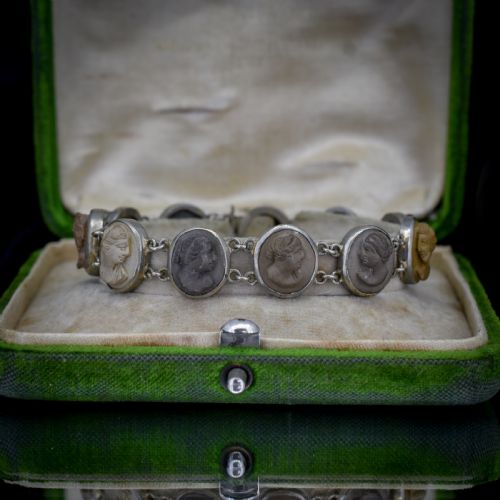
A carved profile portrait presents a human likeness in side view, executed as a relief upon materials ranging from shell and hardstone to marble and wood. These works appear across rings, brooches, earrings, bracelets, and wall plaques spanning the eighteenth, nineteenth, and early twentieth centuries.
Most examples originate from nineteenth-century production, particularly Victorian and Grand Tour contexts where classical revivals dominated. Buyers frequently encounter shell and hardstone cameos mounted in gold, alongside marble bas-relief plaques depicting classical figures, poets, and emperors.
The objects serve dual purposes as personal adornment and cabinet pieces, reflecting an enduring fascination with classical antiquity. Whether worn as a pendant or displayed within a Florentine frame, each piece distils portraiture into compact sculptural form.
How they were made
Carvers utilised natural stratified materials such as shell, agate, carnelian, and lava, cutting through upper layers to leave the opaque profile standing proud against a contrasting background. This subtractive method required immense precision to maintain consistent depth and detail across miniature surfaces.
Sculptural pieces in marble, bronze, and mahogany were shaped using chisels, gravers, and abrasive pastes to achieve smooth contours and sharp relief. Metalwork mounts in various carats of gold, silver, and pinchbeck were then fabricated to frame or support the carved medium securely.
Grand Tour travellers routinely returned with Roman emperors carved in stone, ensuring classical poets shared luggage space with dirty laundry.
What varies in quality
The sophistication of the mounting elevates a piece, distinguishing standard commercial production from bespoke studio work. Substantial gold settings, fine filigree work, and signed or attributed workshop origins indicate higher craftsmanship and greater artistic ambition.
Thorvalsen Workshop
The Carved Profile Portrait Glossary
- Cameo
- A method of carving an object such as an engraved gem, item of jewellery, or vessel, where a raised image stands out from a background of a different colour. This technique exploits natural colour bands in shell and stone.
- Intaglio
- A gem or stone carved in reverse so that the design sinks below the surface, traditionally utilised as a seal ring. When pressed into wax, it produces a raised impression.
- Grand Tour
- A cultural itinerary of Europe undertaken by wealthy young men in the eighteenth and nineteenth centuries, resulting in the acquisition of souvenirs like marble plaques and lava cameos. These items documented classical education and travels.
- Hardstone
- A collective term for semi-precious stones such as agate, carnelian, and onyx used for carving and inlay. These materials offer superior durability and rich colour variation compared to shell.
- Bas-relief
- A sculptural technique where the figures project only slightly from the background plane, commonly seen in marble and bronze wall plaques. This method creates subtle plays of light and shadow across the profile.
Carved Profile Portrait: Frequently Asked Questions
What materials are used in carved profile portraits?
Makers utilised a diverse palette of natural substances, including conch shell, layered agate, carnelian, lava, marble, wood, and bronze. Precious metals such as gold and silver frequently provided settings for wearable forms.
Shell and hardstone remain the most common mediums for rings and brooches, while marble and mahogany appear predominantly in larger wall plaques and framed reliefs.
How were these portrait pieces worn or displayed?
Wearable examples functioned as rings, brooches, earrings, bracelets, and pendants, allowing owners to display personal tastes or classical affiliations on their persons. Jewellery settings often incorporated gold wires, filigree, and pinchbeck.
Larger plaques and reliefs were designed for interior display, mounted on walls or housed within picture frames and wooden surrounds. Many originated as souvenirs collected during European travels.
How can I tell the period of a cameo?
Dating relies upon stylistic markers, mounting techniques, and the profile shapes characteristic of specific eras like the Georgian, Victorian, or Edwardian periods. Classical Revival styles dominated the nineteenth century, often depicting Roman emperors or mythological figures.
Closer examination of the gold carat marks, pin mechanisms on brooches, and the treatment of hair and costume helps establish the chronological window of manufacture.