
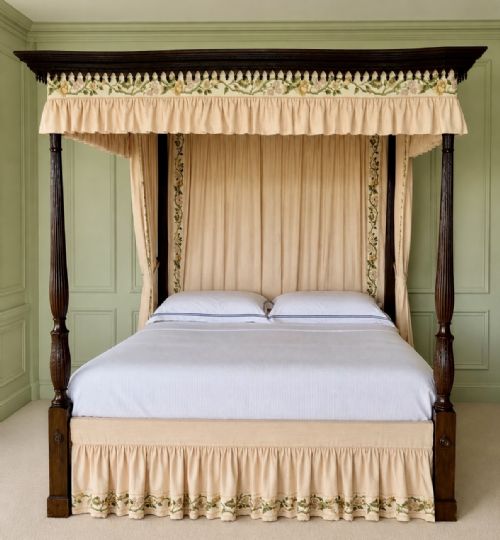


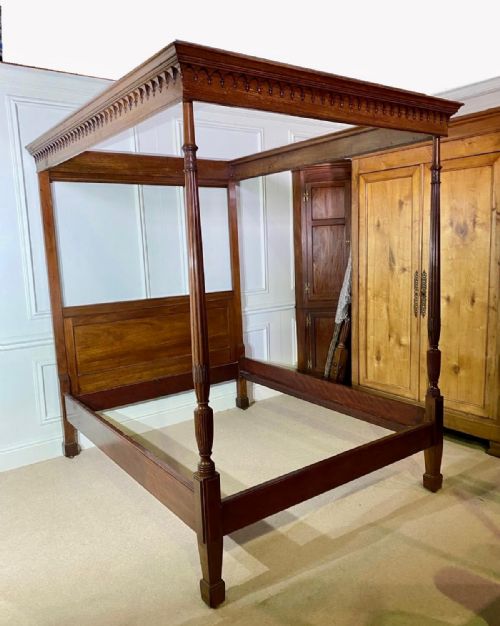
Carved Post Bedstead
A carved post bedstead brings monumental presence to a bedroom, offering grand architectural form and rich historic character.
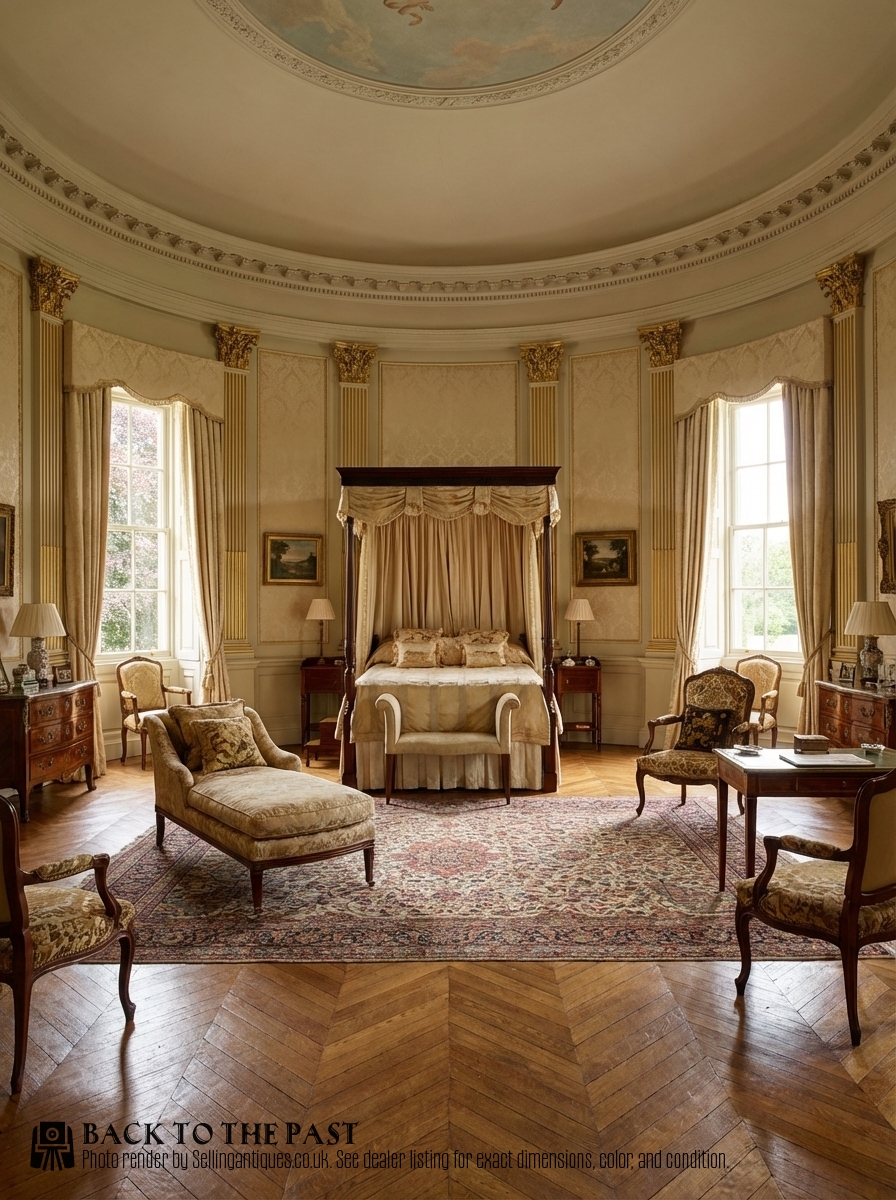
Carved Post Bedstead
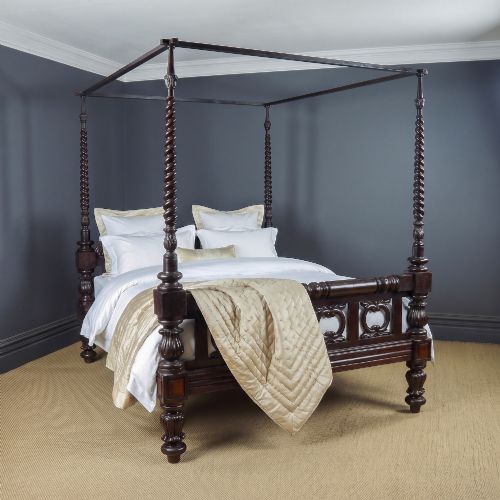
When you search for a carved post bedstead, you enter a field dominated by substantial timber frameworks designed to anchor a sleeping chamber with architectural authority. These pieces range from grand tester beds draped in history to pairs of single frames with decorative uprights.
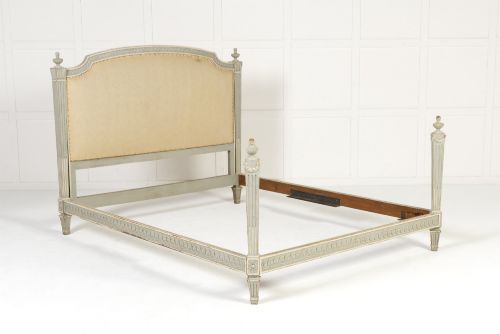
You are most likely to meet Victorian and Edwardian examples on this page, alongside Continental pieces executed in styles from Regency to Louis XVI. The selection spans single sizes up to super king, frequently utilising mahogany or painted wood.
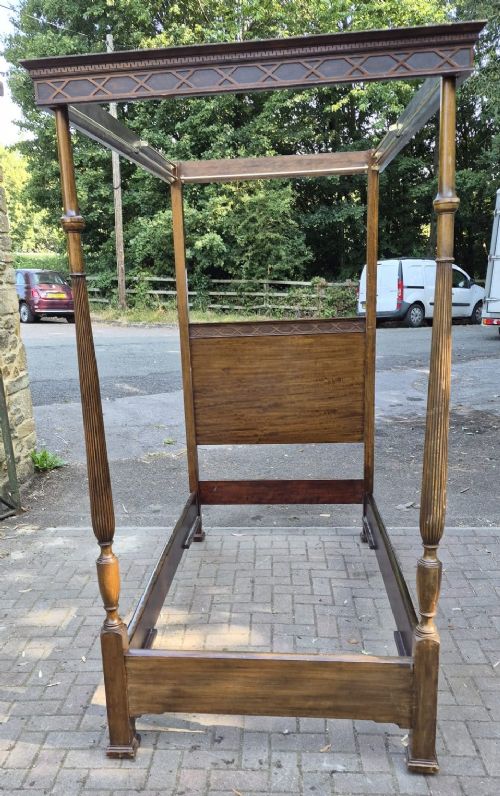
The forms vary from robust colonial interpretations to refined revival pieces referencing Georgian and Chippendale designs. Each variation displays distinct regional characteristics in the turning and carving of the structural posts.
How they were made
Construction relies upon dense hardwoods such as mahogany and rosewood, chosen for their structural strength and ability to hold crisp carving along the uprights. Pine and secondary hardwoods often form the internal framing and lesser components.
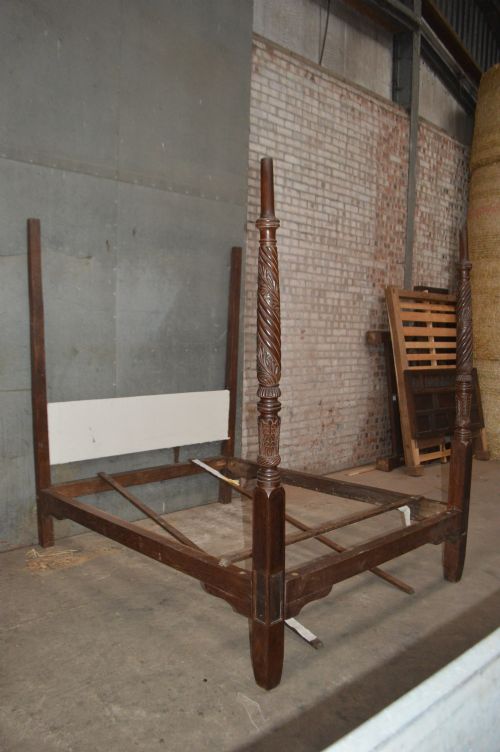
Carving and turning techniques define the posts, ranging from spiral fluting to elaborate floral motifs and classical foliage. Painted finishes and gilding frequently appear on Continental frameworks, applied over prepared wooden surfaces.
Spiral carved posts twist upwards like wooden barley sugar, adding motion to silent timber.
What varies in quality
The standard of a carved post bedstead is determined by the depth and precision of the timber carving on the posts, where sharp undercutting distinguishes finer workshops from mass production. Proportions also govern value, as heavy timbers must balance with refined decorative restraint.
The choice of primary timber influences the overall character, with dense figured mahogany and rich rosewood sitting at the upper end of the material spectrum. Original surface patination and the retention of crisp detail across decorative mouldings further separate average examples from exceptional ones.
Howard & Sons
The Carved Post Bedstead Glossary
- Tester bed
- A bed featuring a wooden canopy or ceiling supported by the corner posts. This overhead framework historically supported fabric curtains to retain warmth.
- Four poster bed
- A bed with four vertical posts supporting an upper frame or standing free as decorative architectural elements. The posts are frequently turned or carved.
- Louis XVI style
- A neoclassical aesthetic characterised by straight lines, symmetry, and classical restraint. Furniture in this style often displays carved fluting and subdued ornamentation.
- Regency style
- A British design movement drawing heavily on classical Greek and Roman motifs. Pieces from this period frequently employ dark timbers and bold decorative turning.
- Caned
- Woven rattan or split cane panels used for bed ends or headboards. This technique provides textural lightness within a solid wooden framework.
Carved Post Bedstead: Frequently Asked Questions
What is a four poster bed?
A four poster bed is a traditional bedframe featuring four vertical corner posts that rise to support an overhead canopy or tester. These posts provide substantial architectural presence to the sleeping chamber.
Historically, the upper framework supported heavy fabrics designed to enclose the sleeper for privacy and warmth. Today, these beds serve as striking focal points in large bedrooms.
How do I fit modern mattresses?
Many antique carved post bedsteads have been discreetly adapted to accommodate standard modern mattress sizes such as king or super king. Internal wooden rails and support slats are often altered to sit at the correct height.
It is essential to check the internal dimensions of the specific frame rather than relying solely on the outer measurements of the posts and headboard.
Are these beds easy to assemble?
Most traditional bedsteads utilise heavy timber side rails that lock into the headboard and posts using standard bed bolts or historical slot-and-tenon joints. Assembly typically requires two people due to the sheer weight of the solid mahogany or hardwood components.
Careful alignment of the structural posts ensures the canopy and rails square up correctly before tightening all fixings.
How do I care for mahogany posts?
Solid mahogany and hardwood surfaces benefit from regular dusting with a soft, dry cloth to prevent the accumulation of grit in deep carvings. Periodic application of quality beeswax helps nourish the timber and maintain a deep, natural lustre.
Keep these substantial wooden pieces away from direct heat sources and strong sunlight to prevent the timber from drying out or splitting.