

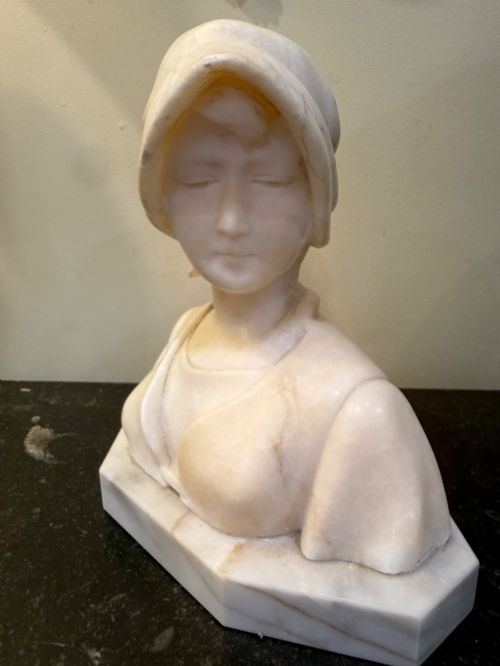
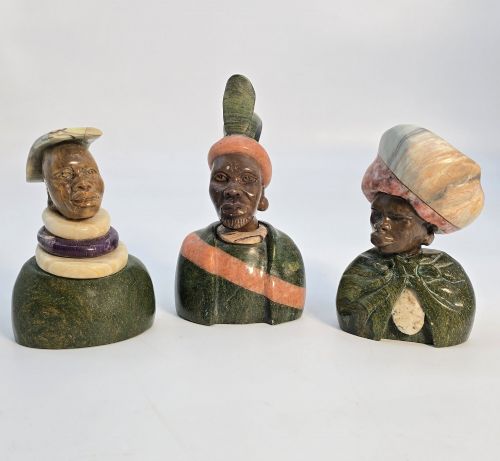

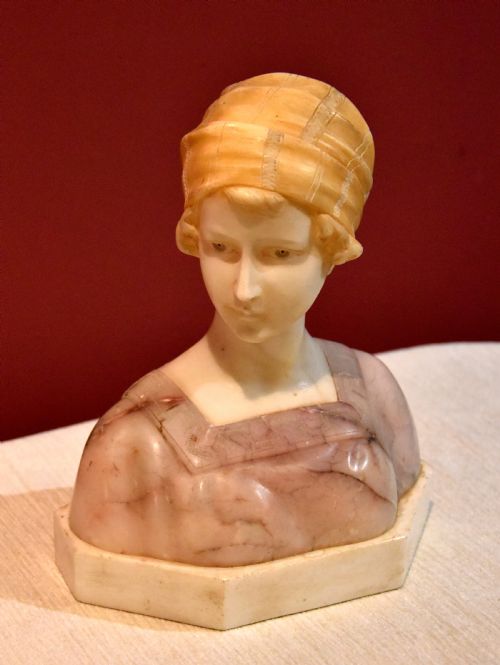
Carved Portrait Statue
A carved portrait statue preserves the likeness of a specific individual in stone, marble, alabaster or wood.
Carved Portrait Statue
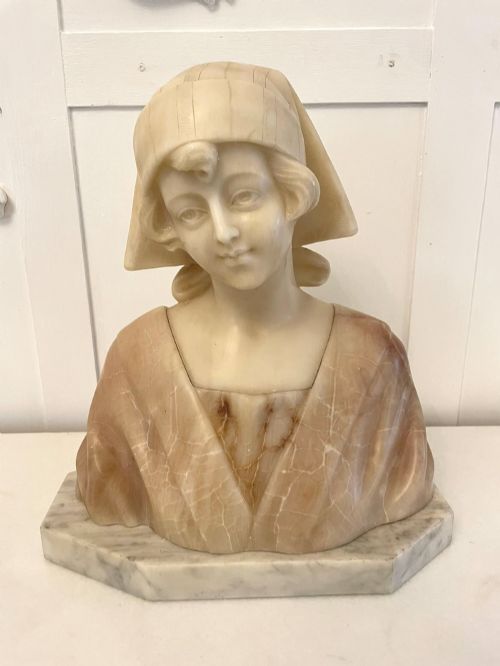
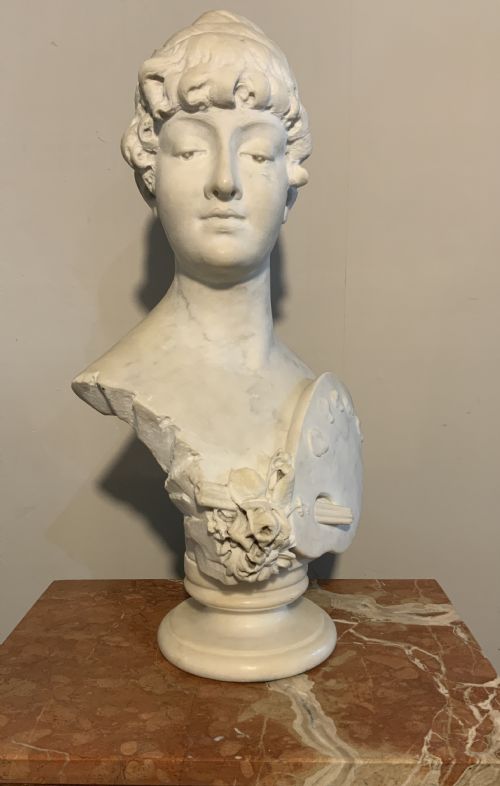
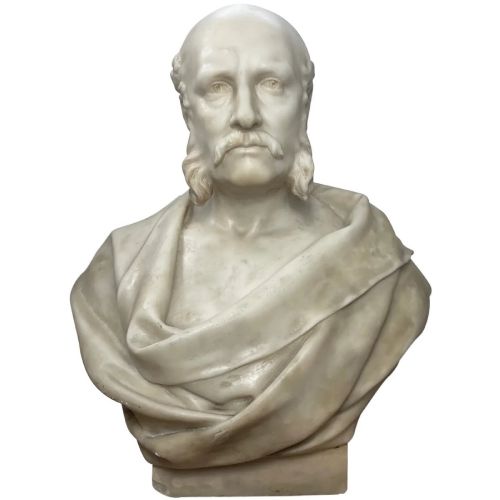
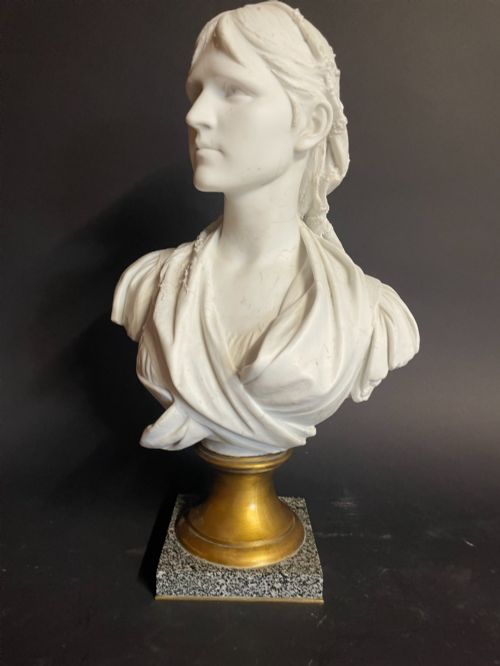
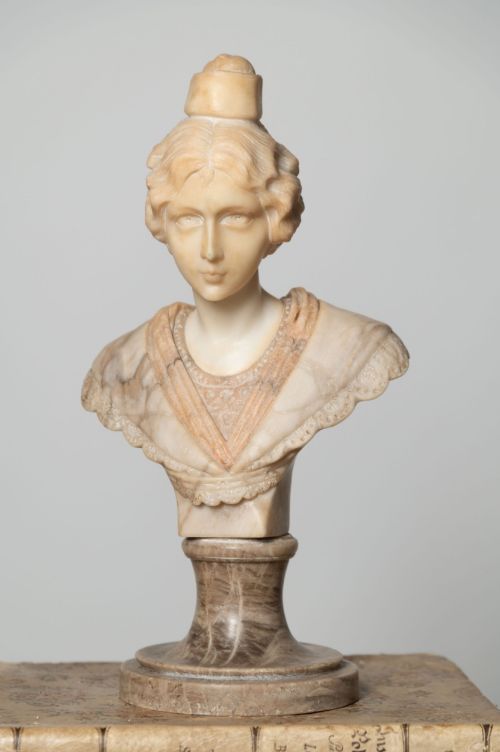
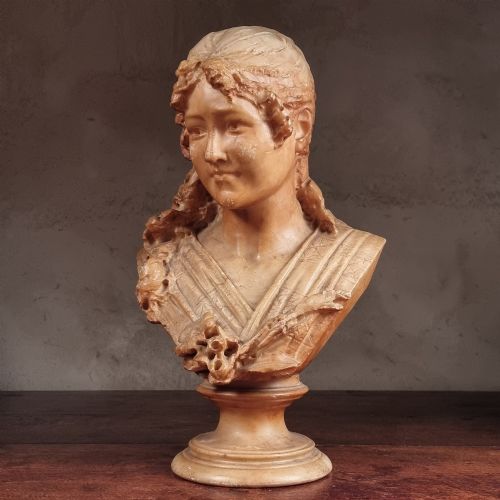
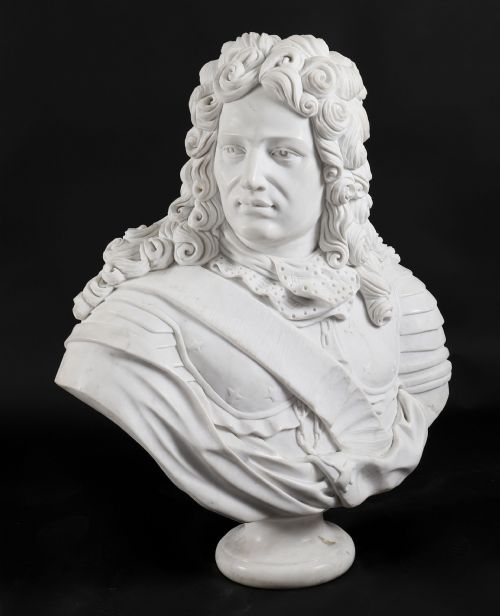
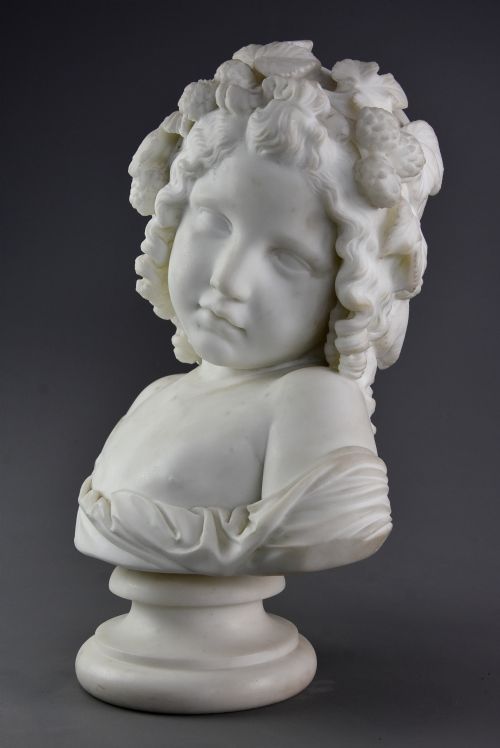
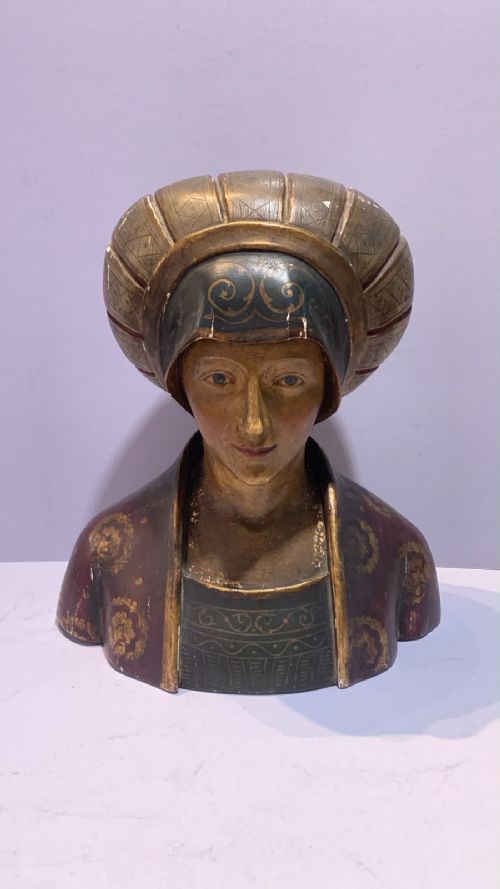
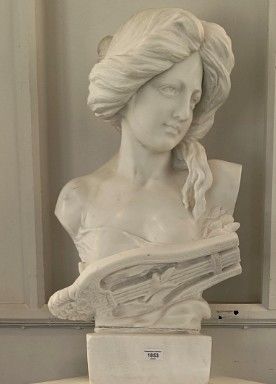
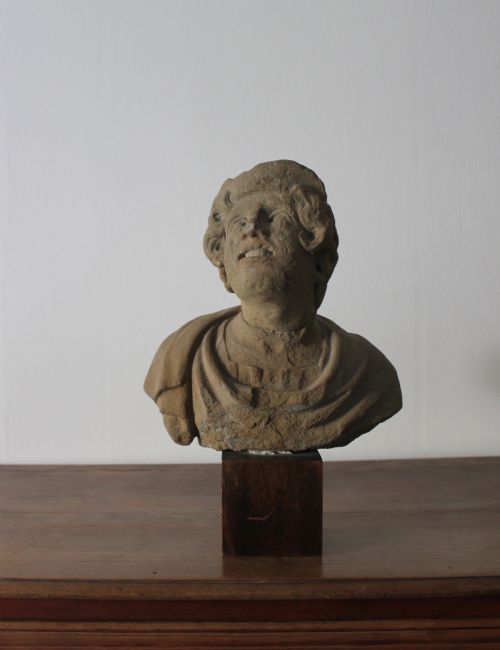
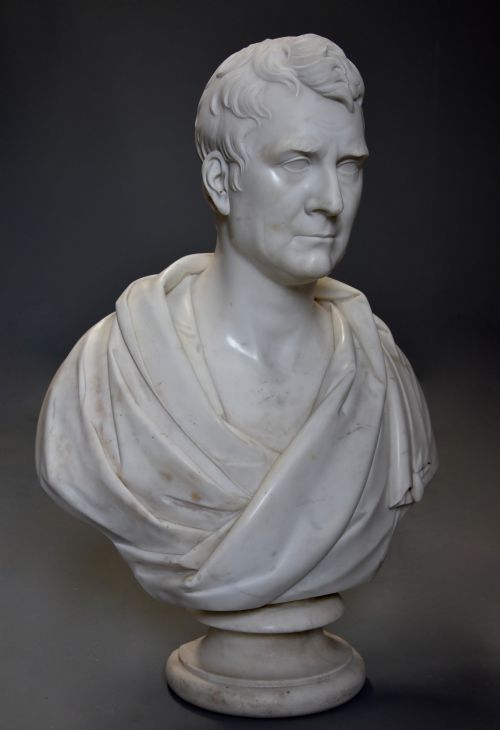
A carved portrait statue captures the physical likeness and character of historical figures, nobles, mythic muses, or private citizens in three dimensions. Buyers seeking these works encounter portrait busts and library heads rendered in enduring materials across several centuries of production.
The selections span from seventeenth-century pieces through the Victorian era and into the early twentieth century. Most examples on this page are marble or alabaster portrait busts originating from British and continental European studios.
Subjects range from classical Roman emperors and literary figures like Dante and Walter Scott to named civic figures and anonymous noblewomen. These sculptures served as scholarly ornaments for libraries, grand tour souvenirs, and commemorative monuments.
How they were made
Many works rely on traditional reduction techniques where the artisan translated proportions from a clay model into hard stone. Surface finishing involved abrasive smoothing and polishing to contrast matte drapery against luminous flesh.
Carved Portrait Statue Retail Price Guide 2026
Typical asking prices for carved portrait statue among the pieces listed under this phrase on Sellingantiques today, from the lower quarter to the upper quarter. They describe what is for sale here now, not the wider market.
Listings feature portrait works spanning from the seventeenth century through the early twentieth century, utilising marble, alabaster, stone, and wood.
What varies in quality
The success of a carved portrait statue rests upon the sculptorial command of anatomy, expression, and psychological depth in the subject's gaze. Master carvers render muscle tension, subtle bone structure, and the soft fall of hair with convincing realism.
Signatures by documented makers or studios elevate a piece above anonymous workshop production. The choice and purity of the stone, alongside crispness in carved details such as lace collars or armour straps, distinguish finer output.
Houdon·J Francis·Auguste Henri Carli·John Wenlock Rollins·Mieczyslaw Leon Zawiejski
The Carved Portrait Statue Glossary
- Carrara marble
- A type of white or blue-grey marble from the city of Carrara in Tuscany, prized by sculptors for its fine and uniform grain.
- Alabaster
- A fine-grained, translucent stone that accepts intricate carving and was frequently utilised for nineteenth-century portrait busts.
- Polychrome
- The practice of decorating sculptural works in a variety of colours using paint, gesso, or mixed materials.
- Grand Tour
- A traditional trip of Europe undertaken by upper-class European young men of means during the eighteenth and nineteenth centuries, often resulting in the acquisition of art.
- Library bust
- A smaller scale portrait sculpture intended for display upon bookshelves or mantelpieces within a private study.
Carved Portrait Statue: Frequently Asked Questions
How do I identify the subject of a portrait statue?
Many portrait sculptures include carved inscriptions on the base, shoulders, or rear identifying the sitter, or depict recognizable historical attributes such as laurel wreaths and Roman armour.
Researching costume details, accompanying library tags, or signature marks often confirms the identity of the historical figure or literary muse portrayed.
Where were these portrait sculptures displayed originally?
Owners placed these busts in domestic libraries, entrance halls, and formal drawing rooms as symbols of scholarly taste, political allegiance, or family lineage.
Smaller library busts suited private reading spaces, while monumental civic statues occupied public halls and institutional buildings.
How should I clean marble and alabaster sculptures?
Dust marble and alabaster surfaces gently with a soft, dry microfibre cloth or a clean, soft-bristled brush to prevent particulate accumulation.
Avoid using water, chemical cleaners, or oils on porous stone and alabaster, as moisture causes staining and degrades the historic surface.
How do I distinguish nineteenth-century pieces from earlier eras?
Nineteenth-century works frequently reflect Neoclassical, Victorian, or Romantic revivals with crisp machine-assisted finishing and specific biographical inscriptions.
Earlier seventeenth and eighteenth-century pieces often display hand-tooled toolmarks, distinct patination, and different fastening methods within the stone or wood armature.