


Carved Pole Screen
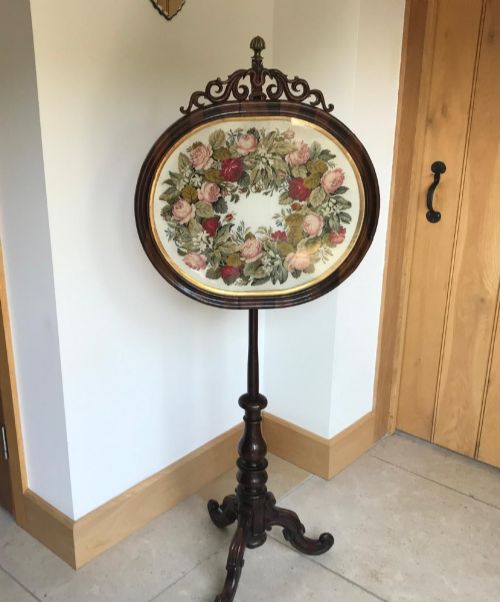
A carved pole screen directs radiant fireplace heat away from a seated face, combining practical warmth with an embroidered focal point.
Carved Pole Screen
When you search for a carved pole screen, you encounter adjustable upright stands supporting a vertical sliding panel designed to shield occupants from open hearth fires. These pieces emerge primarily from Georgian, Regency, William IV, and Victorian eras, spanning the eighteenth and nineteenth centuries.
The most frequent form on this page pairs a turned or carved central wooden pole on a tripod base with an embroidered, needlepoint, or tapestry panel that moves vertically. You will find variations in mahogany, rosewood, and walnut, alongside smaller miniature formats and reflector versions utilising glass.
Makers designed these furnishings to stand near domestic hearths where adjustable panels protected skin from intense coal fires. The surviving examples demonstrate how households combined utility with intricate textile arts mounted on sturdy carved timber framing.
Materials and construction
Cabinetmakers turned and carved dense tropical hardwoods such as mahogany, rosewood, and walnut to form the central shafts and supportive tripod bases. Gilding appears on specific Regency examples, adding a reflective metallic finish to the carved wooden elements.
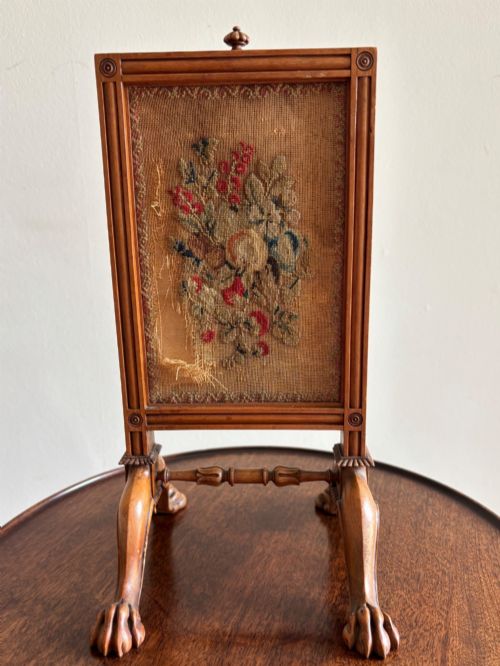
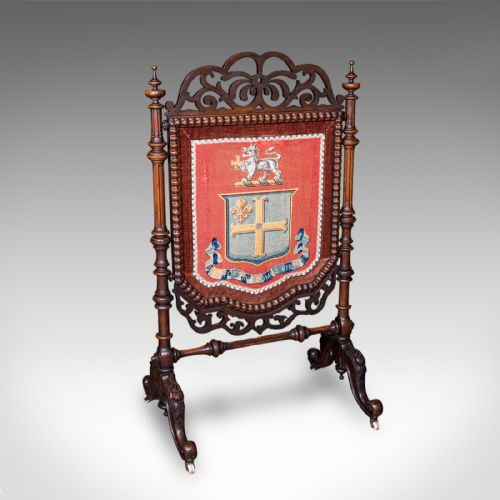
Needlework panels utilise wool, textile, and tapestry techniques, often displaying floral motifs or armorial designs stitched by hand. These decorative inserts slot into or hang from adjustable frames mounted securely upon the vertical poles.
Victorian ladies used these screens to prevent their expensive face makeup, often containing wax, from melting near the hearth.
What separates the finest examples
The sophistication of the timber carving on the tripod base and central pillar dictates much of the visual distinction across these objects. Finer pieces display crisp, deep relief work and well-proportioned turning rather than simplified linear decoration.
The execution and preservation of the needlework panel significantly influence the overall standard of a screen. Finely detailed tapestry and needlepoint with intact wool colours elevate the textile component above plain or later replacement panels.
The Carved Pole Screen Glossary
- Pole screen
- A freestanding vertical wooden shaft on a base supporting an adjustable sliding panel used near fireplaces. This configuration allowed occupants to raise or lower the shield depending on heat intensity.
- Tripod base
- A three-legged support structure commonly utilised to keep slender vertical poles stable on uneven flooring. These bases frequently feature cabriole legs or carved claw feet.
- Needlepoint
- A type of canvas work embroidery executed with yarn using various stitches to create pictorial or floral designs. It forms the primary display surface on most screens.
- Tapestry
- A heavy hand-woven or needle-worked fabric depicting decorative scenes or patterns mounted within the screen frame. These textiles provide rich colour and texture.
- Regency
- An English design period spanning the early nineteenth century characterised by classical motifs, carved rosewood, and giltwood. Pieces from this era display distinct architectural influences.
Carved Pole Screen: Frequently Asked Questions
How do you adjust the panel height?
A concealed collar or thumb screw typically grips the central pole, allowing the frame to slide up and down freely.
Users set the textile shield at the exact eye level required to block intense heat from the open fireplace.
Where were pole screens placed in rooms?
They stood directly between seating areas and the hearth during colder months when open coal or wood fires burned brightly.
Their primary function was protecting delicate facial complexions from the scorching heat radiating from the flames.
Are the tapestry panels original?
Many retain their nineteenth-century needlework, though textiles frequently experienced wear from smoke and handling over generations.
Close inspection of the wool yarns and backing canvas helps determine whether a panel dates to the same period as the wooden stand.
What is a glass reflector screen?
Certain Regency variants incorporate a mirrored or glass panel instead of stitched embroidery to bounce light and warmth back into the room.
These unusual pieces served both as fire shields and auxiliary light reflectors before gas and electric illumination.
How do I care for rosewood furniture?
Keep these items away from direct sunlight and excessive temperature shifts to prevent timber splitting or fading.
Apply occasional gentle wax polishing to maintain the natural lustre of dense woods like rosewood and mahogany.