



Needlepoint Draft Screen
These needlepoint draft screen pieces offer practical warmth and refined decoration, crafted to shield rooms from open hearth drafts.
Needlepoint Draft Screen
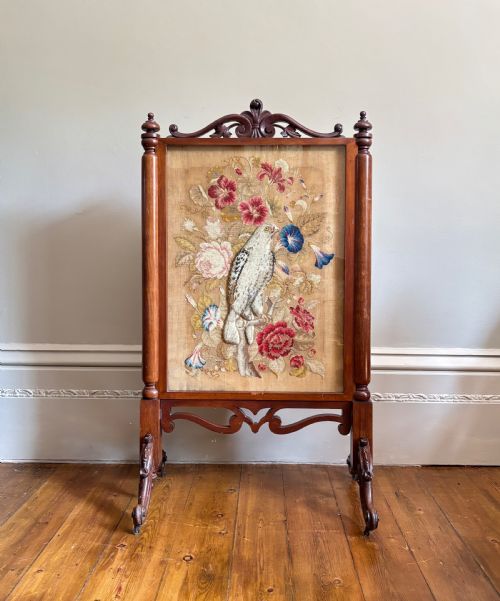
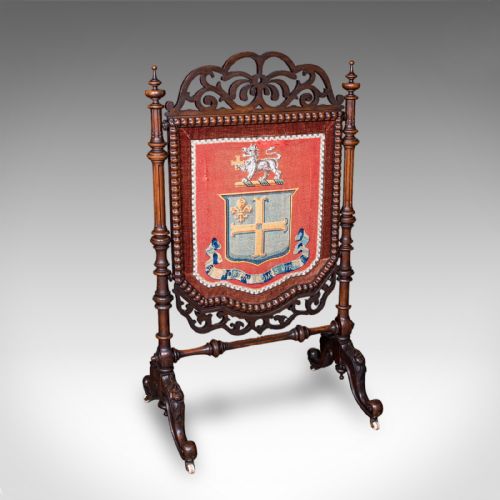
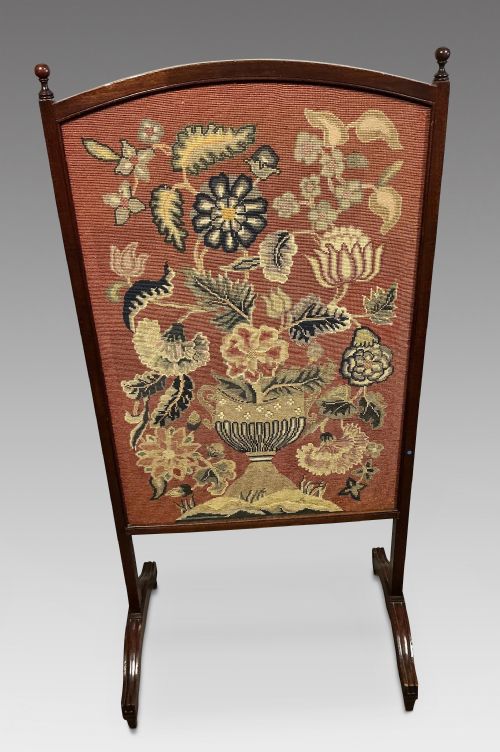
A needlepoint draft screen stands as a decorative and functional division within a room, designed historically to block heat loss or air movement from an open fireplace. Buyers seeking a needlepoint draft screen encounter diverse formats, ranging from low hearth guards to tall multi-panel room dividers. The examples recorded here span the Victorian and Regency periods, showing how domestic interiors adapted textiles for everyday utility.
Most pieces on this page appear as single fire screens or tall folding panels, constructed to manage temperature and privacy in domestic settings. The primary forms combine a sturdy timber frame with a central textile insert executed in wool, silk, or canvas. These items bridge furniture design and textile art, reflecting the changing tastes of nineteenth century households.
How they were made
The construction of these screens relies on dense timber frames paired with hand-worked textile panels. Cabinetmakers utilised hardwoods such as mahogany, walnut, rosewood, and palisander to build stable supports and carved surrounds. These frames often incorporate brass fittings or hinged joints to accommodate folding room dividers.
The textile inserts utilise wool and silk threads stitched onto canvas grounds, employing techniques such as Berlin work and tapestry weaving. Artisans mounted these embroidered or woven panels tightly within the wooden frames to ensure the textile remained flat and taut under household conditions.
Needlepoint Draft Screen Retail Price Guide 2026
Typical asking prices for needlepoint draft screen among the pieces listed under this phrase on Sellingantiques today, from the lower quarter to the upper quarter. They describe what is for sale here now, not the wider market.
One towering six-foot specimen exists purely to convince visitors that your parlour is far draftier than it actually is.
What varies in quality
The standard of a piece rests upon the complexity of the timber carving and the fineness of the textile work. Superior examples demonstrate skilled joinery in woods like rosewood and mahogany, alongside detailed pictorial or armorial stitching in wool and silk. Simpler items rely on basic turned frames and coarser canvas embroidery.
Proportion and execution dictate the standing of each object. A well-balanced frame housing intricate hand-woven pastoral scenes or armorial motifs sits apart from plain utilitarian barriers. The relationship between the weight of the timber and the precision of the needlework defines the overall calibre.
The Needlepoint Draft Screen Glossary
- Berlin work
- A style of nineteenth century needlepoint charted on squared paper using coloured wools. This technique allowed makers to produce symmetrical floral and pictorial designs with ease.
- Palisander
- A dense tropical timber often used in Regency cabinet making. Its dark grain and rich colour brought a formal appearance to high status furniture frames.
- Armorial panel
- A textile design featuring a family crest or coat of arms. These embroidered displays marked lineage and status within grand houses.
- Tapestry screen
- A movable furnishing holding a woven or embroidered panel. The textile insert serves as both a decorative focal point and a functional barrier against drafts.
- Canvas
- A heavy woven fabric used as the foundation ground for needlepoint stitching. Its even grid structure supports precise counting and placement of wool and silk threads.
Needlepoint Draft Screen: Frequently Asked Questions
What is a needlepoint draft screen?
A needlepoint draft screen is a movable furnishing designed to block air currents near a fireplace or divide a large interior space. These pieces combine a wooden frame with a decorative embroidered textile panel.
Historically placed in sitting rooms and parlours, they managed room temperature before central heating became common. Today they function primarily as decorative antique furnishings.
How were these screens used?
People placed these screens close to hearths to shield seated occupants from the radiant heat of the fire or cold draughts coming down the chimney. Taller multi-panel versions also served to divide rooms and create private seating areas.
In larger houses, servants moved them according to the daily needs of the household. Their mobility made them essential items for controlling comfort in draughty nineteenth century rooms.
How do I care for the textile panels?
Protect antique wool and silk needlepoint from direct sunlight to prevent fading of the dyed threads. Keep them away from damp environments to protect both the canvas backing and the wooden frame.
Gentle dusting with a soft brush helps maintain the textile without damaging the fibres. Avoid using liquid cleaners on historic embroidery.
How do I distinguish Victorian from Regency styles?
Regency pieces generally exhibit classical restraint, featuring smooth veneers such as mahogany and palisander with architectural lines. They date from the early nineteenth century and prior.
Victorian examples often display heavier carving, more ornate rosewood or walnut frames, and elaborate Berlin work or pastoral tapestry panels. These reflect the later nineteenth century preference for dense decoration.