
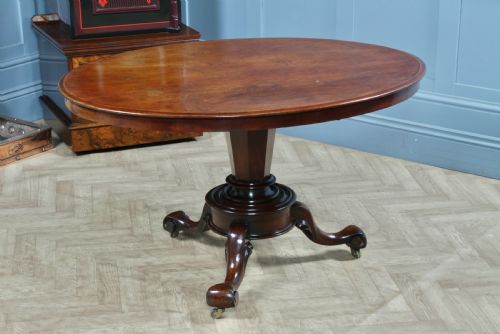
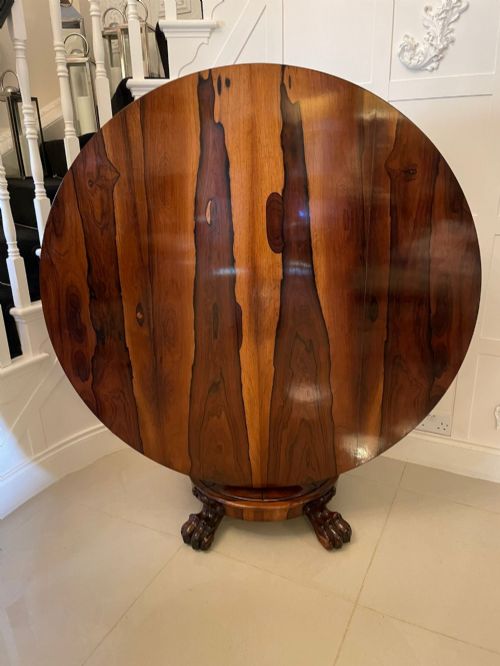
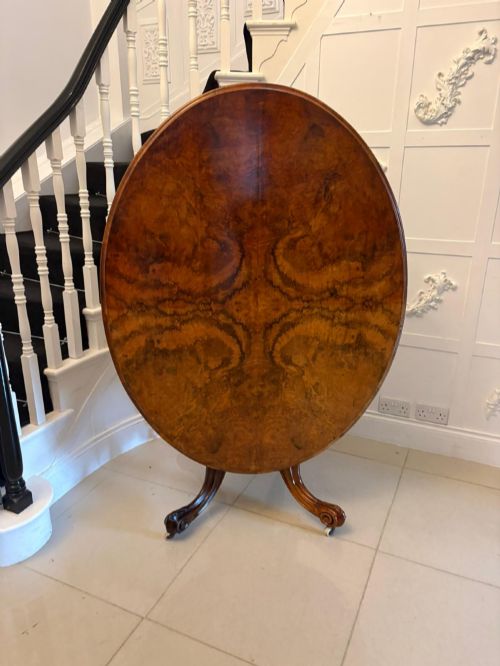


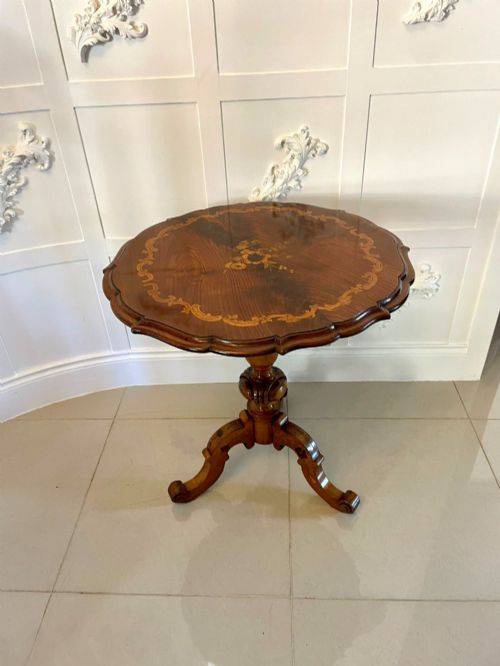
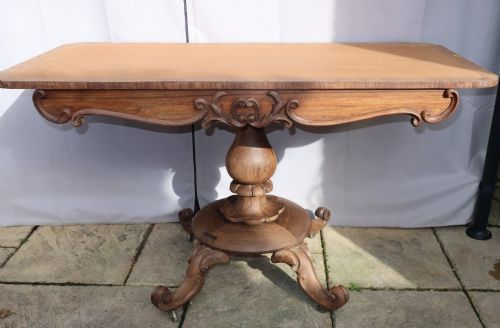
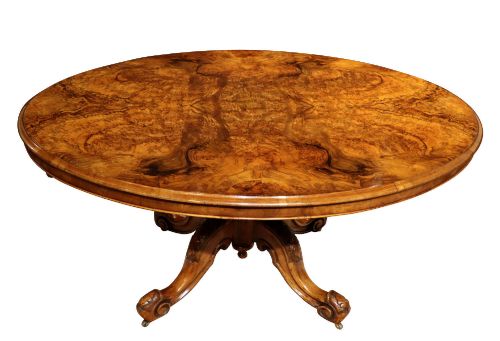
Carved Pedestal Loo Table
These carved pedestal loo tables are grand centrepieces designed for evening assembly, bringing warmth and presence to reception rooms.
Carved Pedestal Loo Table
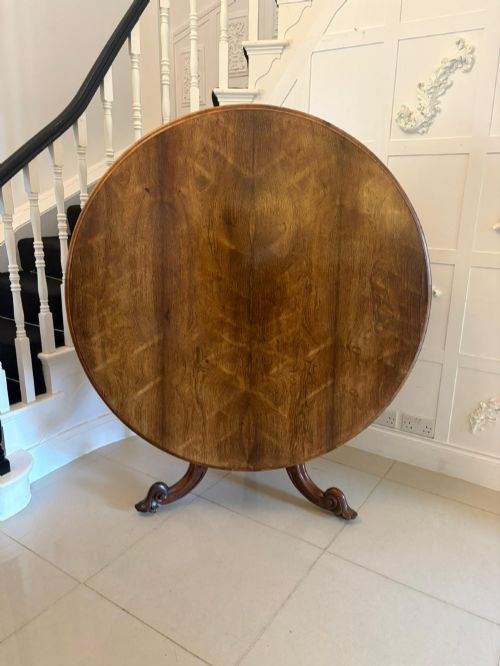
A carved pedestal loo table is a versatile nineteenth-century form designed for communal gatherings, serving variously as a dining table, breakfast table, or grand centrepiece. These pieces appear primarily in Victorian and William IV iterations, spanning circular and oval formats.
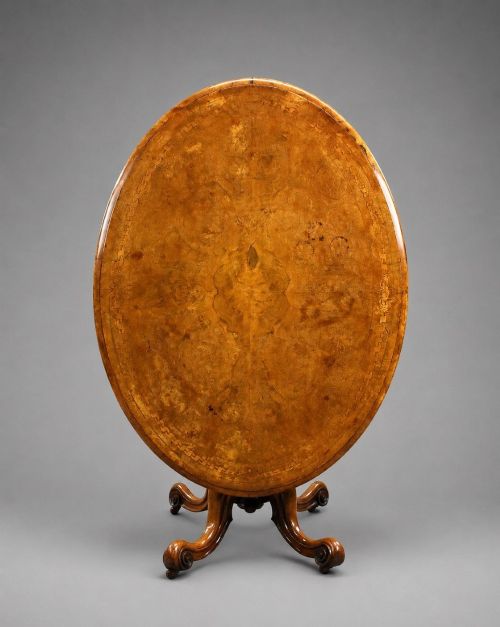
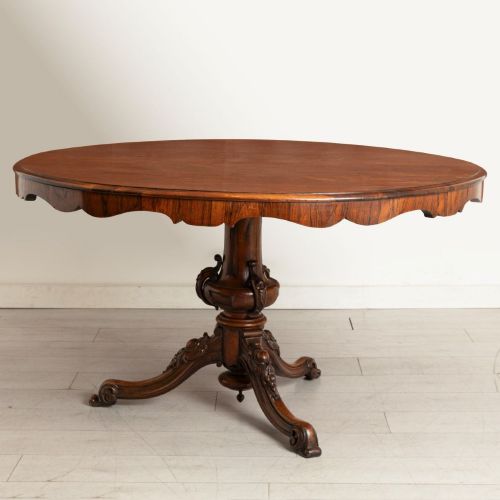
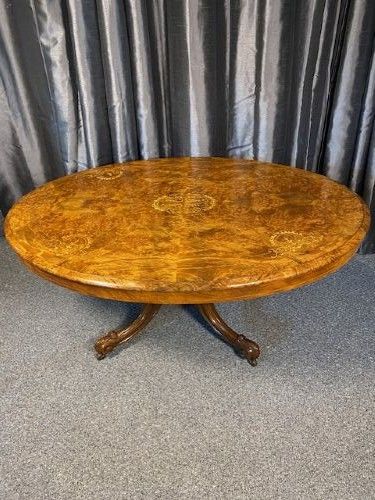
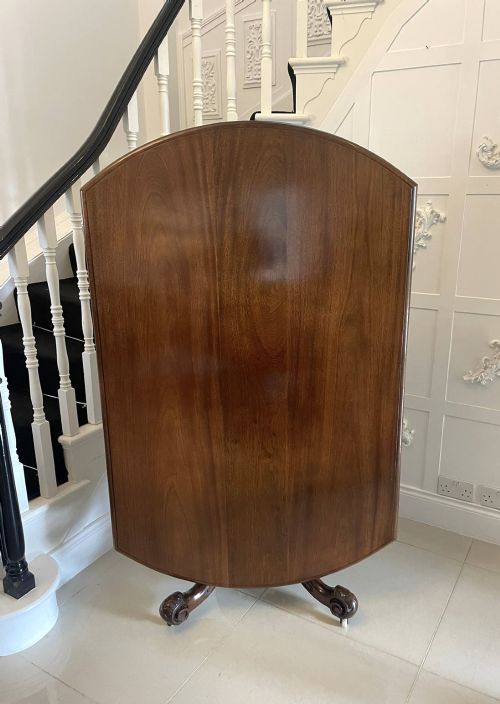
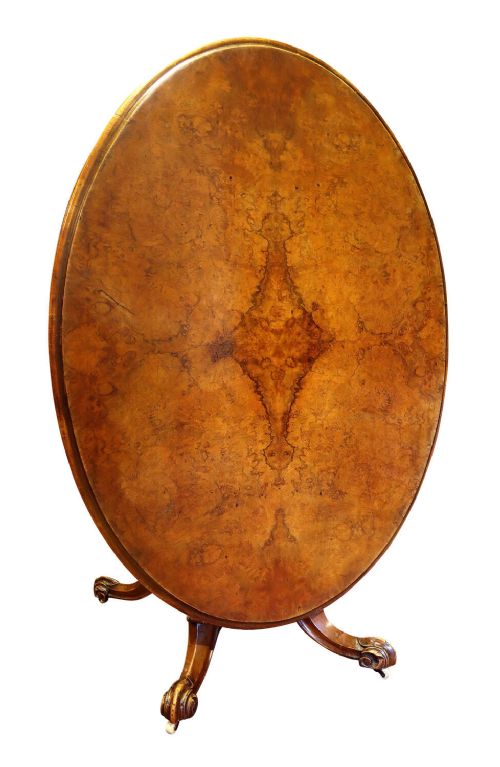
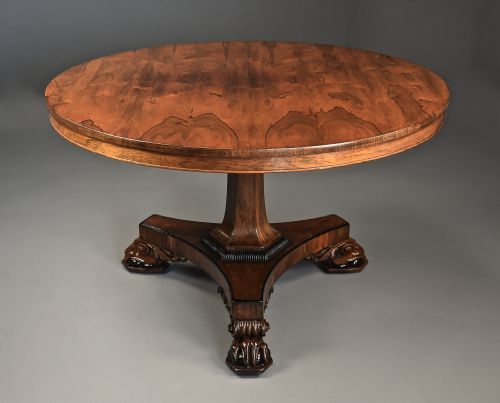
The most common examples on this page are Victorian burr walnut and rosewood versions featuring tilt tops and substantial carved pedestals. Makers of the period engineered these tables to tilt upright when not in use, saving valuable floor space in large reception rooms.
Beyond the standard circular and oval dining formats, the selection includes related occasional tables, coffee tables, and library tables sharing the characteristic pedestal construction. Regional variations such as Anglo-Indian models also surface alongside English Regency and William IV pieces.
How they were made
Cabinet makers utilised dense native and exotic timbers, selecting burr walnut, rosewood, mahogany, and pollard oak for their rich grain patterns. These choice woods were frequently laid as veneers over stable secondary timbers to create striking patterned surfaces.
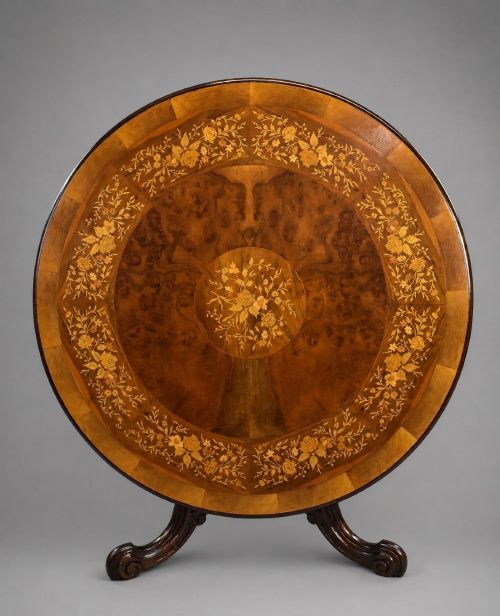
Decorative details rely heavily on precision craftsmanship, incorporating boxwood inlay, marquetry, and intricate hand-carved solid wood bases. Pedestals were often turned on a lathe before craftsmen applied deep relief carving to the knees and feet of the quadrapod or tripod supports.
The practical tilt-top mechanism requires robust iron or brass hinges and catches concealed beneath the top to allow the heavy timber surface to pivot and lock securely into position.
Burr walnut dominates the mid-nineteenth-century listings here, frequently paired with intricate boxwood inlay and marquetry.
What varies in quality
The distinction between ordinary and exceptional tables rests primarily on the selection of timber veneers and the depth of the carving. Superior pieces display book-matched burr walnut or figured rosewood with lively grain, while lesser examples use flat or poorly matched timber.
Carving execution defines the upper tier of the range, showing crisp, deep undercutting on the pedestal and base rather than soft, mechanical moulding. The stability of the tilt mechanism and the seamless fit of secret drawers or inlaid banding further separate the finest workshops from standard production.
Gillows·Peters of Genoa
The Carved Pedestal Loo Table Glossary
- Tilt Top
- A table mechanism allowing the top to pivot to a vertical position. This clever design enabled tables to be pushed against walls when not in use.
- Loo Table
- A large round or oval table originally intended for the nineteenth-century card game of loo. They double easily as breakfast or centre tables.
- Burr Walnut
- A prized wood harvested from walnut tree growths, producing swirling, knotty patterns. Cabinet makers used it extensively for high-end Victorian veneering.
- Marquetry
- The art of applying pieces of veneer to a structure to form decorative patterns or pictures. Craftsmen used contrasting woods like boxwood for fine detail.
- Quadrapod
- A four-legged pedestal base providing sturdy support for heavy tabletops. These bases are frequently carved with scrolls or foliage.
Carved Pedestal Loo Table: Frequently Asked Questions
How do I use a loo table today?
These tables make striking centrepieces in large hallways or principal reception rooms where their decorative tops can be appreciated. They also function well as everyday dining tables or large coffee tables depending on the height and scale of the specific piece.
Pivot the top upright against a wall when you need to reclaim floor space for entertaining, just as nineteenth-century households did. Their sturdy pedestal construction ensures they remain practical for modern living without sacrificing historical character.
What is the difference between a loo table and a breakfast table?
While both terms frequently describe large nineteenth-century pedestal tables with tilt tops, a loo table specifically references furniture sized for card games. Breakfast tables served a similar multi-purpose domestic role in the morning hours before rooms were reset for evening activities.
In practice, makers used the terms interchangeably in period records, and the physical forms overlap entirely on this page. Both types rely on stable quadrapod bases and striking timber veneers to anchor a room.
How do I date a Victorian burr walnut table?
Dating relies on observing a combination of timber choices, construction techniques, and prevailing decorative styles across the nineteenth century. Earlier William IV and early Victorian pieces often feature heavy rosewood and bold architectural carving, while mid-Victorian examples favour burr walnut and marquetry.
Examine the secondary woods beneath the top and inside any secret drawers for clues regarding regional British or continental workshop practices. The evolution from sturdy tripod bases to heavy carved quadrapods also helps narrow down the decade of manufacture.
Are tilt-top mechanisms still stable?
Original nineteenth-century tilt mechanisms were engineered to support substantial timber tops safely through decades of daily use. When properly adjusted, the brass or iron catches lock the tabletop firmly into a horizontal plane without excessive wobble.
Maintenance typically involves checking the pivot pins and wooden blocks beneath the top to ensure they remain secure. The weight of the solid timber and pedestal naturally keeps the assembly balanced during normal use.