

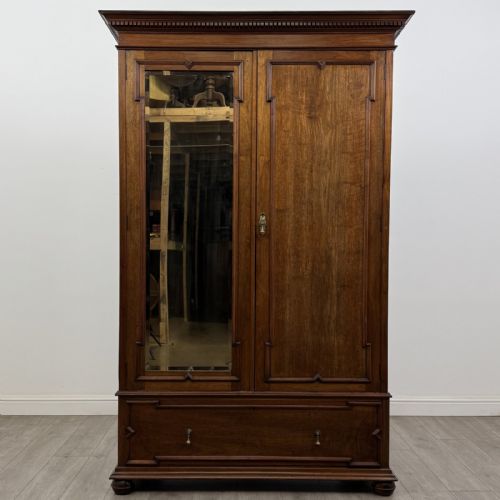
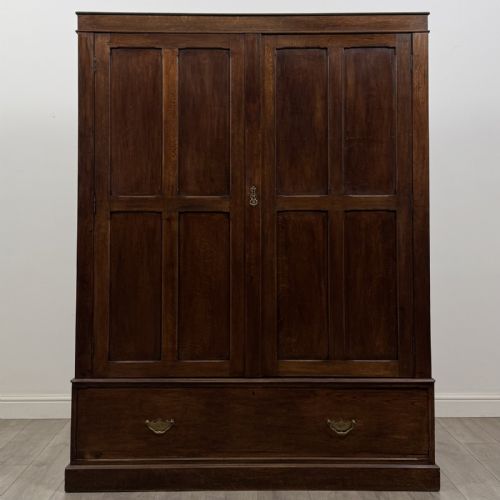
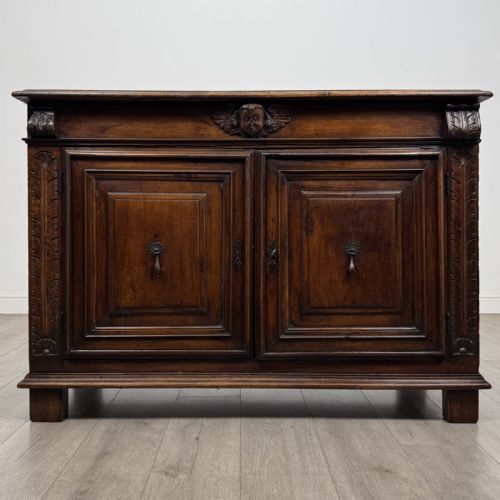
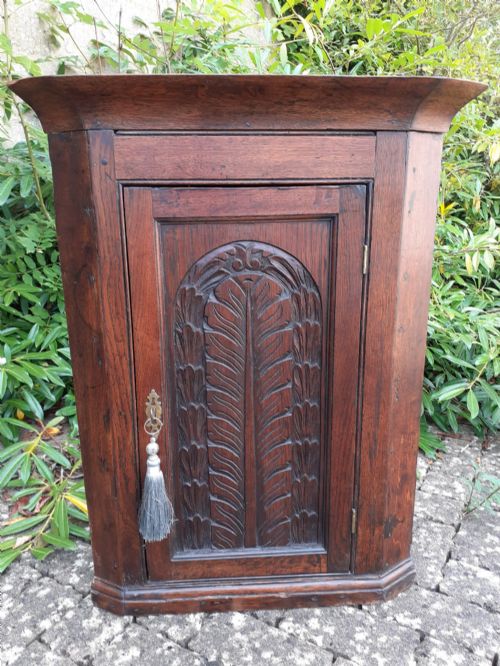
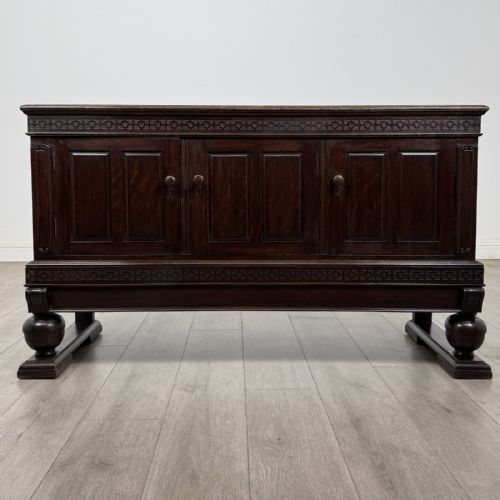
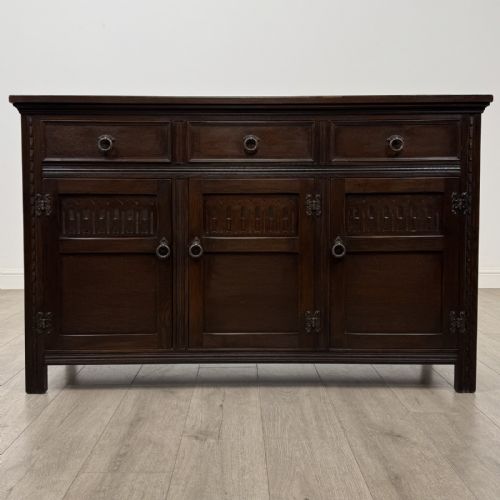
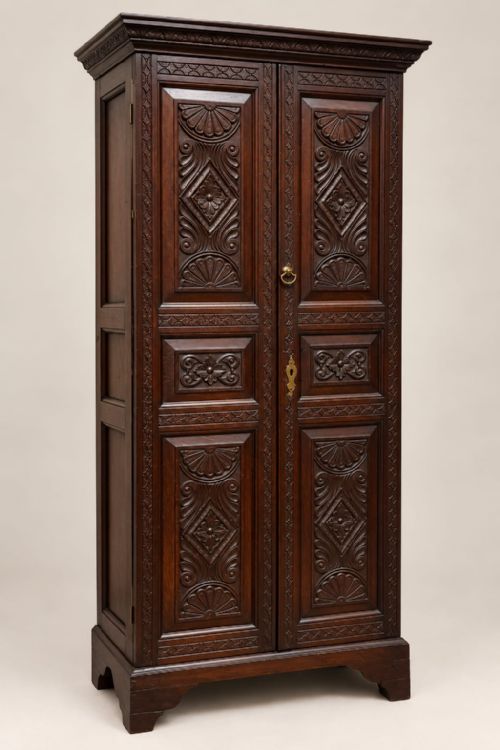
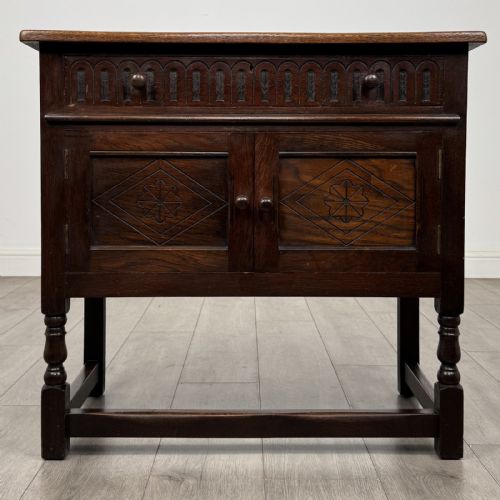
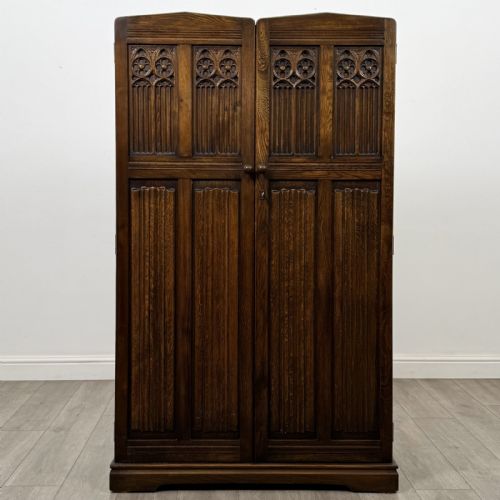
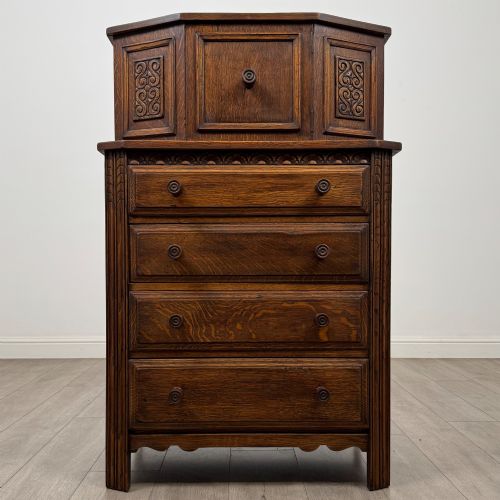
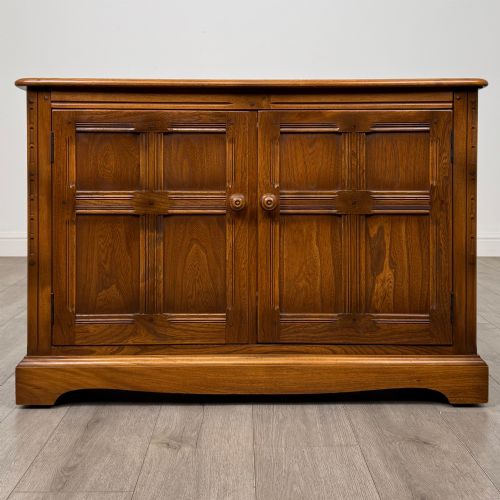
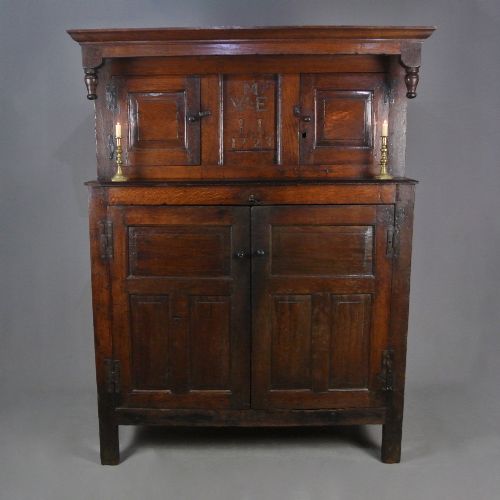
Carved Panel Storage Cupboard
A carved panel storage cupboard brings heavy timber and centuries of hand-chiselled detail directly into everyday domestic use.
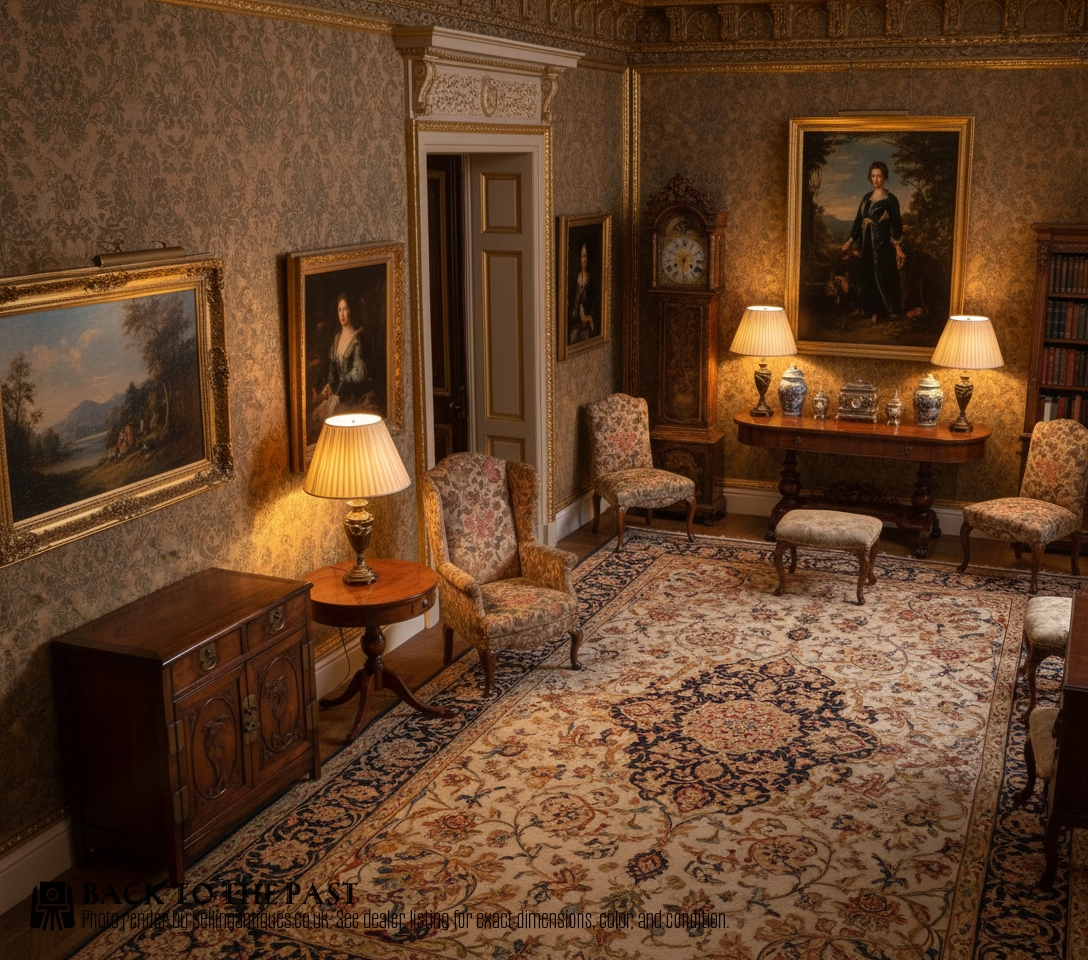
Carved Panel Storage Cupboard
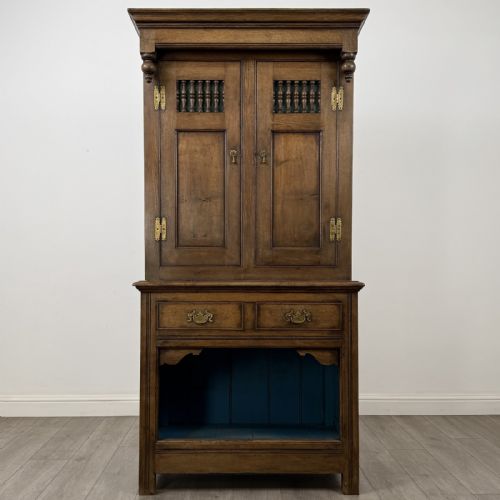
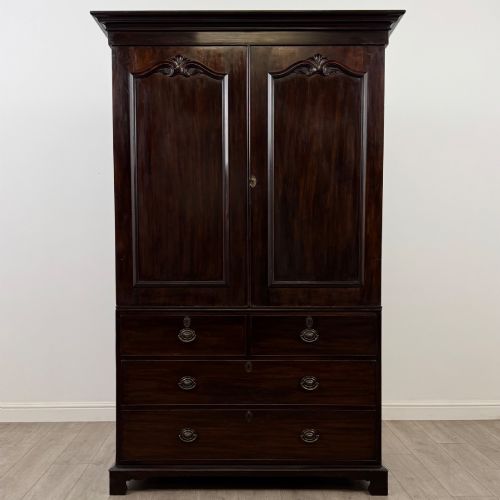
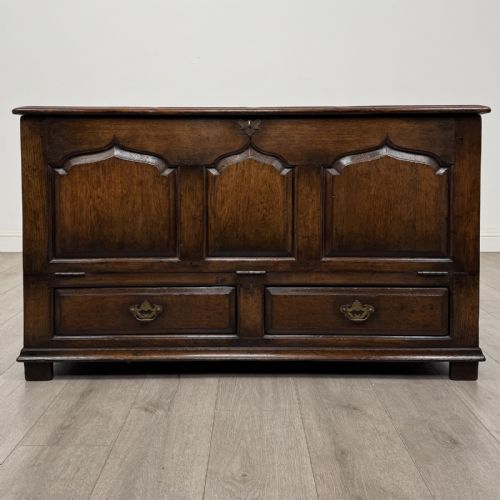
A carved panel storage cupboard represents a lineage of utilitarian timber furniture built to hold household stores, linens, and provisions. When you examine the options on this page, you will notice forms spanning from early oak court cupboards to Edwardian golden oak examples and later twentieth-century interpretations.
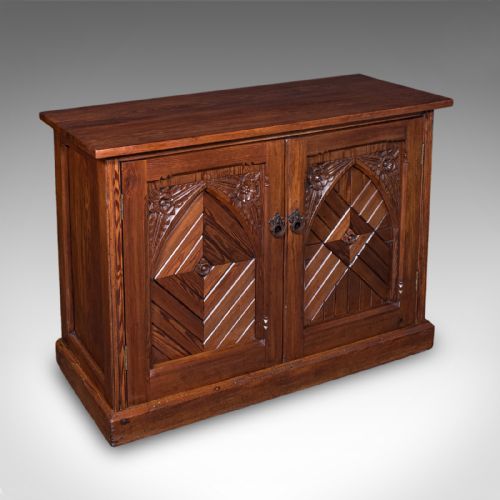
The materials reflect a strong bias towards sturdy domestic woods, predominantly oak alongside walnut, elm, pine, and mahogany. These pieces frequently manifest as housekeepers cupboards, court cupboards, wardrobes, and side cabinets incorporating panelled doors adorned with relief carving.
Origins stretch across English country workshops, Welsh traditions, and continental European output including French and Italian pieces. The stylistic vocabulary swings between authentic seventeenth-century vernacular and later revivals spanning the Jacobean, Gothic, and Elizabethan manners.
Construction and materials
Makers relied primarily on solid oak and walnut, assembled using traditional joinery methods like mortise and tenon frames to support heavy panelled doors. Iron and brass hardware such as hinges, handles, and escutcheons were secured by hand to anchor the weighty timber doors.
Surface ornamentation relied on gouges, chisels, and carving knives to apply geometric strapwork, floral motifs, and linenfold patterns directly into the grain of the wood. Secondary timbers like fruitwood and pine appear in internal shelving and backing boards, while painted finishes decorate certain continental European examples.
Carved Panel Storage Cupboard Retail Price Guide 2026
Typical asking prices for carved panel storage cupboard among the pieces listed under this phrase on Sellingantiques today, from the lower quarter to the upper quarter. They describe what is for sale here now, not the wider market.
Listings feature oak predominantly, supported by walnut, elm, pine, and mahogany across periods spanning the seventeenth century to the twentieth.
Evaluating craftsmanship and integrity
Quality rests heavily on the depth and crispness of the hand-carved panels, where sharp relief work distinguishes bespoke artisan output from mechanical or later revival output. The choice of primary timber grade, such as richly figured quarter-sawn oak or dense walnut, dictates the visual presence of the piece.
Structural longevity depends on the original integrity of the framework, the snugness of the panel expansion within grooves, and the preservation of period brass or iron furniture. Examples retaining their original boarded backs, functional locks, and uncompromised internal configurations hold superior integrity.
Henry Ogden and Son
The Carved Panel Storage Cupboard Glossary
- Housekeeper's cupboard
- A large tall storage unit traditionally utilised in large domestic staff quarters for housing household linens and dry goods. These usually feature multiple panelled doors enclosing adjustable shelving or hanging space.
- Linen press
- A large upright cupboard designed specifically for storing folded garments and household textiles, frequently incorporating internal sliding trays. They often display prominent raised wooden panelling on the upper facade.
- Quarter-sawn oak
- A method of cutting logs radially from the centre to produce boards with enhanced dimensional stability and striking medullary ray fleck patterns. This cut was favoured by cabinet makers seeking both durability and decorative figuring.
- Strapwork
- A decorative carving motif resembling flat interlaced leather bands or ribbons, frequently deployed in geometric patterns across Elizabethan and Jacobean panels.
Carved Panel Storage Cupboard: Frequently Asked Questions
How do I date an oak cupboard?
Dating relies on observing construction marks, joint types, timber characteristics, and the style of the hand carving. Earlier seventeenth and eighteenth-century pieces display pegged joints, hand- cleft boards, and irregular tool marks left by local carpenters.
Later revival pieces from the Victorian and Edwardian eras often utilise machine-sawn timber, standardised screws, and cleaner internal linings while imitating older decorative schemes.
Where were these cupboards originally used?
These storage units served utilitarian roles across various rooms in large houses, farmhouses, and civic buildings. Housekeepers cupboards stood in domestic service corridors or large kitchens to safeguard household linens and dry goods.
Smaller side cabinets and corner cupboards functioned in dining rooms, halls, and parlours to store tableware, documents, and provisions.
How do I care for antique oak?
Preserving antique timber requires stable indoor humidity levels and protection from direct sunlight and sudden temperature shifts. Radiant heat sources can cause ancient oak panels and joints to shrink, warp, or split.
Feed the wood sparingly with appropriate beeswax or natural polish, avoiding modern silicone sprays that build up and damage dry historic finishes.
What is the difference between an 18th century and a revival piece?
Seventeenth and eighteenth-century pieces were built to fulfill immediate domestic storage needs using available regional timbers and contemporary hand tools. They frequently bear the scars of heavy use and repairs accumulated over centuries.
Revival furniture manufactured during the nineteenth and twentieth centuries deliberately recreated historical aesthetics like the Jacobean or Elizabethan styles for modern homes using period-appropriate timber.