
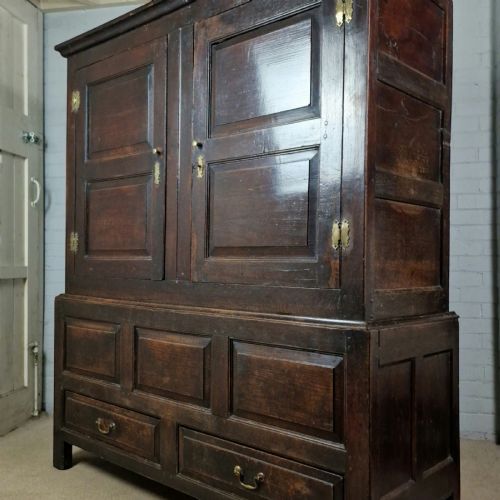
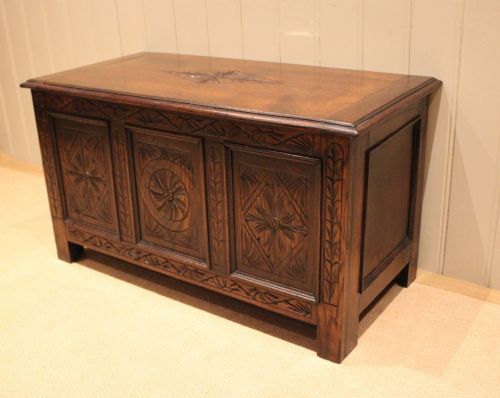
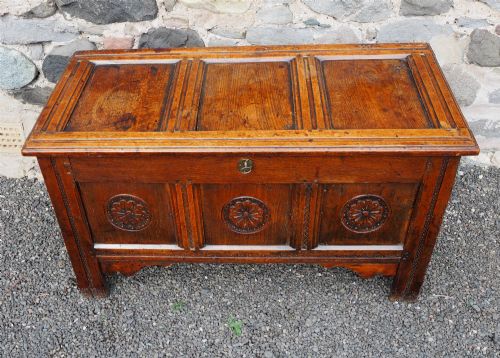
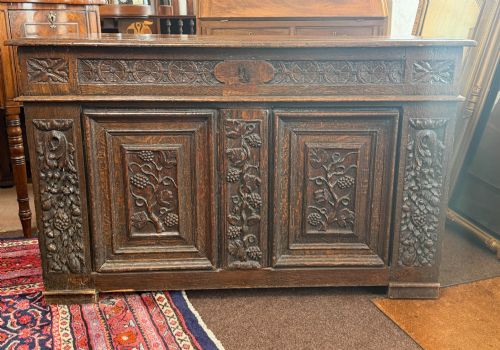

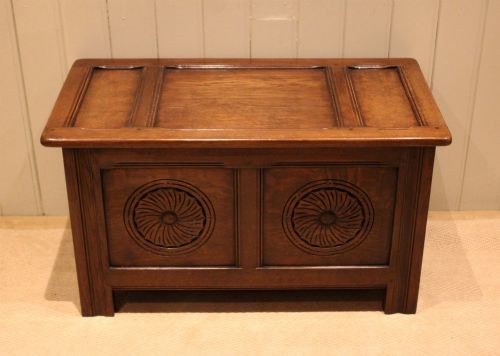
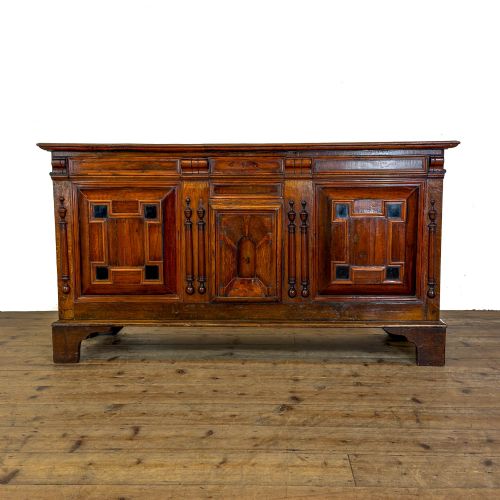
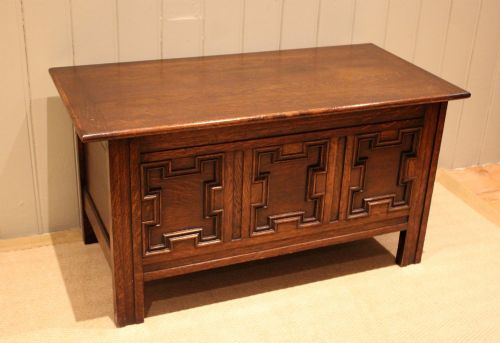
Carved Panel Mule Chest
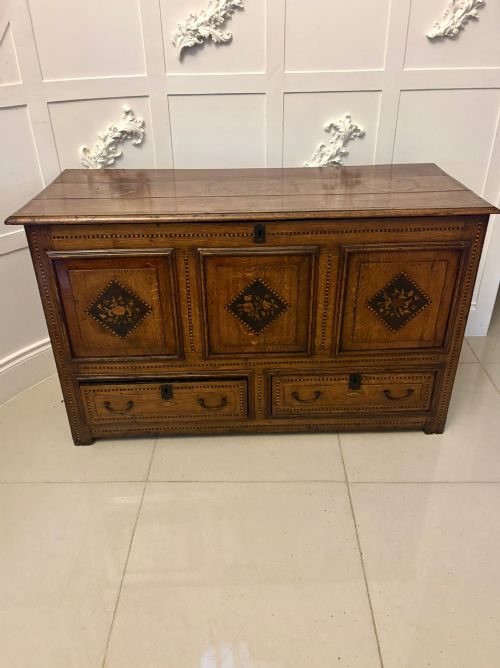
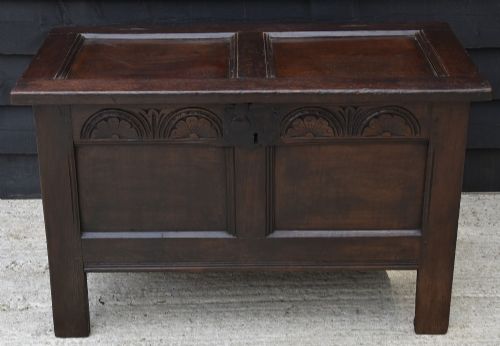
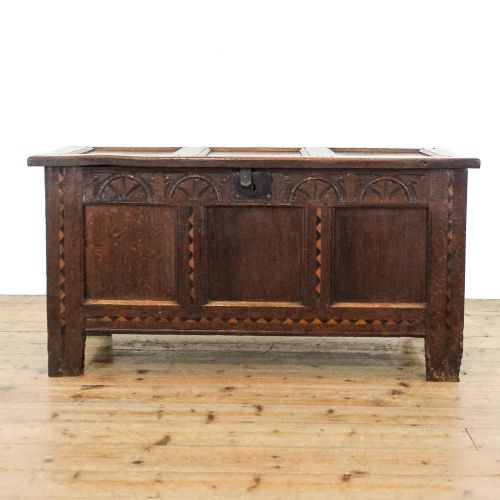
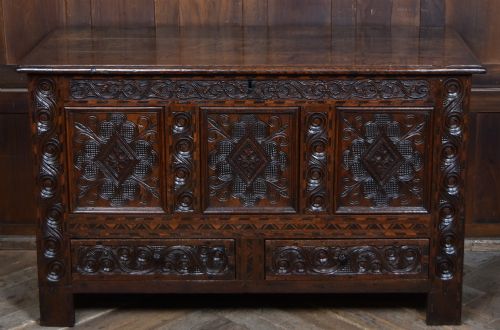
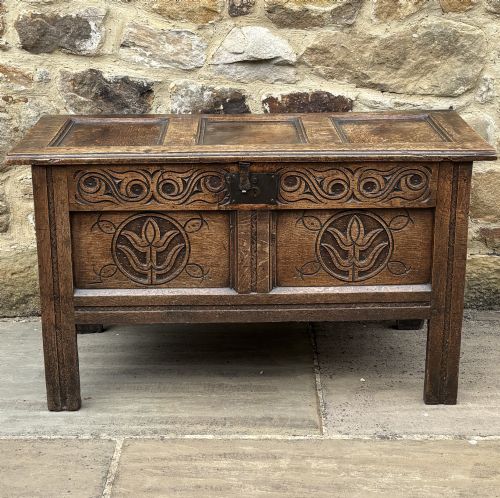
A carved panel mule chest offers generous storage beneath a hinged lid, combining a traditional chest base with lower drawer space.
Carved Panel Mule Chest
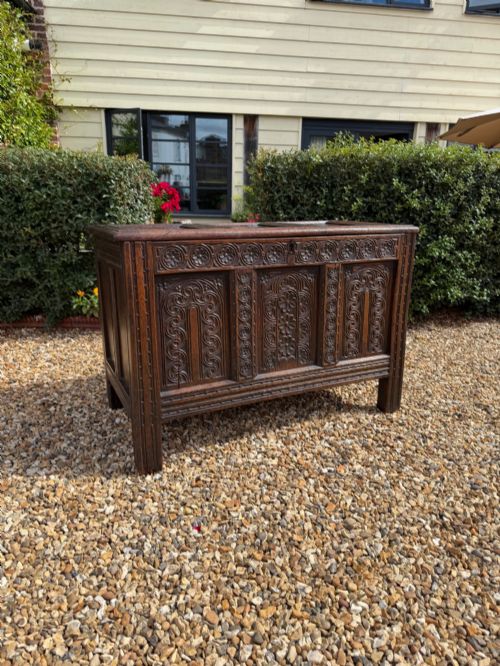
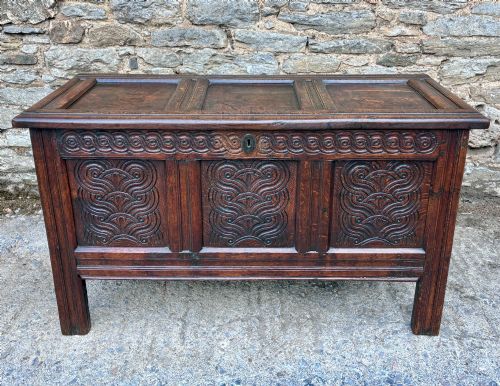
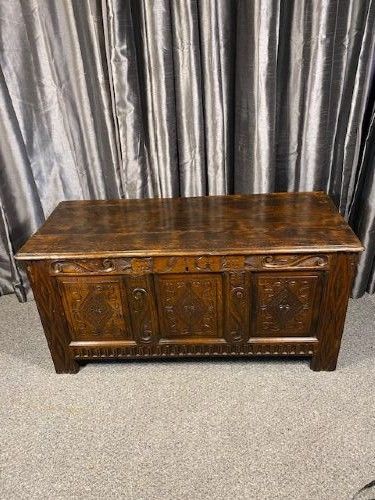
A carved panel mule chest is a storage piece combining a trunk compartment with one or more lower drawers, seen frequently in oak across this selection. These pieces date principally from the seventeenth and eighteenth centuries, alongside later revival examples from the early twentieth century.
The form developed to provide easier access to belongings without disturbing items stored in the main upper compartment. Regional variations appear among the listings, including English country examples and specific pieces attributed to locations such as Dorset, Wales and Leeds.
Materials and construction
Makers built these chests primarily using solid oak, assembled with pegged frame and panel construction to accommodate seasonal wood movement. Iron and brass hardware, including hinges and lock plates, secure the heavy timber lids and doors.
Decorative surface treatments incorporate carved geometric or floral motifs directly into the timber panels. Certain examples utilise contrasting marquetry inlay, wood inlay, burr elm panels, fruitwood or ebonised wood details to enhance the visual depth.
The listings here span seventeenth century origins through to 1930s revival interpretations, constructed primarily in solid oak with occasional fruitwood and burr elm.
Judging quality and period character
Quality rests in the crispness and depth of the carved detailing on the panels, alongside the integration of the lower drawer section. Finer examples display balanced proportions, such as small proportions or distinctive regional cabinetmaking traits.
The integrity of the timber surfaces and the presence of original construction elements elevate individual pieces. Revival items from the twentieth century differ visibly in patination and tool marks from seventeenth and eighteenth century originals.
The Carved Panel Mule Chest Glossary
- Mule chest
- A storage chest featuring a hinged lid above one or more drawers built into the base. This form bridges the traditional coffer and the modern chest of drawers.
- Coffer
- A heavy timber storage chest used primarily for household goods and valuables. Many examples incorporate panelled construction and hinged lids.
- Marquetry inlay
- Decorative patterns formed by fitting contrasting veneers into prepared recesses in the wood surface. It appears on select panels to create pictorial or geometric designs.
- Linen fold
- A carved wooden panel motif resembling folded cloth or linen. This style is frequently found on sixteenth and seventeenth century English woodwork.
- Jacobean
- The period of English design spanning the early to mid seventeenth century. Furniture from this era often exhibits bold carving and robust oak construction.
Carved Panel Mule Chest: Frequently Asked Questions
What is a mule chest?
A mule chest is a traditional storage chest that adds one or more drawers beneath the main trunk compartment. This hybrid design emerged to make stored items more accessible.
The addition of drawers below distinguished it from standard coffers by separating smaller items from bulkier textiles stored in the top section.
How are these chests dated?
Dating relies on construction methods, timber species, tool marks and decorative carving styles. Seventeenth century pieces typically display pegged frame and panel joinery with hand-carved motifs.
Later revival items from the twentieth century utilise similar oak materials but exhibit different surface patination and machine assistance in assembly.
Where were these pieces made?
These chests were produced locally across English workshops and regional centres such as Wales, Dorset and Leeds. Each region often imparted subtle differences in timber selection and decorative carving.
Local cabinetmakers utilised native woods like oak, fruitwood and burr elm available in their immediate geographic areas.
How do I care for antique oak?
Antique oak benefits from stable indoor humidity and protection from direct sunlight or extreme heat sources. Regular dusting with a dry cloth preserves the natural timber patination.
Applying occasional traditional beeswax helps nourish the dry wood without sealing the historical surface pores.