
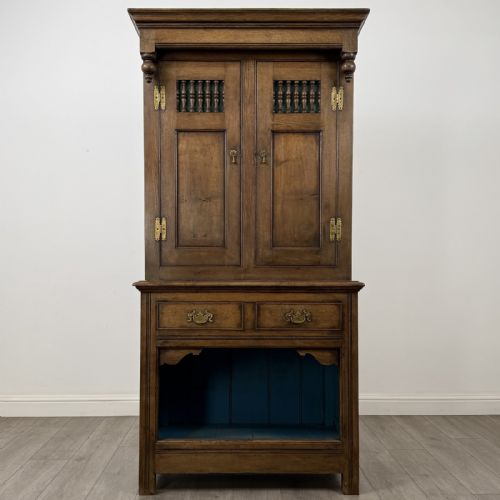
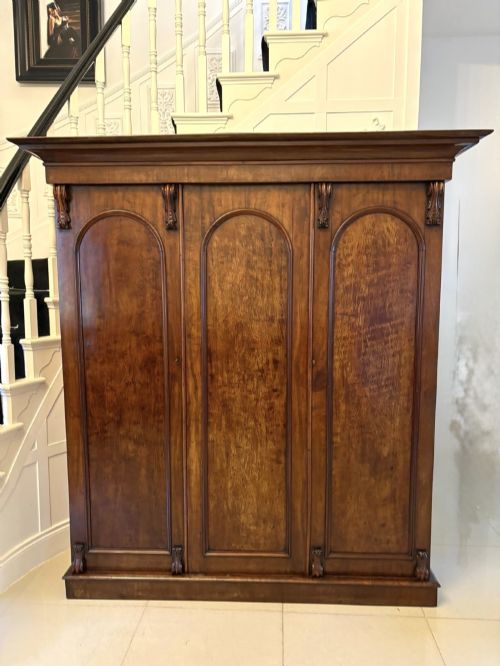
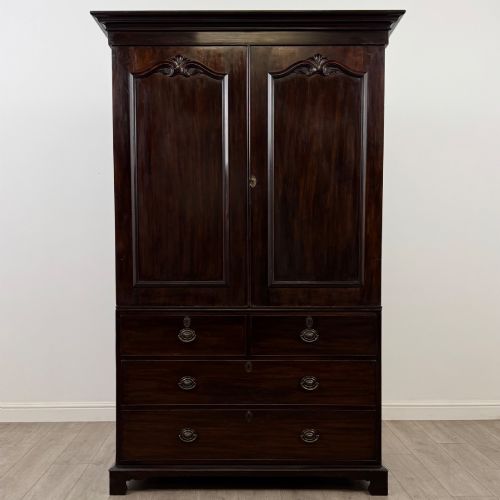
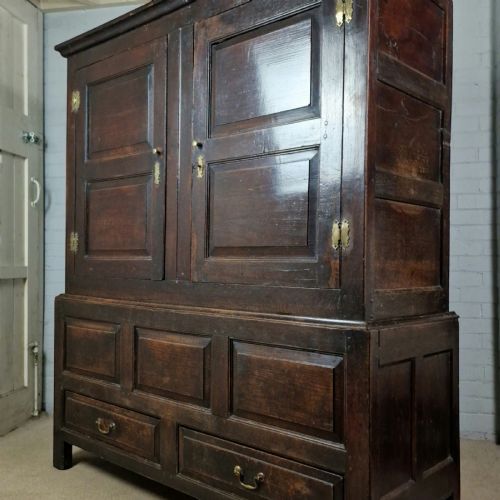



Carved Panel Linen Press
A carved panel linen press is a substantial storage piece built for textiles, offering deep presence and historical utility in a room.
Carved Panel Linen Press
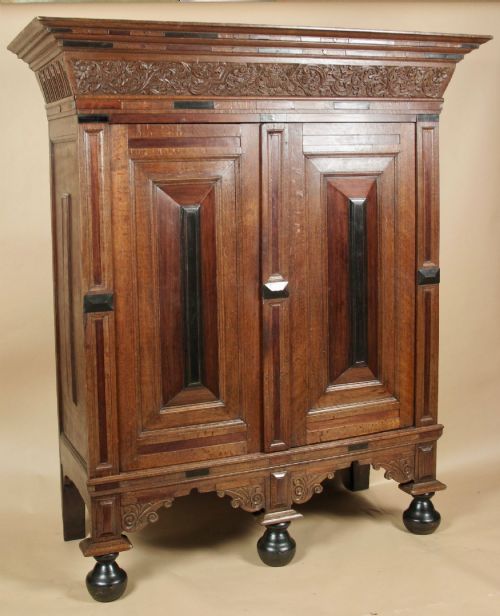
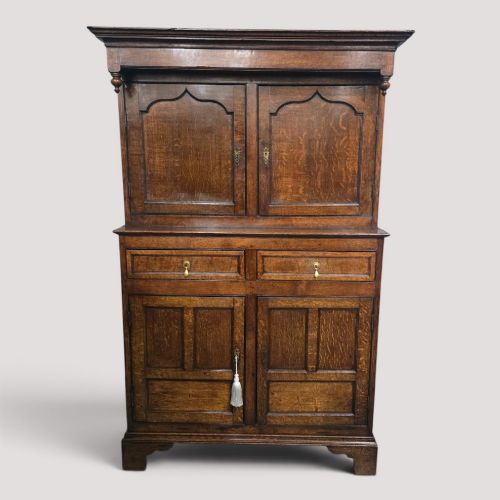
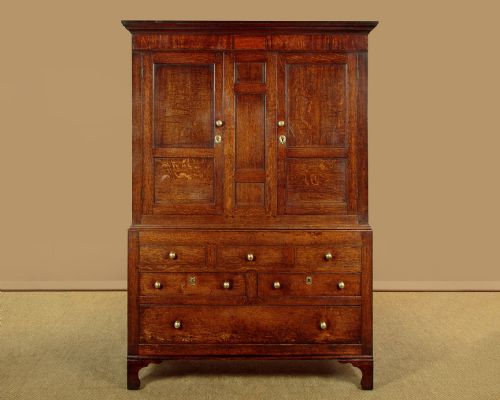
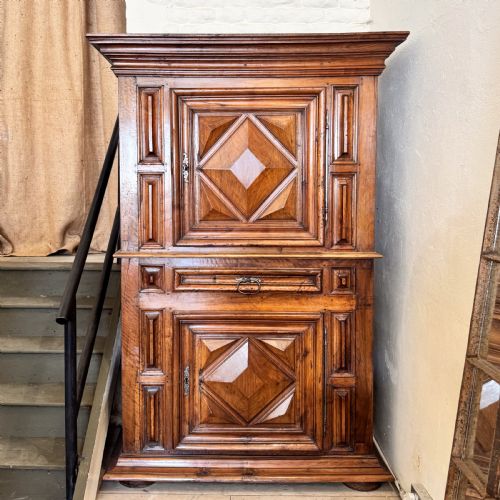
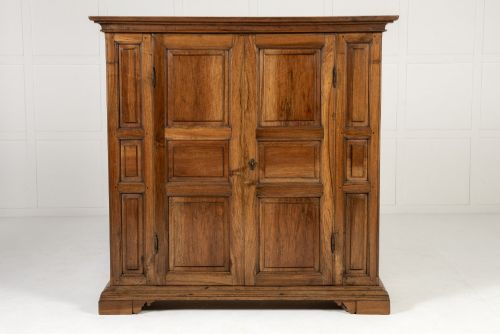
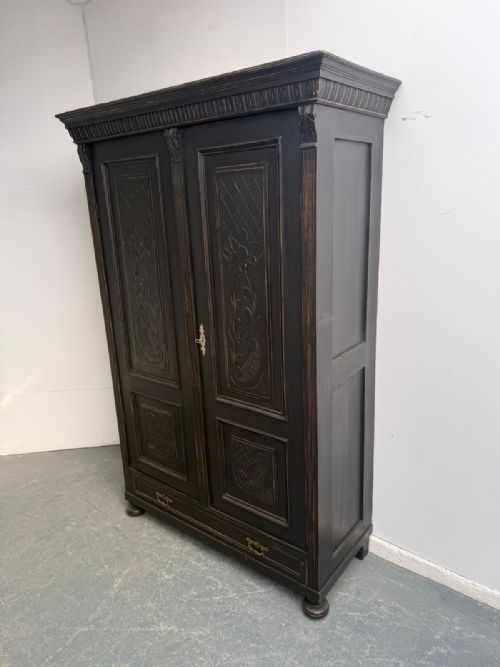
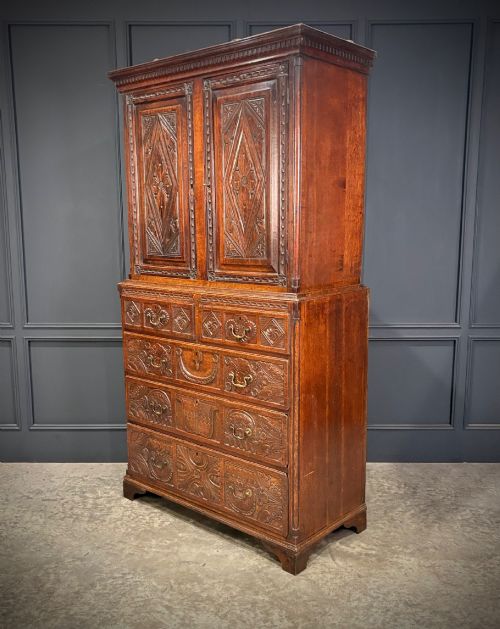
When you search for a carved panel linen press, you encounter large storage furniture designed for clothes and linens, spanning several centuries of craftsmanship. The pieces available range from early oak cupboards to later mahogany and walnut wardrobes.
Regional variations appear across English, Welsh, Dutch, and Italian examples, showing distinct local tastes in timber selection and joinery. These variations provide insight into the domestic architecture of their origins.
Materials and Construction
Carpenters relied primarily on solid oak, walnut, and mahogany, utilising heavy timbers to build rigid frames and panelled doors. Secondary woods such as pine appear in internal shelving and backing boards.
Joinery techniques involve pegged mortise and tenon frames surrounding heavy carved panels, which allowed the timber to expand and contract naturally. Brass and iron hardware, including hinges and escutcheons, secure the heavy doors and drawers.
The listings span from the 17th century through the Georgian and Victorian eras, utilising oak, walnut, mahogany, and pine.
Assessing Quality and Execution
Quality rests in the crispness of the carving and the selection of figured timber, such as burr walnut or quarter-sawn oak. The integration of panel work into the structural frame shows the maker's hand.
Proportion and the integrity of the original hardware distinguish superior examples from ordinary utilitarian pieces. Well-executed pieces maintain balanced door alignment and smooth operation within the heavy timber frame.
The Carved Panel Linen Press Glossary
- Linen press
- A tall piece of furniture traditionally used for storing folded sheets and garments, often featuring sliding trays or shelves behind upper doors.
- Court cupboard
- An early form of open or enclosed side table and storage unit, frequently constructed in solid oak with carved detailing.
- Livery cupboard
- A medieval or early modern cabinet intended for keeping food or clothing, ventilated through turned spindles or pierced panels.
- Kast
- A large, architectural wardrobe or cupboard originating from the Netherlands or Germany, often built with substantial cornices and applied mouldings.
- Compactus
- A fitted wardrobe or combination cabinet designed to maximise internal hanging space and drawer capacity efficiently.
Carved Panel Linen Press: Frequently Asked Questions
What is a carved panel linen press used for?
These large cabinets provide ample vertical storage for clothing, heavy blankets, and household linens. Their deep shelves and internal hanging spaces suit modern bedrooms and hallways requiring substantial storage.
Historically, they housed family textiles and garments before fitted wardrobes became standard. Today, they function as focal storage points that conceal modern apparel while adding historical character.
How do I date an antique linen press?
Dating relies on identifying timber species, construction methods, and hardware styles across different centuries. Early pieces utilise solid oak with hand-cut pegs, whilst later 19th-century examples often feature mahogany or walnut with machine-finished elements.
Examining the backboards, interior drawer construction, and panel bevels provides further clues to the manufacturing period. Stylistic motifs like Georgian bracket feet or Victorian mouldings also anchor the piece in time.
Are these cupboards difficult to move?
Due to their solid timber construction and large dimensions, these presses are heavy and typically require two people to transport. Many regional and continental examples are built as single massive units that demand careful measuring of stairwells and doorways.
Some later wardrobe variations dismantle into sections, but early oak and walnut cupboards generally remain as fixed carcasses. Planning the route into your room beforehand ensures safe placement.
How should I care for antique timber?
Maintaining these pieces involves keeping them away from direct heat sources and dramatic humidity shifts to prevent the solid wood from splitting. Regular dusting with a dry, soft cloth preserves the wax finish without building up residue.
Occasional application of natural beeswax nourishes dry timber and maintains the subtle lustre of oak and walnut surfaces. Avoid synthetic polishes that can damage historic finishes over time.