




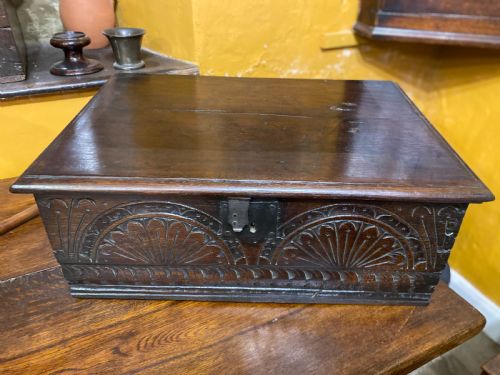


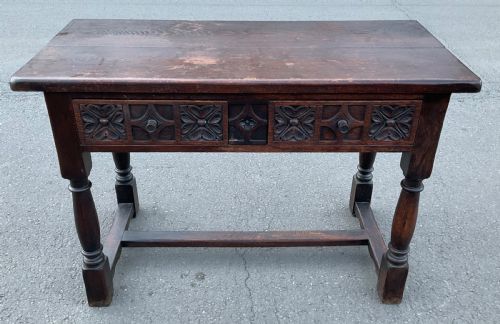
Carved Panel Desk
A carved panel desk brings tactile depth and rich timber grain to a room, offering a serious workspace grounded in historical craft.
Carved Panel Desk
A carved panel desk draws the eye with distinctive relief work and timber construction, ranging from compact bureaus to substantial partners desks. When exploring a carved panel desk today, buyers most frequently encounter solid oak and walnut examples spanning the nineteenth and early twentieth centuries, alongside revival pieces.
The form encompasses writing tables, bureau bookcases, and pedestal desks featuring fitted drawers and writing surfaces. These pieces serve as functional workstations while displaying the sculptural woodwork that defines the genre.
Materials and construction
Timbers such as oak, walnut, mahogany, and exotic hardwoods form the structural foundation of these pieces, often paired with brass hardware, leather writing inserts, and glass panels. Artisans utilised traditional joinery alongside hand-carved relief panels to create durable furniture designed for daily use.
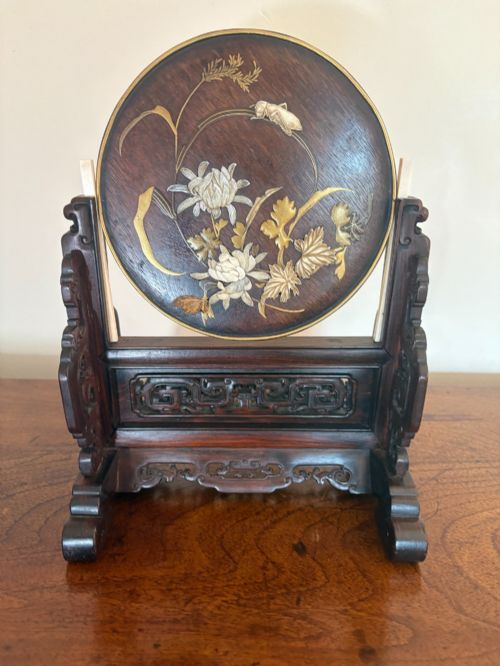
Surface decoration frequently includes elaborate geometric or figurative carving on doors, sides, and friezes. Secondary materials like mother-of-pearl and silk appear in specialised table screens and cabinet work associated with the broader groupings.
Carved Panel Desk Retail Price Guide 2026
Typical asking prices for carved panel desk among the pieces listed under this phrase on Sellingantiques today, from the lower quarter to the upper quarter. They describe what is for sale here now, not the wider market.
Listings feature oak, walnut, and mahogany as primary timbers, alongside brass, glass, and leather details spanning the seventeenth to twentieth centuries.
Assessing quality and execution
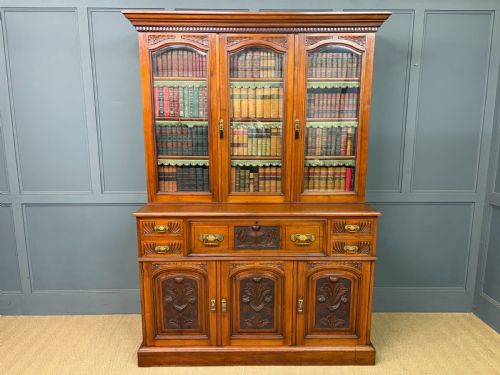
Quality rests in the crispness and depth of the hand-carved panels, where deep relief and clean undercut details distinguish superior execution from shallow mechanical work. The choice of timber grain and the integrity of the structural joinery also determine the long-term standing of the piece.
Proportion and the balance of the carved elements relative to the plain surfaces dictate visual success. Pieces that integrate fitted interiors, secondary woods, and original hardware maintain greater integrity than those with replaced elements.
Gregory and Co of London
The Carved Panel Desk Glossary
- Bureau
- A sloping writing desk with a hinged flap that covers pigeonholes and small drawers. It often sits upon a chest of drawers or a stand.
- Pedestal desk
- A heavy freestanding writing table supported by two pedestals containing drawers. The top surface frequently incorporates a leather or fabric writing insert.
- Secretaire bookcase
- A tall piece of furniture combining a glazed bookcase top with a pull-down desk drawer or flap in the middle section.
- Jacobean Revival
- A style of design popular in the nineteenth and early twentieth centuries that mimics seventeenth-century English motifs, heavily featuring dark oak and geometric mouldings.
- Partners desk
- A large double-sided pedestal desk designed for two people to sit opposite each other, featuring drawers and cupboards on both sides.
Carved Panel Desk: Frequently Asked Questions
What is a carved panel desk?
A carved panel desk is a functional writing surface featuring decorative woodwork carved in relief upon its drawers, doors, or sides. These pieces combine utility with sculptural ornamentation.
They appear in various forms, including pedestal desks, writing tables, and bureaus, executed primarily in oak, walnut, and mahogany across different historical periods.
How do I care for my desk?
Maintain the timber by dusting regularly with a soft, dry cloth and avoiding placement near direct heat sources or strong sunlight. These precautions prevent the wood from drying out and cracking.
Feed the timber periodically with appropriate wax to preserve the finish. Protect leather writing surfaces from spills and sharp objects.
How are different periods identified?
Period identification relies on structural characteristics, timber selection, and carving styles. Seventeenth-century pieces typically show heavy oak construction with hand-tooled joinery, while revival pieces from the nineteenth and twentieth centuries often exhibit machine assistance.
Hardware styles, secondary woods, and construction techniques inside drawers also provide clear chronological markers for dating.
Where were these desks used?
These desks served as primary administrative furniture in private libraries, studies, and commercial offices. Their substantial build suited domestic and institutional environments alike.
Larger variations, such as partners desks, stood in the centres of rooms to allow simultaneous access from multiple sides.