
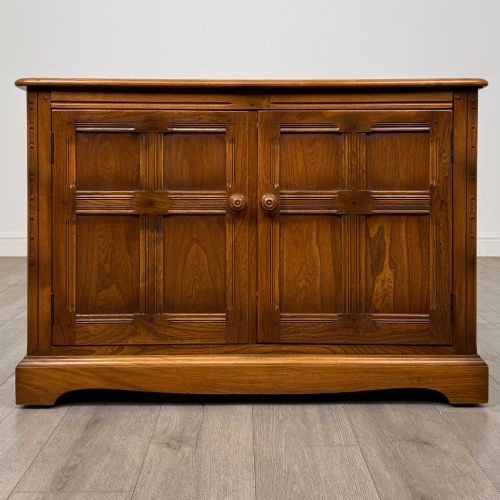
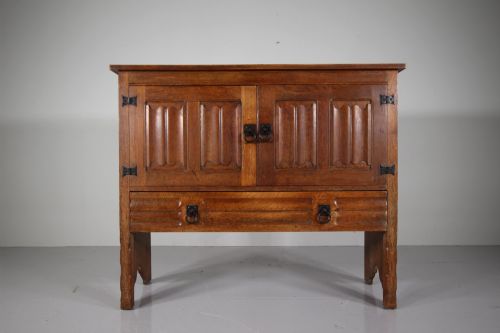
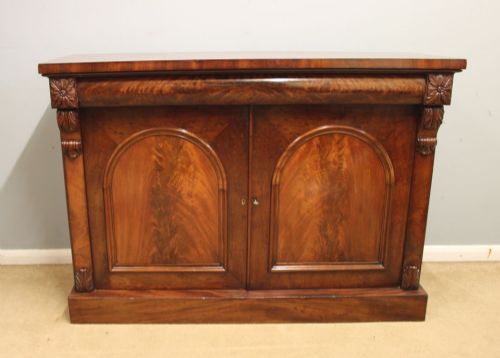
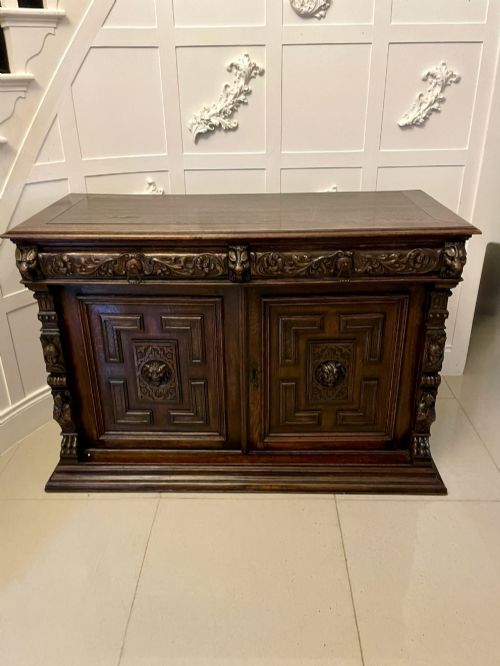
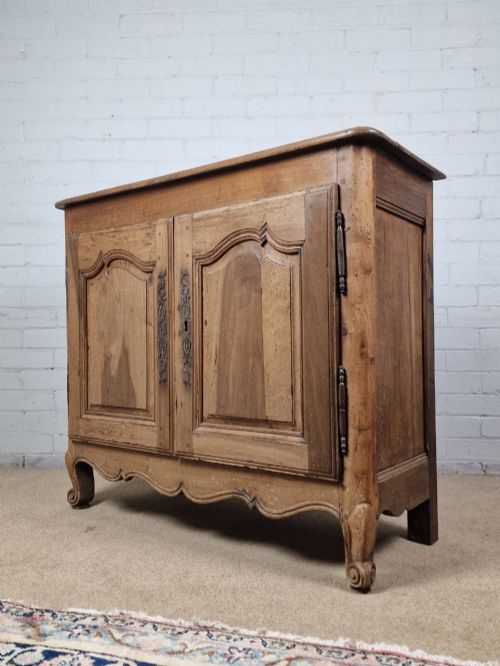
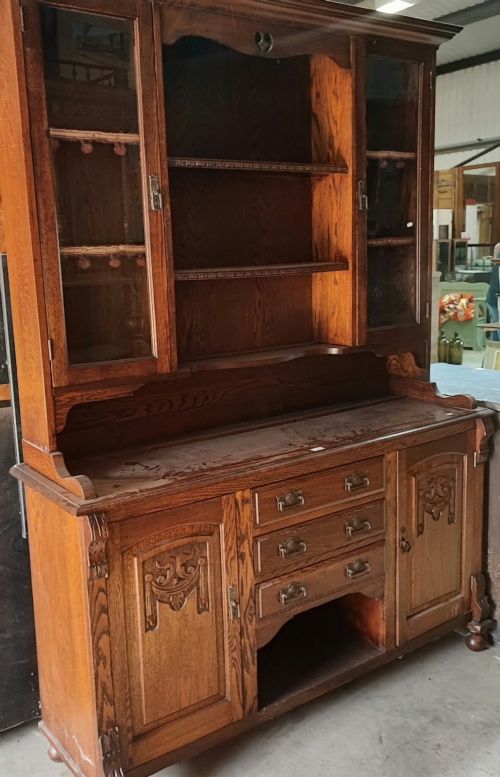
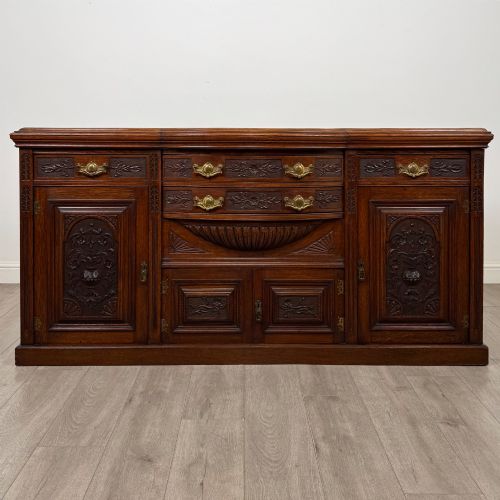
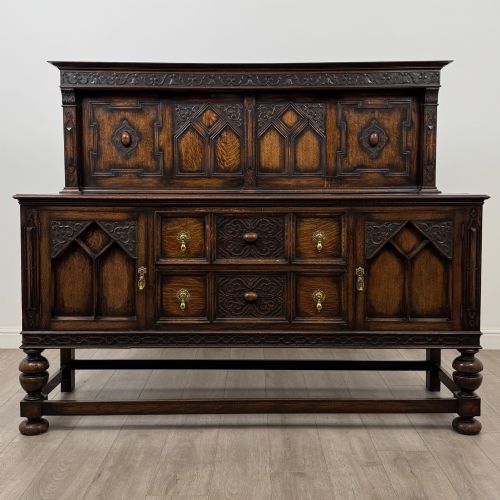
Carved Panel Buffet
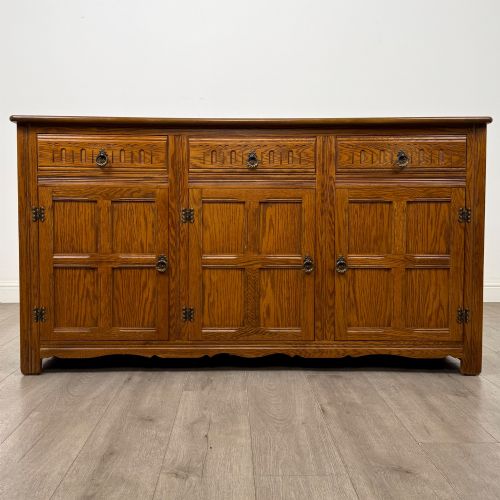
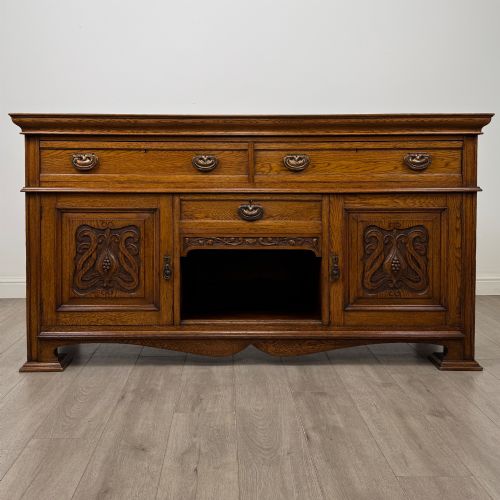
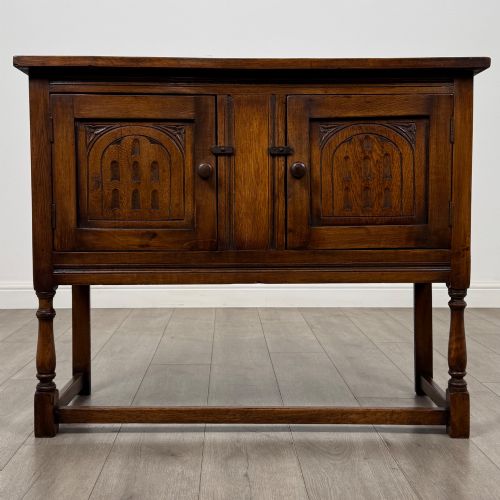
These carved panel buffet pieces bring sturdy timber and deep historic joinery straight into a room.
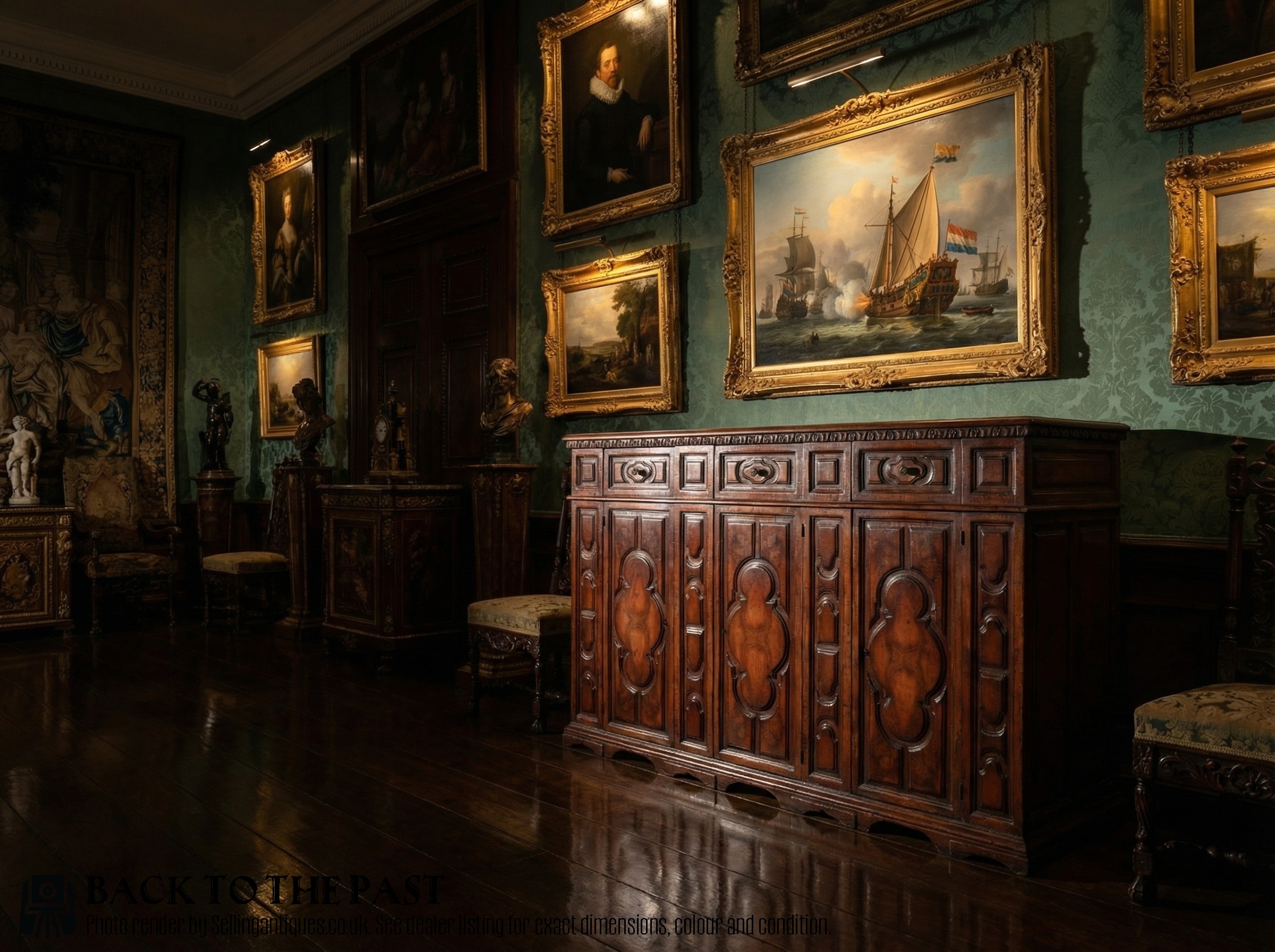
Carved Panel Buffet
A carved panel buffet serves as a substantial storage piece, combining cupboard doors and display surfaces within dining and living spaces. These items appear across centuries, ranging from early joined oak constructions to later revival pieces.
The versions most common here span the seventeenth through the nineteenth centuries, alongside Edwardian and later interpretations. Oak dominates the selection, accompanied by walnut, mahogany, and fruitwood.
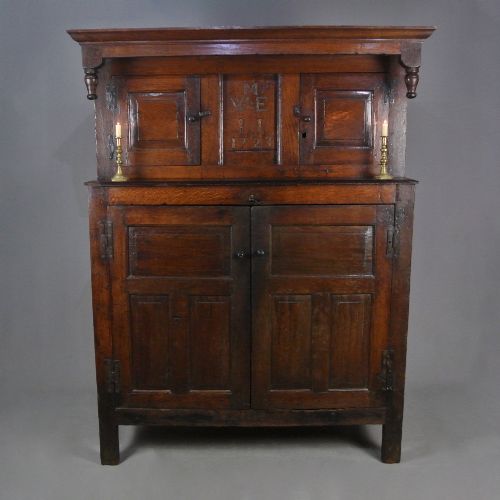
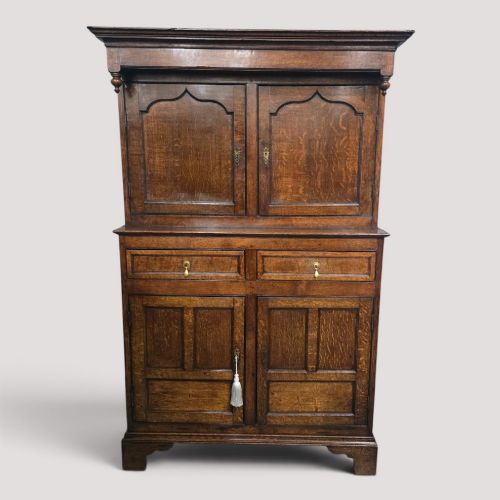
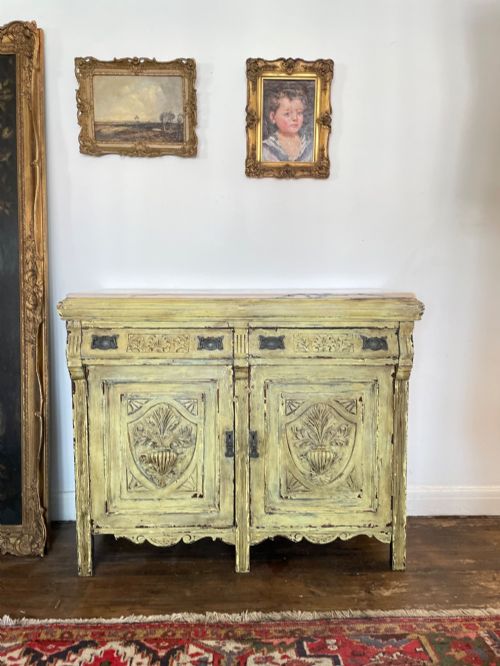
Makers shaped these forms into sideboards, court cupboards, and dresser bases. Their surfaces frequently display relief carving and panelled doors rooted in Jacobean, Georgian, and Victorian traditions.
What varies in quality
Depth and crispness of the hand carving separate standard production from superior examples. Sharp, well-defined chisel work indicates a skilled hand, whereas softened or shallow incisions suggest rapid execution.
Timber selection and structural integrity define the upper tier. Dense, quartersawn oak with prominent medullary rays and uniform grain holds up better than mixed secondary woods or poorly matched veneers.
Listings feature oak, walnut, mahogany, and fruitwood spanning the seventeenth to twentieth centuries.
M. D. Miller & Sons
The Carved Panel Buffet Glossary
- Court cupboard
- A heavy storage piece featuring an enclosed upper section supported by columns or balusters above a lower cabinet. These items date primarily to the seventeenth century and often feature elaborate carved panels.
- Dresser base
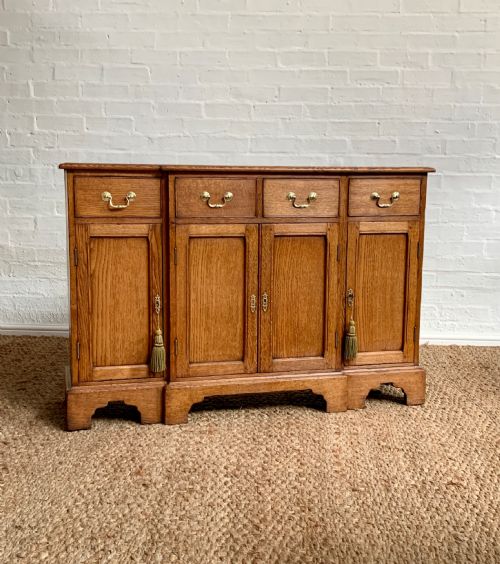
- A low cabinet with drawers and cupboards beneath a flat top, historically used for food preparation and serving. They typically lack the upper plate rack associated with full dressers.
- Panelling
- Framework constructed with fitted wooden boards inset into grooved stiles and rails. This technique prevents warping while adding decorative depth to cabinet doors and sides.
- Barley-twist
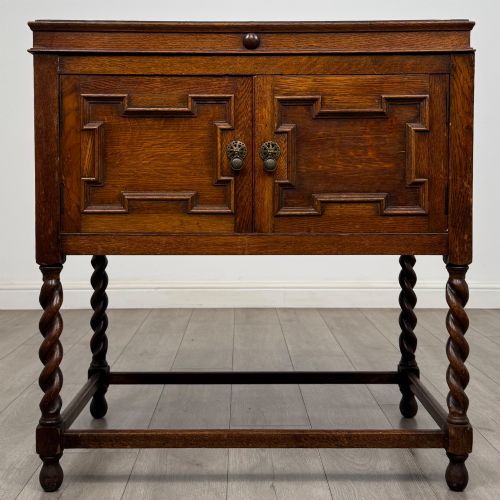
- A type of turning shaped to resemble a spiralling rope or barley sugar stick. This decorative support appears frequently on legs and structural posts of seventeenth-century and revival furniture.
- Quartersawn
- Timber cut radially from the growth rings to produce boards with enhanced dimensional stability and distinct grain patterns. This method yields the characteristic silver figure seen in fine antique oak.
Carved Panel Buffet: Frequently Asked Questions
What is a carved panel buffet used for?
These pieces function as heavy storage cabinets and serving surfaces in dining rooms and halls. Their interior shelves and deep drawers hold tableware, linen, and household provisions.
The flat top surface serves as a display area for silver, ceramics, or serving dishes during meals. Their robust construction allows them to support significant weight.
How do I identify a 17th century piece?
Seventeenth-century pieces display pegged joinery, hand-riven timber, and deep geometric or floral relief carvings. The wood surfaces often exhibit a dark, oxidized patina built up over centuries of handling.
Construction relies heavily on solid oak with pegged mortise and tenon joints rather than modern fasteners. Iron hardware and heavy panelled doors are standard characteristics of this era.
Where were these buffets made?
The pieces originate primarily from English, French, and Italian workshops, reflecting regional joinery traditions. English examples commonly utilise native oak, while continental pieces feature local walnut and fruitwood.
Regional styles range from West Country court cupboards to French provincial buffets and Italian Renaissance revival cabinets. Each area developed distinct carving motifs and proportions.
How do I care for antique oak?
Maintain the timber by applying natural beeswax sparingly to nourish the dry wood fibres. Avoid placing these heavy items near direct heat sources or in fluctuating humidity.
Dust surfaces regularly with a soft, dry cloth rather than wet sprays. Proper climate control prevents the ancient timber from splitting or warping.