


Continental Walnut Credenza
A continental walnut credenza brings substantial presence to a room, offering deep tones and historic craftsmanship.
Continental Walnut Credenza
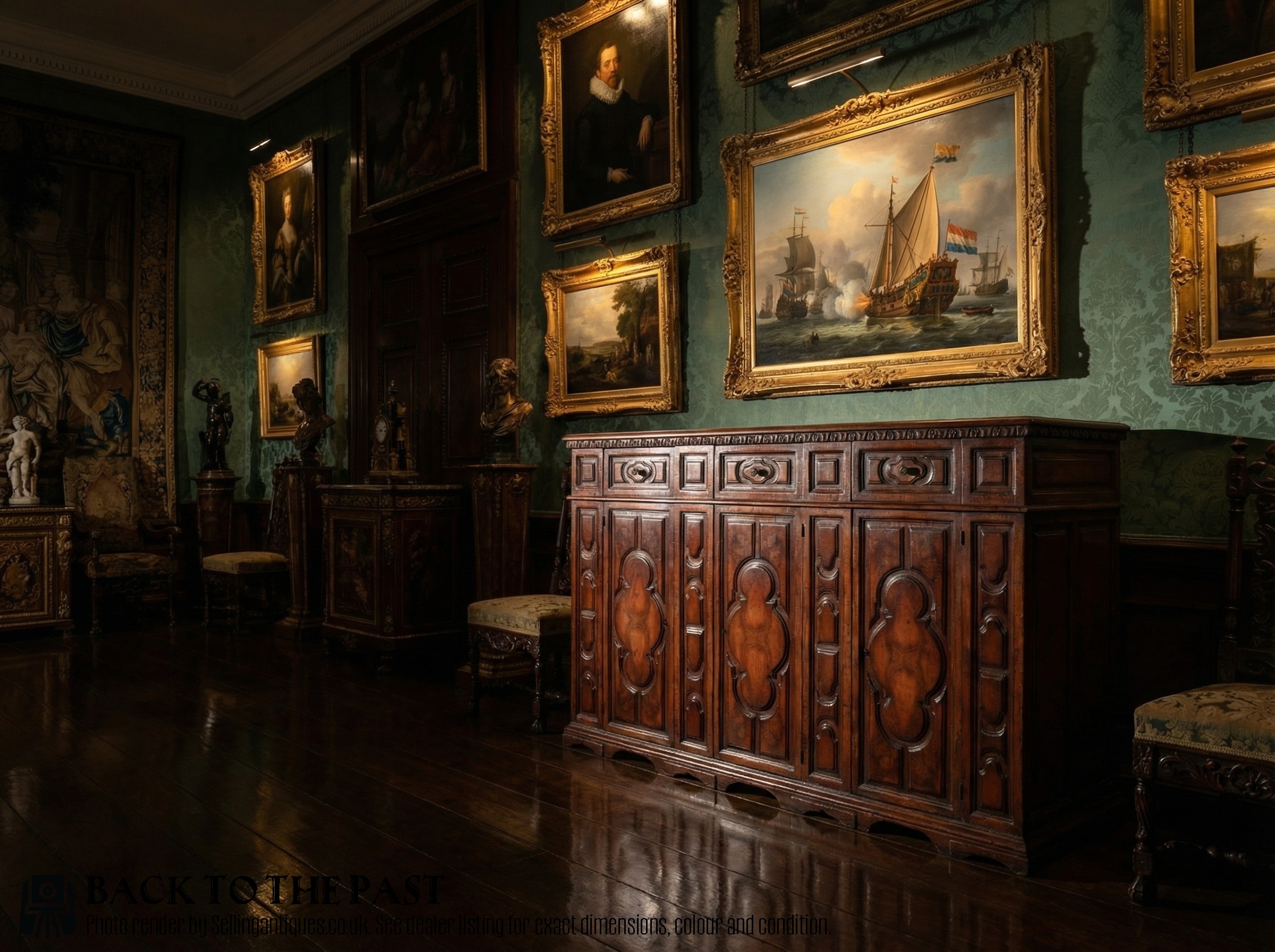
A continental walnut credenza encompasses grand storage pieces from various European regions, primarily featuring Italian origins. Buyers searching for a continental walnut credenza encounter impressive sideboards, commodes, and cabinets dating from the eighteenth century onwards.
The selection on this page leans heavily towards eighteenth-century Italian examples alongside nineteenth-century interpretations. These heavy timber forms serve as prominent storage units and display surfaces within formal interiors.
How they were made
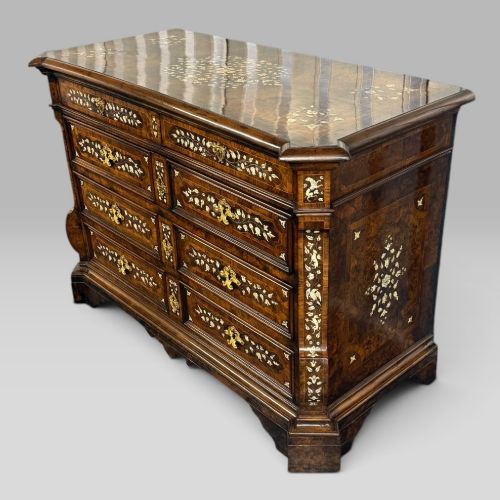
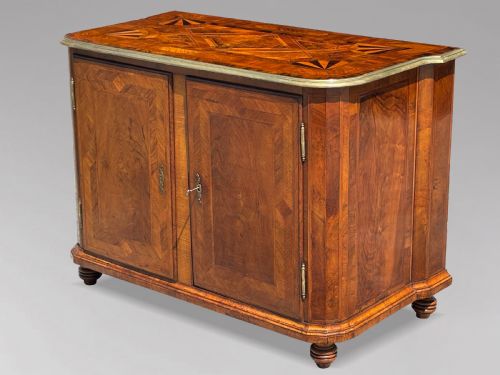
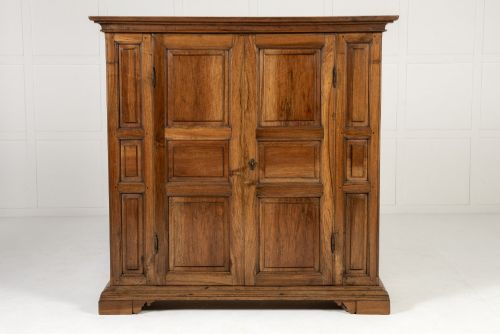
Cabinetmakers utilised solid walnut and burl walnut veneers over secondary timbers, shaping heavy panels into monumental proportions. Decorative surfaces often incorporated fruitwood inlay and bone inlay to create intricate patterns across the drawer fronts and doors.
Metal mounts in brass and ormolu reinforced structural corners and framed key escutcheons. Selected pieces also integrated Carrara marble tops to provide a durable and contrasting surface above the timber base.
Some nineteenth-century cabinets hide tiny bone inlay details that only reveal themselves when light catches the surface at an angle.
What varies in quality
The standard of carving and inlay work dictates the distinction between standard provincial furniture and high-workshop production. Crisp execution of floral marquetry and well-defined figurative carving reflect superior artisan skill.
The choice of timber grain, particularly figured burl walnut, elevates the visual depth of the facade. Original metalwork and uncompromised structural integrity further separate exceptional survivals from later alterations.
The Continental Walnut Credenza Glossary
- Credenza
- A sideboard or cabinet used historically for storing and displaying valuable objects. These pieces sit low to the ground and often feature a combination of drawers and cupboards.
- Marquetry
- Decorative veneer patterns applied to furniture surfaces using thin slices of wood. Floral and geometric designs create ornamental pictures across cabinet doors and tabletops.
- Breakfront
- A piece of furniture where the central section projects forward from the flanking sides. This architectural arrangement adds visual rhythm to large sideboards and bookcases.
- Ormolu
- Gilded bronze mounts applied to furniture for decorative effect. These metallic elements highlight corners, feet, and keyholes on formal cabinetwork.
Continental Walnut Credenza: Frequently Asked Questions
Where were continental credenzas made?
The pieces originate primarily from Italy and Austria, reflecting regional cabinetmaking traditions. Workshops across these areas produced robust storage furniture utilising local walnut.
Craftsmen incorporated distinct stylistic elements such as baroque curves and neoclassical symmetry depending on the specific decade of production.
How do I date a walnut credenza?
Dating relies on examining construction methods, timber selection, and stylistic details like hardware and inlay. Eighteenth-century examples display hand-cut joints and dense native timbers.
Later nineteenth-century and twentieth-century pieces often revive earlier baroque or renaissance aesthetics while retaining machinery marks from their era of manufacture.
Can I use a credenza in a modern dining room?
These large timber units provide generous surface area and deep interior storage suitable for modern dining spaces. Their rich walnut tones anchor contemporary room schemes with historic weight.
Careful placement away from direct heat sources ensures the timber and any marble tops remain stable over time.
What is the difference between a commode and a credenza?
A commode functions primarily as a low chest of drawers with formal proportions and decorative mounts. A credenza typically combines cupboards and drawers for storage and display.
Both forms utilise fine wood veneers and elaborate hardware within continental interiors.