




Carved Panel Arm Chair
A carved panel arm chair brings solid timber and centuries of joinery straight into a room.
Carved Panel Arm Chair
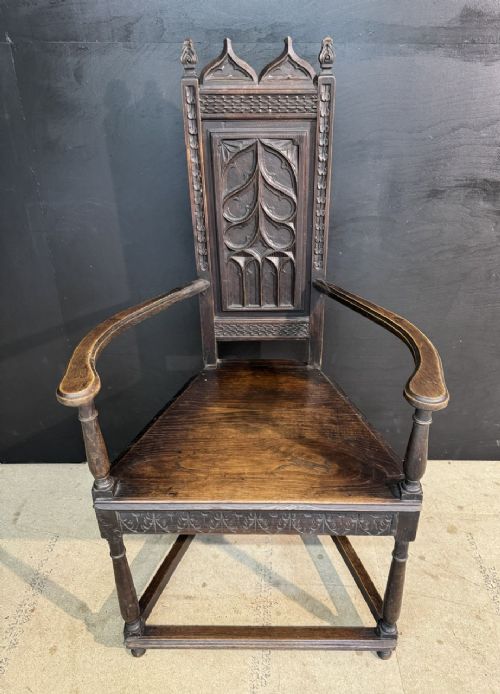
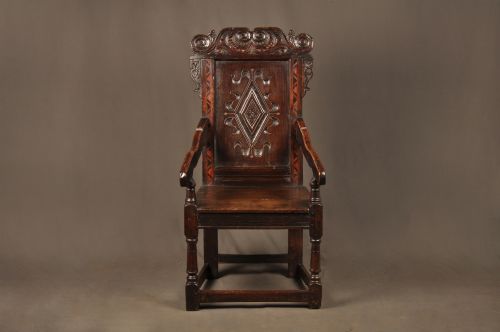
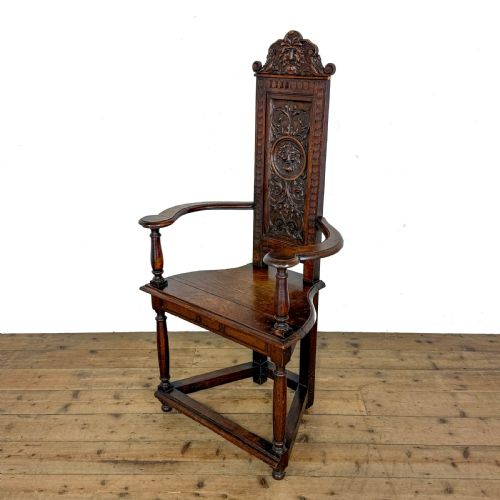
When you search for a carved panel arm chair, you enter a lineage of heavy timber seating that spans from the seventeenth century through to Victorian revivals. The form typically centres on a solid wooden back panel, often enriched with relief carving, framed by upright stiles and heavy armrests.
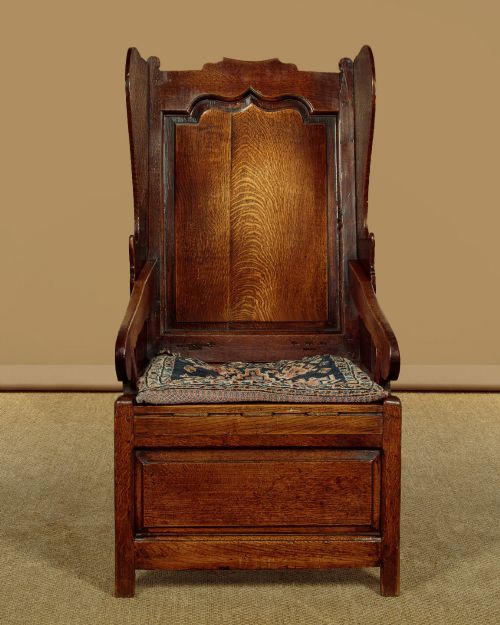
The pieces most frequently met on this page are oak wainscot chairs from the seventeenth and eighteenth centuries, alongside nineteenth-century revivals built in the same idiom. You also encounter regional variations such as Welsh great chairs, Yorkshire examples, and occasional lambing chairs or painted French pieces with needlepoint panels.
These items were originally made for high-status domestic use, serving as permanent fixtures in panelled halls and parlours. Today, buyers select them to anchor a room with architectural presence and tactile history, using them as occasional seats or statement reading chairs.
How they were made
The construction of these chairs relies principally on solid oak, shaped through traditional framing and panel techniques. Joiners used heavy stiles and rails joined by mortise and tenon joints, secured with wooden pegs rather than metal nails to allow the timber to move naturally.
Carving was executed directly into the solid wood panels, frequently employing gouges and chisels to create geometric strapwork, floral motifs, or scrolling designs. Secondary materials appear selectively, such as wool needlepoint for upholstery panels, brass elements, and occasional painted finishes on Continental forms.
The listings here draw on materials dominated by solid oak and hardwood, spanning the seventeenth to the nineteenth centuries.
What varies in quality
Quality in a carved panel arm chair rests on the crispness of the timber carving and the integrity of the original framing. Superior examples display deeply undercut relief work executed by confident hands, while lesser pieces rely on shallow, mechanical scoring or later re-carving.
The proportion of original timber against replacement elements dictates the standing of a piece within the range. Chairs retaining their original seat boards, arm assemblies, and pegged joints without extensive timber patches command greater respect from collectors.
The Carved Panel Arm Chair Glossary
- Wainscot chair
- A heavy wooden armchair, typically made of oak, featuring a panelled back and solid seat. This form dominated seventeenth-century elite domestic seating before upholstered chairs became common.
- Stile
- The upright vertical member that forms the outer edge of a chair back or panel frame. It bears the structural load and receives the tenons of the horizontal rails.
- Elbow chair
- An older term for an armchair, often used interchangeably in historical inventories to distinguish seats with arms from standard side chairs. These provide structural support for the arms via shaped wooden supports.
- Needlepoint
- A type of counted-thread embroidery, frequently executed in wool on canvas mesh, used for inset panels in nineteenth-century chair backs and seats. It introduces texture and colour contrast to the timber frame.
- Lambing chair
- A vernacular armchair featuring enclosed sides and a high back designed to shield the sitter from draughts. They appear in country contexts, often fashioned from solid wood with tailored seating compartments.
Carved Panel Arm Chair: Frequently Asked Questions
Are carved panel arm chairs comfortable?
These chairs were built for posture and authority rather than lounging, possessing rigid wooden backs and seats. Many owners soften them with a loose cushion for daily use.
Their upright proportions make them well suited as desk chairs or accent seating where support takes priority over softness.
How do I date a wainscot chair?
Dating relies on examining the joinery marks, timber shrinkage, and the style of the carving on the back panel. Seventeenth-century examples often show hand- split oak and pegged mortise joints.
Later revival pieces from the nineteenth century generally display more uniform machine sawing and crisper, shallower tool marks.
Where should I place one in a modern home?
A heavy oak chair works effectively in a hallway, as a desk companion, or paired beside a fireplace where its architectural silhouette stands clear. The dark timber contrasts well against neutral walls.
Keep them away from direct heat sources and dramatic humidity shifts to protect the antique wood.
What is the difference between a wainscot and a lambing chair?
A wainscot chair is an formal, panel-backed armchair constructed from heavy timber with distinct legs and arm supports. It reflects structured seventeenth-century joinery.
A lambing chair is a vernacular country form featuring enclosed, hooded, or high-sided panels designed specifically to block cold room draughts.