


Carved Panel Accent Chair
A carved panel accent chair brings solid timber and historic ornament into a room, offering both seating and architectural presence.
Carved Panel Accent Chair
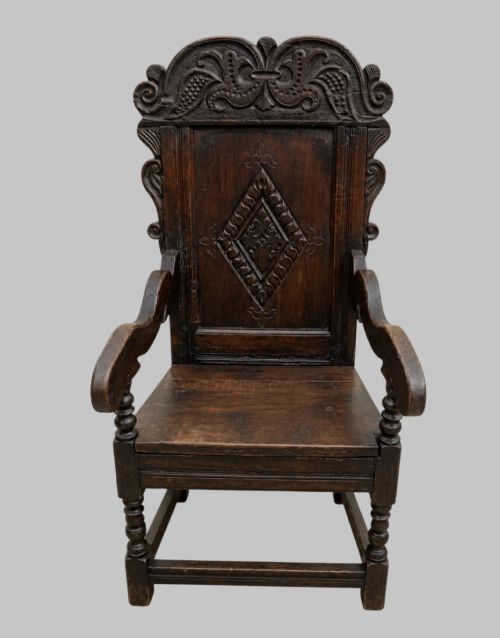
A carved panel accent chair encompasses various seating forms defined by timber construction and relief decoration, from sturdy wainscot armchairs to upright hall chairs and low-seated caquetoires. These seating pieces draw heavily upon seventeenth-century traditions, often appearing in later revivals executed during the Victorian period alongside authentic early examples.
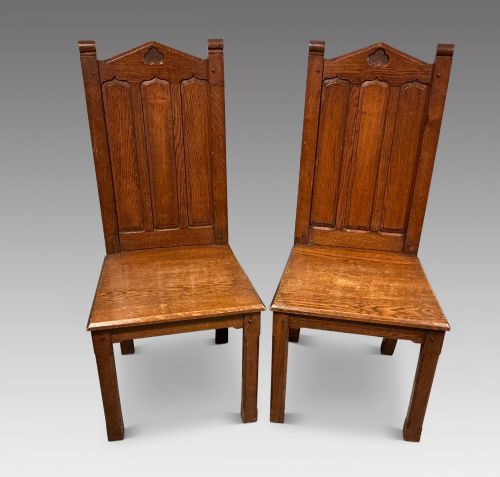
Buyers encountering these listings meet a predominance of oak constructions, alongside walnut, mahogany, and occasional painted finishes. The forms range from high-backed throne chairs and rocking variants to pairs of hall chairs intended for narrow corridors and formal entryways.
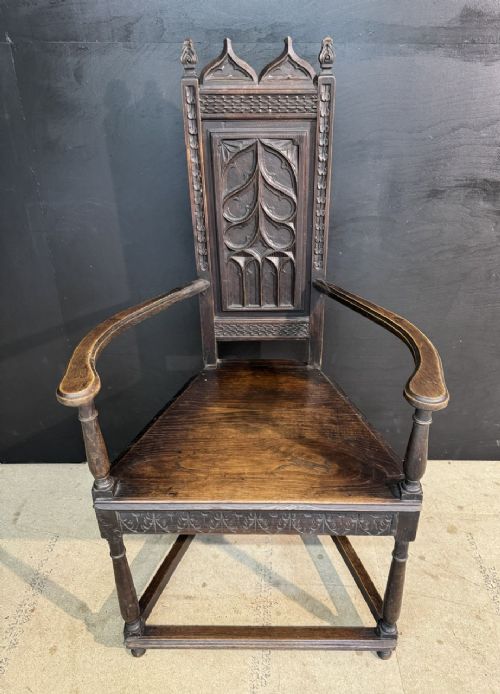
Stylistic influences vary significantly across the inventory, moving between robust Jacobean Revival, ecclesiastical Gothic Revival, and refined French open armchairs featuring needlepoint panels. Each iteration utilises carved wooden panels in the backrest or seat to create visual weight and historic texture within domestic spaces.
Distinctions in Quality and Execution
Quality rests primarily in the depth, crispness, and artistic confidence of the woodcarving, distinguishing fluid historical handwork from later, more mechanical revival output. The integration of the carved panels into the main frame demonstrates the joiner's skill, where tight joints and well-balanced proportions ensure lasting structural soundness.
The choice and preservation of primary timbers also dictate standing, with dense, figured oak and patinated walnut holding greater visual and material authority than lesser woods or heavily restored surfaces. Original upholstery elements, such as period needlepoint or leather detailing, elevate the integrity of the piece when preserved alongside the timber frame.
Some nineteenth-century makers evidently enjoyed crafting miniature wainscot chairs just to test if their tiny chisel work could fool the eye.
Bruce J Talbert
The Carved Panel Accent Chair Glossary
- Wainscot chair
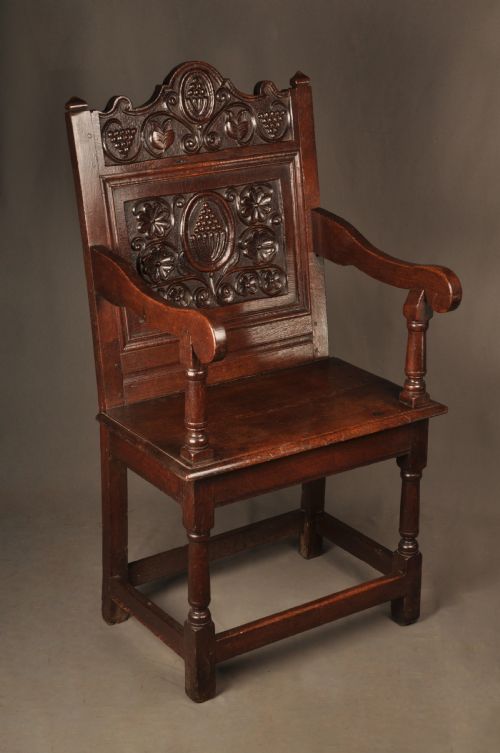
- A heavy wooden armchair characterised by a panelled back and solid wooden seat, originating in the sixteenth and seventeenth centuries. These sturdy seats were traditionally reserved for the head of the household.
- Caquetoire
- A lightweight conversational armchair featuring a narrow, trapezoidal body designed to accommodate the voluminous skirts of the sixteenth and seventeenth centuries. They often incorporate carved wooden panels and open arms.
- Hall chair
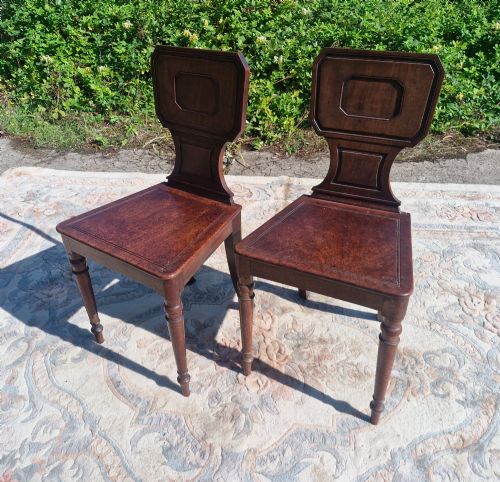
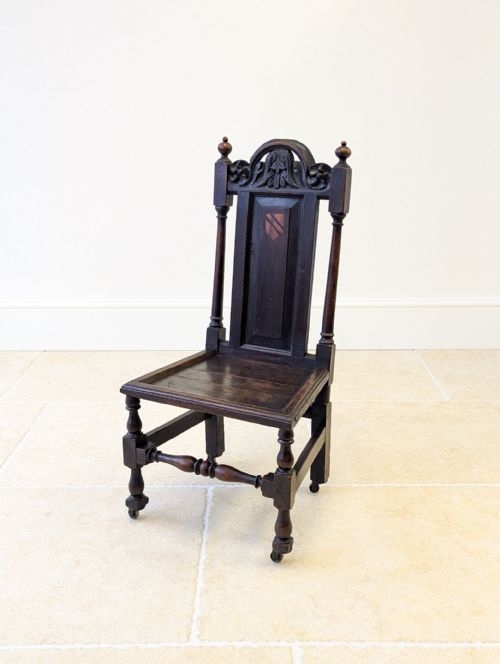
- An upright, often stiff-backed wooden chair placed in entrance halls rather than used for prolonged sitting. They frequently display prominent carved crests or solid panel backs bearing heraldic motifs.
- Needlepoint panel
- A section of hand-stitched canvas work, often executed in wool, inset into the backrest or seat of nineteenth-century revival armchairs. These textile elements introduce colour and softened texture to heavy timber frames.
Carved Panel Accent Chair: Frequently Asked Questions
Where should I place a carved panel accent chair?
These chairs function well in hallways, studies, or living rooms where their sculptural timber backs and carved details can be appreciated against a plain wall. Their strong architectural presence allows them to act as focal points rather than routine seating.
Because many examples have upright wooden seats or narrow proportions, they suit spaces dedicated to reading or occasional use rather than lounging for extended periods.
How do I care for antique oak and walnut frames?
Maintain the timber by keeping the chair away from direct heat sources and rapid temperature fluctuations that can cause historic wood to split or warp. Occasional application of appropriate microcrystalline wax helps nourish the surface and preserve the natural patina.
Avoid using modern liquid polishes or silicone-based cleaners, as these can penetrate open wood grains and degrade the historic finish over time.
Are seventeenth century style chairs actually old?
Many chairs displaying seventeenth-century characteristics were actually produced during the Victorian period as part of the widespread Jacobean and Gothic revival movements. Stylistic markers such as strapwork carving and panelled construction were deliberately recreated by nineteenth-century workshops to satisfy demand for historic aesthetics.
Distinguishing between periods requires examining the tool marks, timber shrinkage, and joinery techniques used in the construction, as nineteenth-century interpretations often exhibit different assembly methods than authentic seventeenth-century pieces.
Can I use these chairs for everyday dining?
Hall chairs and side chairs with wooden panel seats were historically designed for occasional use in entrance spaces rather than comfortable dining. Sitting in them for long periods may prove stiff due to the upright posture and lack of cushioning.
If utilised around a dining table, consider pairing them with seat pads or reserving them for head-of-table seating where their decorative carved panels remain visible.